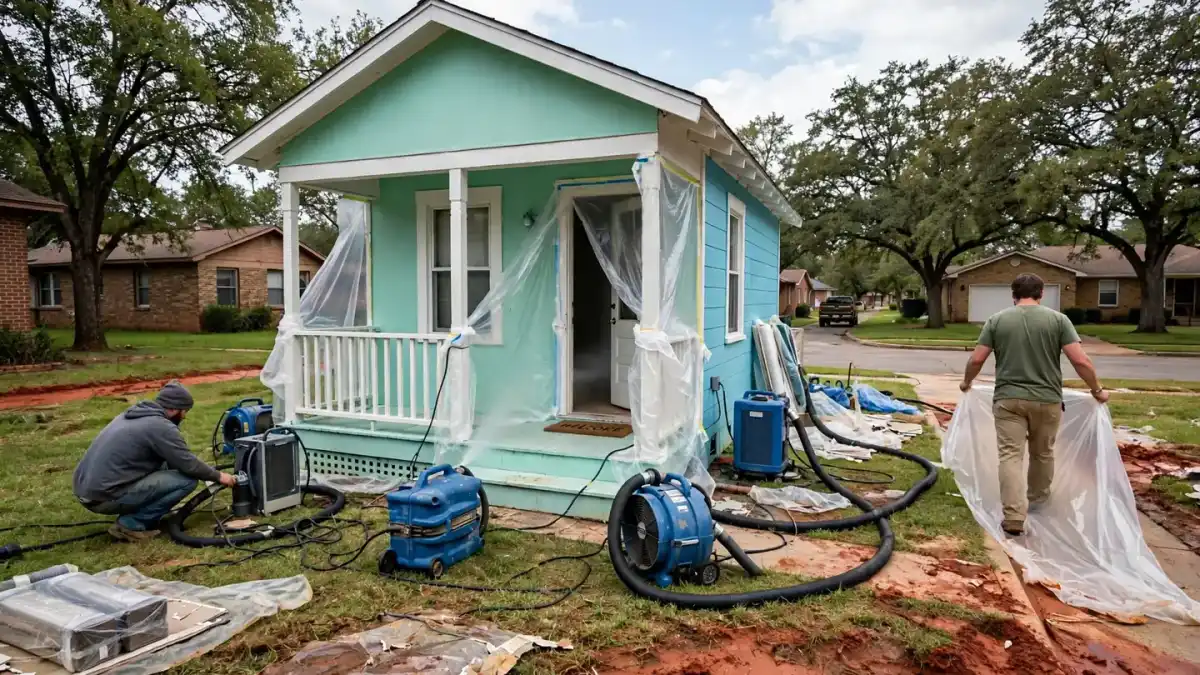
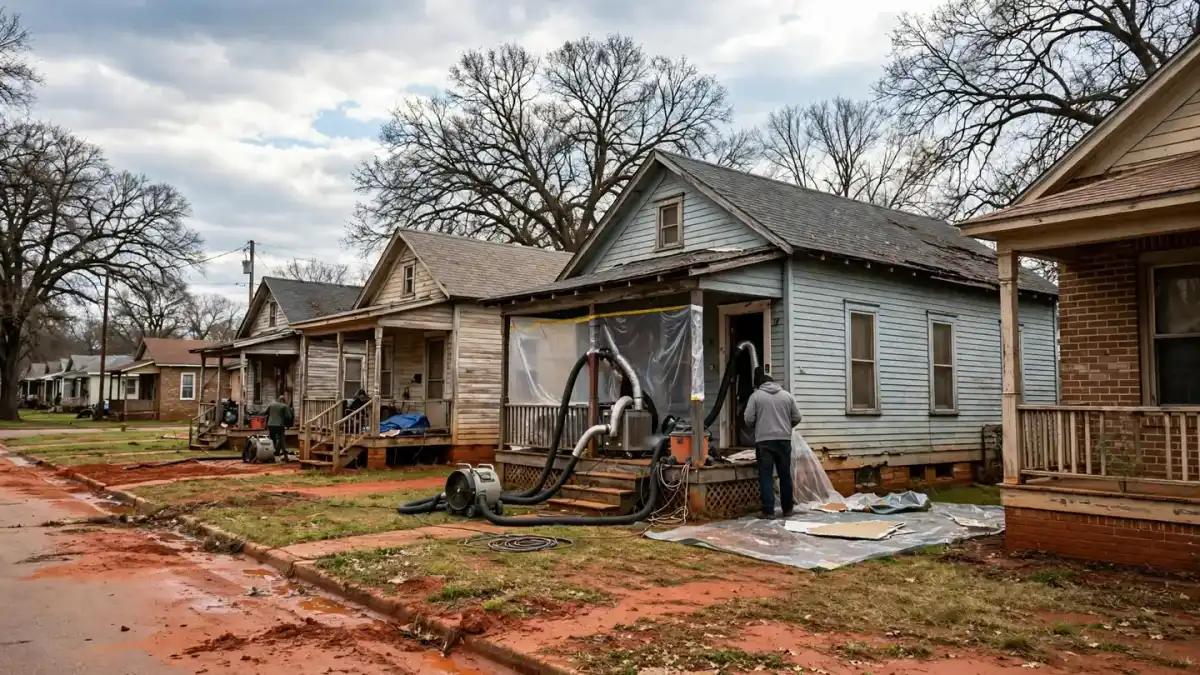
Key facts: Capitol Hill
- Capitol Hill was incorporated as a separate town in 1904 and later annexed by Oklahoma City [1].
- The neighborhood's historic commercial center grew along Commerce Street, south of the Oklahoma River [2].
- Surface water flowing in from low ground near the river is treated as flood, which homeowners policies usually leave to separate flood coverage [3].
- Damp joists and subfloors under pier-built houses should be dried within a day or two, in line with EPA mold guidance [4].
Coverage
Capitol Hill ZIP covered
Calls from Capitol Hill addresses in ZIP 73109 can be connected to an independent contractor, including homes and businesses around SW 25th Street, Commerce Street, Robinson and Walker south of the river.
- ZIP 73109: Capitol Hill and surrounding south Oklahoma City neighborhoods
- Neighboring covered ZIPs: 73129 (east), 73119 (southwest) and 73139 (south)
- Addresses outside the covered ZIPs may not be connected
The neighborhood
Capitol Hill's history and housing
Capitol Hill began as a separate town south of the North Canadian River, now called the Oklahoma River through the city. It was incorporated in 1904 and was annexed by Oklahoma City a few years later; sources give slightly different dates for the merger [1]. The town built its own downtown along Commerce Street, and that commercial district remained the heart of south Oklahoma City for decades [2].
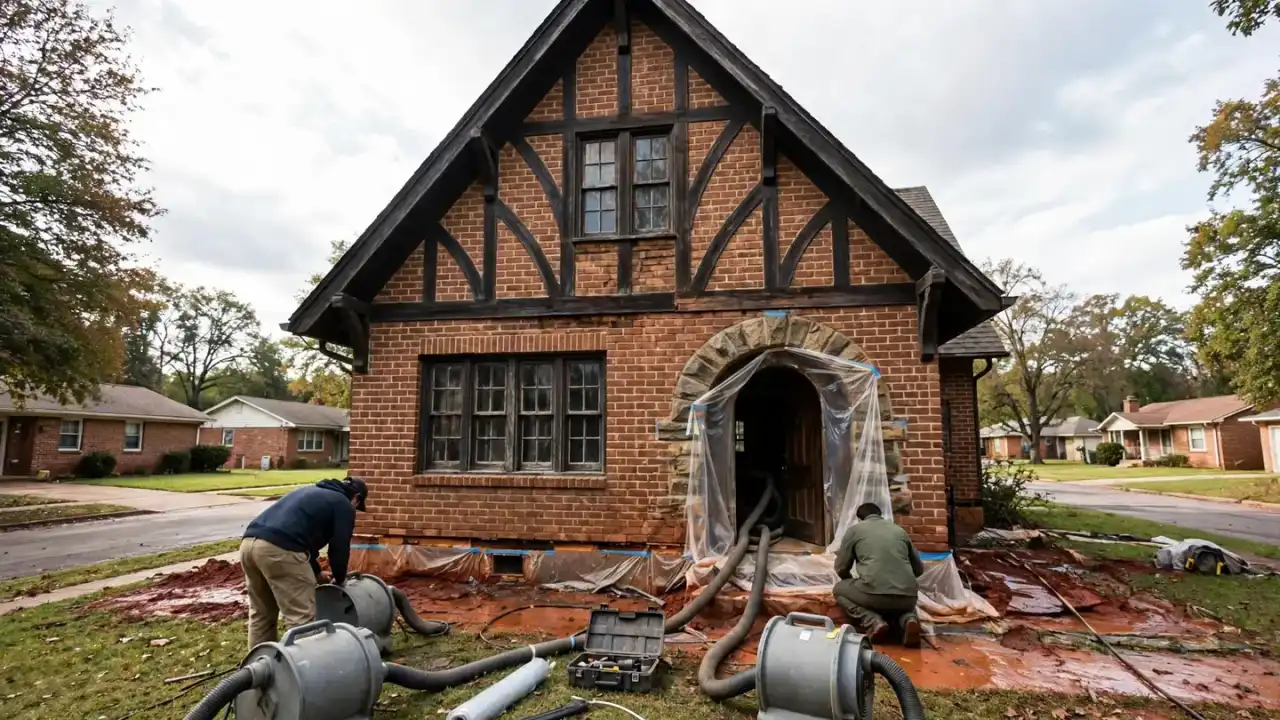
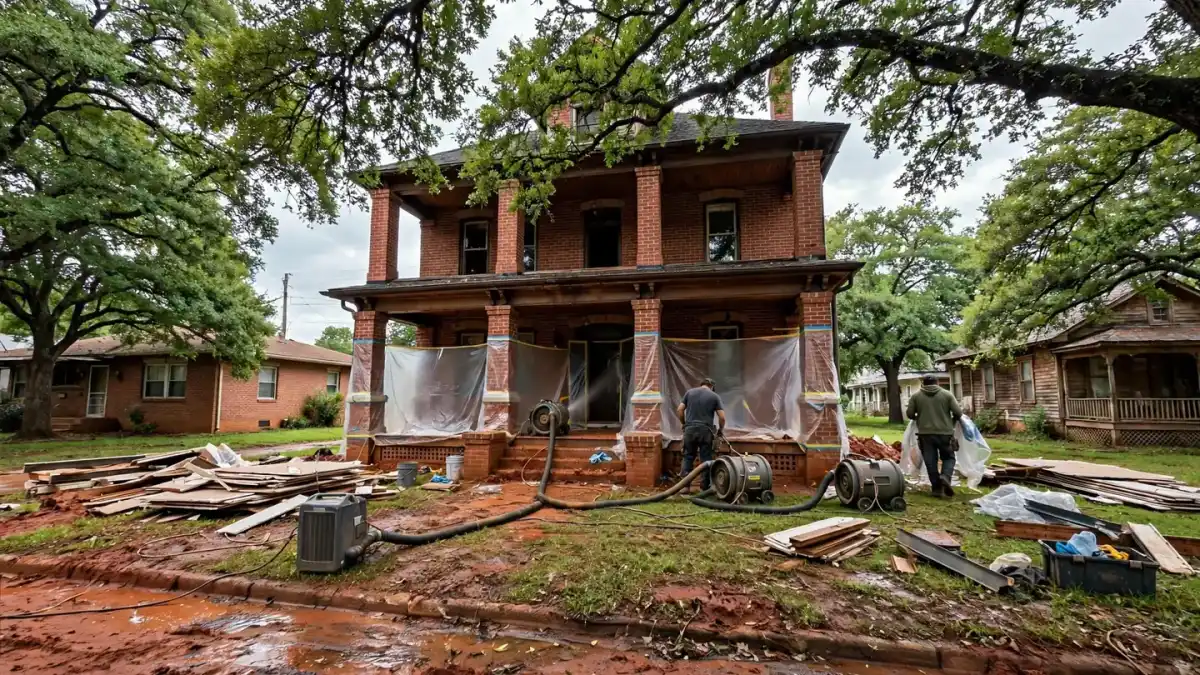
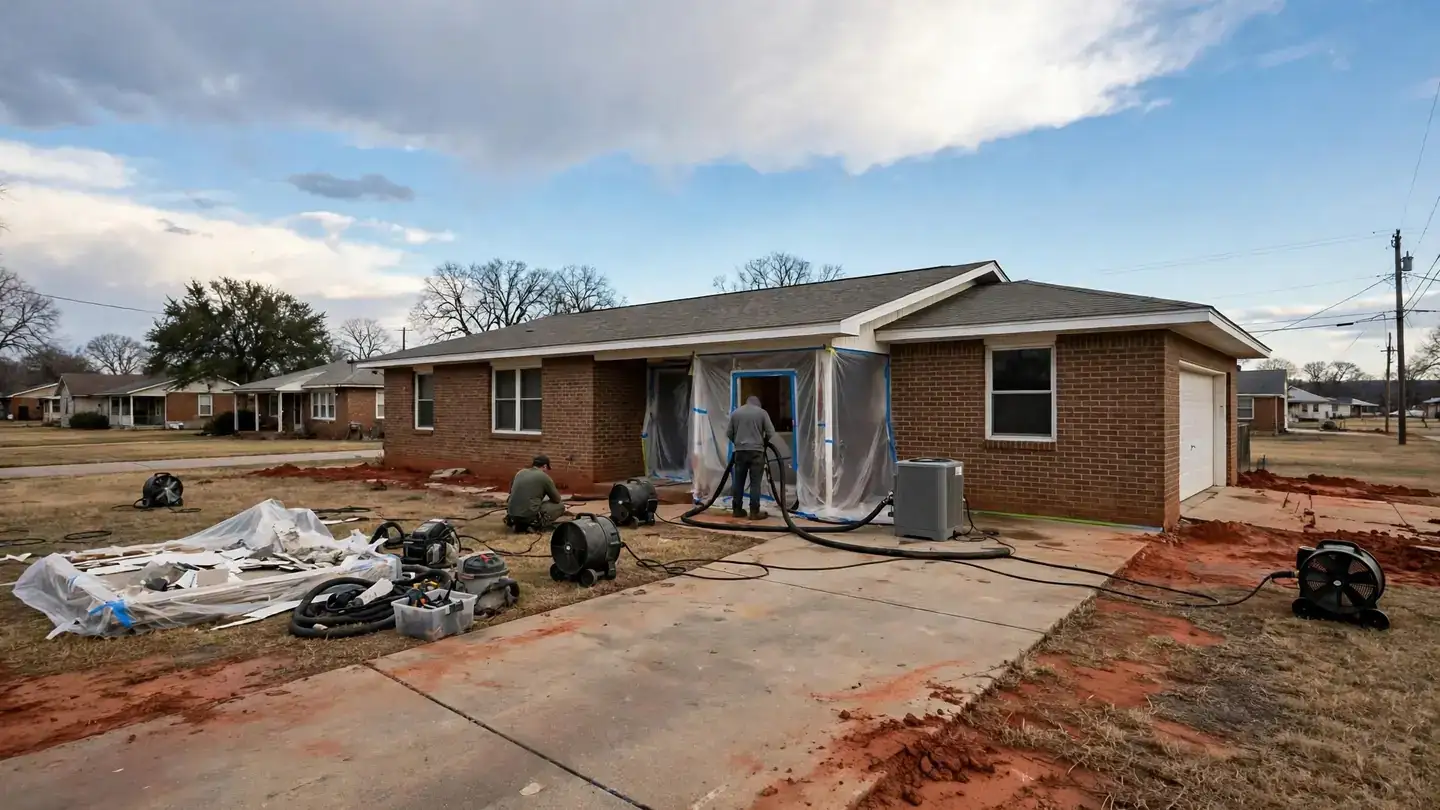
The residential streets around it hold a mix of housing from different eras: small frame houses and cottages from the 1900s and 1910s, bungalows from the 1920s, brick and frame homes from the 1930s and 1940s, and postwar houses on the edges. Many older homes sit on piers or short perimeter foundations over crawlspaces. Over the years, many have been added onto, re-sided and replumbed in stages.
Today Capitol Hill is a lively, largely Hispanic community, and the area along SW 25th Street is known for its shops, restaurants and celebrations. Many homes are owner-occupied by long-time families; others are rentals.
What pros see
Water damage patterns in Capitol Hill
Aging supply lines
Galvanized steel and older copper lines leak at joints in walls and crawlspaces.
Crawlspace water
Leaks and storm runoff collect under pier-built houses on clay soil.
Additions and enclosed porches
Rooms added over the decades often have weaker roofs and foundations, and leak at the joint with the original house.
Sewer line problems
Older clay and cast iron sewer laterals crack or fill with roots.
Storefront roofs
Flat roofs on older Commerce Street buildings leak when drains clog.
Storm runoff
Heavy rain on low ground near the river can push water toward foundations.
Older houses
Frame houses on piers
Many of Capitol Hill's oldest houses are wood-frame homes raised a short distance above the ground on piers, with a crawlspace beneath. The floors are wood joists and plank or plywood subfloors, often covered by several generations of flooring: original wood, then linoleum, then carpet or vinyl. Walls may be plaster, wallboard or paneling, depending on how the house was updated.
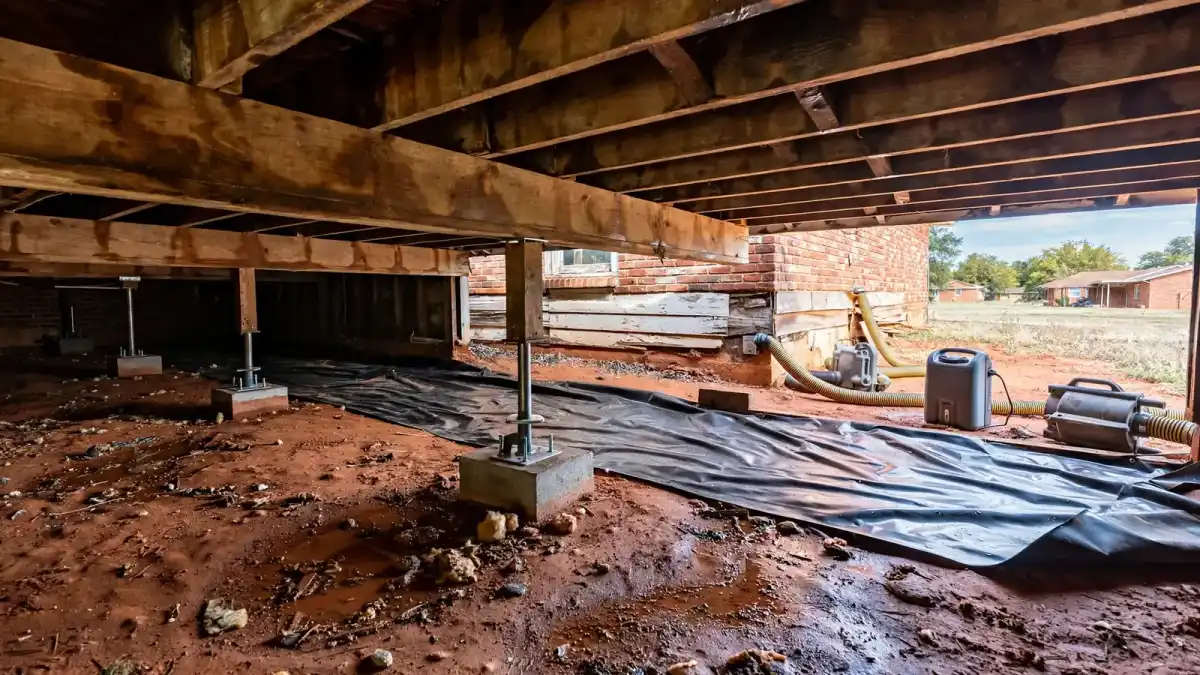
When a pipe leaks in one of these houses, water drains through gaps in the floor into the crawlspace. That can be good news, in that less water pools inside, and bad news, because water in the crawlspace is easy to miss. Wet joists, sill plates and subfloors stay damp, attract termites and can rot over time if the leak continues.
Layered flooring is another issue. Water can get trapped between old linoleum and newer vinyl or under carpet laid over wood. Drying may require lifting some layers to reach the wet subfloor. If very old flooring is involved, ask about asbestos testing before it is removed; some older sheet flooring and adhesives contain it.
Pier-built houses drain leaks into the crawlspace below
River and drainage
Low ground, storm runoff and the river
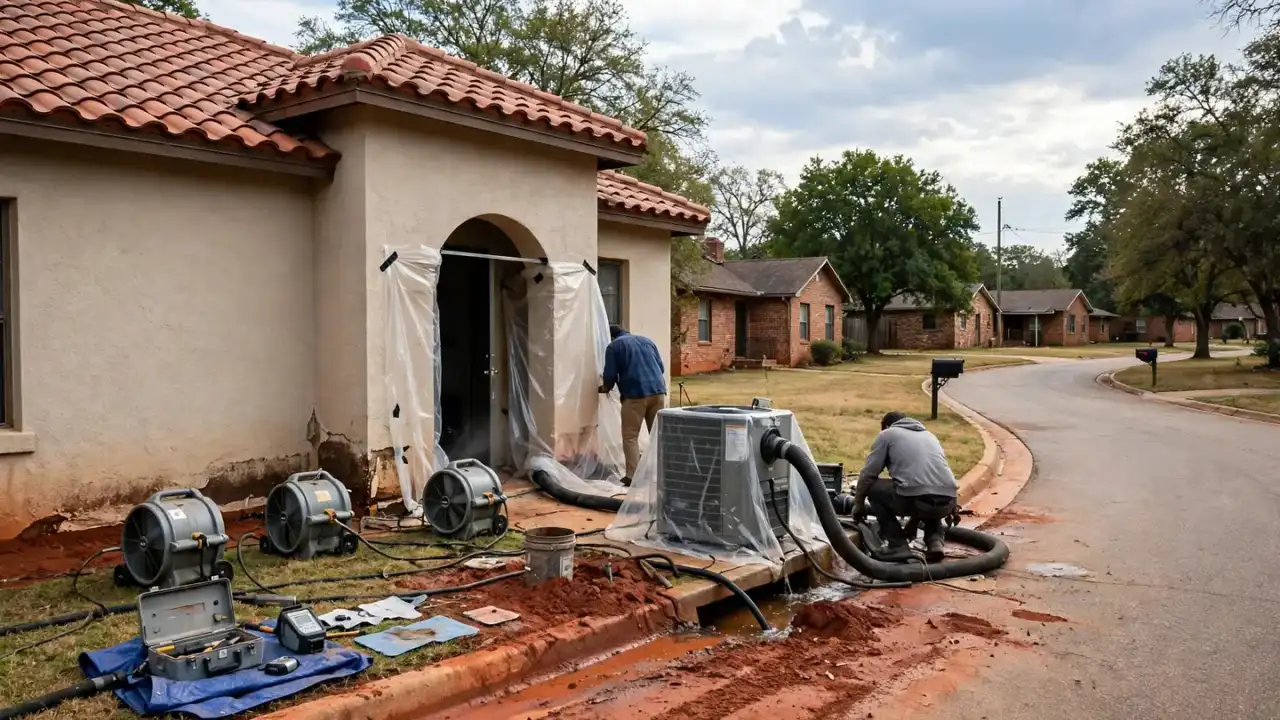
Parts of south Oklahoma City sit on lower ground near the Oklahoma River and its tributary creeks. During intense spring and summer storms, the National Weather Service in Norman may issue flash flood warnings for the metro, and streets and low-lying yards can fill quickly. Water that reaches houses at ground level, running across yards and under doors or into crawlspaces, is surface flooding.
For insurance purposes, that distinction matters. Standard homeowners policies generally exclude flood from rising surface water, and flood coverage comes from the National Flood Insurance Program or private flood insurers [3]. If you live near the river or a creek, check whether your property is in a mapped flood zone and consider flood coverage, which usually has a waiting period before it starts.
Inside the home, floodwater is treated as contaminated, so cleanup includes removing porous materials it touched and cleaning and disinfecting surfaces, in addition to drying.
Sources
Common water sources in Capitol Hill homes and what to do
| Source | Where it shows up | First step |
|---|---|---|
| Leaking supply line | Wet floor, crawlspace, high water bill | Shut the main valve |
| Sewer lateral backup | Lowest drain, tub or toilet | Stop water use; call a plumber |
| Roof leak on an addition | Ceiling stain where addition meets the house | Catch drips; arrange repair |
| Storm runoff | Crawlspace, under doors | Move belongings; photograph; pump and dry |
| Water heater failure | Closet, utility room or back porch | Shut water and power or gas to the heater |
Additions
Enclosed porches and add-on rooms
Over a century, many Capitol Hill houses gained rooms: back porches enclosed as kitchens or laundry rooms, bedrooms added to the side, carports turned into living space. These additions are often built on simpler foundations and covered with low-slope roofs that tie into the original roof. The joint between old and new is a frequent leak point, both at the roof and at the floor.
Water from a roof leak at that joint may run down inside the wall and appear as a stain or soft spot in either room. Water from a laundry or kitchen in an enclosed porch can run under the original house. Drying needs to account for both parts of the building, and repairs may need to address the roof transition itself.
Sewer lines
Older sewer laterals and backups
Homes in older parts of Oklahoma City often still have clay tile or cast iron sewer laterals connecting the house to the public main. Clay joints let tree roots in, and cast iron corrodes over decades. Backups appear first at the lowest drain, which in a pier-built house might be a tub or a floor drain in a laundry area.
Property owners are generally responsible for their own sewer lateral, while the city maintains the public mains [6]. If several neighbors have backups at once, contact the city's utilities department. Sewage inside the home calls for cleaning and disinfection, not just drying; see our sewage backup cleanup page for what that involves.
Commerce Street
Storefronts and mixed-use buildings
Commerce Street's historic storefronts are mostly one- and two-story masonry buildings with flat roofs, shared walls and, in some cases, apartments or offices upstairs. Flat roofs drain through internal drains or scuppers, and clogged drains during storms lead to ponding and leaks. Leaks in one storefront can reach the next through shared walls and roof structures.
Business owners and building owners should know who is responsible for the roof and plumbing under the lease. Commercial policies may include business income coverage for a closure caused by a covered loss. Document damage and lost business days carefully.
Do this now
What to do right after a leak in a Capitol Hill home
- Shut off the water at the main valve if the leak is from plumbing.
- Turn off power to wet rooms if you can reach the panel safely.
- Move furniture, rugs, papers and electronics away from the water.
- Photograph the damage and the source before cleanup.
- If water may have reached the crawlspace, note any sounds of running water or damp smells; do not crawl in yourself.
- If you rent, notify your landlord in writing.
- Call a plumber for the source and a restoration contractor for the water.
Permits
Permits for repairs in Capitol Hill
Oklahoma City's Development Services Department issues building, plumbing, electrical and mechanical permits throughout the city, including Capitol Hill [5]. Drying and removing wet materials do not usually need a permit. Repiping, water heater replacement, sewer line replacement, rewiring and structural repairs to joists or piers usually do.
Older houses sometimes reveal past work that was not up to code once walls or floors are opened. Your contractor can explain what needs correcting as part of the repair.
Planning a visit
Preparing for a contractor visit in Capitol Hill
- 1
Stop the water
Shut the main valve or stop using drains if a sewer line is involved.
- 2
Describe the house
Mention the age, whether it is on piers and whether there are additions.
- 3
Locate the opening in the skirting
Locate the hatch or opening in the skirting.
- 4
Gather documents
Have your policy, and if you rent, your landlord's contact details.
- 5
Plan access
Mention driveway or alley access and any parking limits.
- 6
Language preference
If you prefer to speak in Spanish, say so at the start of the call so the contractor knows.
Termites
Moisture, termites and wood decay
Wood that stays damp invites trouble. Subterranean termites are common in Oklahoma and are drawn to moist wood in contact with or close to soil, which describes the sills and joists of many older pier-built houses after a leak. Wood decay fungi also need sustained moisture. A leak that is fixed and dried promptly rarely leads to either, but a slow crawlspace leak that runs for months can.
When the crawlspace is dried after a water loss, ask the contractor to note any signs of termite tubes, damaged wood or soft sills, and to photograph them. A pest control company can inspect and treat if needed, and a carpenter can repair damaged framing before the floor is closed up.
Family homes
Multi-generation homes and keepsakes
Many Capitol Hill homes have been in the same family for generations, filled with photographs, religious items, documents and keepsakes that cannot be replaced. When water damage happens, these are often the first concern. Move them to a dry place quickly, keep photos and papers flat, and do not try to separate stuck photographs.
Wet photographs and documents can be frozen in sealed plastic bags to stop mold until they can be dried properly. Ask the restoration contractor how they handle sentimental items during cleanup, and photograph everything before it is moved for your insurance claim.
Winter
Freezing weather and pier-built houses
Houses raised on piers have cold air under the floor all winter. Supply lines in the crawlspace, along exterior walls and in enclosed porches are especially exposed. During the hard freezes that reach central Oklahoma in some winters, those pipes can freeze and split, then leak when temperatures rise.
Before a freeze, cover foundation vents or gaps in the skirting, insulate exposed pipes, open sink cabinets on exterior walls and let faucets drip. Keep the heat steady day and night. If you leave the house during a cold spell, shut off the main valve and drain the lines.
Renters
Renting in Capitol Hill
A number of Capitol Hill houses and small apartment buildings are rentals. When water damage happens, the owner is generally responsible for the building, the plumbing and the roof, while tenants are responsible for their own belongings. Renters insurance covers personal property if the tenant carries it, and many policies include temporary housing if the home cannot be lived in.
Tell the landlord about any leak right away and in writing, even a small one, and keep a copy. Photograph your belongings and the damage. If the landlord is slow to respond and the damage is getting worse, keep documenting it and consider contacting local tenant resources for advice. Prompt drying protects everyone's interests.
Mold
Mold and musty smells in older homes
Older pier-built houses often have a faint earthy smell from the crawlspace, but a strong or new musty odor after a leak means moisture is lingering. EPA advises drying water-damaged materials within 24 to 48 hours to help prevent mold growth [4]. In houses with layered flooring or paneled walls, mold can grow out of sight between layers.
If you smell mustiness, look for stains, warped flooring or soft spots, and have the area checked with a moisture meter. Removing wet materials, drying the structure and fixing the source are the reliable fixes. Bleach on visible spots does not reach mold inside porous materials.
Insurance
Insurance questions in Capitol Hill
Homeowners policies commonly cover sudden and accidental water damage, such as a burst pipe or a failed water heater. Damage from long-term leaks, wear and tear or poor maintenance is usually excluded. Floodwater from outside generally requires flood insurance, and sewer backups usually need a water backup endorsement.
Report the loss quickly, describe the source accurately and provide photos. Keep the plumber's invoice showing what failed. The Oklahoma Insurance Department can help if you have problems with a claim [7]. If English is not your first language and you need help understanding your policy, ask your agent or insurer whether they can explain it in your preferred language.
Materials
Older Capitol Hill materials and water damage
| Material | Usual response |
|---|---|
| Plank or plywood subfloor on joists | Dry from below in the crawlspace; replace if decayed |
| Layered vinyl, linoleum and carpet | Lift layers to reach wet subfloor; test old flooring for asbestos |
| Wood paneling | Dry or remove; check the wall behind |
| Plaster or old wallboard | Dry if sound; replace if crumbling |
| Galvanized supply lines | Repair or replace failed sections |
| Clay or cast iron sewer lateral | Camera inspection; repair or replace |
Seniors
Helping older homeowners after water damage
Capitol Hill has many long-time homeowners, some of them older adults living alone. Water damage can be especially hard for them: lifting wet items, finding the main valve, understanding an insurance policy and living around drying equipment. Family and neighbors are often the first help.
If you are helping an older relative, start by shutting off the water and making the house safe, then gather their policy and medications. Ask the contractor to explain the plan in plain language, to give written updates and to tell you which rooms will be off limits. Keep receipts and notes in one folder.
Water heaters
Water heaters on back porches and in closets
In older Capitol Hill houses, the water heater may sit on an enclosed back porch, in a utility closet or in a small room added to the house. Those spaces are sometimes less protected from cold and may not have drain pans or floor drains. When a tank fails, water spreads across the floor and into the crawlspace or the rest of the house.
Know where the cold-water valve on top of the heater is, and how to turn off its power or gas. A drain pan with a line to the outside and a simple leak alarm can limit damage. Heaters in unheated porches should be protected from freezing in winter.
Gutters
Gutters, downspouts and grading
Many water problems in pier-built houses start outside. Missing or clogged gutters dump roof water right at the foundation, and downspouts that empty against the house send water straight under it. Over decades, soil and landscaping can build up so the ground slopes toward the house instead of away from it.
After a storm-related water problem, walk around the house in the next rain and watch where the water goes. Cleaning gutters, extending downspouts several feet away and regrading beds so water flows away from the foundation are simple, effective fixes that keep the crawlspace drier.
Staying home
Living in a small house during drying
In a small house, drying equipment can fill much of the living space, and the noise runs day and night. If a bathroom or kitchen is involved, or if sewage or floodwater was present, staying with family or in temporary housing for a few days is often more comfortable and safer. Ask the contractor how long the equipment will run and which rooms will be closed off.
FAQ
Capitol Hill water damage questions
Water from my leak disappeared under the house. Is that a problem?
Yes. Water in the crawlspace can keep joists, sills and subfloor damp, leading to mold, rot and termites. The crawlspace should be checked and dried.
Is storm water coming into my house covered by insurance?
Water from rising surface flooding is generally excluded from standard homeowners policies and needs flood insurance. Water that enters because a storm damaged the roof may be treated differently.
Why does water stain the ceiling where my addition meets the house?
The roof joint between the original house and an addition is a common leak point. A roofer should repair the transition before the ceiling is dried and repaired.
Does old flooring need testing before removal?
Some older sheet flooring and adhesives contain asbestos. Testing before removal protects your family and the crew.
Is the city responsible for my old sewer lateral?
No, the lateral from your house to the street is generally yours; the city looks after the public main. If several neighbors back up at once, report it to the city.
Do I need a permit to repair water damage?
Drying does not. Repiping, water heater replacement, sewer line work and structural repairs usually need permits from Development Services.
Can termites be a problem after a water leak?
Moist wood near soil attracts termites, especially under pier-built houses. Dry the crawlspace promptly and have damaged wood inspected.
My elderly parent had a leak. Where do I start?
Shut off the water, make sure the house is safe, then call the insurer and arrange drying. Keep notes and receipts in one place and ask for written updates.
Sources and citations
- [1]Metropolitan Library System: Capitol Hill history
- [2]Wikipedia: Capitol Hill, Oklahoma City
- [3]FEMA FloodSmart: National Flood Insurance Program
- [4]U.S. EPA: A brief guide to mold, moisture and your home
- [5]City of Oklahoma City: Development Services
- [6]City of Oklahoma City: Utilities
- [7]Oklahoma Insurance Department