Key facts: Paseo
- The Paseo was developed in 1929 by G. A. Nichols as a Spanish-style village, the earliest shopping district built north of the city's downtown [1].
- The district's buildings are known for stucco walls and clay tile roofs [1].
- The Paseo neighborhood is one of Oklahoma City's historic preservation districts, where exterior changes need review [2].
- Fixing the moisture source and drying within 24 to 48 hours is EPA's key advice for preventing mold [3].
Coverage
Paseo addresses and ZIPs covered
Calls from the Paseo and surrounding blocks in ZIPs 73103 and 73118 can be connected to an independent contractor, including homes and studios along Paseo Drive, NW 28th through NW 30th Streets and the streets between Walker and Lincoln.
- ZIP 73103: southern Paseo blocks and nearby Mesta Park side
- ZIP 73118: northern Paseo blocks toward Crown Heights
- Addresses outside the covered ZIPs may not be connected
The neighborhood
The Paseo's buildings and homes
The Paseo began in 1929, when developer G. A. Nichols built a Spanish-style shopping village along the curve of Paseo Drive, near NW 28th Street and Walker Avenue. It was the earliest shopping district built north of the city's downtown, and its stucco buildings with clay tile roofs still define the area [1]. Over the following decades it went through cycles of decline and revival, and since the late 1970s it has been known as an arts district with galleries, studios and restaurants.
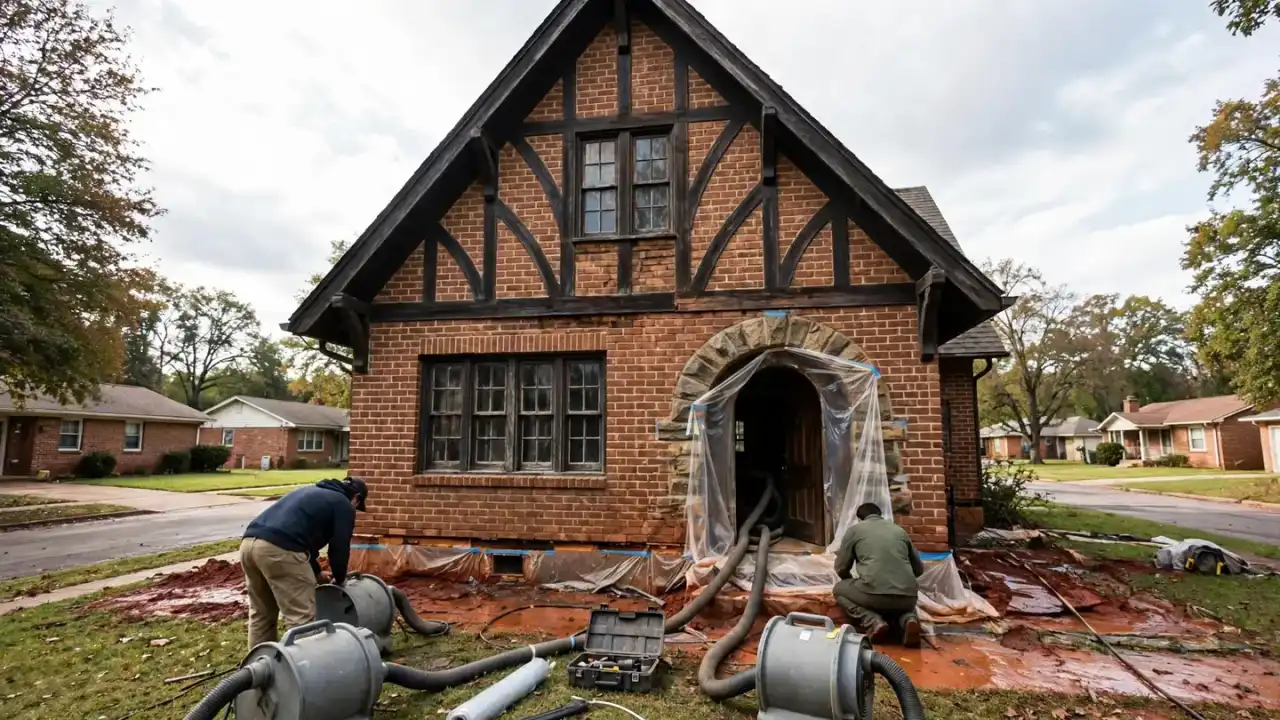
Around the commercial core are residential streets of homes built mostly from the 1920s into the 1940s: bungalows, Spanish and Mission Revival cottages with stucco walls, Tudor-influenced houses and small apartment buildings. Many have pier-and-beam foundations, original wood floors, plaster interiors and later additions. The Paseo neighborhood is one of the city's historic preservation districts [2].
Many buildings in the Paseo serve more than one purpose: a gallery downstairs with an apartment above, a house converted into studios, or a home with a backyard workshop. That mix affects who is responsible when water damage happens and what needs protecting.
What pros see
Water damage patterns common in the Paseo
Parapet and flat roof leaks
Low-slope roofs behind stucco parapets drain through scuppers that clog and overflow in heavy rain.
Water behind stucco
Cracks in stucco let water into the wall, where it can travel unseen to the inside.
Clay tile roof issues
Broken or slipped tiles let water reach the underlayment and roof deck.
Crawlspace water
Pier-and-beam homes collect water under the floor after storms or leaks.
Studio and gallery contents
Artwork, supplies and equipment are vulnerable to even small leaks.
Upstairs apartments
Leaks from apartments above commercial spaces drop through to galleries below.
Flat roofs
Flat roofs, parapets and scuppers
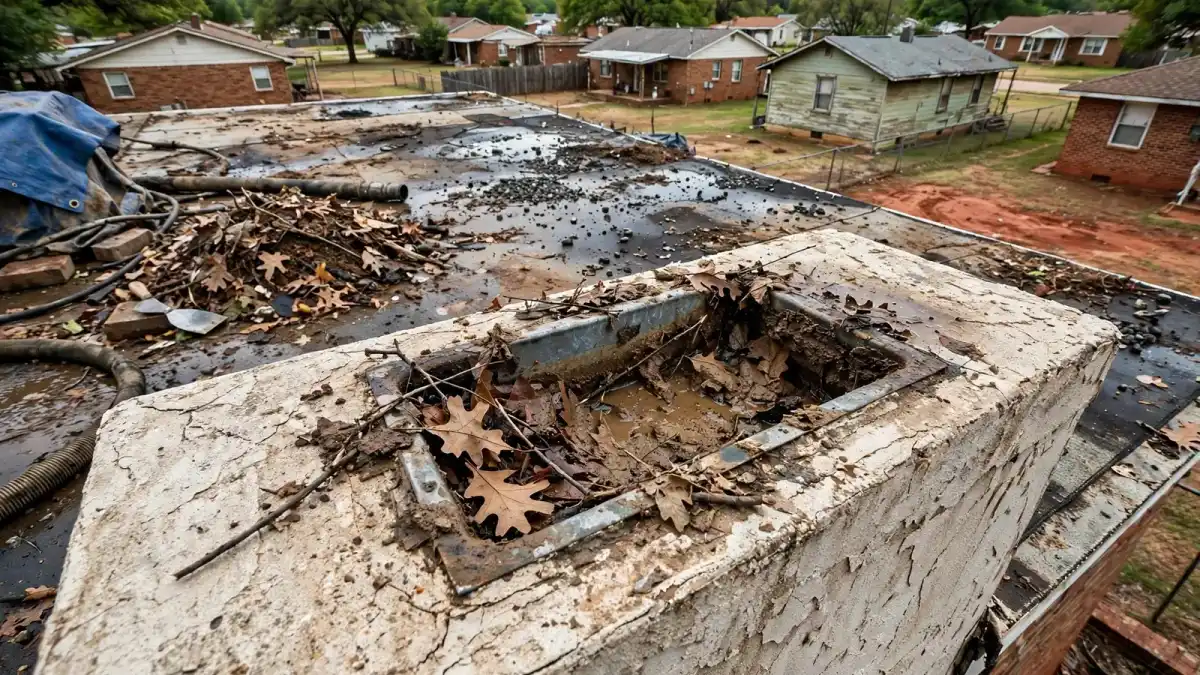
Many Spanish and Mission Revival buildings in the Paseo have low-slope or flat roofs hidden behind stucco parapet walls. Water drains off these roofs through scuppers, which are openings in the parapet, or through internal drains. When leaves, debris or hail clog a scupper, water pools on the roof. In a heavy Oklahoma thunderstorm, that pool can rise above the roofing membrane's edge or find a seam and leak into the ceiling below.
Parapet caps and the joint where the roof membrane turns up the inside of the parapet are other weak points. Cracked caps let water into the top of the wall, where it runs down inside the stucco. Leaks from these spots often appear far from where water entered, as a stain on an interior wall or ceiling some distance away.
After a leak, the roof needs repair before drying can succeed. The restoration contractor dries the ceiling and walls below, and the roofer clears drains, repairs the membrane and seals the parapet. Keeping scuppers clear, especially in spring storm season and fall leaf season, prevents many of these leaks.
Clogged scuppers let water pool on flat roofs
Stucco
Water behind stucco walls
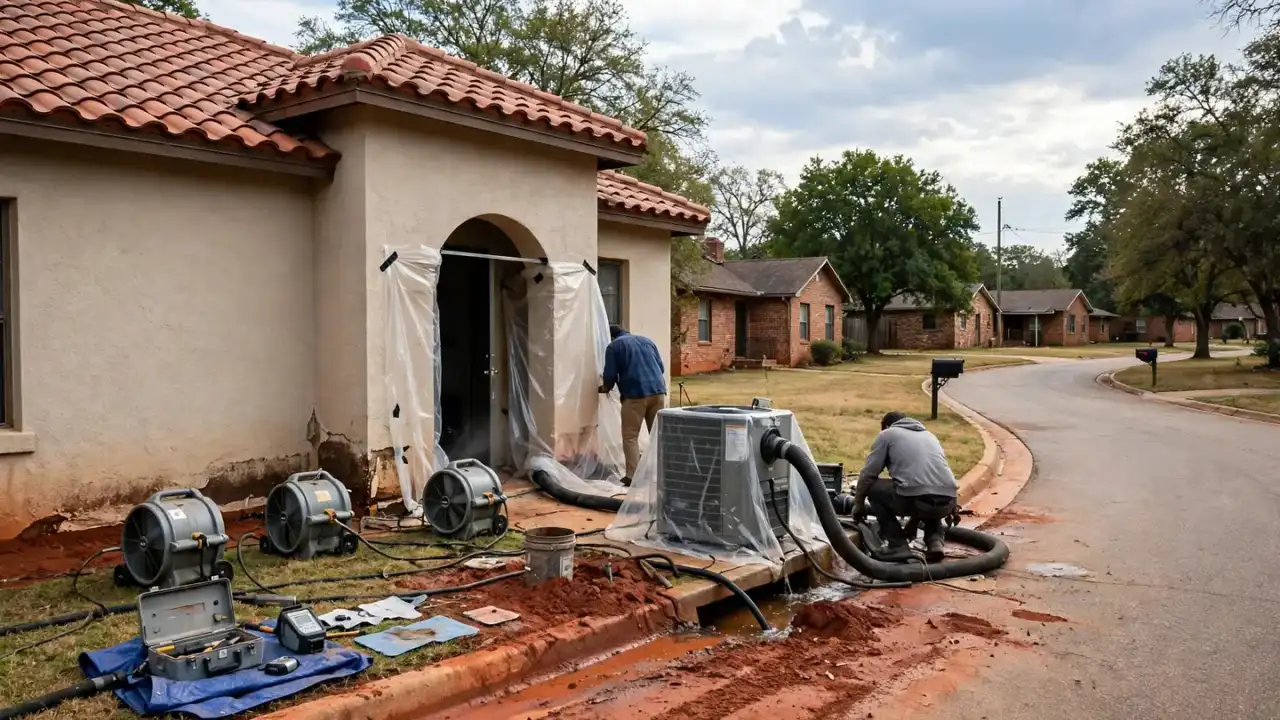
Traditional stucco is a durable cement-based finish, but it is not waterproof. It depends on a weather-resistant barrier behind it and on flashing at windows, doors and roof edges to keep water out of the wall. Over decades, stucco cracks, flashing deteriorates and the barrier behind it can fail. Water that gets in through those gaps soaks the wall sheathing and framing and may stay there for a long time, because stucco dries slowly.
Signs of water behind stucco include staining or efflorescence (white mineral deposits) on the outside, bubbling paint or stains on inside walls, soft spots around windows, and musty smells. Moisture meters and thermal cameras can help find wet areas without tearing into the wall. Repairs may involve opening the stucco around the problem, drying and repairing the framing, and restoring the barrier and flashing before new stucco is applied.
Because the Paseo is a historic preservation district, stucco repairs that change the exterior appearance may need review. Matching texture and color is part of good stucco repair anyway.
Exterior
Paseo exterior features and water entry points
| Feature | Weak point | What to watch for |
|---|---|---|
| Stucco walls | Cracks, failed flashing at openings | Stains inside, efflorescence outside |
| Parapet walls | Cracked caps, membrane edges | Leaks along walls below the roof edge |
| Flat roofs | Clogged scuppers and drains, seams | Ponding after storms, ceiling stains |
| Clay tile roofs | Broken or slipped tiles | Attic moisture, deck rot |
| Arched windows and doors | Old flashing and sills | Water at window corners |
| Pier-and-beam foundations | Water under the house | Musty odor, soft floors |
Studios
Protecting galleries, studios and artwork
The Paseo's galleries and studios hold paintings, works on paper, sculpture, ceramics, textiles, photographs and the supplies and equipment artists depend on. Water damage there is a different kind of loss: much of the work is one of a kind. A leak from an upstairs apartment, a clogged roof drain or a burst pipe in winter can do serious harm in a short time.
If water reaches artwork, move pieces to a dry space, keep works on paper flat, and do not try to separate stuck sheets or wipe wet paint. Wet paper and photographs can be frozen in sealed bags to stop mold until a conservator can treat them. Canvas should be kept upright and allowed to dry slowly away from direct heat. Contact a conservator for valuable pieces.
For the building, the restoration contractor handles extraction and drying, but tell them what is stored in the space so they can protect it. Commercial tenants should check their business property coverage, which is separate from the building owner's policy.
Historic district
Historic preservation review in the Paseo
As a city historic preservation district, the Paseo has rules for exterior changes visible from the street [2]. Repairing stucco, replacing roofing, changing windows or doors and altering parapets may need a Certificate of Appropriateness before work starts. Staff can approve many routine repairs administratively.
Interior water damage work, drying, removing wet materials and rebuilding inside, does not need historic review. Building, plumbing, electrical and mechanical permits come from Development Services [4]. Starting the historic review early means you will not be waiting for approval when the interior work is done.
Permits
Approvals that may apply in the Paseo
- Certificate of Appropriateness for exterior changes in the historic preservation district [2].
- Building and trade permits from Oklahoma City Development Services [4].
- Lead-safe practices for painted surfaces in pre-1978 buildings [6].
- Commercial building owners may need to coordinate with tenants for access and business interruption.
Clay soil
Crawlspaces and clay soil under Paseo homes
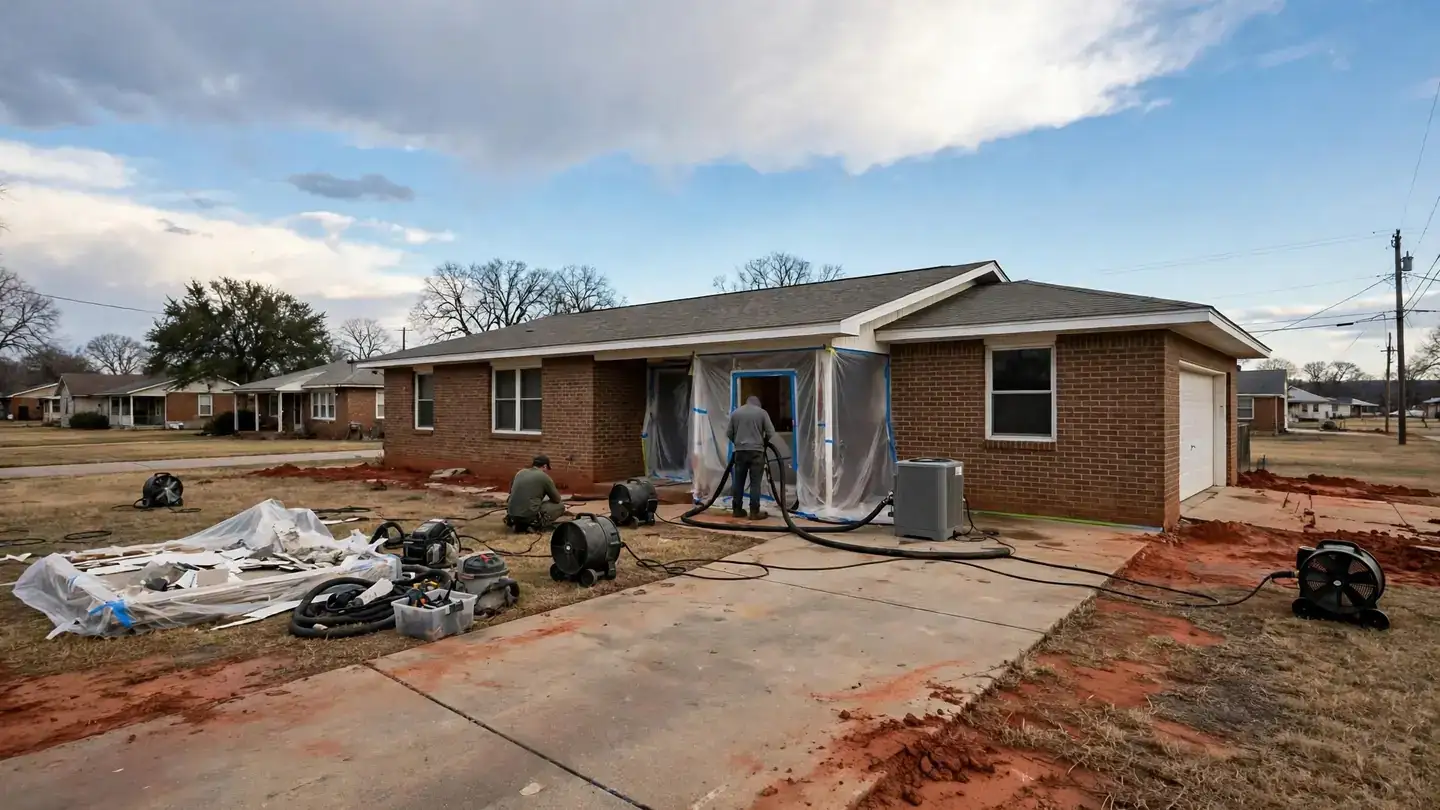
Many Paseo houses sit on pier-and-beam foundations over a shallow crawlspace. Central Oklahoma's clay soils swell when wet and shrink when dry [5], and after heavy rain the soil under a house can stay saturated and muddy for days. Water also enters crawlspaces from leaks above and from runoff when the grade slopes toward the house.
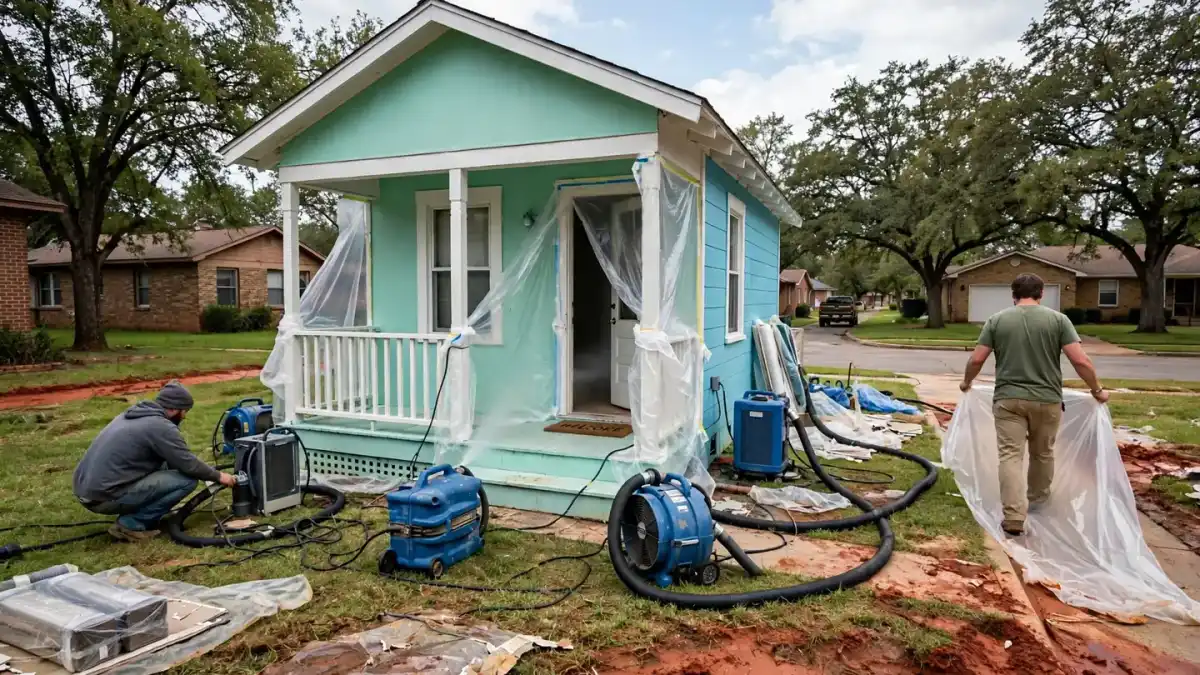
A wet crawlspace keeps the floor above damp, encourages mold on joists and subfloor, and can bring musty odor into the house. Drying usually means pumping standing water, removing wet insulation or debris, and running dehumidifiers under the house. Improving gutters, downspout extensions and grading afterward helps keep water out.
Planning a visit
Preparing for a contractor visit in the Paseo
- 1
Stop the leak or catch the drips
Shut off the supply or, for a roof leak, catch the drips and move contents away.
- 2
Describe the building
Say whether it is a house, a studio, a gallery or an apartment above a business.
- 3
Point out roof type
Mention a flat roof with parapets, clay tile or a pitched shingle roof.
- 4
List valuable contents
Identify artwork, equipment or inventory that needs priority protection.
- 5
Plan access and parking
Paseo Drive is busy during events; mention alley access or parking options.
- 6
Contact other parties
Let the building owner, tenants or management know about the leak.
Clay tile
Clay tile roofs and their underlayment
Some Paseo buildings carry clay tile on pitched roof sections, a defining feature of the Spanish village style. Clay tile itself can last a very long time, but it is brittle. Hail, falling branches and people walking on the roof can crack or dislodge tiles. The real weatherproofing is the underlayment beneath the tiles, and on older roofs that layer may be near the end of its life even when the tiles look fine.
Leaks under clay tile often show up as stains on ceilings or walls near the roof edge. Repairs require roofers who know tile: removing tiles carefully, replacing underlayment and resetting or replacing tiles to match. Temporary protection should avoid walking on and cracking more tiles.
Mixed use
Apartments above galleries and shops
Several Paseo buildings have apartments or studios above ground-floor galleries and businesses. A leak from an upstairs kitchen, bathroom or water heater can drop through the floor into the business below in minutes. Responsibility is usually divided: the building owner handles the structure and building plumbing, the upstairs tenant's renters policy covers their belongings, and the downstairs business's policy covers its contents and possibly lost business income.
Everyone involved should report the leak and document their own losses promptly. Drying usually involves both spaces at once, so coordination between tenants and the owner about access and working hours helps the job move faster.
Events
Water damage during art walks and festivals
The Paseo hosts regular art walks and an annual arts festival that bring large crowds to the district. A water leak in the middle of an event creates practical problems: access for drying equipment, parking for service vehicles and the need to keep visitors away from wet floors and electrical hazards.
If a leak happens during a busy event, close the affected space, put up signs and move artwork and visitors away. Tell the contractor about the event when you call so they can plan access, and coordinate with the district or building owner about equipment placement until crowds clear.
Bungalows
Paseo bungalows and cottages
Away from the commercial curve, the Paseo's residential streets are lined with small houses: Craftsman bungalows with front porches, stucco cottages with arched entries, and a few duplexes and fourplexes. Many have been lovingly renovated by owners who value original details such as built-in cabinets, coved ceilings, arched doorways and tile bathrooms from the 1920s and 1930s.
Those original bathrooms are worth special care after a leak. Vintage tile set in a mortar bed is often durable and can be dried and kept, but the plumbing behind it may be old galvanized or cast iron. If a supply line or drain fails inside a tiled wall, ask whether the leak can be reached from an adjoining closet or the crawlspace before tile is removed. A good plan can save much of the original work.
Winter
Frozen pipes in small older homes
Paseo cottages often have plumbing in exterior walls and in the crawlspace beneath the floor, both exposed to cold. During a hard freeze, open cabinet doors under kitchen and bathroom sinks, let a faucet drip, and close or cover crawlspace vents if the house has them. Many older homes have little insulation, so keeping the heat steady around the clock is important.
If a pipe bursts in the crawlspace, water can run for some time before anyone notices because it drains straight into the soil. Watch for a sudden drop in water pressure, a running sound under the floor or a jump in the water meter. Shut the main valve and call a plumber; the restoration contractor can then pump and dry the crawlspace.
Renters
Renters in the Paseo
A good share of Paseo residents rent, whether a bungalow, a unit in a small apartment building or a studio space. The owner is generally responsible for the building and its plumbing and roof. Tenants are responsible for their own belongings and, for businesses, their inventory and equipment, which their own policies cover if they carry them.
Report leaks to the owner or manager promptly and in writing, photograph your belongings and any damage, and keep receipts for anything you have to replace or for temporary housing. Ask the owner when drying will start and how long the space may be out of use.
Mold
Mold in stucco walls and crawlspaces
Water trapped behind stucco and in damp crawlspaces dries slowly, which gives mold time to grow. EPA's guidance is to fix the water problem and dry materials within 24 to 48 hours where possible [3]. In stucco walls that is not always achievable because the water is hidden, so finding the source quickly matters.
A persistent musty smell inside, especially near exterior walls or in closets, is worth investigating with a moisture meter. If mold is found inside a wall, the affected section is opened, cleaned or removed and dried, and the exterior leak is fixed before the wall is closed.
Seasons
Seasonal water risks for Paseo buildings
| Season | Main risk | What to check |
|---|---|---|
| Spring | Heavy storms, hail | Scuppers, roof drains, tile and parapet caps |
| Summer | Intense downpours | Ponding on flat roofs, crawlspace water |
| Fall | Leaves clogging drains | Gutters, scuppers, downspouts |
| Winter | Hard freezes, ice | Pipes in exterior walls and crawlspaces |
Business owners
Business interruption for Paseo galleries and shops
For a gallery, studio or restaurant, water damage means more than repairs; it can mean closing for days or weeks. Commercial policies sometimes include business income coverage, which can replace lost income during a covered shutdown, and extra expense coverage for steps that shorten the closure. Read your policy or ask your agent what applies.
Keep records of the days you were closed, sales from comparable periods and any extra steps you took to reopen faster, such as renting temporary space or storage. Ask the restoration contractor for a realistic drying timeline in writing; it helps both your planning and your claim.
Insurance
Insurance questions for Paseo owners
Whether a water loss is covered depends on the source and your policy. Sudden plumbing failures are often covered; long-term leaks behind stucco, roof wear and gradual seepage often are not. Water entering from surface flooding generally needs flood insurance. Sewer backups typically require a specific endorsement.
For roof leaks after hail or wind, the storm damage to the roof is usually the key question; interior water damage that follows is often handled with it. Photograph the roof damage, the interior stains and the date of the storm. The Oklahoma Insurance Department provides consumer help if you run into trouble with a claim.
FAQ
Paseo water damage questions
Why does my flat roof leak during heavy storms?
Clogged scuppers or drains let water pool behind the parapet until it finds a seam or rises over the membrane edge. Clearing drains and repairing the membrane edges usually helps.
Can water get through stucco?
Yes. Stucco is not waterproof on its own. Cracks and failed flashing let water into the wall, where it can travel to the inside unseen.
Do stucco repairs need historic approval?
Exterior changes in the Paseo historic preservation district may need a Certificate of Appropriateness. Like-for-like repairs are often approved administratively.
What should I do if water reaches artwork?
Move it to a dry area, keep works on paper flat, do not wipe wet surfaces and contact a conservator. Wet paper can be frozen to stop mold.
Who handles a leak from an apartment above my gallery?
The building owner usually handles the structure, while each tenant's own policy covers their contents and business property. Report it in writing and document everything.
Why does my crawlspace stay wet after rain?
Clay soil holds water and drains slowly. Grading, gutters and downspout extensions help, and dehumidifiers dry the space after a leak.
Can original 1920s tile be saved after a leak?
Often. Tile set in a mortar bed is durable and can be dried. Ask whether the leak can be reached from behind or below before removing tile.
Do clay tile roofs leak?
The tiles themselves last a long time, but broken tiles and worn underlayment let water through. A roofer experienced with tile should repair them.
Is water behind stucco covered by insurance?
It depends on the cause. Damage from a sudden event may be covered; slow leaks from aging flashing or cracks are often treated as maintenance. Read your policy and document what you find.
How often should scuppers and roof drains be cleared?
At least each spring and fall, and after big storms. Leaves, hail and debris build up quickly on flat roofs, and a clogged outlet is one of the most common causes of Paseo roof leaks.
Who issues permits for repairs in the Paseo?
Oklahoma City's Development Services Department issues building and trade permits. Exterior changes in the historic district also need historic preservation review.