
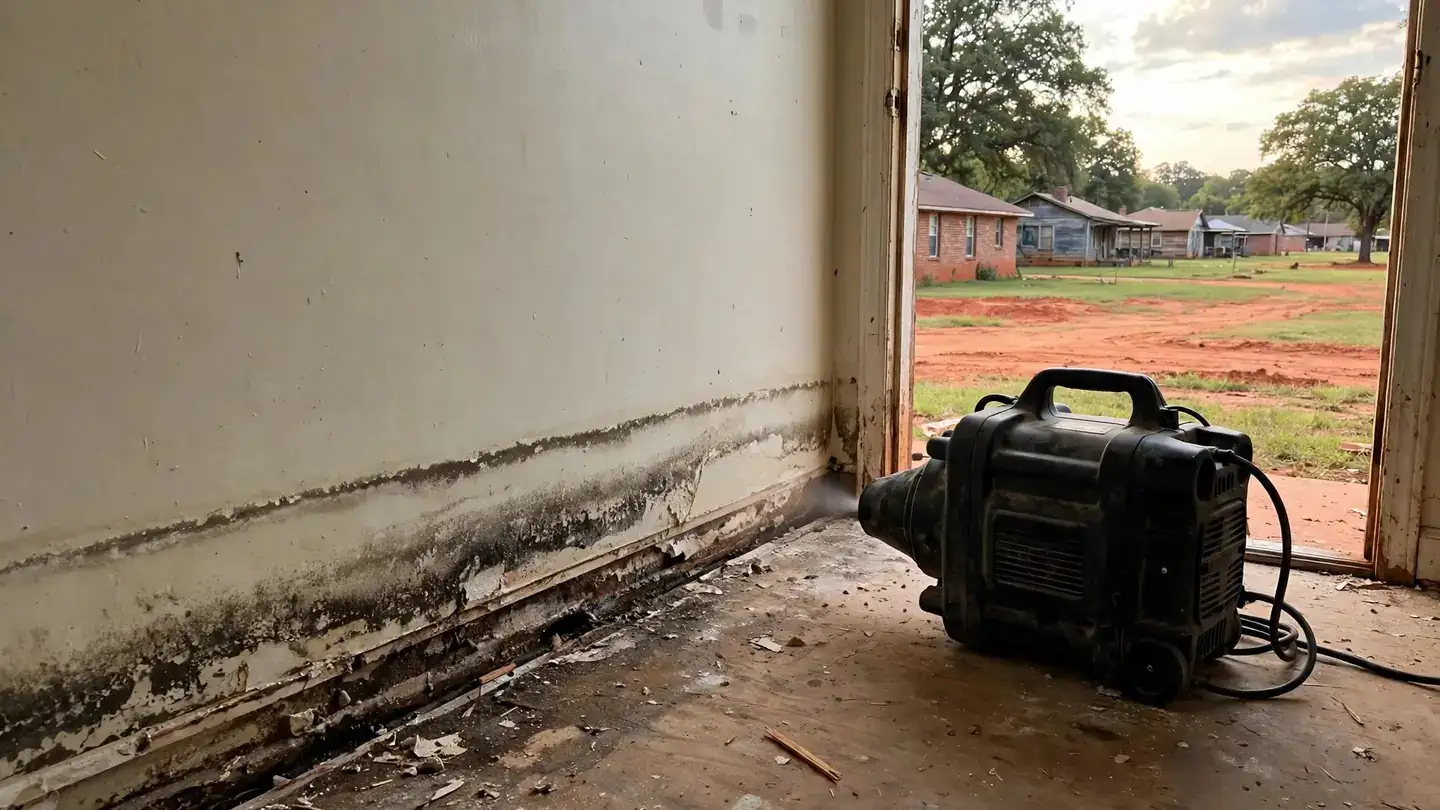
Key facts: How long drywall takes to dry
- With professional dehumidifiers and air movers, lightly wet drywall often dries in one to three days.
- Drywall feels dry on the surface long before the gypsum core and the framing behind it are dry; meters decide.
- Walls left damp past the first one to two days risk mold, which is why EPA stresses drying in that time [1].
- Drywall soaked by sewage or floodwater is generally removed rather than dried [2].
Short answer
How long drywall takes to dry: the short answer
Lightly wet drywall usually dries in one to three days with professional dehumidifiers and air movers. Drywall that was wet for a long time, wet on both sides, painted with vinyl or oil-based coatings, or backed by wet insulation can take longer or may need removal. On its own, without equipment, drywall in a closed house can stay damp for a week or more, which is long enough for mold to start [1].
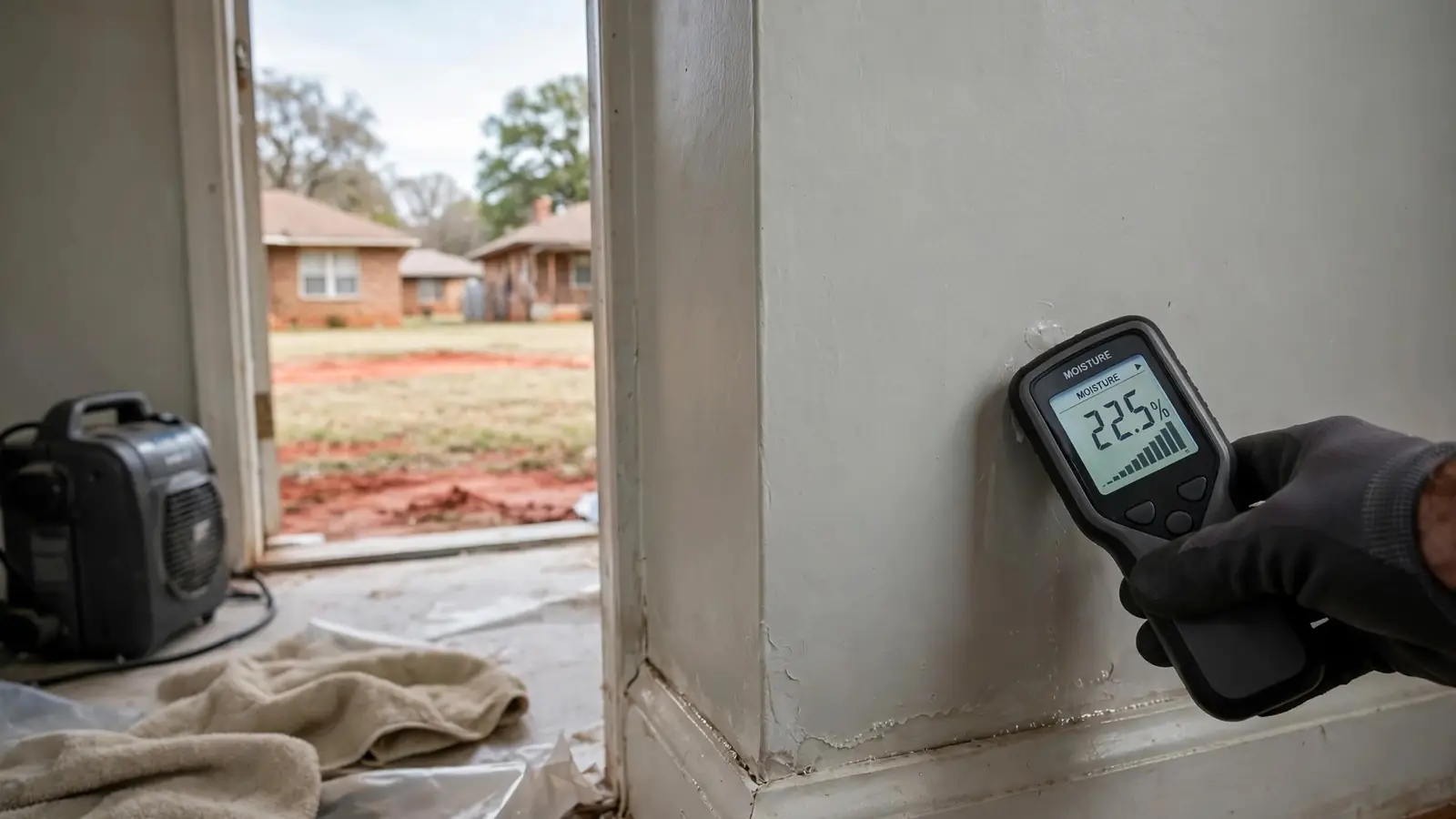
The only reliable way to know is to measure. Readings from a moisture meter, compared with dry walls elsewhere in the house, tell you when the wall is truly dry.
At a glance
Drywall situations and what usually happens
| Situation | Likely outcome | What to do |
|---|---|---|
| Clean water, wet for a few hours | Can usually be dried in place | Start drying; measure daily |
| Clean water, wet for several days | Often cut out at the wet line | Check for mold; remove damaged sections |
| Gray or black water | Removed above the wet line | Clean, disinfect and dry the framing |
| Ceiling drywall sagging | Replaced | Keep people out from under it |
| Soft, crumbling or swollen | Replaced | Dry the framing before patching |
| Wet insulation behind it | Insulation removed; wall often opened | Dry the cavity |
Readings, not touch, tell you when drywall is dry
Safe checks
Simple checks you can do yourself
- Press gently on the lower wall; softness means it is saturated.
- Look for bubbling paint, a dark line or swollen baseboards.
- Smell near the floor and inside closets for a musty odor.
- Note how long the water was there and where it came from.
- Do not cut into walls before photographing them for your insurer.
Why touch fails
Why dry to the touch is not dry
Drywall is a gypsum core sandwiched between paper faces. Water wicks up the core from the floor, often a foot or more above the visible water line. The surface paper dries first, especially if paint lets it breathe, while the core and the wood bottom plate behind it stay wet. That is why walls can feel dry in a day or two and still support mold behind the baseboard a week later.
Restoration crews take readings at several heights and compare them with a dry reference wall in the same house. Drying is complete when the wet wall matches that reference.
What slows drying
What makes drywall dry more slowly
Several things slow drying: vinyl wallpaper or oil-based paint that traps moisture; insulation in exterior walls that holds water against the back of the drywall; cabinets and tubs that block airflow; and cool or humid indoor air. Oklahoma City's humid spells can slow drying when the house is open to outside air, which is why crews usually keep the house closed and control the air with dehumidifiers [3].
To speed things up, crews may pull baseboards, drill small holes near the floor to vent the cavity, or use systems that push dry air into the wall.
How a pro handles it
How wet drywall is dried or replaced
- 1
Map the moisture
Readings and thermal images show how high and how far the water went.
- 2
Decide keep or cut
Based on the water source, time wet and condition.
- 3
Open the cavity if needed
Remove baseboards, drill vent holes or cut a flood line.
- 4
Remove wet insulation
Insulation in exterior walls is usually replaced.
- 5
Dry
Dehumidifiers and air movers run until readings match the dry reference.
- 6
Repair
New drywall is hung, taped, primed and painted once framing is dry.
Repair or replace
Drying versus cutting out drywall
Drying in place makes sense when the water was clean, the wall is firm and drying starts quickly. Cutting out drywall makes sense when the water was contaminated, the drywall is soft or crumbling, there is wet insulation behind it, mold is visible, or readings are not improving after a couple of days. A flood cut, removing a strip a little above the wet line, opens the cavity and often speeds the whole job. See structural drying for more.
Prevention
Preventing wet walls
- Use braided supply lines for toilets, sinks and appliances.
- Put leak sensors near water heaters and washing machines.
- Fix small leaks under sinks right away.
- Recaulk tubs and showers when caulk cracks.
What to tell the pro
What to tell the contractor about wet walls
- Where the water came from and how long it ran.
- How high the water line appears on the walls.
- Whether the walls are interior or exterior (insulated).
- Whether the walls have wallpaper or special finishes.
Ceilings
Ceiling drywall dries differently
Ceiling drywall is thinner in some homes and carries the weight of insulation above it. When water soaks a ceiling, the drywall softens and can sag between joists. A ceiling that stayed firm can usually be dried from below once wet insulation above is removed. A ceiling that sagged even slightly has lost strength and is normally replaced; drying it will not restore its stiffness.
Slab or crawlspace
Walls on slabs and on pier-and-beam floors
In Oklahoma City slab homes, water spreading across the floor wicks into the bottom of every wall it touches, and the wood bottom plate sits directly on wet concrete. Drying those walls means drying the plate and the slab edge too. In older pier-and-beam homes, water drains through the floor more quickly, so walls may wick less, but the subfloor and crawlspace below need attention. Either way, the wall is only dry when the framing behind it is dry.
Plaster
Plaster walls in older homes
Homes in older central neighborhoods often have plaster walls rather than drywall. Plaster absorbs water more slowly and tolerates it better, so it is less often cut out, but it also dries more slowly, sometimes over a week or more. Plaster that has loosened from its lath or crumbles needs repair. Patience and steady dehumidification are the keys.
FAQ
Wet drywall questions
Can wet drywall be saved?
Often, if the water was clean and drying starts quickly. Drywall soaked by contaminated water, or wet for days, is usually replaced.
How do I know drywall is dry?
Use moisture readings compared with a dry wall in the same house. Touch and appearance are not reliable.
Will fans dry my walls?
Fans help the surface but do little for the core and the cavity unless dehumidifiers remove the moisture from the air.
How high should drywall be cut?
Usually a little above the highest wet reading. Crews often cut at a standard height to make patching easier.
Can I paint once it feels dry?
Wait until readings confirm it is dry, then use a stain-blocking primer if there is a water mark.
Why are there small holes at the bottom of my walls?
Crews drill small holes behind baseboards to let dry air into the wall cavity. They are covered when the baseboards go back on.