
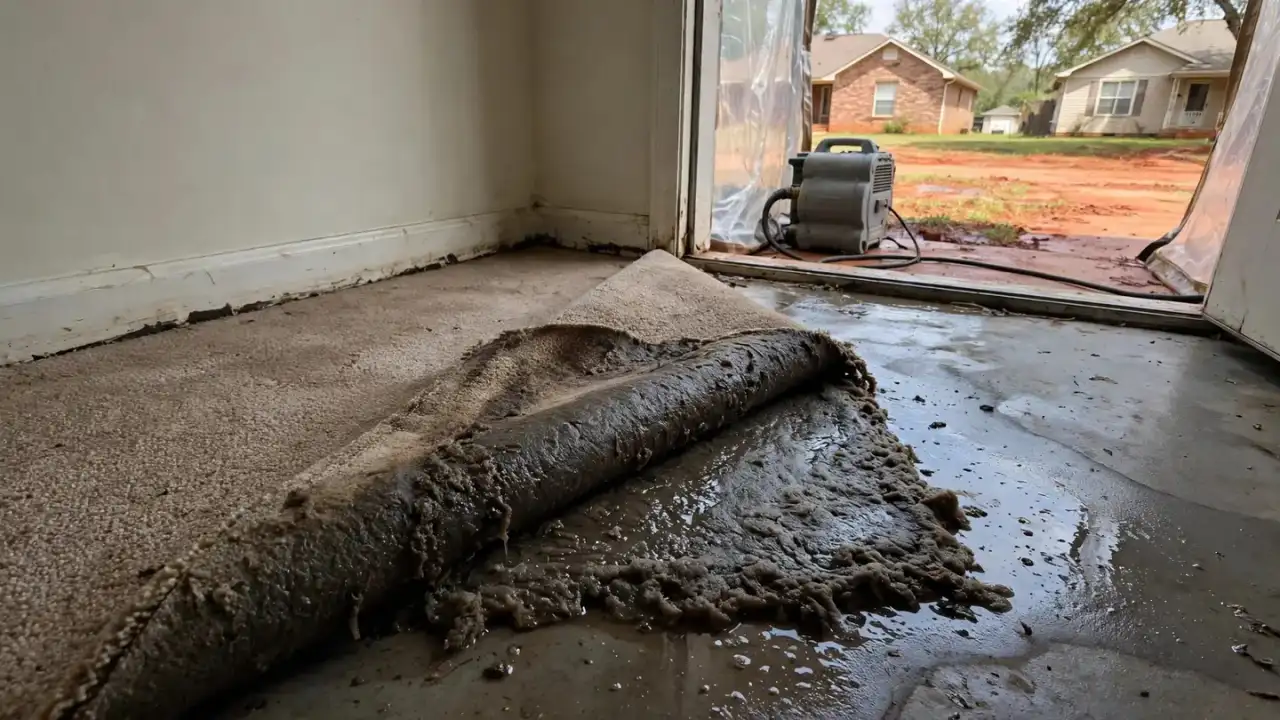
Key facts: Wet carpet after a leak
- Carpet wet with clean water and extracted within a day or two can often be dried in place.
- Carpet pad absorbs far more water than carpet and is frequently replaced even when the carpet is kept.
- Carpet soaked by sewage or floodwater is generally discarded [1].
- Carpet and pad left wet beyond a day or two can grow mold; EPA advises drying within that period [2].
Short answer
Wet carpet: the short answer
If the water was clean, such as a burst supply line or an overflowing sink with no waste, and the carpet is extracted and dried within a day or two, the carpet can often be saved. The pad underneath is frequently replaced because it soaks up much more water and dries poorly. If the water came from a sewer, a toilet with waste, or floodwater from outside, the carpet and pad are generally removed for health reasons [1].
Speed matters most. Carpet that stays wet for several days can grow mold, delaminate and develop odors that cleaning will not remove.
At a glance
Wet carpet situations and what usually happens
| Situation | Carpet | Pad |
|---|---|---|
| Clean water, under 24 to 48 hours | Usually dried in place | Sometimes dried, often replaced |
| Clean water, several days | Often replaced | Replaced |
| Washer or dishwasher water | Sometimes cleaned and dried | Replaced |
| Toilet with waste, sewage | Replaced | Replaced |
| Floodwater from outside | Replaced | Replaced |
| Musty odor already present | Often replaced | Replaced |
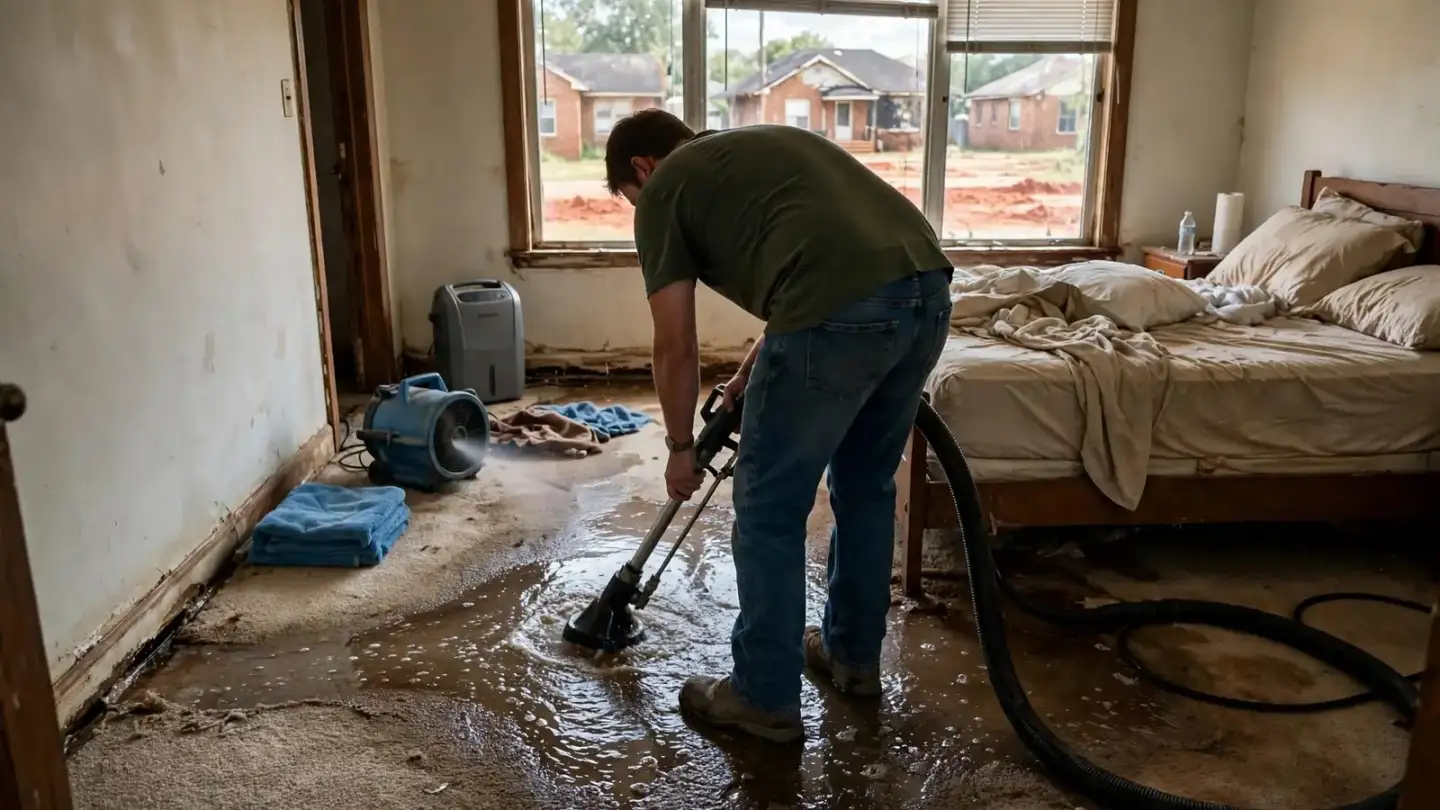
Extraction pulls water from both carpet and pad
Safe checks
What you can do right now
- Stop the water source and turn off power to wet rooms if safe.
- Move furniture off the carpet or put foil or blocks under the legs to prevent staining.
- Lift area rugs off the wet carpet and dry them separately.
- Do not use a household vacuum on water.
- Photograph the wet carpet and the source before anything is pulled up.
- Avoid walking on soaked carpet; it spreads water and can damage the backing.
Pad
Why the pad is the real problem
Carpet itself is mostly synthetic fiber and dries reasonably well. The pad underneath is foam or fiber that holds a great deal of water and sits right on the subfloor or slab, where airflow is poor. Even when the carpet surface feels dry, the pad can stay wet for days. That is where odors and mold usually start.
Professional extraction tools press the carpet and pad against the floor while removing water, which gets out far more than a household machine. In many cases, crews lift the carpet, remove the wet pad, dry the carpet and floor, then reinstall the carpet over new pad.
Slab and subfloor
What is under the carpet matters
In Oklahoma City slab homes, wet pad sits on concrete, which absorbs some water and dries slowly. On pier-and-beam floors, water passes through the pad into the wood subfloor and can drip into the crawlspace. Either way, the floor beneath has to dry too, or it will keep feeding moisture into new pad and carpet. See water extraction for how crews handle both.
How a pro handles it
How wet carpet is dried or replaced
- 1
Identify the water
Clean, gray or black water decides what can be kept.
- 2
Extract
Weighted or truck-mounted extraction removes water from carpet and pad.
- 3
Lift and remove pad
Wet pad is cut out and discarded if it will not dry quickly.
- 4
Dry carpet and floor
Air movers under the lifted carpet and dehumidifiers dry both.
- 5
Clean and sanitize
Carpet is cleaned; antimicrobial treatment may be applied for gray water.
- 6
Reinstall
Carpet is re-stretched over new pad once the floor is dry.
Repair or replace
Signs the carpet should be replaced
Replace carpet that has delaminated (the backing separates from the fibers), shrunk, developed persistent odor, shows mold, or was soaked by contaminated water. Older carpet near the end of its life may not be worth drying. Your insurer may also have a view on whether drying or replacement is appropriate; document the condition before deciding.
Prevention
Preventing the next wet carpet
- Check washing machine hoses and replace them with braided lines.
- Put a drain pan and leak sensor under water heaters.
- Check under sinks and around toilets regularly.
- Keep gutters clean so storm water does not reach doors.
Area rugs
Area rugs and wall-to-wall carpet are different
Area rugs can be taken out of the house and dried or cleaned separately, which makes them easier to save. Wool and hand-knotted rugs can bleed dye when wet, so they should be lifted quickly and sent to a rug cleaner experienced with water damage. Rugs lying on wet wall-to-wall carpet should come up right away so both can dry.
Odor
Why wet carpet starts to smell
A sour or musty smell from wet carpet means microbes are growing in the pad, the backing or the dust trapped in the fibers. It can start within a day in warm weather. Once odor sets in, cleaning the surface rarely fixes it; the pad has to come out and the floor beneath has to be dried and sometimes treated. If you notice odor, tell the contractor; it changes what can be saved.
Stairs and closets
Carpet on stairs and in closets
Water often runs to the lowest spots: closets, the bottom of stairs and room corners. Closet carpet is easy to forget because it is hidden behind doors and stored items. Clear closets near a leak so the carpet can be checked and dried. Carpet on stairs is wrapped around each step and tacked tightly, which makes it harder to lift and dry; it is more often replaced after a significant soaking.
FAQ
Wet carpet questions
How long can carpet stay wet before mold grows?
Mold can begin within a day or two. Extract and dry as soon as possible.
Can I dry carpet with fans?
Fans dry the surface but not the pad underneath. Extraction and dehumidifiers are needed to dry the pad and floor.
Do I need new pad if the carpet is saved?
Often, yes. Pad holds much more water and dries poorly, so it is commonly replaced.
Is carpet wet from a toilet overflow safe to keep?
If the water contained waste, the carpet and pad are generally removed for health reasons.
Will insurance pay for new carpet?
If the leak was sudden and covered, drying or replacement may be covered. Document the damage before anything is removed.
Can I pull up the wet carpet myself?
You can, but it is heavy and easy to damage. Photograph it first, and consider letting the crew decide whether to lift it so it can be dried and reinstalled.
Does wet carpet damage the floor underneath?
It can. Wet pad keeps a slab or wood subfloor damp, and wood subfloors can swell or grow mold. The floor must be dried along with the carpet.