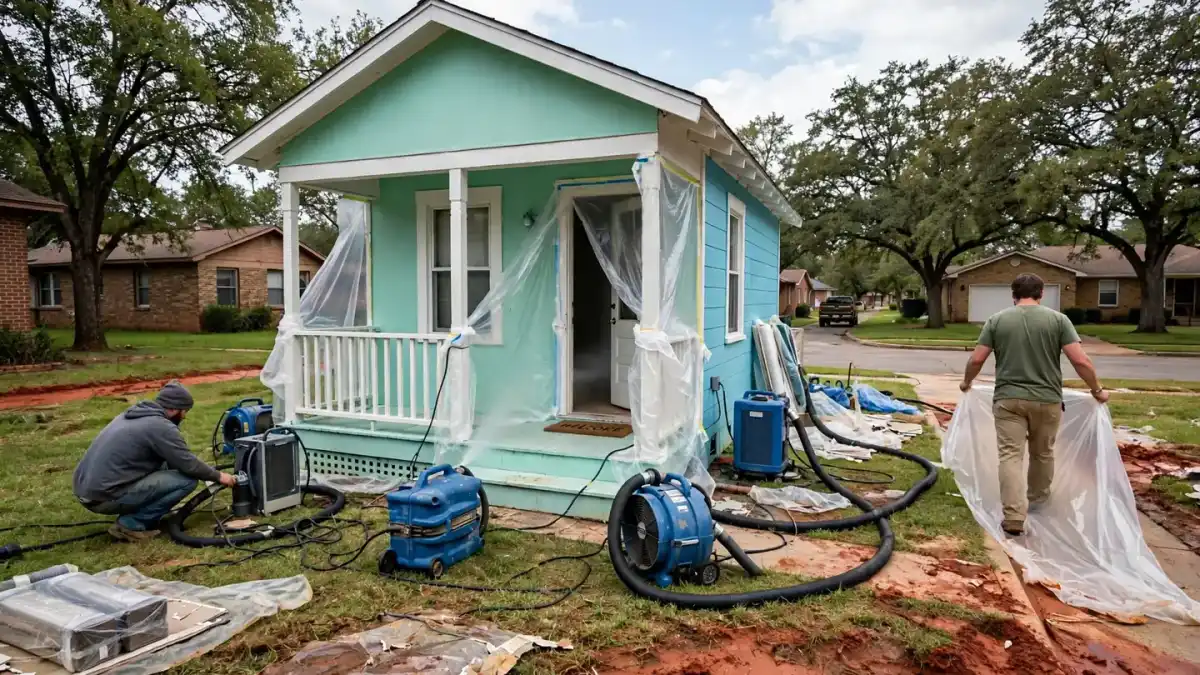
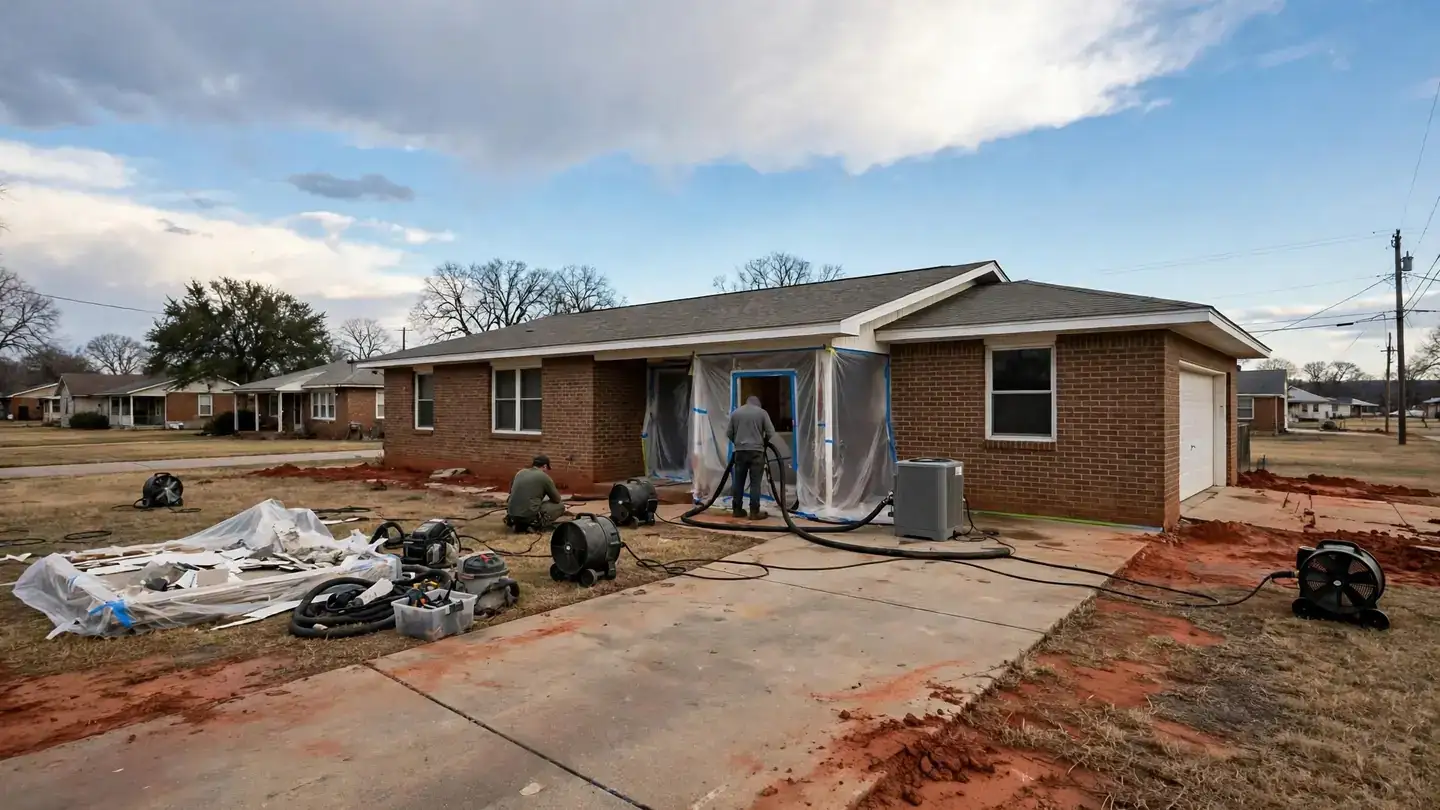
Key facts: Lake Hefner
- Lake Hefner is a reservoir in northwest Oklahoma City built in the 1940s to expand the city's water supply; it covers about 2,500 acres [1].
- Residential areas border the lake on the north, west and east sides [1].
- On a slab, water spreads under flooring and into the bottom of walls rather than draining to a crawlspace.
- Expansive clay soils swell and shrink with moisture, which can stress slabs and the plumbing beneath them [2].
Coverage
Lake Hefner area ZIPs covered
Calls from Oklahoma City addresses in the [Lake Hefner](/services/burst-pipe-water-damage/) area ZIPs can be connected to an independent contractor, including neighborhoods off Hefner Road, Britton Road, Portland Avenue, Meridian Avenue and Lake Hefner Parkway.
- ZIP 73120: neighborhoods east and southeast of the lake
- ZIP 73162: neighborhoods north and northwest of the lake
- ZIP 73132: neighborhoods west and southwest of the lake
- Nearby independent cities such as The Village and Warr Acres have their own city governments and permit offices
Homes here
Homes around Lake Hefner
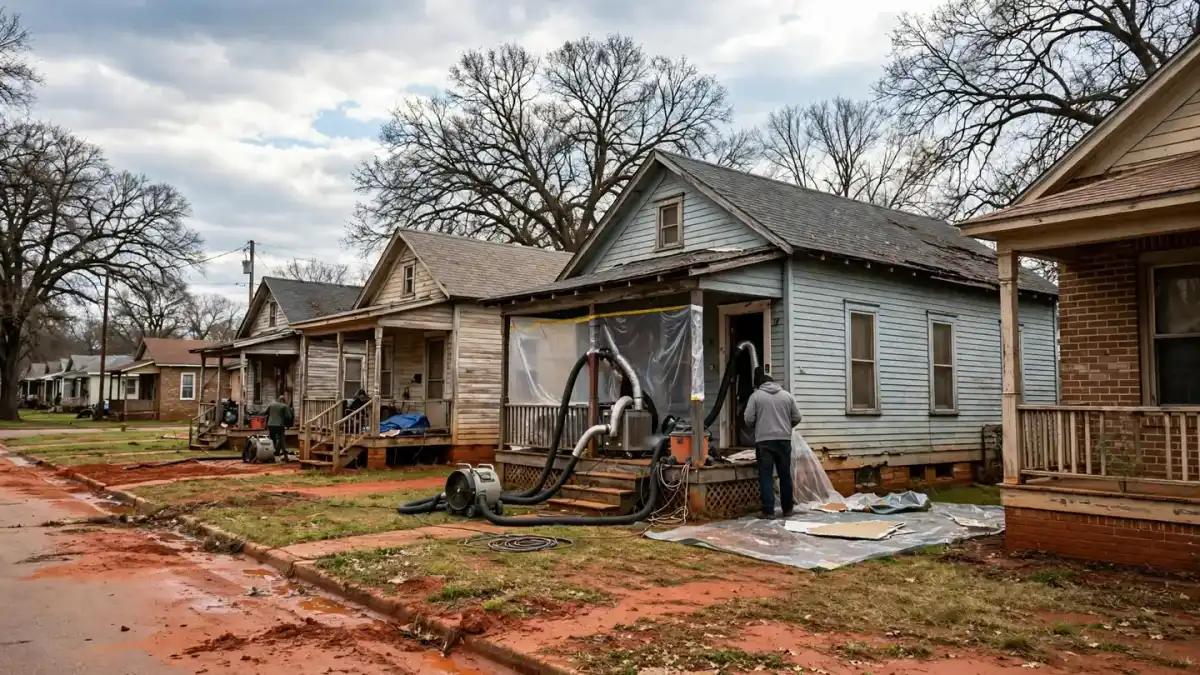
Lake Hefner was built in the 1940s as a reservoir to expand Oklahoma City's water supply, and it now covers about 2,500 acres with trails and parks along its shore [1]. In the decades after it was built, the land around it filled with subdivisions, especially from the 1960s through the 1980s. Residential areas border the lake on the north, west and east [1].
The typical house is a one-story brick ranch or a split-level, often with an attached two-car garage, built on a concrete slab. Inside, expect drywall, carpet over the slab in bedrooms and living areas, and tile or vinyl in kitchens and baths, though many homes have been updated with laminate, vinyl plank or engineered wood. Water heaters sit in garages, closets or attics, and supply lines in many homes run through the attic to reach fixtures.
Closer to the lake and along the major roads, there are condominium buildings, townhome communities and apartment complexes, along with golf course homes and newer infill. The open landscape around the lake means strong winds, hail and wind-driven rain hit these homes directly.
What pros see
Water damage patterns in Lake Hefner homes
Slab leaks
Supply or drain lines under the concrete leak into the slab and up through flooring.
Attic supply line failures
Lines overhead freeze or fail and soak insulation and ceilings.
Closet and attic water heaters
Tanks in closets and attics flood hallways and rooms below.
Wind-driven rain
Storms push water past windows, doors and siding on exposed sides of the house.
Hail-damaged roofs
Hail cracks shingles and dents vents, leading to attic leaks.
Condo leaks between units
Water from one unit reaches neighbors through shared walls and floors.
Slab leaks
Slab leaks under Lake Hefner ranch homes
In many homes built in this era, water supply lines run under or within the concrete slab to reach kitchens and bathrooms. Over time those lines can develop leaks from corrosion, abrasion against concrete or stress from soil movement. Central Oklahoma's expansive clay soils swell when wet and shrink when dry, and that movement can shift slabs and the pipes beneath them [2].
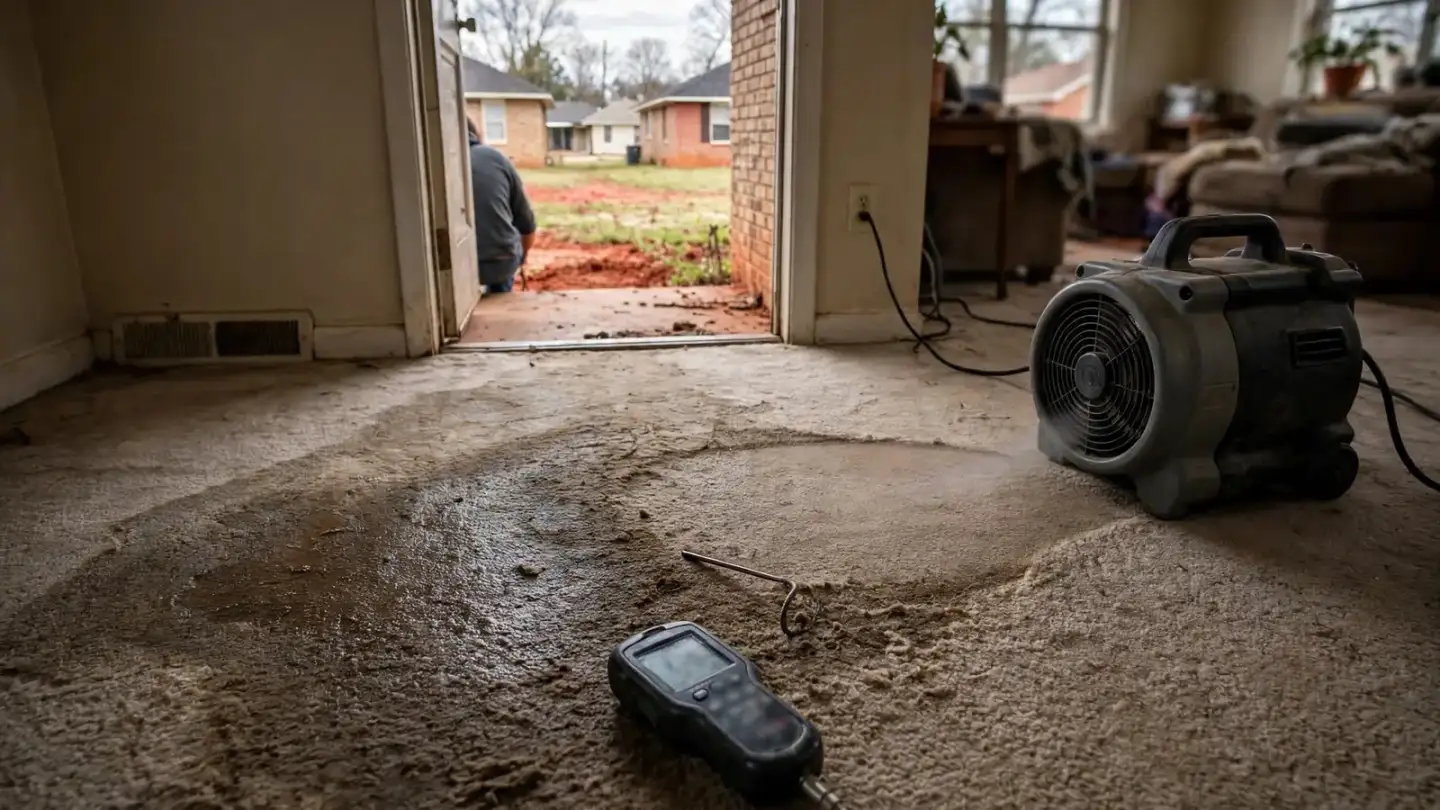
Signs of a slab leak include a warm or damp spot on the floor, especially if it is a hot water line; carpet that feels wet with no visible source; cracks in tile or flooring; the sound of running water when no fixtures are on; and a water bill that rises suddenly. Leak detection specialists can pinpoint the leak with acoustic and thermal tools.
The plumbing repair may involve opening the slab at the leak or rerouting the line through the walls or attic. The water damage side involves removing wet flooring, drying the slab and the bottom of walls, and confirming the concrete is dry before new flooring goes in.
A damp spot with no visible source can point to a slab leak
Attic lines
Water lines and water heaters in the attic
Running water lines through the attic was a common approach in slab homes, because it avoids burying lines in concrete. In Oklahoma City's climate, attics get very hot in summer and can approach outdoor temperatures in a hard freeze. Supply lines there can freeze and split during arctic cold, and fittings can fail with age.
Some homes also have water heaters in the attic. When an attic heater leaks, water collects in the drain pan; if the pan or its drain line is missing or clogged, the water soaks the insulation and ceiling below. The first sign is often a stain or drip from a light fixture or smoke alarm.
Response: shut off the water, catch the drips, keep people out from under sagging ceilings and call for help. Wet attic insulation is usually removed, and the ceiling is dried or replaced. Insulating attic lines and checking heater pans and drains each year reduce the risk.
On a slab
Where water goes in a slab home
| Material | What happens | Usual response |
|---|---|---|
| Carpet and pad | Soaks quickly, spreads water | Extract; pad usually replaced |
| Laminate and vinyl plank | Traps water against the slab | Often lifted or removed |
| Tile | Water travels under grout and tile edges | Dry; check for loose tiles |
| Baseboards and lower drywall | Wicks water upward | Remove baseboards; dry or cut drywall |
| Wood bottom plates | Absorb water from the slab | Dry in place with airflow |
| Concrete slab | Absorbs water, dries slowly | Dry and test before new flooring |
Wind and hail
Wind, hail and storm leaks near the lake
The open landscape around Lake Hefner offers little shelter from wind. Spring and early summer storms bring strong gusts, heavy rain and hail, and the National Weather Service office in Norman regularly issues severe thunderstorm warnings for the metro [3]. Wind-driven rain can force water past window seals, door thresholds, siding joints and roof vents on the windward side of a house.
Hail damages shingles, gutters, vents and skylights, and leaks may not appear until the next rain. After a hailstorm, check for granules in gutters, dents on vents and new ceiling stains. Photograph roof damage and interior stains with the date of the storm for your insurance claim. Interior water damage is dried once the roof is repaired or tarped.
Condos
Condominiums and townhomes near the lake
Condominium buildings, townhomes and apartments line parts of the Lake Hefner area. Leaks in these buildings often cross unit lines: water from an upstairs bathroom, a water heater or a washing machine runs through the floor into the unit below, and water from a shared wall leak can affect both sides.
In condos and townhomes, the association usually manages the building exterior, roof and common elements, while owners are responsible for interiors and belongings as defined in the governing documents. Renters are covered for their belongings by their own policies. Report leaks to management immediately, document your unit and check your association documents to see where responsibility falls.
Do this now
What to do right after a leak in a Lake Hefner area home
- Shut off the main water valve; in many homes it is at the meter near the street or in the garage.
- If the leak is from the water heater, shut its cold-water valve and turn off power or gas to it.
- Turn off power to wet areas if the panel is safe to reach.
- Move furniture off wet carpet and put foil or blocks under legs.
- Photograph the source, the water and the affected rooms.
- Keep people out from under stained or sagging ceilings.
- Get a plumber or leak detection specialist for the pipe, then a restoration crew to dry the slab and walls.
Permits
Permits for repairs in northwest Oklahoma City
Oklahoma City's Development Services Department issues building, plumbing, electrical and mechanical permits for addresses inside the city [5]. Slab leak repairs, repiping, water heater replacements and structural repairs usually need permits; drying and removing wet materials usually do not. Some addresses near the lake are inside separate municipalities such as The Village or Warr Acres, which have their own permit offices, so check which city your address is in.
Homes built before about 1980 may have asbestos in some ceiling textures, flooring and duct materials. Testing before those materials are disturbed protects your family and the crew [7].
Planning a visit
Preparing for a contractor visit near Lake Hefner
- 1
Close the main or heater valve
Shut the main valve or the water heater supply.
- 2
Describe the home
Say whether it is a slab ranch, a split-level, a townhome or a condo.
- 3
Locate the attic access
If the leak may be overhead, find the attic hatch or pull-down stairs.
- 4
Note the flooring
Mention carpet, laminate, vinyl plank, tile or wood, since each dries differently.
- 5
For condos
Arrange building access with management and tell neighbors below.
- 6
Open a claim
Report the loss and ask what they need before work begins.
Split-levels
Water in split-level homes
Split-level houses, popular in the 1960s and 1970s, put living areas on staggered floors. The lower level is often partly below grade, built on a slab with the family room and sometimes a bedroom or laundry. Water from a leak on an upper level runs down the half-flights of stairs, and storm water can enter the lower level through doors or window wells.
The lower level dries slowly because it is partly below ground and often carpeted over concrete. Prompt extraction, removing wet pad and running dehumidifiers there is important. Check the lower-level walls for wicking, especially where paneling or drywall meets the floor.
Garages
Attached garages and laundry areas
In many Lake Hefner area homes, the water heater and washing machine sit in the attached garage or in a laundry room next to it. A burst washer hose or a failed tank sends water across the garage floor and under the door into the house. Because the garage floor is often slightly lower, water may pool there before reaching living spaces.
A drain pan under the washer and water heater, braided supply hoses and a leak sensor with an alarm are simple ways to catch problems early. Check the base of the shared wall between garage and house after any garage leak; drywall and bottom plates there can wick water into the house.
Mold
Mold risk in slab homes
Slab homes do not have crawlspaces, but they have their own hidden places for moisture: under carpet pad, beneath laminate and vinyl plank, inside the bottom of walls and under kitchen and bathroom cabinets. EPA recommends drying within 24 to 48 hours to help prevent mold [4]. When a slab leak or a slow cabinet leak has been going on for weeks, mold on the back of baseboards and the bottom of drywall is common.
Removing baseboards, checking the lower walls with a moisture meter and lifting flooring where needed are the way to find it. Small areas on hard surfaces can be cleaned; mold on drywall and pad means removing those materials after the area is contained.
Pools
Pools, sprinklers and outdoor water
Many homes in the area have lawn sprinkler systems, and some have pools. A broken sprinkler line or a misaimed head can soak the soil against the foundation day after day, and a leak near the house can show up as moisture along an exterior wall inside. Pool leaks and overflows can also saturate the soil near the slab.
If an exterior wall or the floor near it stays damp with no plumbing leak inside, check the sprinklers and pool equipment. Keeping irrigation away from the foundation helps both the house and the clay soil beneath it.
Kitchens and baths
Kitchen and bathroom leaks on a slab
Kitchens and bathrooms are where most indoor leaks start: dishwasher lines, sink drains, refrigerator ice-maker lines, toilet supply lines, wax rings and shower valves. On a slab, the water runs under cabinets and vanities and across the floor beneath tile or vinyl, often unseen until baseboards swell or a musty smell appears.
Drying under cabinets usually means pulling toe kicks or drilling small holes in the cabinet floor to get air into the space. Particleboard cabinet bases that swelled are usually replaced; the countertops above can often be kept. If a shower valve or pan is leaking inside the wall, the plumbing repair comes first, then the wall cavity and floor are dried.
Older updates
Homes from the 1960s and 1970s with older plumbing
Houses built around Lake Hefner in the 1960s and 1970s may still have original copper or galvanized lines, and some homes built or remodeled in the 1970s through the mid-1990s used polybutylene, a gray plastic pipe with a history of failures. Original cast iron drains under slabs can also corrode and crack after decades.
If a leak reveals one of these older materials, ask the plumber about the condition of the rest of the system. Rerouting supply lines through the attic or walls, called repiping, is common when slab lines fail repeatedly. A camera inspection can show the condition of drains under the slab.
Insurance
Insurance questions for slab leaks and storm leaks
Homeowners policies commonly cover sudden water damage from a burst or leaking pipe, sometimes including access to the pipe through the slab, though the plumbing repair itself may be treated separately. Long-term leaks and wear are usually excluded. Storm damage to the roof and resulting interior water damage are often handled together.
Document the leak source, the plumber's findings and the damage before cleanup. The Oklahoma Insurance Department provides consumer guidance if you have trouble with a claim [6].
Seasons
Seasonal water risks near Lake Hefner
| Season | Main risk | What to check |
|---|---|---|
| Spring | Hail, wind-driven rain | Roof, vents, windows on the windward side |
| Summer | Heavy downpours, irrigation | Gutters, sprinklers near the foundation |
| Fall | Storms, leaves | Gutters and downspouts |
| Winter | Hard freezes | Attic lines, garage water heater, outdoor spigots |
Foundation movement
Clay soil, slab movement and plumbing
The clay soils common in the Oklahoma City area expand when they absorb water and shrink as they dry [2]. Long droughts followed by heavy rain can make the soil under and around a slab move unevenly. That movement can crack slabs, shift walls and doors out of square, and put stress on pipes running beneath or through the concrete.
Keeping soil moisture around the foundation more consistent helps: direct downspouts away from the house, avoid overwatering beds next to the slab, and do not let the soil pull away from the foundation in long dry spells. If you notice new cracks in walls, doors that stick or gaps at baseboards along with a leak, mention it on the call; a foundation specialist may be worth consulting after the water damage is handled.
Staying home
Living with drying equipment in a ranch house
In a one-story ranch home, drying equipment is usually set up in the affected rooms and the hallways connecting them. The noise is steady, rooms get warm and some doors may need to stay closed. Many families stay home if bedrooms and a bathroom remain usable; others prefer to stay elsewhere for a few days.
Keep pets away from the equipment, leave it running continuously and let the crew in for daily readings. If a breaker trips, tell the crew rather than unplugging units. Keep your electric bill for the drying period in case the extra usage is reimbursed.
Older residents
Help for older homeowners around the lake
Many long-time residents of the Lake Hefner neighborhoods are older adults who have lived in their homes for decades. A leak can be overwhelming: shutting off the water, moving furniture, calling the insurer and living around equipment. Family members and neighbors often step in.
If you are helping someone, start with safety and the water shutoff, then find the policy and call the insurer. Ask the contractor for clear written updates and a contact person. Keep receipts and notes together in one folder.
FAQ
Lake Hefner area water damage questions
How do I know if I have a slab leak?
Warm or damp spots on the floor, wet carpet with no visible source, the sound of running water and a rising water bill are common signs. A leak detection specialist can confirm it.
Will my floors have to come up after a slab leak?
Usually in the affected area. Carpet pad is typically replaced, and laminate or vinyl plank often has to be lifted so the slab can dry.
Why did my ceiling start dripping during a freeze?
Many slab homes have water lines in the attic. A line can freeze and split, then leak when it thaws. Shut off the water and keep people out from under the ceiling.
Does wind-driven rain count as storm damage for insurance?
It depends on the policy. Water entering through storm-created openings is often treated differently from water seeping past aging seals. Document the storm date and the damage.
Who handles a leak from the condo above me?
Report it to management and your insurer. The association, the upstairs owner and you may each be responsible for different parts, depending on the governing documents.
Do I need a permit for a slab leak repair?
Plumbing repairs like slab leak repairs and repiping usually need permits. Addresses in separate cities near the lake use their own permit offices.
Should I repipe after a second slab leak?
Repeated slab leaks often point to aging lines. Many owners reroute supply lines through the attic or walls. Discuss the options with your plumber.
Can soil movement cause a slab leak?
It can contribute. Expansive clay swells and shrinks with moisture, which can stress pipes under or in the slab. Consistent soil moisture around the foundation helps.
Is my address in Oklahoma City or a separate town?
Some addresses near the lake are in independent cities such as The Village or Warr Acres. Your property tax statement or city utility bill shows which city you are in.