
Key facts: Flooded Basement Cleanup
- Floodwater can carry sewage, chemicals and debris, so it is treated as contaminated during cleanup [1].
- Standard homeowners policies generally do not cover flood from rising surface water; that requires flood insurance [2].
- EPA advises discarding porous items soaked by floodwater that cannot be thoroughly cleaned and dried [1].
- The National Weather Service in Norman issues flash flood warnings for the Oklahoma City metro during heavy rain [3].
Below-grade spaces
Below-grade spaces in Oklahoma City homes
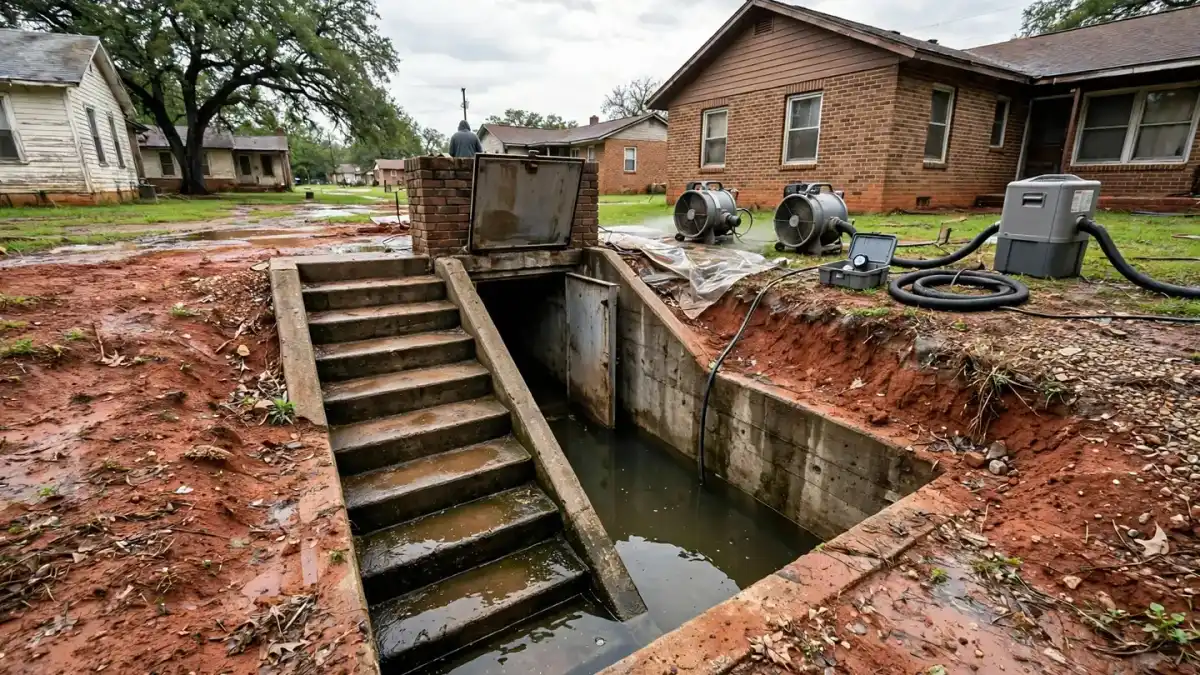
Ask around Oklahoma City and you will hear that houses here do not have basements. That is mostly true for newer slab homes, but it is far from universal. Many older homes in central neighborhoods have partial or full basements, some larger houses on sloped lots have walk-out lower levels, and storm protection is everywhere: backyard storm cellars, in-ground shelters set into garage floors and safe rooms built into homes.
All of those spaces sit at or below ground level, and water finds them. Heavy rain saturates the clay soil and seeps through walls and floors. Surface water runs down cellar stairs and through gaps around shelter doors. Plumbing failures inside the house drain downward. Sewer backups push up through floor drains. Whatever the source, water collects at the lowest point and stays there until it is pumped out.
Pier-and-beam homes add one more below-grade space: the crawlspace. It is not a basement, but it floods in many of the same ways and needs the same kind of pumping, cleaning and drying.
Sources
How water gets into below-grade spaces
Heavy rain and runoff
Water from intense storms runs toward the house, down cellar steps and against foundation walls.
Saturated clay soil
After days of rain, clay soil holds water against walls and floors, pushing it through cracks.
Plumbing failures
Burst pipes and water heater failures upstairs drain down into the lowest level.
Read moreSewer backups
When a city main or a home's sewer line backs up, water can rise through floor drains.
Read moreFailed sump pumps
A pump that loses power or fails during a storm lets water rise quickly.
Shelter door leaks
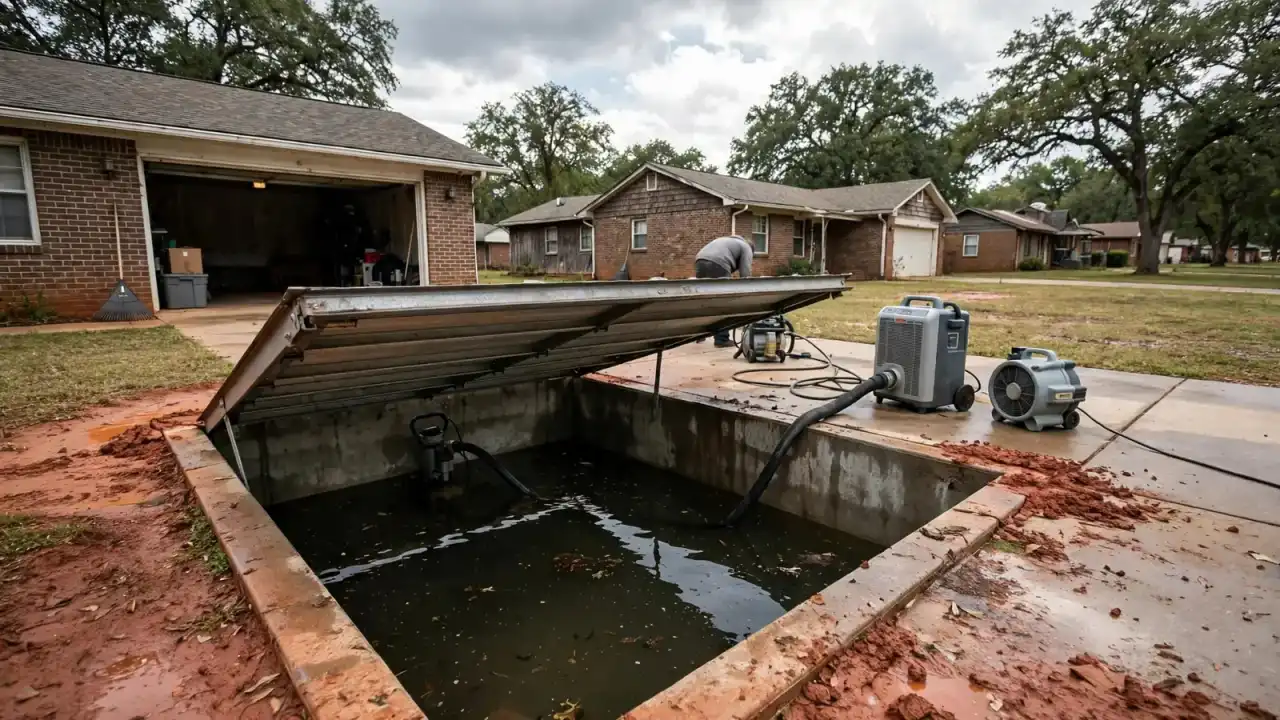
In-ground garage shelters can collect water through door gaps and from the garage floor.
In-ground garage shelters are a common below-grade space in Oklahoma C
Water category
Clean water or floodwater: why it matters
The source of the water decides how the cleanup is done. Water from a burst supply line upstairs starts clean, though it picks up contaminants as it flows through the house and sits. Water that came in from outside, across the ground and down cellar stairs, or rose through a floor drain from the sewer, is treated as contaminated. EPA advises that floodwater may contain sewage, chemicals and other hazards and that porous items soaked by it often need to be discarded [1].
Contaminated water means protective gear for anyone doing the work, removal of porous materials such as carpet, drywall and insulation that the water touched, and cleaning and disinfection of hard surfaces. Clean water losses caught quickly may allow more materials to be dried and kept.
When you call, describe where the water came from as precisely as you can: rain coming in, a pipe, a water heater, a drain backing up or a combination.
Cleanup steps
How a flooded below-grade space is cleaned up
- 1
Safety first
Power to the area is shut off, gas appliances in the space are checked, and the crew confirms the stairs and structure are safe.
- 2
Pump out
Submersible pumps remove standing water. In deep water, pumping may be staged to avoid pressure on walls from saturated soil.
- 3
Remove debris and contents
Mud, debris and soaked belongings are removed and photographed for the claim.
- 4
Cut out soaked porous materials
Carpet, pad, insulation and drywall touched by contaminated water are cut out and removed.
- 5
Wash and sanitize surfaces
Floors, walls and framing are washed and disinfected where the water was contaminated.
- 6
Dry
Dehumidifiers and air movers dry the space, with readings taken daily.
- 7
Check for mold
Surfaces are inspected after drying, and any growth is addressed before rebuilding.
Do this now
What to do when your basement or cellar floods
- Do not walk into standing water if electrical outlets, appliances or cords are under water.
- Turn off power to the area at the breaker panel if you can reach it safely.
- If gas appliances such as a furnace or water heater are in the flooded space, do not relight them; call the gas utility or a technician.
- Wear rubber boots and gloves if the water may be from outside or the sewer.
- Move belongings from upper shelves to dry areas.
- Photograph the water level, the source if visible and damaged items.
- Do not pump out a deeply flooded basement too fast if the ground outside is saturated; water pressure in the soil can damage walls.
Storm shelters
Cleaning storm cellars and in-ground shelters
Storm shelters are a part of life in central Oklahoma. Older homes often have backyard cellars with concrete steps and a heavy door. Many newer homes have in-ground steel or concrete shelters set into the garage floor with a sliding lid, or above-ground safe rooms. In-ground shelters are designed to be sealed from wind, not from water, and they collect water from rain, from water running across the garage floor, and from groundwater pressure in saturated soil.
Cleaning a flooded shelter usually means pumping it out, removing anything stored inside, cleaning the walls and floor with a disinfectant if the water came from outside, and drying it completely. Steel shelters should be checked for rust and coatings touched up. Benches, emergency supplies and stored items such as water jugs, batteries and blankets should be checked and replaced if they were soaked.
A shelter that floods regularly may need better drainage around its opening, a better door seal or a small sump. The shelter installer can advise on what is appropriate for your model.
Spaces
Below-grade spaces and common flooding issues
| Space | Common source | Main cleanup concern |
|---|---|---|
| Full or partial basement | Groundwater seepage, plumbing failure, sewer backup | Finished walls and carpet, sump pump |
| Walk-out lower level | Surface runoff at the door, plumbing | Water spreading across the slab |
| Backyard storm cellar | Rain down the steps, seepage | Contaminated water, stored supplies |
| In-ground garage shelter | Garage floor runoff, groundwater | Pumping, rust on steel shelters |
| Crawlspace | Plumbing, surface water, high soil moisture | Wet insulation, joists, clay soil |
Clay soil
Clay soil, groundwater and foundation walls
Much of central Oklahoma sits on clay-rich soils that swell when wet and shrink when dry. During long wet periods, that soil becomes saturated and holds water against foundation walls and under floors. Water then finds its way through cracks, joints and around pipe penetrations. Expansive clay also puts pressure on basement walls, and repeated swelling and shrinking can crack them.
This has two practical effects for cleanup. First, water may keep seeping in for days after the rain stops, so pumping and drying may need to continue longer. Second, a basement that keeps taking on water probably needs attention to grading, gutters and downspouts, and possibly drainage or waterproofing, after the cleanup is done. A restoration contractor can tell you what they see; a foundation or waterproofing specialist can advise on longer-term fixes.
Insurance
Flood, seepage and backup: the insurance distinctions
Insurance for flooded basements is notoriously confusing because the source matters so much. Standard homeowners policies generally exclude flood, meaning surface water from outside rising and entering the home. Flood coverage comes from the National Flood Insurance Program or private flood policies, and NFIP coverage for basements is limited to certain items [2]. Seepage of groundwater through foundation walls is also commonly excluded.
Water from a sudden plumbing failure inside the house, on the other hand, is often covered. Sewer and drain backups are typically excluded unless you have a specific water backup endorsement. Many policies have a sump pump failure provision only if you bought that endorsement. The Oklahoma Insurance Department provides consumer resources on these questions [5].
Photograph the water, the source and any damage to the roof, doors or windows. Describe what happened accurately to your insurer and ask which coverage applies.
Mold
Mold risk in below-grade spaces
Basements, cellars and crawlspaces are cool, dark and often humid even before they flood, which makes them prime places for mold. After flooding, drying within 24 to 48 hours is the best defense [4]. Below-grade spaces dry slowly, so dehumidifiers usually need to run longer than they would upstairs.
Finished basements are the biggest concern. Drywall, carpet and insulation in contact with the floor or walls can grow mold quickly. Removing wet porous materials and drying the space fully before rebuilding is far better than closing up walls that are still damp. If you have stored belongings in cardboard boxes, check them; cardboard holds water and supports mold.
Prevention
Reducing the chance of another flood
- Keep gutters clean and extend downspouts several feet from the foundation.
- Grade soil so it slopes away from the house.
- Test sump pumps before storm season and consider a battery backup.
- Seal gaps around cellar doors and shelter lids where possible.
- Store belongings in plastic bins on shelves rather than on the floor.
- Ask a plumber about a backwater valve if you have had sewer backups.
- Consider flood insurance, especially if your home is in or near a mapped flood zone.
Questions to ask
Questions to ask about basement or cellar cleanup
- Do you consider this clean water or contaminated water, and why?
- Which materials will you remove, and which can be dried?
- How will you disinfect surfaces after contaminated water?
- How long do you expect drying to take in this space?
- Will you check the furnace, water heater and other equipment in the space?
- What do you see that might explain why water got in?
Crawlspace flooding
Crawlspaces under pier-and-beam homes
Older Oklahoma City neighborhoods have many pier-and-beam houses raised a couple of feet above the ground on concrete or brick piers. The crawlspace beneath can flood from heavy rain running under the skirting, from a plumbing leak above or from a high water table after days of rain. Because the floor is clay, water can pool for a long time.
Cleaning a flooded crawlspace means pumping out standing water, removing wet insulation and debris, and drying the soil surface, piers, joists and subfloor with dehumidifiers. A new vapor barrier is often installed once the space is dry. Working in a crawlspace is cramped and dirty, and there may be pests, sharp debris or electrical hazards, so it is a job best left to crews with the right equipment.
Contents
Belongings stored below ground
Below-grade spaces are where many families keep things they rarely use: holiday decorations, old photographs, tax records, camping gear and outgrown clothing. Cardboard boxes on the floor soak up water and collapse, and paper inside them stays wet. Photographs and important documents can sometimes be saved if they are frozen in sealed bags until a specialist can treat them.
Make a list of what was stored and photograph it before anything is thrown out. Items soaked by floodwater or sewage that cannot be thoroughly cleaned, such as stuffed toys, mattresses and upholstered furniture, are generally discarded for health reasons. Hard plastic, metal and glass can usually be cleaned and disinfected.
Electrical
Electrical panels and equipment in flooded spaces
In homes with basements, the electrical panel, furnace, water heater and laundry equipment are often located there. If water reached the panel or any of this equipment, do not turn it back on. Water can damage breakers, wiring and control boards in ways that are not visible and can create shock or fire hazards later.
Have a licensed electrician inspect the panel and circuits before power is restored to the space, and have the furnace and water heater checked by a qualified technician. Some components, such as gas valves and electronic controls that were submerged, are commonly replaced rather than dried and reused.
Sump pumps
Sump pumps and battery backups
Homes with basements in Oklahoma City sometimes have a sump pit and pump to remove groundwater that collects under the floor. The pump is only useful if it runs when it is needed most, which is during heavy storms, the same storms that knock out power. A pump without a backup stops the moment the power goes out, and water rises.
After a flood caused by a failed pump, the pump and float switch should be inspected and replaced if needed. A battery backup pump or a water-powered backup, plus an alarm that sounds when the water in the pit rises too high, gives far better protection. Test the pump each spring by pouring water into the pit and watching it cycle.
Finished basements
Rebuilding a finished basement after a flood
Finished basements are where flood damage adds up. Carpet and pad, drywall, insulation, baseboards, doors and built-in cabinets all absorb water. After contaminated water, most of those porous materials come out to at least a few inches above the waterline. After clean water caught quickly, some can be dried.
When rebuilding, consider materials that tolerate water better: tile or luxury vinyl instead of carpet, a small gap at the bottom of drywall covered by baseboard, closed-cell foam or rigid insulation against foundation walls, and moisture-resistant drywall. Those choices will not stop the next flood, but they can make the next cleanup much smaller.
Flash floods
Flash flooding in the Oklahoma City metro
Oklahoma City sees intense rainfall, especially in spring and early summer, when slow-moving thunderstorms can drop several inches of rain in a few hours. Streets, underpasses and low-lying neighborhoods near creeks can flood quickly, and the National Weather Service in Norman issues flash flood warnings when that happens [3]. Water entering homes in those events is surface flooding, which is a separate insurance question from plumbing leaks.
During a flash flood warning, stay out of flooded streets and do not enter a flooding basement or cellar. Turn around rather than drive through water. After the water recedes, wait until it is safe to enter, then photograph everything and start cleanup as soon as possible.
First week
A typical first week after a basement or cellar flood
| Day | Usual focus |
|---|---|
| Day 1 | Safety, pumping, photos, removing contents |
| Days 1 to 2 | Removing wet porous materials, cleaning and disinfecting |
| Days 2 to 5 | Drying with dehumidifiers and air movers, daily readings |
| Days 5 to 7 | Mold check, equipment inspection, planning repairs |
Odor
Musty odor after a basement or cellar flood
Even after a below-grade space is pumped and cleaned, a musty smell can linger. It usually comes from materials that are still damp, such as framing behind remaining drywall, the underside of stairs, or concrete that is still releasing moisture. In a cellar or shelter, it may come from soil or debris trapped in corners and drains.
Odor that persists after drying is a clue, not just a nuisance. Ask the contractor to recheck moisture readings in the areas where the smell is strongest. Running a dehumidifier in the space for a few weeks after the job, set to keep humidity moderate, helps keep below-grade spaces fresh.
FAQ
Flooded basement and cellar questions
Do Oklahoma City homes have basements?
Most newer slab homes do not, but many older homes have basements, and storm cellars and in-ground shelters are very common. All of them can flood.
Is a flooded basement covered by insurance?
It depends on the source. Sudden plumbing failures are often covered. Floodwater, groundwater seepage and sewer backups are commonly excluded unless you have flood insurance or the right endorsements.
How do I clean a flooded storm shelter?
Pump out the water, remove stored items, clean and disinfect the surfaces if the water came from outside, and dry the shelter completely. Check steel shelters for rust.
Should I pump out my basement right away?
Usually, yes, once power is off and it is safe. If the ground outside is saturated and the water is deep, pumping in stages can avoid pressure damage to walls.
Can basement carpet be saved?
If the water was clean and extraction happened quickly, sometimes. Carpet soaked by floodwater or sewage is usually removed.
Why does water keep seeping in after the rain stops?
Saturated clay soil holds water against the foundation for days. Seepage can continue until the soil drains.
Is floodwater dangerous to touch?
It can carry sewage, chemicals and debris. Wear boots and gloves, avoid skin contact and wash thoroughly afterward.
Can my furnace or water heater be used after flooding?
Not until a qualified technician has inspected it. Water can damage controls, burners and electrical components.
Do I need flood insurance in Oklahoma City?
Standard homeowners policies generally exclude flood. If your home is near a creek, in a low area or in a mapped flood zone, flood insurance is worth considering. Coverage usually has a waiting period before it starts.
How long does a flooded basement take to dry?
Often four to seven days with professional equipment, longer for thick concrete, block walls or very wet soil outside. Daily readings show when it is done.
Should stored emergency supplies be replaced after a shelter floods?
Yes for anything soaked: water containers with wet caps, batteries, flashlights, blankets and food. Restock once the shelter is cleaned and dry.