
Key facts: Mold risk after water damage
- Drying wet building materials and belongings within one to two days is EPA's main advice for keeping mold from starting [1].
- Controlling mold starts with stopping the water: fix the source before anything else [1].
- CDC notes that people with allergies, asthma or weakened immune systems are more sensitive to mold [2].
- EPA suggests that areas larger than about 10 square feet of mold may call for professional help [1].
Short answer
Mold after water damage: the short answer
Mold spores are everywhere. They need moisture, something to feed on and time. After a leak, building materials such as drywall paper, wood, carpet backing and dust supply the food, and the water supplies the moisture. EPA's guidance is to dry water-damaged materials within 24 to 48 hours to help prevent growth, and to treat fixing the water problem as the first step in keeping mold away [1].
If materials are dried quickly, mold usually does not become a problem. If they stay wet for several days, some growth is likely, often in places you cannot see.
At a glance
Mold clues and what to do
| What you notice | Likely meaning | What to do |
|---|---|---|
| Musty, earthy smell | Hidden moisture and possible growth | Find and dry the source; check hidden areas |
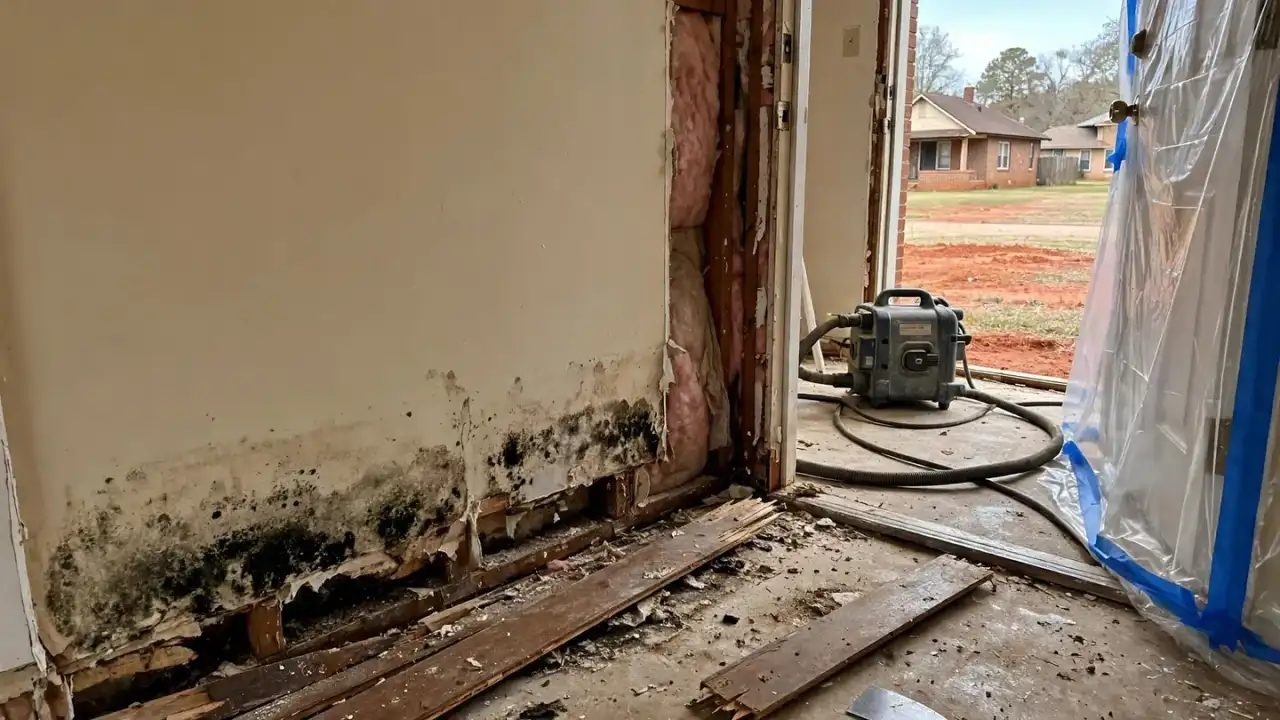
| Spots on lower walls or baseboards | Growth where water wicked up | Check behind baseboards; remove affected drywall |
| Growth on carpet backing or pad | Carpet stayed wet too long | Remove pad; evaluate the carpet |
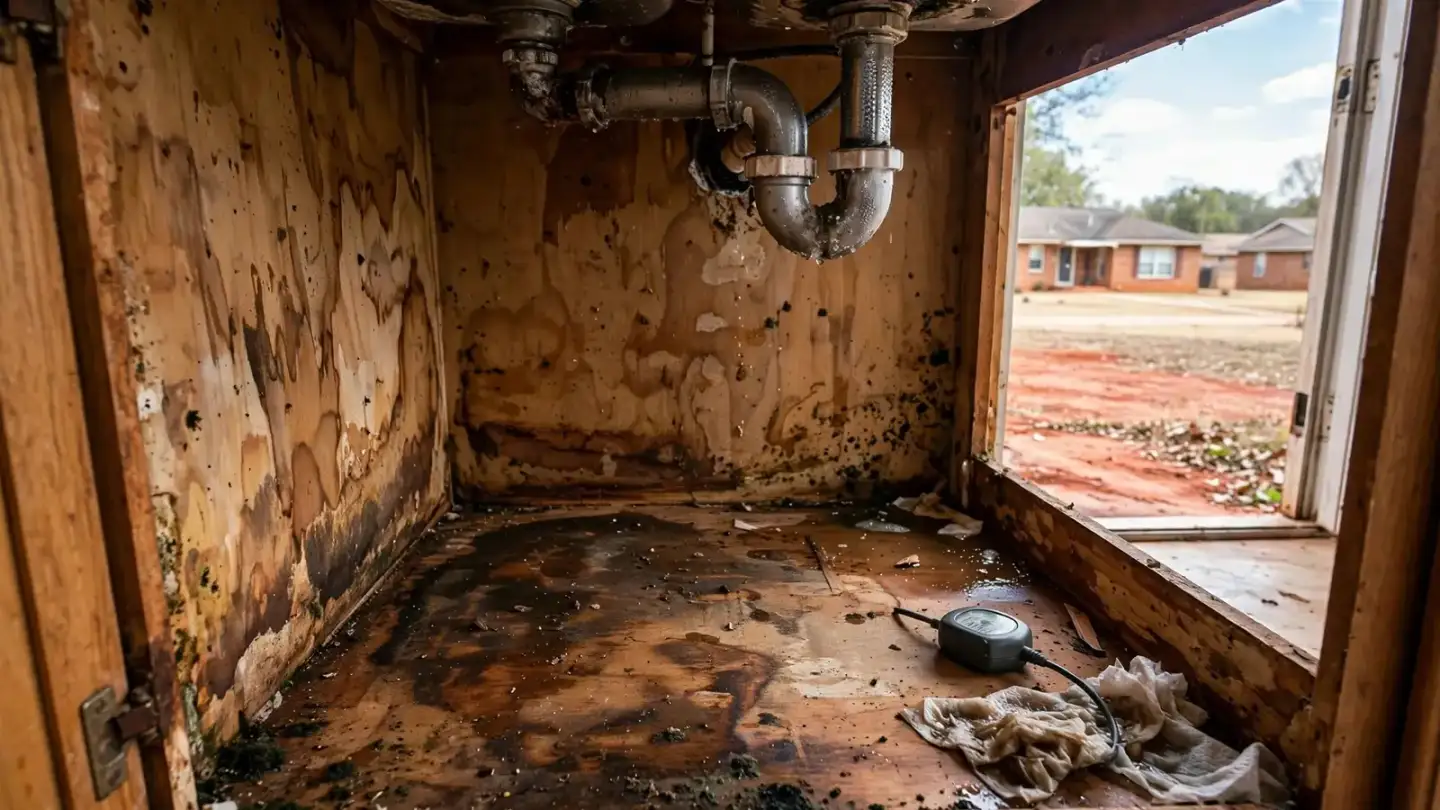
| Spots inside cabinets | Leak under sink or dishwasher | Dry and clean; replace swollen particleboard |
| Allergy symptoms at home | Possible mold exposure | Investigate moisture; consult a doctor if needed |
Safe checks
Safe checks for mold after a leak
- Smell closets, cabinets and rooms near the leak for mustiness.
- Look behind baseboards and at the bottom of walls near the wet area.
- Check under sinks and the base of cabinets.
- Look at the back of carpet and pad if you can lift a corner.
- Do not disturb large areas of mold yourself; it can release spores.
Where it hides
Where mold hides after water damage
Mold most often starts where water lingered and air did not move: inside wall cavities, behind baseboards, under carpet pad, beneath laminate or vinyl plank, inside cabinet bases, in attic insulation after roof leaks, and in crawlspaces under pier-and-beam homes. In Oklahoma City, humid spells in late spring and summer can keep these hidden spots damp longer [3].
Because these places are hidden, a musty smell is often the first clue. Moisture meters and thermal cameras help locate damp areas without opening every wall.
Health
Mold and health
CDC explains that exposure to damp and moldy environments can cause stuffy nose, wheezing, and eye or skin irritation, and that people with allergies, asthma, chronic lung disease or weakened immune systems can have more serious reactions [2]. If anyone in the household is in those groups, take mold seriously and limit their exposure during cleanup. Anyone with health concerns should talk with a doctor.
How a pro handles it
How mold is handled after water damage
- 1
Fix the moisture
Stop the leak and dry the structure first.
- 2
Assess the extent
Find all affected areas, including hidden ones.
- 3
Contain
Seal off the area with plastic and use HEPA air filtration to limit spore spread.
- 4
Remove
Cut out moldy porous materials such as drywall, insulation and pad.
- 5
Clean
Clean hard surfaces and framing; HEPA vacuum the area.
- 6
Verify dry and clean
Confirm the area is dry before rebuilding.
DIY or pro
What you can clean yourself and when to call for help
EPA suggests that a homeowner can often handle small areas, less than about 10 square feet, on hard surfaces with detergent and water while wearing gloves, goggles and an N95 respirator, as long as the moisture problem is fixed [1]. Porous materials with mold, such as drywall, ceiling tiles and carpet, are usually discarded. For larger areas, mold in the HVAC system, mold resulting from sewage or contaminated water, or anyone in the household with health concerns, professional help is the safer choice. See structural drying for how drying prevents growth.
Prevention
Preventing mold after a leak
- Start drying within 24 to 48 hours.
- Remove wet carpet pad and insulation promptly.
- Keep indoor humidity moderate with air conditioning or a dehumidifier.
- Fix leaks under sinks and around toilets right away.
- Keep gutters and downspouts working so water stays away from the house.
Smell
Following your nose
A musty smell that appears or grows in the days after a leak is one of the most reliable signs of hidden moisture and possible mold. Notice where it is strongest: inside a closet, under a sink, near a baseboard or at a floor register. That location is where to look first with a moisture meter. Air fresheners only cover the smell; the source has to be dried and cleaned.
HVAC
Mold and the heating and cooling system
If water reached ductwork, an air handler or a return in a wet room, mold can grow inside the system and spread spores and odor whenever it runs. Signs include a musty smell when the system starts and visible growth around supply registers. Have the system inspected and cleaned by an HVAC professional, and replace the filter. Do not run a contaminated system to dry the house.
Renters
Mold in rental homes
If you rent and notice mold after a leak, report it to the landlord in writing and photograph it. The owner is generally responsible for fixing the leak and the building. Keep copies of your messages, and if anyone in the household has health symptoms, mention them. Your renters insurance may cover damaged belongings.
FAQ
Mold after water damage: questions
How fast can mold grow after a leak?
Mold can begin to grow within a day or two on damp materials, which is why drying within 24 to 48 hours is recommended.
Does bleach kill mold?
Bleach is not recommended as a cure-all. For small areas on hard surfaces, detergent and water work; porous materials with mold are usually removed.
Do I need mold testing?
Usually not if you can see or smell mold; the priority is fixing the moisture and removing the growth. Testing can help in specific situations.
Can I live in a house with mold?
Small areas cleaned promptly are common. Larger growth or sensitive household members call for professional cleanup and limiting exposure.
Is fast drying enough to stop mold?
Prompt, thorough drying is the best prevention. Once growth starts, drying must be combined with removal and cleaning.
Can mold come back after cleanup?
Yes, if the moisture returns. Fixing the source and keeping humidity in check are what keep it from coming back.
Is black mold more dangerous than other mold?
Color does not tell you the type or the risk. Any significant mold growth indoors should be removed and the moisture fixed, regardless of color.