
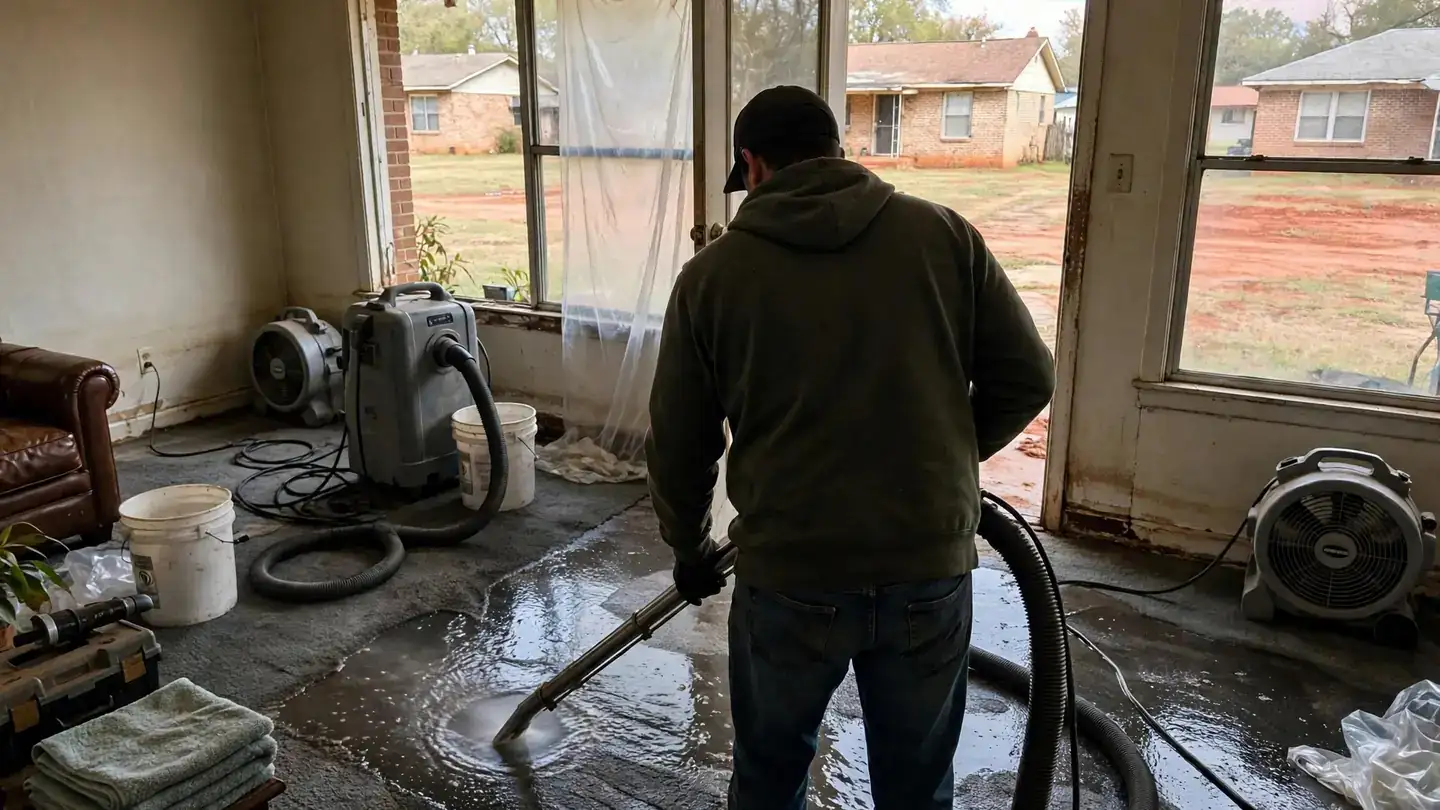
Key facts: Water Extraction
- Removing liquid water by extraction is far faster than waiting for it to evaporate, which is why it is the first step in professional water damage work [1].
- EPA recommends drying water-damaged areas and items within 24 to 48 hours to help prevent mold growth [2].
- Restoration standards classify water by contamination level, from clean supply water to grossly contaminated sewage or floodwater [1].
- Standard homeowners policies usually exclude flood from rising surface water; that requires separate flood insurance [3].
Why it matters
Why getting the water out comes before everything else
Water damage gets worse with every hour that water sits in a house. Carpet pad soaks it up like a sponge, drywall wicks it upward from the floor, wood swells and subfloors absorb it from above. The longer it stays, the deeper it goes, and the longer drying will take. Extraction interrupts that process by removing liquid water mechanically, which is many times faster than evaporating it with fans and dehumidifiers [1].
A common mistake is to set up a few box fans and hope for the best. Fans move air across the surface, but they do nothing about the gallons sitting in a carpet pad or pooled under a laminate floor. Until that bulk water is gone, drying equipment simply cannot keep up, and the house stays damp long enough for mold to take hold. EPA's guidance is to dry water-damaged materials within 24 to 48 hours [2], and extraction is how professionals give themselves a chance of meeting that window.
Extraction also limits secondary damage. Water that is pulled out quickly does not have time to migrate under baseboards into the next room, wick into cabinet bases or seep through a slab joint. In practical terms, a fast extraction often means fewer materials need to be removed later.
Signs you need extraction
Signs there is more water than fans can handle
Carpet squishes underfoot
If water rises around your shoe when you step, the pad beneath is saturated and needs extraction, not just airflow.
Read moreStanding water on hard floors
Puddles on tile, vinyl or laminate are moving under baseboards and between planks as you watch.
Water in the crawlspace
Pooled water under a pier-and-beam house will not drain on its own if the soil is clay.
Baseboards darkening
A dark line creeping up the baseboard shows water wicking into the wall from the floor.
Water pouring through a ceiling
Water from an upstairs bathroom or attic line collects in ceiling cavities before it finds its way down.
Read moreMusty smell within a day
An earthy odor that appears quickly means materials are holding a lot of water.
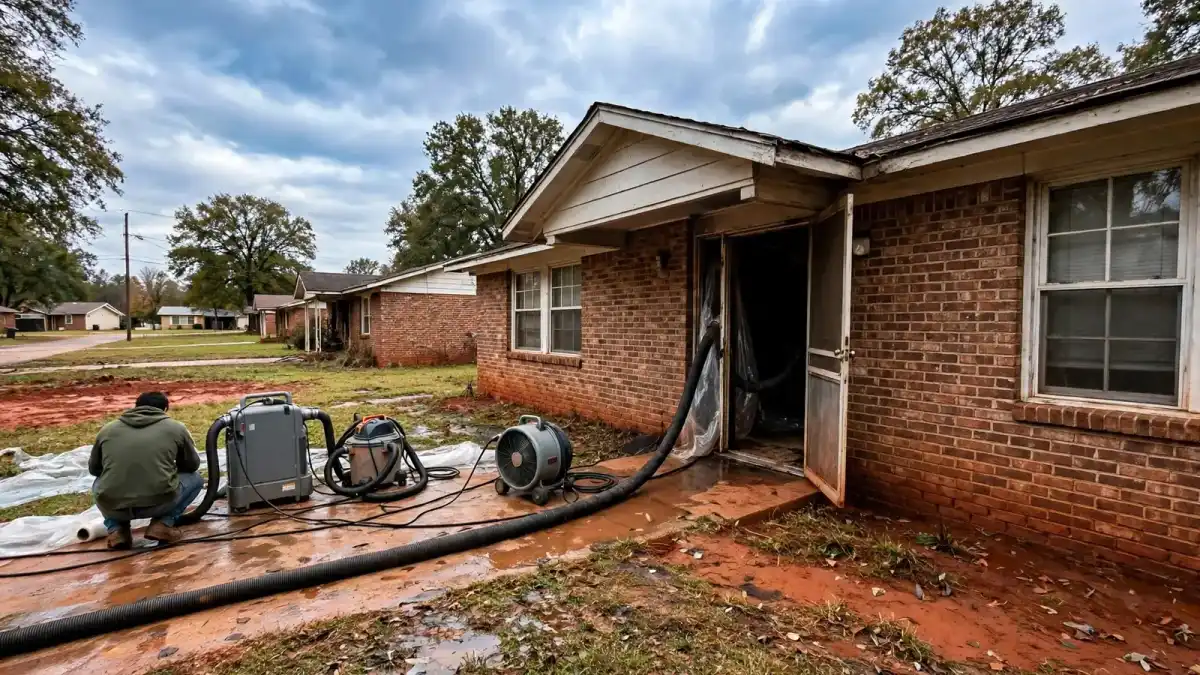
Truck-mounted units provide strong suction for large losses
Categories of water
Clean, gray and black water: why the source changes extraction
Restoration professionals sort water into three categories based on contamination, a system set out in the ANSI/IICRC S500 standard for water damage restoration [1]. Category 1 is clean water from a sanitary source, such as a burst supply line or an overflowing sink with no contaminants. Category 2 has significant contamination, such as washing machine or dishwasher discharge. Category 3 is grossly contaminated, such as sewage, toilet overflow with waste, or floodwater that has flowed across the ground.
The category changes how extraction is done and what happens next. Clean water extraction may allow carpet to be dried in place. Category 2 and especially Category 3 water require protective equipment, removal of porous materials that the water touched, and cleaning and disinfection after extraction. Water can also change category over time: clean water that sits for a few days in a warm house picks up contaminants from building materials and dust and is no longer treated as clean.
When you call, describe where the water came from as clearly as you can. A burst supply line, a failed water heater, a dishwasher hose, a toilet backup and storm water entering under a door are all different situations.
Equipment
Extraction equipment and where it is used
| Equipment | What it does | Typical use |
|---|---|---|
| Truck-mounted extractor | High suction from a unit in the truck, hose run into the house | Large areas, heavily saturated carpet |
| Portable extractor | Electric unit carried into the house | Upper floors, apartments, smaller areas |
| Weighted or rider extraction tool | Presses carpet and pad while extracting | Pulling water from pad without removing carpet |
| Submersible pump | Pumps standing water out through a hose | Deep water in crawlspaces, cellars, storm shelters |
| Squeegee and wet vacuum | Moves and collects water on hard surfaces | Tile, concrete, vinyl |
| Floor drying mats | Suction panels on hardwood | Drawing water out of wood floors |
How it is done
How a professional water extraction usually goes
- 1
Stop the source
The water supply is shut off or the leak isolated. If storm water is entering, the entry point is blocked where possible.
- 2
Make it safe
Power to wet areas is turned off at the breaker, and the crew checks for sagging ceilings and slip hazards.
- 3
Identify the category
The crew determines whether the water is clean, gray or black, which decides protective gear and what can be kept.
- 4
Move contents
Furniture is moved or blocked up, and rugs and boxes are taken to a dry area.
- 5
Extract standing water
Pumps and extractors remove pooled water from floors, crawlspaces and low areas.
- 6
Extract from carpet and pad
Weighted extraction tools pull water out of carpet and pad, or the pad is removed if it cannot be kept.
- 7
Measure
Moisture meters and thermal imaging show where water remains in walls, floors and cabinets.
- 8
Hand off to drying
Dehumidifiers and air movers are set up, and daily readings begin.
While you wait
What you can do before the crew arrives
- Shut off the main water valve if the source is a plumbing leak. In most Oklahoma City homes it is near the meter at the street or where the line enters the house.
- Turn off power to rooms with standing water if you can reach the breaker panel without stepping in water.
- Lift furniture onto foil, plastic lids or blocks so wood legs do not wick water and stain the carpet.
- Move rugs, electronics, books and boxes off the wet floor.
- Photograph the water, the source and the affected rooms before anything is moved further.
- Do not use a household vacuum to pick up water.
- If the water is from a sewer backup or floodwater, keep children and pets away and avoid touching it.
Oklahoma City factors
What makes extraction different in Oklahoma City
Oklahoma City homes are built on a mix of foundations. Many older houses in the central neighborhoods sit on pier-and-beam foundations with a crawlspace. Most homes built from the 1960s onward sit on concrete slabs. Basements are relatively uncommon, though storm cellars and below-grade storm shelters are widespread. Each of these changes where water goes and how it is removed.
On a slab, water spreads across the floor and under flooring, baseboards and bottom plates. On pier-and-beam, water drains through the floor into the crawlspace, where the clay soil common across central Oklahoma absorbs it slowly, so pools can sit for days. In storm shelters and cellars, water collects at the lowest point and usually has to be pumped.
Weather is the other factor. Spring and early summer bring intense thunderstorms with heavy rain and hail, and the National Weather Service office in Norman regularly issues flash flood warnings for the metro [5]. Winter brings hard freezes and ice storms that burst pipes in attics, exterior walls and crawlspaces. Both kinds of event can create a surge of calls across the city at once.
Hidden water
Water you cannot see after extraction
Extraction removes the water you can see and much of what is in carpet and pad. It does not remove water inside wall cavities, under cabinets, beneath vinyl plank or laminate floors, or inside the subfloor. That hidden water is why moisture mapping matters. A thermal camera shows cool, damp areas behind surfaces, and a moisture meter confirms them.
Laminate and luxury vinyl plank floors are a particular challenge. They often look dry on top while water sits underneath, trapped against the slab or subfloor. Some of these floors can be lifted and dried; many have to be removed. Cabinets, especially in kitchens and bathrooms, hide water under the toe kick and behind the back panel.
Ask the contractor you're connected with to show you the moisture readings and explain what will be done about water they find behind walls and under floors.
Insurance
Water extraction and your insurance
Whether extraction is covered depends on where the water came from and on your policy. Sudden and accidental discharges from plumbing, such as a burst supply line or a failed water heater, are often covered by homeowners policies. Long-term leaks, wear and tear and maintenance problems usually are not. Water from flooding, meaning rising surface water from outside, is generally excluded from standard homeowners policies and requires separate flood insurance through the National Flood Insurance Program or a private insurer [3].
Sewer and drain backups are another common exclusion unless you added a water backup endorsement. The Oklahoma Insurance Department provides consumer guidance on homeowners coverage and complaints [4]. Call your insurer early, describe the source honestly and ask what they need before work begins. Photos of the source and the water before extraction are some of the most useful evidence you can provide.
Materials
What extraction can save and what it cannot
| Material | Clean water (Category 1) | Contaminated water (Category 2 or 3) |
|---|---|---|
| Carpet | Often dried in place | Usually removed |
| Carpet pad | Sometimes dried, often replaced | Removed |
| Hardwood floors | Dried with mats when caught early | Cleaned and dried; replaced if badly affected |
| Laminate and vinyl plank | Often removed to dry slab | Removed |
| Drywall | Dried if readings allow | Cut out above the wet line |
| Upholstered furniture | Cleaned and dried | Usually discarded |
Upper floors
Extraction in apartments and two-story homes
Water released on a second floor or in an upstairs apartment does not stay there. It runs through the floor into the ceiling cavity below, soaks insulation and drywall, and drips out of light fixtures and smoke alarm openings. Extraction in these cases means removing water from the upper floor and opening or draining the ceiling below in a controlled way.
In apartment buildings and condos, water damage frequently crosses unit lines. The building owner or association usually handles common areas and the structure, while each resident deals with their own belongings. Reporting the leak to management right away and documenting your unit helps sort out responsibility later.
Questions to ask
Questions for the contractor about extraction
- What category of water do you think this is, and how will that change the work?
- Will you try to dry the carpet and pad in place or remove them?
- How will you check for water under hard flooring and inside walls?
- Will you check the crawlspace or storm shelter if there is one?
- How often will you take moisture readings during drying?
- Can you provide photos and readings for my insurance claim?
Related services
What comes after extraction
Extraction is the first stage. Once the bulk water is out, structural drying removes the moisture left in walls, floors and framing. If the water came from a broken pipe, see burst pipe water damage. Water from a drain or sewer line calls for sewage backup cleanup, and water in a cellar, storm shelter or basement is covered under flooded basement cleanup.
Storm water
When storm water comes in under the doors
Heavy thunderstorms can push water under exterior doors, through window wells and garage doors, and into homes on low lots or at the bottom of a slope. In Oklahoma City, slab homes with patios or driveways that slope toward the house are especially prone to this during intense rain. That water has crossed the ground outside and is treated as contaminated, so extraction is followed by cleaning and disinfection of the floors and lower walls it touched.
Whether insurance covers storm water entering the house depends on how it got in. Water that entered because wind or hail damaged the roof or a window is often treated differently from surface water flowing in at ground level, which is usually considered flood. Photograph the path the water took and any damage to the roof, windows or doors, and describe it accurately to your insurer.
Pets and safety
Electrical and slip hazards around standing water
Standing water and electricity are a dangerous combination. Extension cords, power strips, floor outlets and appliances sitting in water can energize it. If you cannot reach the breaker panel without walking through water, stay out and wait for the crew or an electrician. Do not plug in or unplug anything while standing on a wet floor.
Wet tile and vinyl are slippery, and soaked carpet can hide uneven floors and debris. Keep children and pets out of wet rooms, and wear rubber boots if you must walk through. If the water is from a sewer or flood source, avoid skin contact and wash thoroughly afterward.
Water heaters
Water heater failures and garage floods
Many Oklahoma City homes have their water heater in the garage, a hall closet or the attic. When a tank fails, it can release its full capacity and then keep filling from the supply line until someone shuts the valve. A heater in an attic is the worst case: the water soaks insulation and ceiling drywall and comes through light fixtures in the rooms below. A heater in a hall closet sends water across the slab under carpet and into bedrooms.
Shut the cold-water valve on top of the heater, or the main valve, and turn off power or gas to the heater before anything else. Extraction then focuses on the rooms around the heater location and any ceiling cavities below an attic unit. If the heater sat in a drain pan without a working drain line, mention that on the call; it often explains how far the water spread.
Appliances
Washing machines, dishwashers and ice makers
Appliance hoses are a leading source of household water damage. A burst washing machine supply hose can release a large volume of water in a short time, and a slow dishwasher or refrigerator ice maker leak can soak a subfloor and cabinet base for weeks before anyone notices. Washer discharge water is usually treated as gray water because it contains detergent and soil.
After extraction, kitchen and laundry losses often need toe kicks removed or holes drilled at the base of cabinets so air can reach the hidden cavity beneath. Braided stainless supply hoses and a water leak sensor near each appliance are simple upgrades worth making once the repairs are done.
Timing
What happens to water left in a house
| Time | What tends to happen |
|---|---|
| First hour | Water spreads across floors and under baseboards; carpet pad saturates |
| Hours 1 to 24 | Drywall wicks water upward; wood begins to swell; furniture stains carpet |
| Days 1 to 2 | Musty odor; mold growth can begin on damp materials |
| After 2 days | Clean water is no longer considered clean; more materials need removal |
| After a week | Visible mold, warped floors, delaminated cabinets and stronger odor likely |
FAQ
Water extraction questions
How fast should water be extracted?
As soon as the source is stopped and the area is safe. Within the first few hours is ideal, because water spreads and soaks deeper the longer it sits.
Can wet carpet be saved?
Often, when the water is clean and extraction happens quickly. Carpet soaked by sewage or floodwater is usually removed for health reasons, and wet pad is frequently replaced.
Can I rent a wet vac and do it myself?
A shop vacuum helps with small spills on hard floors. It cannot pull water out of carpet pad, under flooring or from inside walls the way professional extraction and moisture mapping can.
What happens to water under my laminate floor?
It usually stays trapped against the slab or subfloor. Many laminate and vinyl plank floors need to be removed so the floor beneath can dry.
Is extraction covered by insurance?
It often is when the water came from a sudden plumbing failure. Flood from rising surface water and sewer backups are commonly excluded unless you have the right coverage.
How do you get water out of a crawlspace?
Standing water is pumped out, wet insulation and debris are removed, and dehumidifiers are run until the soil, piers and wood framing dry.
Will extraction stop mold?
It is the most important step, but it is not enough alone. Materials must also be dried to normal moisture levels within a day or two.
Why does my floor still feel damp after extraction?
Extraction removes liquid water, but moisture remains inside materials. Dehumidifiers and air movers finish the job over several days.
Should I pull up wet carpet myself?
Wait if you can. Lifting soaked carpet is heavy work, can tear the backing and makes it harder to dry in place. Move furniture and photograph everything, and let the crew decide what to keep.
How long does water extraction take?
Extraction itself often takes a few hours for a typical room or two. Larger losses, crawlspaces and multiple floors take longer. Drying afterward usually runs several more days.
Do I need to leave the house during extraction?
Usually not for clean water losses, though the equipment is noisy and some rooms will be off limits. For sewage or floodwater, keep children, pets and anyone with health concerns away until cleaning is done.
What if the water came from my upstairs neighbor?
Report it to the building manager and your own insurer, photograph the damage, and arrange extraction promptly. Responsibility is sorted out between the policies later; waiting only makes the damage worse.