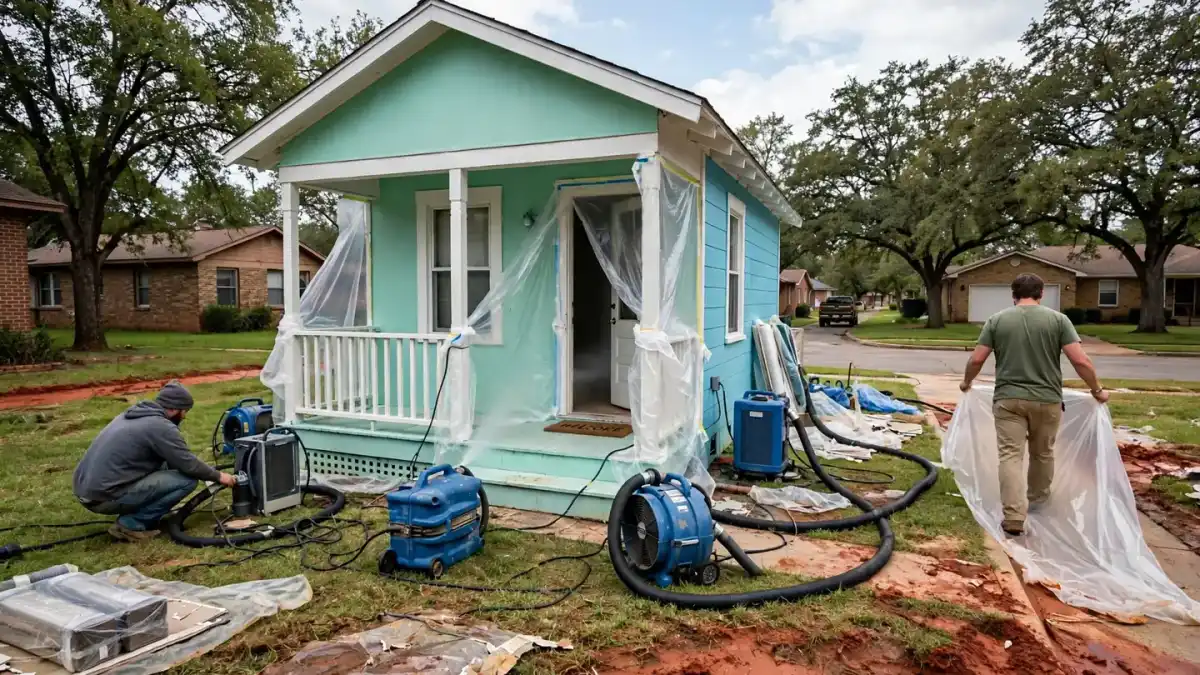
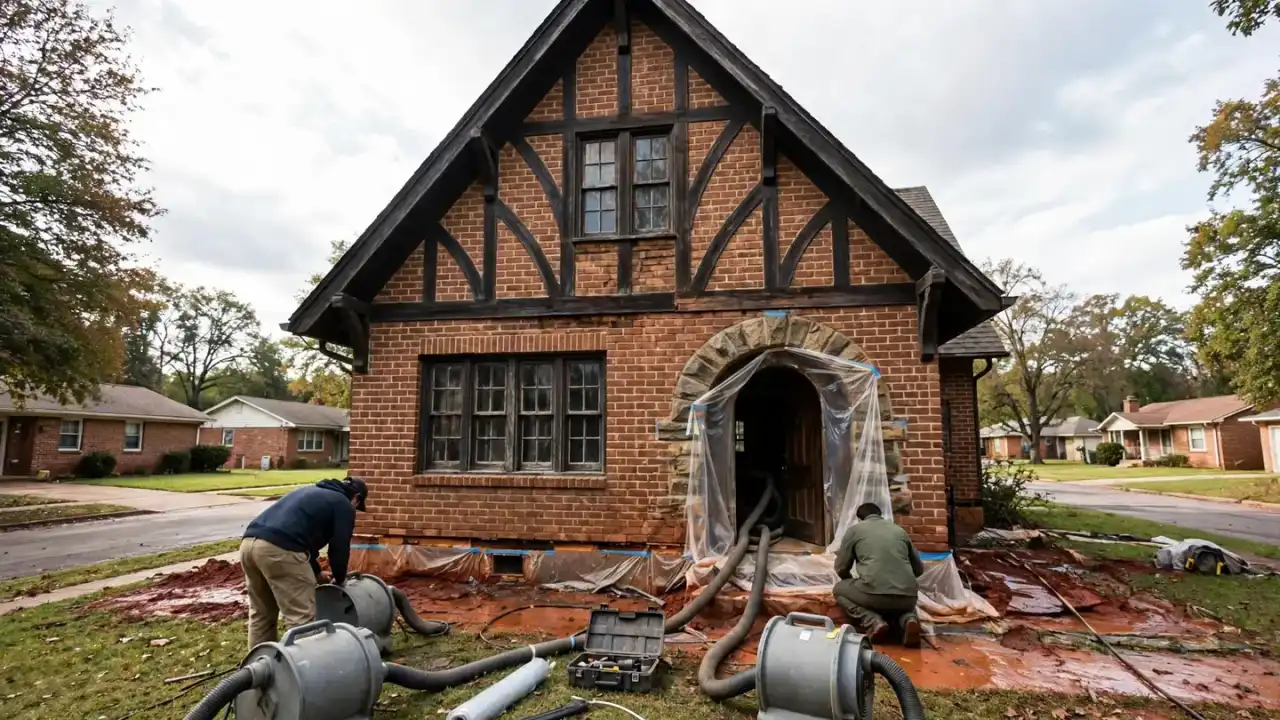
Key facts: Crown Heights
- The Crown Heights Historic District, which covers the blocks from NW 36th to NW 43rd Street between Walker and Western, was listed on the National Register in 1995 [1].
- The district's period of significance runs from 1925 to 1949, with Tudor Revival, Colonial Revival and Mission or Spanish Revival styles [1].
- Crown Heights appears among the National Register historic districts listed for Oklahoma County [2].
- Crown Heights is also one of Oklahoma City's historic preservation districts, where exterior changes need review [3].
Coverage
Crown Heights ZIP covered
Calls from Crown Heights addresses in ZIP 73118 can be connected to an independent contractor, including streets between NW 36th and NW 43rd from Walker Avenue to Western Avenue, and nearby Edgemere Park blocks.
- ZIP 73118: Crown Heights, Edgemere Park and the northern Paseo blocks
- Neighboring covered ZIPs: 73103 (Mesta Park and Heritage Hills) and 73112 (west of Western)
- Addresses outside the covered ZIPs may not be connected
Homes here
What Crown Heights houses are like
Crown Heights sits in north-central Oklahoma City, roughly between NW 36th and NW 43rd Streets and between Walker and Western Avenues. Its National Register district covers homes built from 1925 to 1949, many associated with developer G. A. Nichols, in Tudor Revival, Colonial Revival and Mission or Spanish Revival styles [1]. Part of the area was once the Oklahoma City Golf and Country Club course; that land is now Crown Heights Park.
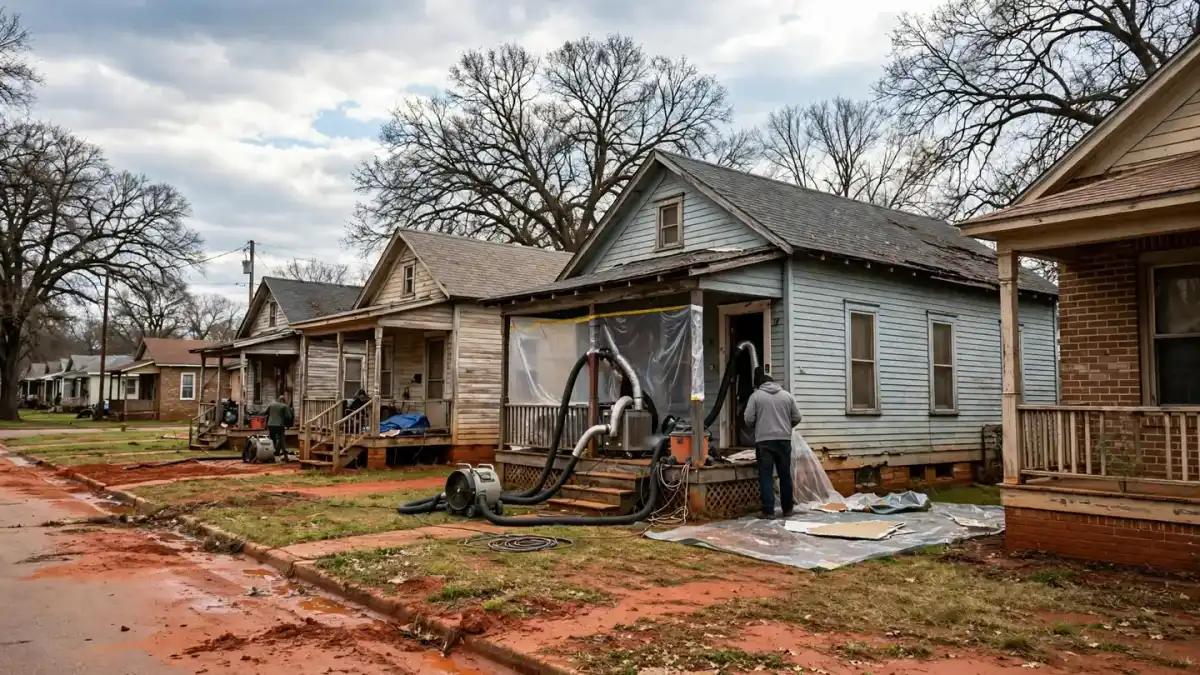
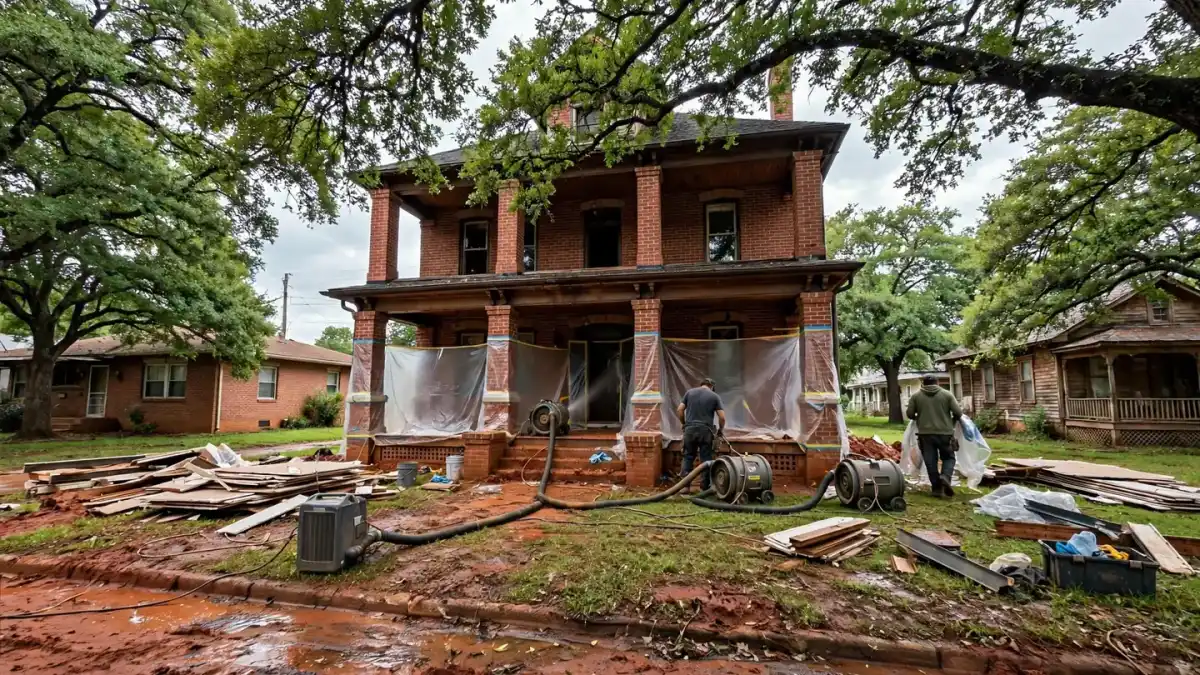
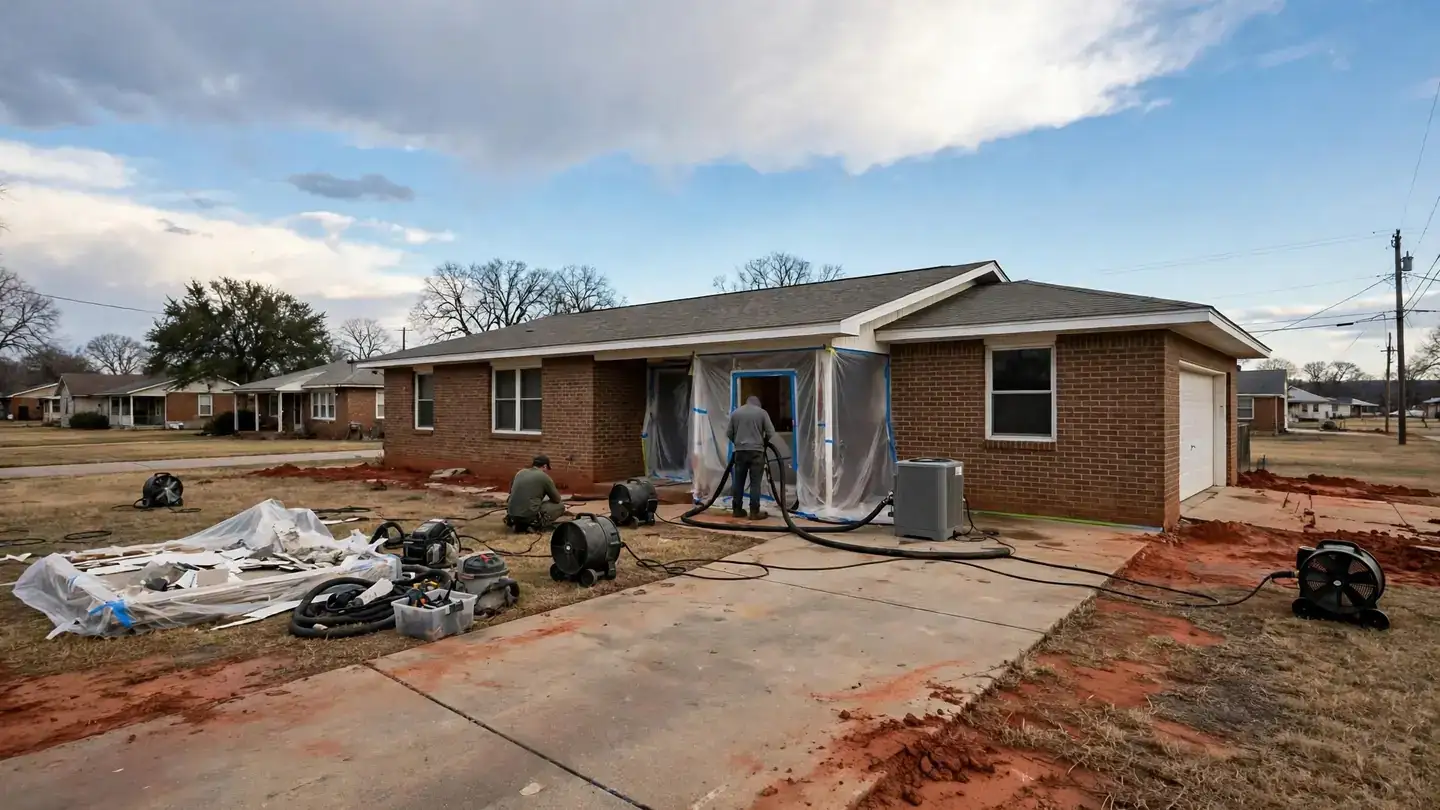
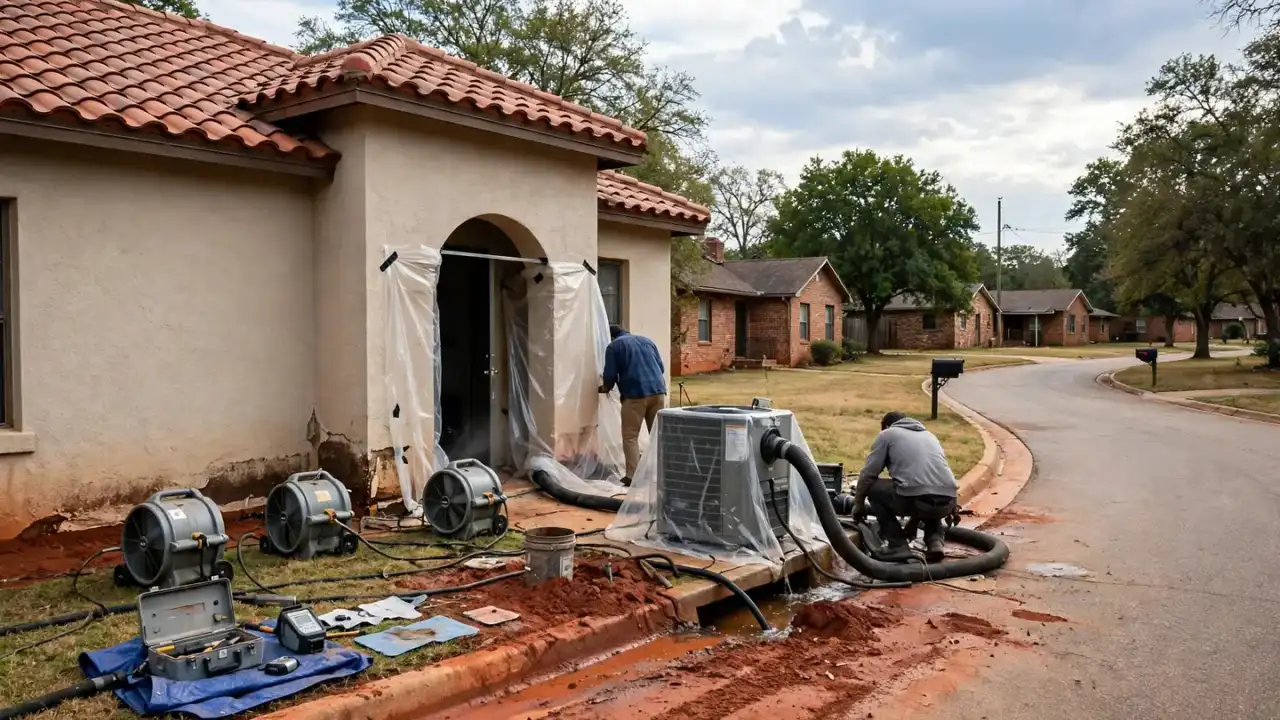
The typical Crown Heights house is a one- or one-and-a-half-story brick home with a steep front gable, an arched entry, a chimney on the front or side, leaded or multi-pane windows and a detached or attached garage reached by a narrow driveway. Larger two-story houses line some streets. Inside, expect plaster walls in earlier homes, oak floors, arched openings, coved ceilings and original tile bathrooms, often updated in later decades.
Most houses sit on pier-and-beam foundations with a crawlspace, or on a perimeter foundation with a short crawlspace, rather than slabs. Plumbing runs through that crawlspace, and many homes still have some of their original cast iron drain lines and clay sewer laterals.
What pros see
Water damage patterns in Crown Heights
Cast iron drain failures
Original drains rust through or crack under floors and inside walls, often leaking slowly.
Crawlspace water
Leaks and storm runoff collect under pier-and-beam floors on clay soil.
Steep roof valleys
Tudor rooflines with valleys and dormers concentrate water and leak at flashing.
Bathroom leaks into floors
Vintage tile bathrooms hide failing supply lines and drains beneath.
Hardwood cupping
Oak floors over plank subfloors cup when water wets them from above or below.
Sewer backups
Clay sewer laterals invaded by tree roots back up into the lowest drains.
Cast iron
Original cast iron drains under Crown Heights homes
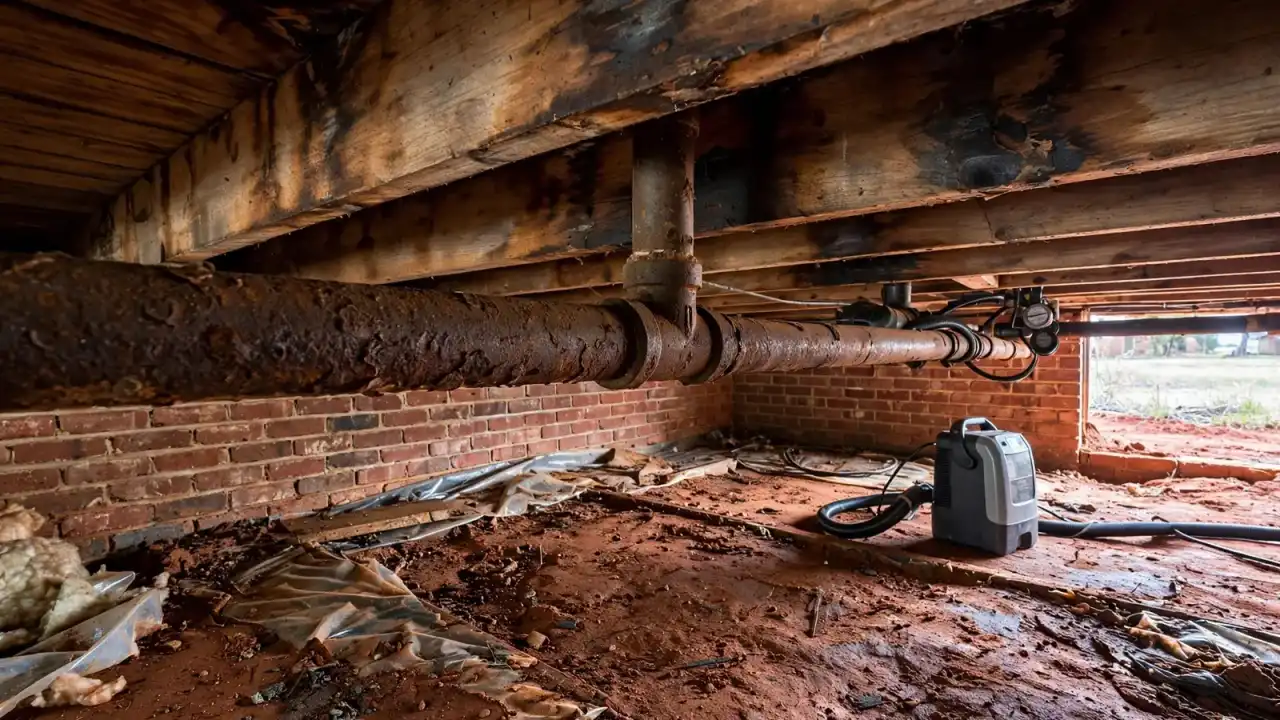
Homes built in the 1920s through the 1940s used cast iron for drain and vent piping. Cast iron is strong and quiet, but after seventy to a hundred years it corrodes from the inside. The bottom of horizontal pipes, where water flows, thins first; eventually it cracks along the length of the pipe or rusts through. Joints sealed with lead and oakum can also loosen.
Under a pier-and-beam house, a failing drain leaks into the crawlspace, often slowly, so the first sign may be a sewer smell, a damp or soft spot in a bathroom floor, or a musty odor. Inside walls, a cracked stack can leak behind tile or plaster. Water from drains is contaminated and needs cleaning and disinfection along with drying.
A plumber with a camera can inspect drain lines and recommend spot repair, lining or replacement. If the drain failed, it is worth asking about the condition of the rest of the system while the crawlspace or wall is open.
Original cast iron drains can rust through after decades
Crawlspaces
Crawlspaces on Crown Heights clay
Crown Heights, like much of central Oklahoma City, sits on clay-rich soil that swells when wet and shrinks when dry [6]. After long rains, the soil in a crawlspace can become saturated and stay muddy for days, and runoff from gutters and driveways can run under the house if grading is poor. Plumbing leaks add more water from above.
A wet crawlspace keeps the subfloor and joists damp, invites mold and wood decay, draws musty air into the house through gaps in the floor, and can affect the oak floors above. Drying usually involves pumping standing water, removing wet insulation and debris, laying a new vapor barrier and running dehumidifiers until the wood reads dry. Clay soil movement can also shift piers over time, which is a separate question for a foundation specialist.
Roofs
Steep Tudor roofs and storm leaks
The steep, multi-gabled roofs that give Tudor houses their charm also concentrate water. Valleys where two roof planes meet carry heavy flows during thunderstorms, and flashing around chimneys, dormers and walls is a common leak point. Hail, a regular hazard in central Oklahoma, can damage shingles or older slate and tile, opening the way for water.
Leaks in these roofs often show up as stains on upstairs sloped ceilings, at the junction of walls and ceilings, or around chimney breasts. Attic spaces behind knee walls in one-and-a-half-story homes hide wet insulation that holds water against the ceiling. The roof is repaired first, then wet insulation is removed and the ceilings and walls are dried.
Sources
Water sources in Crown Heights homes and first steps
| Source | Typical damage | First step |
|---|---|---|
| Cast iron drain crack | Crawlspace contamination, damp floor | Stop using that drain; call a plumber |
| Supply line leak | Wet walls and floors | Shut the main valve |
| Roof valley or chimney leak | Upstairs ceiling and wall stains | Catch drips; arrange tarping |
| Sewer lateral backup | Sewage at the lowest drain | Stop water use; call a plumber |
| Storm runoff under the house | Wet crawlspace, musty odor | Pump and dry; fix grading and gutters |
| Water heater failure | Garage, closet or utility room flooding | Shut the water and power or gas to the heater |
Historic district
Historic preservation rules for Crown Heights repairs
Crown Heights is one of Oklahoma City's historic preservation districts [3]. Exterior changes visible from the street generally require a Certificate of Appropriateness before work begins. That can include replacing windows or doors, changing roofing materials, altering chimneys and modifying porches or entries. Many like-for-like repairs are approved by staff.
Interior water damage work does not need historic review. Plumbing, electrical, building and mechanical permits come from the city's Development Services Department [5]. If water damage leads to exterior repairs, such as replacing leaded windows damaged in a storm or reroofing after a leak, plan for the historic review alongside the insurance claim.
Permits
Approvals that may apply in Crown Heights
- Certificate of Appropriateness for exterior changes in the historic preservation district [3].
- Plumbing permits for drain or sewer replacement and building permits for structural repairs [5].
- Electrical inspection before power is restored to circuits exposed to water.
- Lead-safe practices when sanding or scraping old painted surfaces.
- Asbestos testing before removing old pipe insulation or flooring.
Floors
Oak floors over pier-and-beam framing
Crown Heights homes typically have oak strip floors laid over wood subfloors on joists. Water can reach them from a leak above or from a wet crawlspace below. Floors absorb moisture from whichever side is wetter, and uneven moisture causes cupping. The best approach dries the floor from both sides at once: floor drying mats or dehumidification in the room above, and pumping and dehumidifying the crawlspace below.
Patience pays off. Floors that are refinished before they are fully dry may crown later. If boards are badly damaged, matching original oak is usually possible with reclaimed or new stock milled to the same profile.
Planning a visit
Preparing for a contractor visit in Crown Heights
- 1
Stop water use or shut the main
Shut the main valve or stop using drains if the problem is a drain or sewer line.
- 2
Locate the crawlspace access
Find the hatch or exterior access door so the crew can inspect under the house.
- 3
Describe the source
Say whether the water came from a supply line, drain, roof, water heater or outside.
- 4
Note original features
Point out tile bathrooms, plaster walls, arched openings and floors you want preserved.
- 5
Mention the garage
Detached garages and narrow driveways affect where equipment can go.
- 6
Contact your insurer
Report the loss and ask what they need before work begins.
Garages
Detached garages and backyard structures
Many Crown Heights lots have a detached garage at the end of a narrow driveway, some with an apartment or studio above. Water lines to these buildings often run underground or through unheated spaces and can freeze in hard cold. Flat-roofed garages and additions also leak when drains clog.
If an outbuilding has water damage, report it separately; detached structures often fall under a different part of the homeowners policy. Drying a garage apartment follows the same steps as the main house, but access for equipment along a narrow driveway should be planned with the contractor.
Trees
Mature trees, roots and sewer lines
The mature trees that shade Crown Heights streets have extensive root systems that seek out water. Old clay sewer laterals, with joints every few feet, are an easy target. Roots enter through tiny gaps, grow into dense mats inside the pipe and eventually cause backups. Root intrusion is one of the most common reasons for sewer problems in older Oklahoma City neighborhoods.
Signs include slow drains throughout the house, gurgling toilets and backups after heavy use. A plumber can clear roots and use a camera to assess the line. Recurring root problems usually point toward lining or replacing the lateral. If a backup has already occurred, the contaminated area needs cleaning and disinfection as well as drying.
Winter
Freezing risks in Crown Heights crawlspaces
Pier-and-beam houses expose their plumbing to cold air in the crawlspace. Foundation vents that help in summer let freezing air in during winter, and supply lines running along exterior foundation walls are especially vulnerable. During arctic cold, close or cover foundation vents, insulate exposed pipes and keep the heat steady inside.
If a crawlspace pipe bursts, water drains straight into the soil and may run for hours before anyone notices. Watch for low water pressure, sounds of running water under the floor and a moving water meter. Shut the main valve right away and call a plumber, then arrange drying for the crawlspace.
Mold
Moisture, mold and older homes
Older homes with crawlspaces can hold moisture in hidden places, and EPA advises drying water-damaged materials within 24 to 48 hours to reduce mold risk [4]. In Crown Heights houses, mold most often appears on joists and subfloor in a damp crawlspace, behind vintage tile where a slow leak persisted, and in closets on exterior walls.
If you notice a persistent musty smell, have the crawlspace checked first. Fixing the water source, drying the area and removing affected materials is the reliable fix; masking the odor with fragrance or sealing over damp wood does not solve the problem.
Windows
Leaded and steel windows after storms
Many Crown Heights houses have leaded glass, casement or early steel windows that are central to their character. Wind-driven rain during spring storms can push water past aging glazing and weatherstripping, and hail can crack panes. Water entering at a window runs down inside the wall and shows up as stains below the sill or bubbling plaster.
Repair is usually possible: leaded panels can be re-leaded or have individual pieces replaced, steel casements can be cleaned, repaired and reglazed, and wood sashes can be restored. Replacement is an exterior change that generally needs historic review. Drying the wall below the window and checking the framing for rot are part of the water damage work.
Chimneys
Chimney leaks in Tudor homes
Prominent brick chimneys are a signature of Tudor Revival houses, and they are a frequent leak source. Cracked crowns, failed flashing where the chimney meets the roof, and porous old brick can all let water in. The water often appears on the wall beside the fireplace, on the ceiling near the chimney breast or in the attic.
A chimney professional or mason can repair the crown, repoint mortar and replace flashing. Inside, the restoration contractor dries the plaster and framing around the chimney. Because chimney appearance is part of the historic streetscape, significant changes to a chimney may need review.
Insurance
Insurance and older drain systems
Insurers often distinguish between sudden water damage and gradual deterioration. A cast iron drain that cracks suddenly may be treated differently from one that has been seeping for months. Damage to the pipe itself is often excluded as wear and tear, while resulting water damage may be covered, depending on the policy. Sewer backups usually require a specific endorsement.
Document the failed pipe with photos, keep the plumber's written findings, and photograph the damage before cleanup. The Oklahoma Insurance Department provides consumer help if you have trouble with a claim. Asking your agent now about backup coverage can prevent surprises later.
Materials
Crown Heights materials and water damage response
| Material | Usual response |
|---|---|
| Plaster walls | Dry in place where sound; patch loose areas |
| Oak strip floors | Dry from above and below; refinish once dry |
| Vintage mortar-bed tile | Dry and keep where possible; access plumbing from behind |
| Cast iron drains | Repair or replace failed sections; inspect the rest |
| Crawlspace insulation and barrier | Remove if wet; replace once dry |
| Leaded and steel windows | Repair and reglaze; review before replacing |
Park edge
Homes near Crown Heights Park
Crown Heights Park, on the former golf course land, is an open green space surrounded by homes. Open lawns and gentle slopes move a lot of water during heavy rain, and houses on the lower edges of the neighborhood can see runoff flow toward their foundations. Driveways that slope toward detached garages behind the house can carry water toward the back of the lot as well.
If water regularly pools near your foundation or runs into the crawlspace during storms, look at where it is coming from: neighboring lots, the street, the driveway or your own downspouts. Small changes, such as extending downspouts, regrading a flower bed or adding a shallow swale, often make a large difference. A drainage contractor can help with larger problems.
Staying home
Living in the house while it dries
Most Crown Heights homes are modest in size, so drying equipment can take over a significant part of the house. If a bathroom or the kitchen is affected, or if a drain leak contaminated part of the crawlspace, many families stay elsewhere for a few days. If only one room is involved, it can usually be closed off while the rest of the house stays in use.
Ask the contractor how long the equipment will run and which rooms will be off limits, and check whether your policy includes additional living expense coverage for temporary housing.
FAQ
Crown Heights water damage questions
Why does my house smell like sewer after rain?
A cracked cast iron drain or clay sewer lateral can leak into the crawlspace, and wet conditions make the odor stronger. A plumber's camera inspection can find the problem.
Can my original oak floors be saved?
Often. Dry the floor from above and the crawlspace from below, wait until readings are normal, and then refinish. Badly damaged boards can be replaced to match.
Do I need historic approval for water damage repairs?
Interior repairs do not. Exterior changes such as new windows, doors or roofing generally need a Certificate of Appropriateness in the Crown Heights district.
Why is my crawlspace always damp?
Clay soil holds water, and runoff from gutters or poor grading can flow under the house. Gutters, downspout extensions, grading and a good vapor barrier help.
Should old cast iron drains be replaced?
If one section has failed, others may be close behind. A camera inspection helps you and your plumber decide between spot repair and wider replacement.
Who issues permits in Crown Heights?
Oklahoma City's Development Services Department issues building and trade permits. Historic review is handled separately.
Can leaded glass windows be repaired after storm damage?
Yes. Leaded panels can be repaired or re-leaded and individual pieces replaced. Replacing windows is an exterior change that generally needs historic review in Crown Heights.
Why is there water on the wall next to my fireplace?
A cracked chimney crown, failed flashing or porous brick may be letting water in. A chimney professional should repair the source before the wall is dried and patched.
How long does a Crown Heights crawlspace take to dry?
Often several days to a week with pumps and dehumidifiers, longer after heavy rain when the clay soil is saturated. Readings on the joists and subfloor show when it is done.
Sources and citations
- [1]NPS: Crown Heights Historic District record
- [2]Wikipedia: National Register listings in Oklahoma County
- [3]A Better Life OKC: Historic neighborhoods and preservation districts
- [4]U.S. EPA: A brief guide to mold, moisture and your home
- [5]City of Oklahoma City: Development Services
- [6]Wikipedia: Expansive clay