
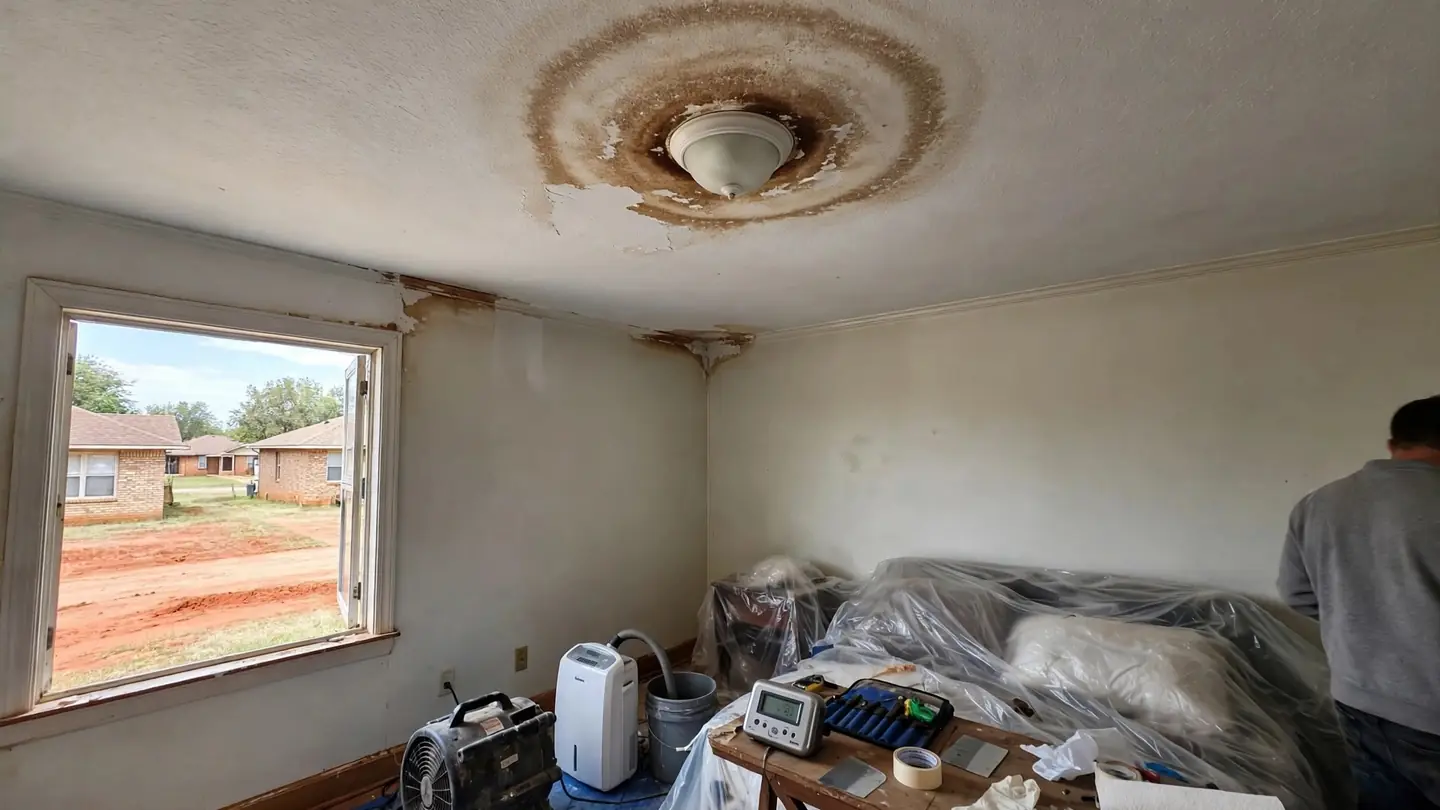
Key facts: Water stain on the ceiling
- Ceiling stains usually come from a roof leak, an attic water line or water heater, an HVAC drain line, or a bathroom above.
- A stain that grows, darkens or feels damp means the leak is still active.
- A sagging ceiling holding water can collapse; keep people out from under it.
- A ceiling soaked for more than a day or two is at risk of mold; EPA advises drying within that window [1].
Short answer
What a ceiling water stain means: the short answer
A water stain on the ceiling means water reached the drywall from above and dried, leaving minerals and tannins behind as a ring. The source is usually a roof leak, a leaking attic water line or water heater, an overflowing air conditioner condensate pan, or a bathroom or appliance on the floor above. If the stain is growing, damp or dripping, the leak is still active and needs attention now.
Painting over the stain without fixing the source only hides it until the next leak. Finding the source comes first; then the ceiling is dried or replaced, sealed and painted.
At a glance
Ceiling stain clues and likely causes
| What you see | Likely cause | What to do |
|---|---|---|
| Stain appears after storms | Roof or flashing leak | Have the roof inspected; check the attic |
| Stain grows in summer | AC condensate pan or line overflowing | Check the pan and drain line in the attic |
| Stain below a bathroom | Toilet, tub or shower leak | Have a plumber check seals and drains |
| Stain near a light fixture or smoke alarm | Water collecting above the ceiling | Turn off the circuit; stay clear |
| Stain after a freeze | Attic supply line split | Shut the main valve; call a plumber |
| Ceiling sagging or bulging | Water pooled on the drywall | Keep people out; call for help |
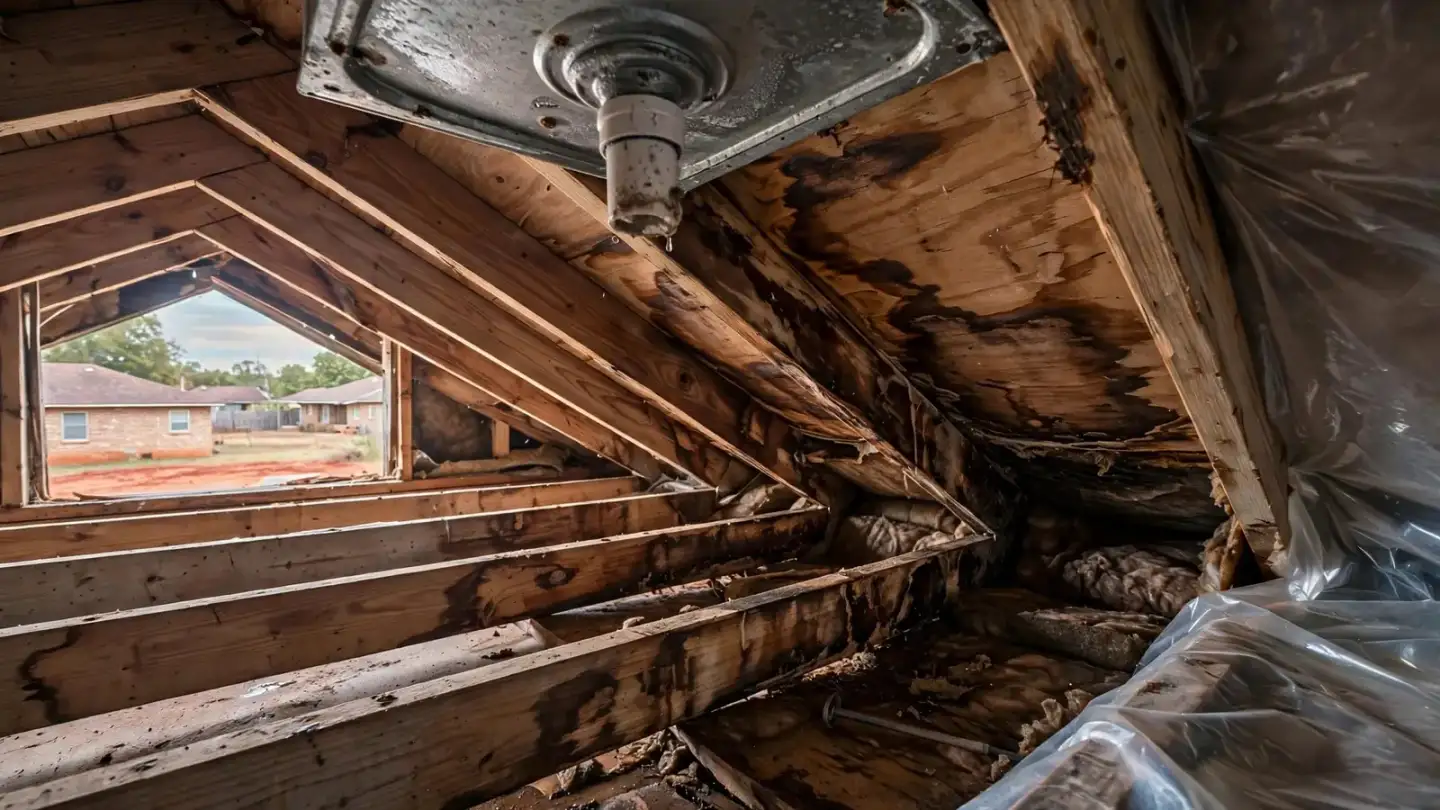
Attic equipment is a common source of ceiling stains
Safe checks
Safe checks you can do yourself
- Touch the stain lightly; damp or soft means the leak is active.
- Mark the edge of the stain with pencil and check it the next day for growth.
- Look in the attic with a flashlight if you can do so safely, stepping only on joists.
- Check the air conditioner drain pan and any water heater in the attic.
- Note whether the stain appeared after rain, after a freeze or in hot weather.
- If the ceiling sags, keep everyone out from under it and turn off the light circuit.
Roof leaks
Roof leaks after Oklahoma storms
Central Oklahoma sees frequent spring and summer thunderstorms with heavy rain, strong wind and hail [2]. Hail can crack shingles and dent flashing, and wind can lift shingles and drive rain under them. Leaks often appear as stains near exterior walls, around chimneys and vents, or under roof valleys. Water may travel along rafters before dripping, so the stain is not always directly under the leak.
Attic equipment
Air conditioner and water heater leaks in the attic
Many Oklahoma City homes have their furnace or air handler in the attic. In summer, the air conditioner produces condensate water that drains through a line to the outside. If that line clogs with algae or debris, the pan overflows and water soaks the ceiling below. Some homes also have water heaters in the attic. A rusted tank or failed fitting can release a lot of water quickly, especially if the drain pan is missing or blocked.
Clearing the condensate line, adding a float switch that shuts the system off when the pan fills, and checking the water heater pan each year prevent many of these stains.
How a pro diagnoses it
How a contractor finds and fixes the source
- 1
Measure moisture
A meter on and around the stain shows whether it is wet now and how far the water spread.
- 2
Inspect above
The attic, roof or floor above is checked to find the source.
- 3
Fix the source
A roofer, plumber or HVAC technician repairs the cause.
- 4
Pull out soaked insulation
Soaked insulation above the ceiling is removed.
- 5
Dry or replace the ceiling
Firm drywall is dried; sagging or crumbling drywall is replaced.
- 6
Seal and paint
A stain-blocking primer stops the ring from bleeding through new paint.
Repair or replace
When the ceiling needs replacing
A small, dry stain on a firm ceiling usually needs only sealing and painting once the source is fixed. A ceiling that sagged, softened, crumbled or stayed wet for more than a day or two is usually replaced, because drywall loses strength when soaked and can grow mold on its paper face. See how long drywall takes to dry for how drying is judged.
Prevention
Preventing ceiling stains
- Have the roof checked after hailstorms.
- Flush the AC condensate line each spring and add a float switch.
- Check attic water heater pans and drain lines yearly.
- Insulate attic water lines against freezing.
- Recaulk tubs and showers and replace worn toilet seals.
Old stains
Telling an old stain from a new one
Old stains are usually dry, with a crisp brown edge and no softness. New or active stains often have a darker center, a damp feel, a slightly bubbled surface or a halo of lighter discoloration spreading outward. If you are not sure, mark the edge with a pencil and look again after a day and after the next rain. A moisture meter gives a definite answer.
Sagging ceilings
When a ceiling starts to sag
A ceiling that bulges downward is holding water, often a lot of it, and soaked drywall can give way without warning. Move people, pets and valuables out from under it and turn off the light circuit for that room. If water is pooling, a professional may make a small controlled hole to drain it into a bucket, which relieves the weight and limits how far the water spreads. Do not push on a sagging ceiling from below.
FAQ
Ceiling stain questions
Is a water stain on the ceiling an emergency?
If it is dripping, sagging or growing quickly, yes. A dry, old stain is not urgent, but the source should still be found before you paint.
Can I just paint over a ceiling stain?
Only after the source is fixed and the ceiling is dry. Use a stain-blocking primer first, or the ring will bleed through.
Why is there a stain but no rain?
Check attic equipment such as the AC drain pan and any water heater, and look for plumbing above the ceiling.
Will a stained ceiling grow mold?
If it stays wet for more than a day or two, it can. Dry it promptly and replace drywall that stayed wet.
Does insurance cover a stained ceiling?
Damage from a sudden leak or storm is often covered; long-term leaks and maintenance issues often are not. Document the source and the damage.
Why does the stain come back after I paint?
Either the leak was not fixed or the stain was painted without a stain-blocking primer. Water-soluble minerals in the drywall migrate through ordinary paint.