
Key facts: Burst Pipe Water Damage
- Pipes freeze most often where they run through unheated spaces such as attics, crawlspaces, garages and exterior walls [1].
- A split supply line keeps releasing water under pressure until the valve is closed, so shutting off the water is the first step [1].
- Sudden and accidental pipe bursts are often covered by homeowners insurance, while gradual leaks usually are not [2].
- Water from a split line soaks insulation and drywall fast, so drying should start inside the 24 to 48 hours EPA suggests [3].
First minutes
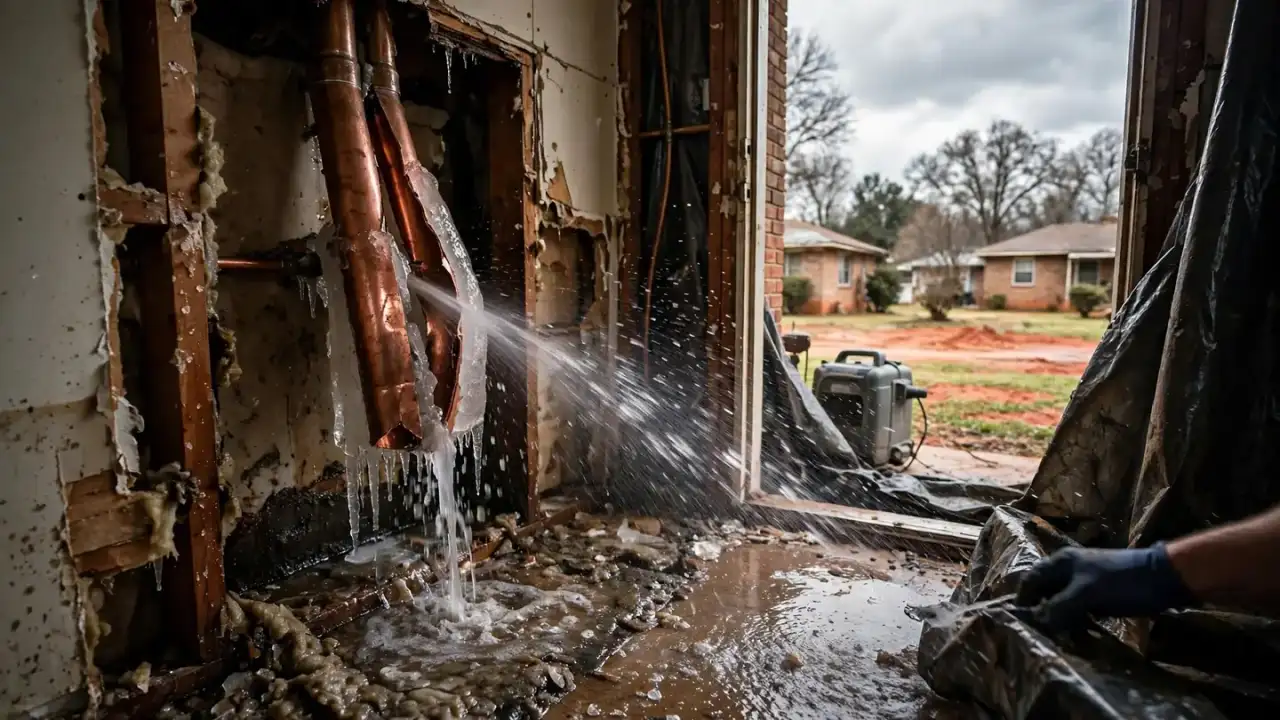
The first thing to do when a pipe bursts
When a pipe bursts, shut off the water. Everything else can wait a minute. The main shutoff valve for most Oklahoma City homes is either in a meter box near the street or on the line where it enters the house, often in the garage, a utility closet or near the water heater. Turn it clockwise until it stops. If you cannot find or turn it, the city's utilities department can help in an emergency [5].
Next, if water is near electrical outlets, light fixtures or the breaker panel, turn off power to those circuits if you can reach the panel without standing in water. Open faucets at the lowest point of the house to drain the remaining water from the lines. Then move belongings out of the water's path and start taking photos.
Call a plumber to repair the pipe and a restoration contractor to remove and dry the water. Those are separate jobs and often separate companies, though some restoration contractors work closely with plumbers. Calling both early keeps the damage from spreading while the pipe is being fixed.
Where pipes burst
Where pipes most often freeze and split
Attic supply lines
Many Oklahoma City homes route water lines through the attic, where winter temperatures can drop close to outdoor levels.
Exterior walls
Pipes in walls facing north or west, especially behind kitchen sinks, lose heat quickly in a hard freeze.
Crawlspaces
Pier-and-beam homes have supply lines under the floor, exposed to cold air through foundation vents.
Garages
Water heaters, washing machines and lines to the house often sit in unheated garages.
Outdoor spigots
Hose bibs with a hose left attached can freeze and split the pipe inside the wall.
Fire sprinkler lines
Apartment buildings and some homes have sprinkler pipes in attics that can freeze and flood units.
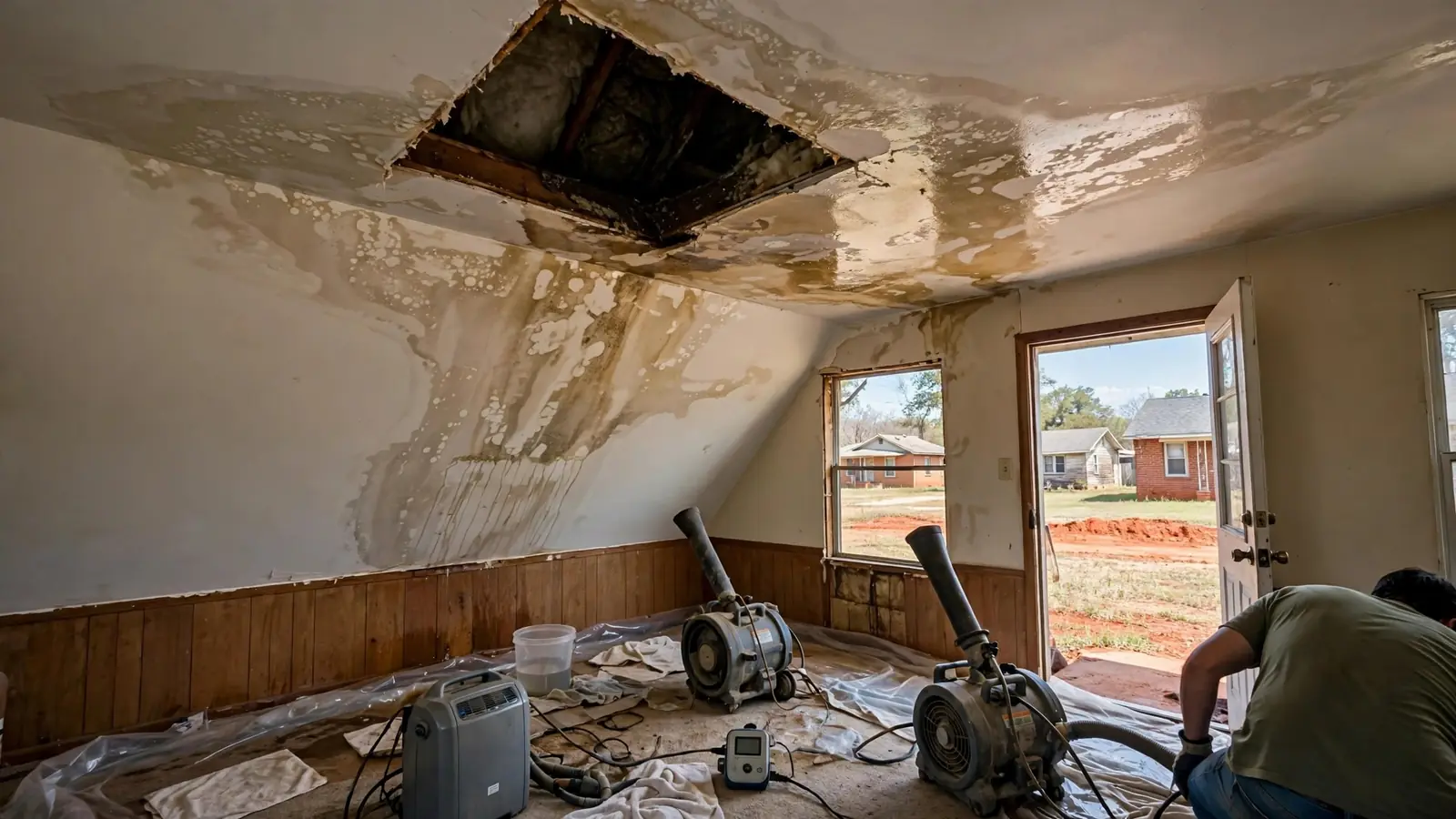
Attic pipe failures often show up first as a ceiling stain
Why they freeze
Why Oklahoma City pipes are vulnerable in a freeze
Oklahoma City usually sees only brief cold snaps, so many homes are not built with the deep pipe protection common farther north. Water lines run through attics to reach bathrooms and kitchens, sit in exterior walls with limited insulation, and pass through ventilated crawlspaces. In a typical winter that works fine. In a prolonged arctic outbreak, it does not.
Severe cold events, such as the extended Arctic outbreak in February 2021 that brought some of the coldest temperatures in decades to central Oklahoma, can freeze lines across the city at once [4]. Ice storms can also knock out power for days, leaving homes without heat. When the pipes thaw, splits that formed while frozen suddenly release water, often in the attic or inside a wall where no one sees it at first.
Freezing is not the only cause. Pipes also fail from age and corrosion, high water pressure, poor joints and physical damage. Galvanized steel lines in older homes rust from the inside, and some plastic pipe types used in past decades have known failure patterns. Those failures can happen any time of year.
At a glance
Burst pipe locations and what they damage
| Pipe location | What gets wet | Typical response |
|---|---|---|
| Attic line | Insulation, ceiling drywall, rooms below | Remove wet insulation; dry or replace ceiling |
| Exterior wall | Wall cavity, bottom plate, flooring | Open or drill wall; dry cavity and floor |
| Under a sink | Cabinet base, subfloor, adjoining walls | Remove toe kick; dry cabinet and floor |
| Crawlspace | Subfloor, joists, soil, insulation | Pump water; dry crawlspace and floor |
| Under a slab | Slab, flooring, lower walls | Leak detection; plumbing reroute or repair; dry floor |
| Garage | Garage floor, adjoining wall, stored items | Extract; dry the shared wall |
The process
How burst pipe water damage is handled
- 1
Water off, pipe repaired
The water is shut off and a plumber repairs or replaces the failed section.
- 2
Find every wet area
Moisture meters and thermal imaging trace how far water traveled through ceilings, walls and floors.
- 3
Extract
Standing water is removed from floors, carpet and crawlspaces.
- 4
Remove wet insulation and damaged drywall
Insulation and ceiling sections that sagged or hold water are taken out.
- 5
Dry
Dehumidifiers and air movers run, with wall cavity drying where possible.
- 6
Monitor
Daily readings confirm progress toward normal moisture levels.
- 7
Repair
Drywall, insulation, flooring and paint are replaced once materials are dry.
Do this now
What to do right now after a pipe bursts
- Shut off the main water valve.
- Turn off power to affected areas if you can safely reach the panel.
- Open the lowest faucets in the house to drain the lines.
- If the water heater is affected or its supply is off, turn off its power or gas.
- Move furniture, rugs and valuables out of the wet area.
- Put buckets under drips and keep people out from under sagging ceilings.
- Photograph the failed pipe, the water and every affected room.
- Call a plumber for the pipe and a restoration contractor for the water.
Ceilings
When the burst pipe is above your ceiling
Attic line failures are common in Oklahoma City because so many homes run water lines overhead. Water from a split attic pipe soaks the insulation first, then the ceiling drywall below. The first sign may be a spreading stain, a bulge or water dripping from a light fixture or smoke alarm. Wet insulation is heavy and holds water against the drywall, and a soaked ceiling can sag and fall.
Keep everyone out from under a bulging ceiling. If water is collecting, the crew may make a small controlled opening to drain it into a bucket. Once the water is out, wet insulation is usually removed and the ceiling is either dried in place, if it stayed firm, or replaced. See water stain on the ceiling for more on what ceiling stains can mean.
Slab leaks
Slab leaks under Oklahoma City homes
In slab homes, some water lines run beneath or within the concrete. When one of those lines fails, water may surface as a warm or wet spot on the floor, damp carpet with no obvious source, a hissing sound, an unexplained jump in the water bill or cracks in flooring. Shifting clay soil around foundations can put stress on lines under slabs over time.
Slab leaks need leak detection and a plumbing repair, which may mean opening the slab or rerouting the line through walls or the attic. The water damage side then involves removing wet flooring, drying the slab surface and lower walls, and confirming the concrete is dry before new flooring goes in. Ask the contractor whether they work with plumbers who handle slab leak detection.
Insurance
Burst pipes and homeowners insurance
Homeowners policies commonly cover sudden and accidental water damage from a burst pipe, including tearing out and replacing damaged walls and floors, though the plumbing repair itself may be treated separately. Damage from a long-term slow leak, or from freezing in a house that was left unheated without reasonable precautions, may be excluded. Policy language varies, so read the water damage and freezing sections of your policy.
The Oklahoma Insurance Department offers consumer guidance and handles complaints about insurers [2]. Report the loss quickly, describe what happened accurately and keep the failed section of pipe if the plumber removes it, since the adjuster may want to see it. Photos taken before cleanup are especially valuable.
Prevention
Preventing the next burst pipe
- Insulate pipes in attics, crawlspaces, garages and exterior walls.
- Disconnect garden hoses and cover outdoor spigots before freezing weather.
- During a hard freeze, open cabinet doors under sinks on exterior walls and let a faucet drip.
- Keep the thermostat at a steady temperature day and night during cold snaps, even when away.
- Seal gaps where cold air enters crawlspaces and walls near pipes.
- Know where your main shutoff is, and make sure it turns.
- Consider a smart leak detector or automatic shutoff valve.
Permits
Plumbing repairs and permits in Oklahoma City
Repairing or replacing water supply piping is plumbing work that is generally performed by a licensed plumber. In Oklahoma City, the Development Services Department handles plumbing permits and inspections where they are required [6]. Large repipes, slab leak repairs and water heater replacements commonly need a permit, while small emergency repairs may not. Your plumber can confirm what applies.
Restoration work such as drying and removing wet materials does not usually need a permit. Rebuilding walls and ceilings typically does not either, unless framing, wiring or plumbing is changed. If the water reached electrical panels, outlets or wiring, have an electrician inspect before power is restored.
Questions to ask
Questions to ask the contractor about a burst pipe
- How will you find out how far the water traveled in the walls and ceilings?
- Will you need to remove the ceiling or can it be dried?
- What will you do with wet attic insulation?
- Do you work with a plumber who can repair the pipe or a slab leak?
- How will you document the damage for my insurer?
- How long do you expect drying to take?
Power outages
Ice storms, power outages and frozen pipes
Central Oklahoma ice storms can bring down tree limbs and power lines across the metro, sometimes leaving homes without electricity for days. Without power, most furnaces stop, even gas furnaces that need electricity for their blowers and controls. Indoor temperatures drop, and pipes in the coldest parts of the house can freeze even if the outside temperature is only a few degrees below freezing.
If you lose power during a freeze and cannot keep the house warm, consider shutting off the main water valve and draining the lines by opening faucets at the lowest point. That simple step can prevent a burst pipe from flooding the house while you are away. When power returns, turn the water back on slowly and check for leaks in the attic, under sinks and in the garage.
Vacant homes
Pipes in vacant homes and rentals
Homes that are empty during the winter, such as rentals between tenants, homes for sale and houses of people traveling for the holidays, are at higher risk. A burst pipe in an empty house can run for days before anyone notices, soaking the entire floor and the structure beneath. Many insurance policies have conditions about heat being maintained or water being shut off in vacant homes.
If a home will be empty during cold weather, keep the heat on at a reasonable level, shut off and drain the water if the heat might fail, and have someone check the house regularly. Smart leak sensors that send alerts to a phone are a simple safeguard against a long, unnoticed leak.
Older pipes
Older plumbing materials in Oklahoma City homes
Homes in older central neighborhoods may still have galvanized steel supply lines, which corrode from the inside and can fail at threaded joints. Some houses built or remodeled in the 1970s through the mid-1990s used polybutylene, a gray plastic pipe with a history of failures, especially at fittings. Copper lines are durable but can develop pinhole leaks in some water conditions. Newer homes and repipes typically use PEX or CPVC.
If a failure happens in an older material, the plumber may recommend replacing more than the burst section. That decision is between you and the plumber, but it is worth knowing before the walls are closed up after drying.
Apartments
Burst pipes in apartments and condos
In apartment buildings, a single frozen pipe can affect several units. Attic sprinkler lines and supply lines serving upper units are common failure points in older garden-style complexes around Oklahoma City. Water from an upper unit travels down through ceilings and walls, so residents below may see damage before the unit with the broken pipe does.
If you rent, report the leak to management immediately and in writing, and photograph your belongings and any damage in your unit. The building owner generally handles the structure and the plumbing repair; your renters policy, if you have one, covers your own belongings and may cover temporary housing. If you own a condo, check your association documents to see which parts of the unit you are responsible for.
Hidden damage
Damage that shows up days later
Not every burst pipe announces itself with a flood. A split line inside a wall may leak slowly after it thaws, soaking the cavity for days. Signs can appear gradually: a baseboard that swells, paint that blisters, a floor that starts to cup, or a musty smell in a closet. By the time those signs appear, the bottom plate and drywall may have been wet for a while.
After any freeze, walk the house and check under sinks, around water heaters, in the garage and in the attic if you can do so safely. Watch the water meter with all fixtures off; if the dial moves, there is a leak somewhere. Catching a hidden leak early keeps the drying job small.
Pipe types
Common pipe materials and how they fail
| Material | Common in | Typical failure |
|---|---|---|
| Galvanized steel | Older central neighborhoods | Internal corrosion, leaks at threads |
| Copper | Many homes from the 1950s onward | Freeze splits, pinhole leaks |
| Polybutylene (gray plastic) | Some homes built or remodeled 1970s to mid-1990s | Fitting and pipe failures |
| CPVC | Homes from the 1980s onward | Cracking when brittle or frozen |
| PEX | Newer homes and repipes | More freeze tolerant; fitting failures possible |
Thawing safely
Thawing a frozen pipe without causing a flood
If a faucet produces only a trickle during a freeze, a pipe may be frozen but not yet split. Keep the faucet open, so water can flow as the ice melts, and apply gentle heat to the section you suspect: a hair dryer, a heating pad or a space heater kept at a safe distance. Start near the faucet and work back toward the frozen area. Never use an open flame, a torch or a kerosene heater on pipes.
Before thawing, know where the main shutoff is and keep a path clear to it. A pipe that split while frozen will start leaking as soon as the ice melts. If you cannot find the frozen section, or it is inside a wall or ceiling, call a plumber rather than opening walls yourself.
FAQ
Burst pipe questions
What should I do first when a pipe bursts?
Shut off the main water valve, then turn off power to wet areas if it is safe. After that, drain the lines, move belongings and call a plumber and a restoration contractor.
Where is my main water shutoff?
In most Oklahoma City homes it is in a meter box near the street or where the line enters the house, often in the garage or a utility closet. Find it before you need it.
How do I know if a pipe burst inside a wall?
Look for spreading stains, bubbling paint, warped baseboards, the sound of running water and a sudden rise in your water bill. A thermal camera can confirm it.
Will my ceiling need to be replaced?
If it sagged, crumbled or was soaked for a long time, usually yes. A ceiling that stayed firm can often be dried in place once the wet insulation above it is removed.
Is a burst pipe covered by insurance?
Sudden and accidental bursts are often covered. Long-term leaks and some freeze situations may be excluded. Check your policy and report the loss promptly.
How do I prevent pipes from freezing in Oklahoma City?
Insulate exposed pipes, disconnect hoses, keep the heat steady, open sink cabinets on exterior walls and let a faucet drip during hard freezes.
Can I use a hair dryer on a frozen pipe?
Gentle heat from a hair dryer or space heater can thaw an accessible frozen pipe. Never use an open flame, and be ready to shut off the water in case it has split.
How long does it take to dry after a burst pipe?
Most homes dry in three to five days of professional drying. Ceilings, hardwood and slabs can take longer.
Should I turn off my water when I travel in winter?
It is a good idea during cold weather. Shut the main valve and open a faucet to relieve pressure, and keep the heat on at a moderate setting. Check your policy for vacancy conditions.
Why did the leak start after the weather warmed up?
Ice inside a pipe can split it while frozen, but the ice also plugs the split. When it melts, water flows through the crack. That is why many burst pipes are found as temperatures rise.
Should I call a plumber or a restoration contractor first?
Shut off the water yourself first. Then call both: the plumber fixes the pipe, and the restoration contractor removes and dries the water. Starting both early limits the damage.
Can wet attic insulation dry on its own?
Rarely well. Blown-in insulation compresses and holds water against the ceiling. It is usually removed, the ceiling and framing are dried, and new insulation is installed.