
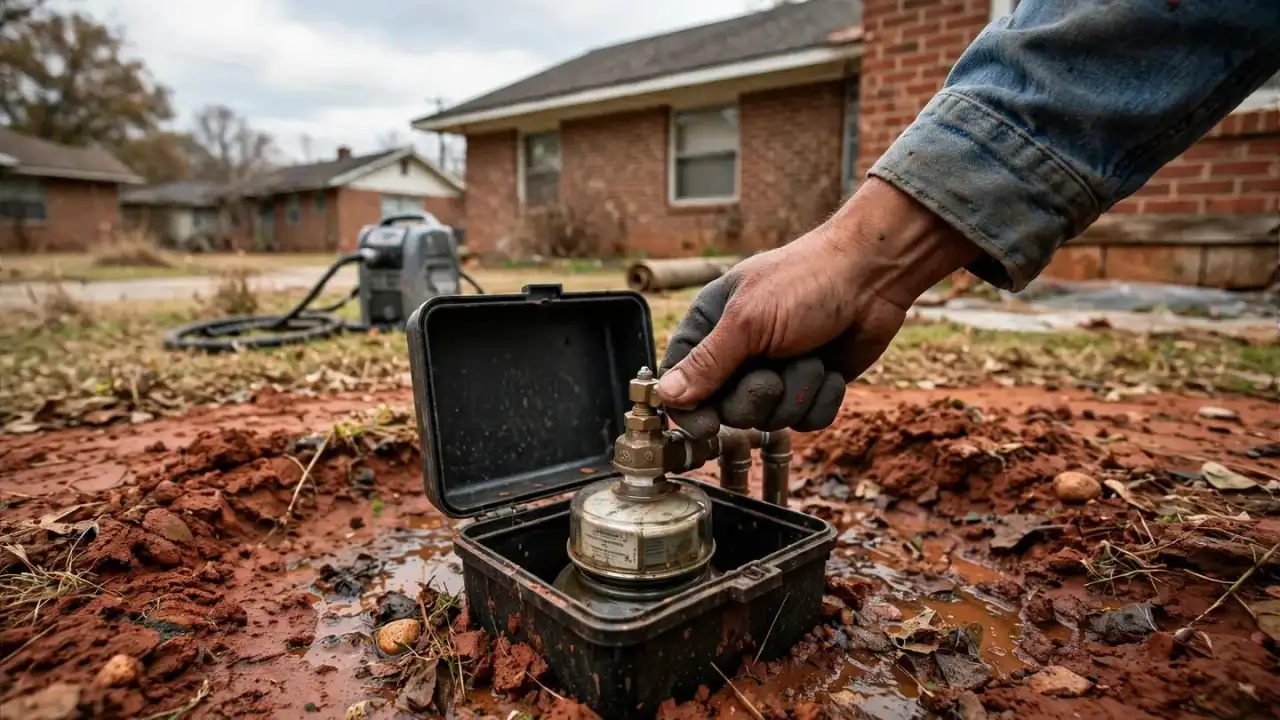
Key facts: What to do after a burst pipe
- Shut off the main water valve first; a burst supply line keeps releasing water until the pressure is stopped.
- Turn off electricity to wet areas only if you can reach the panel without standing in water.
- Once the pipe is fixed, drying should begin within the 24 to 48 hours EPA recommends for mold prevention [1].
- Photos taken before cleanup support an insurance claim [2].
Short answer
After a burst pipe: the short answer
Shut off the main water valve, then make the area electrically safe, drain the lines, move belongings out of the water, photograph everything and call a plumber and a restoration contractor. Report the loss to your insurer the same day. Drying should start within a day or two to keep mold from taking hold [1].
Most of the damage from a burst pipe happens in the time between the break and the water being turned off. Knowing where your shutoff is, and that it turns, is the single most useful thing you can do before it ever happens.
At a glance
What you see and what to do first
| What you see | Likely cause | What to do |
|---|---|---|
| Water spraying from a wall or under a sink | Split supply line | Shut the main valve |
| Water dripping from the ceiling | Attic line or upstairs leak | Shut the main; catch drips; stay out from under the ceiling |
| Water spreading from a closet | Water heater or its lines | Shut the heater's cold valve and the main; turn off heater power or gas |
| Water near outlets or cords | Electrical hazard | Turn off power at the panel if safe; stay out of the water |
| No water from faucets during a freeze | Frozen line | Keep a faucet open; thaw gently; be ready to shut the main |
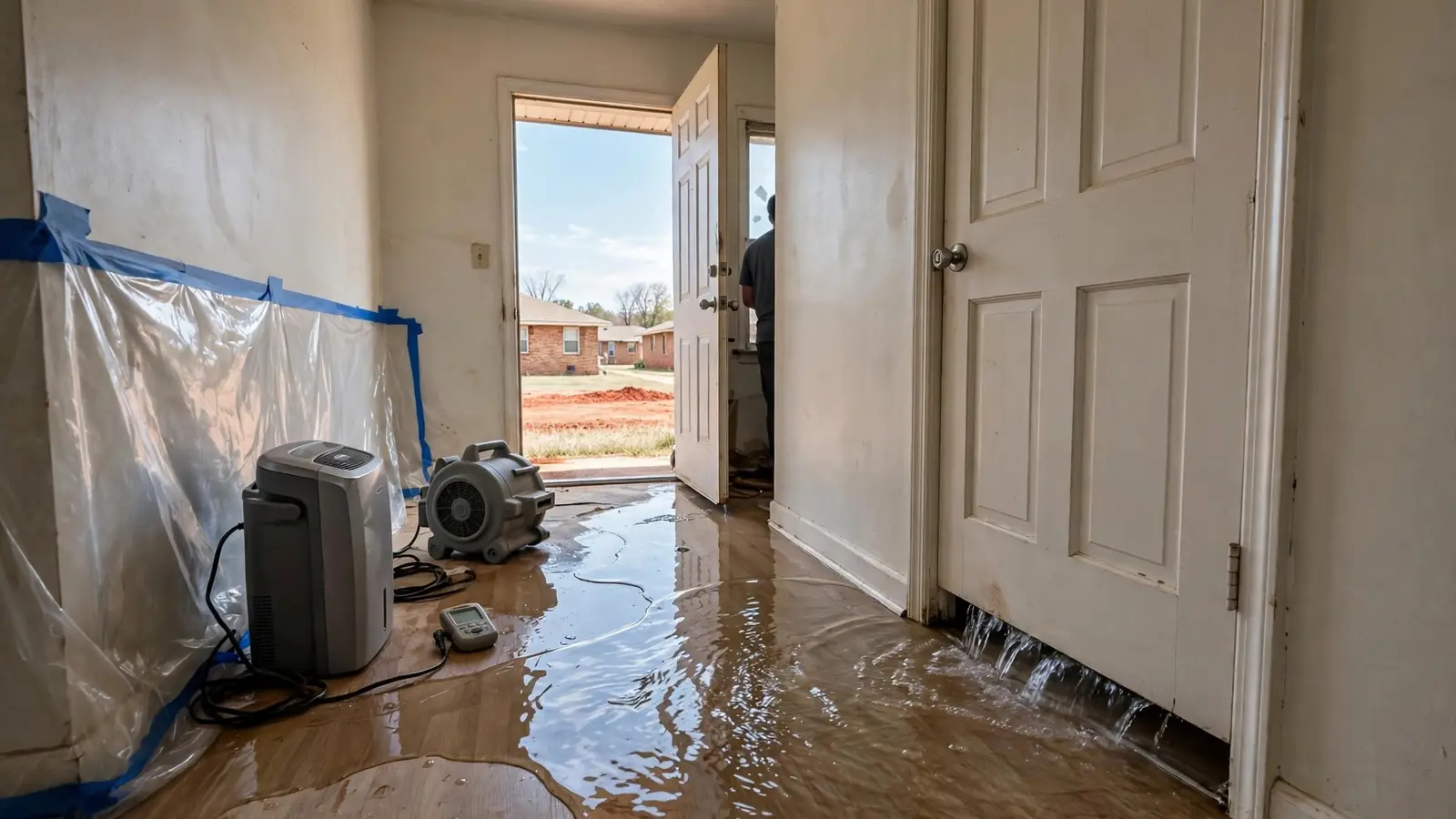
The first minutes decide how far the water spreads
Safe checks
Safety checks before you touch anything
- Do not walk through water that may be in contact with outlets, cords or appliances.
- Keep people out from under bulging or dripping ceilings.
- If you smell gas, leave and call the gas utility from outside.
- Wear shoes with good grip; wet tile and vinyl are slippery.
- If the water came from a drain or sewer line, avoid skin contact.
First hour
The first hour after a pipe bursts
- 1
Shut off the main valve
In most Oklahoma City homes it is in a meter box near the street or where the line enters the house, often in the garage or a utility closet. Turn it clockwise until it stops. If you cannot, the city utilities department can help [4].
- 2
Make it electrically safe
Turn off breakers for wet rooms if you can reach the panel without standing in water.
- 3
Drain the lines
Open the lowest faucet in the house and flush toilets to empty the remaining water from the pipes.
- 4
Protect belongings
Move rugs, electronics, papers and furniture out of the wet area; put foil or blocks under furniture legs.
- 5
Document
Photograph the failed pipe, the water and every affected room before anything else changes [2].
- 6
Call for help
Call a plumber to repair the pipe and a restoration contractor to remove and dry the water.
- 7
Report the loss
Call your insurer, get a claim number and ask what they need.
Hours later
What happens over the next few days
Once the pipe is repaired, the water damage work begins. A restoration crew extracts standing water, measures moisture in walls, floors and ceilings, removes materials that cannot be dried, such as soaked carpet pad and wet insulation, and sets up dehumidifiers and air movers. They take readings each day until materials return to normal. That usually takes three to five days, longer for hardwood, slabs and ceilings. See water extraction and structural drying for details.
Repairs such as new drywall, flooring and paint come after drying. If a ceiling sagged, it is replaced. If the pipe burst inside a wall, the wall is opened enough to repair the pipe and dry the cavity.
Frozen pipes
If the pipe burst during a freeze
In Oklahoma City, many pipe bursts happen during or right after hard freezes. Pipes in attics, exterior walls, crawlspaces and garages freeze first. A frozen pipe often splits while full of ice and starts leaking only when it thaws, so be ready: know where the shutoff is before you thaw a frozen line. Thaw gently with a hair dryer or space heater, never an open flame. Our burst pipe water damage page covers freeze prevention in more detail.
Repair or replace
Repairing the pipe versus replacing more
A single split from freezing is usually repaired by replacing that section. If the pipe failed from corrosion or age, or if your house has older galvanized or polybutylene lines, the plumber may recommend replacing more. That decision is between you and the plumber; it is worth considering while walls and ceilings are already open.
Prevention
Preventing the next burst
- Insulate pipes in the attic, crawlspace, garage and exterior walls.
- Disconnect garden hoses before freezing weather.
- Open sink cabinets on exterior walls and drip faucets during hard freezes.
- Keep the heat steady day and night in cold snaps.
- Install leak sensors or an automatic shutoff valve.
- Know where the main shutoff is and test it once a year.
What to tell the pro
What to tell the contractor when you call
- Where the pipe burst and how long water ran.
- Whether the water is now off.
- Which rooms, ceilings and floors are wet.
- Whether the house is on a slab or a crawlspace.
- Whether the water touched any electrical outlets or the panel.
- Your insurer and claim number, if you have one.
Renters
If you rent your home
If you rent, shut off the water if you can and tell your landlord or property manager immediately, in writing. The owner is generally responsible for the plumbing and the building; your renters insurance covers your own belongings if you have it. Photograph your damaged items and keep receipts for anything you have to replace or for a hotel if the home is not livable.
FAQ
Burst pipe: first-hour questions
How do I find the main shutoff valve?
Usually in a meter box near the street or where the line enters the house, often in the garage, a utility closet or near the water heater. Find and test it before you need it.
Should I turn off the electricity?
Turn off breakers for wet areas if you can reach the panel without standing in water. If you cannot, stay out and wait for help.
Can I use towels and fans?
Towels help with small spills. Fans alone will not dry walls and floors and can spread humid air. Professional extraction and dehumidifiers dry the structure.
How long until mold grows?
Mold can start within a day or two on wet materials. Start drying quickly.
Will insurance cover a burst pipe?
Sudden and accidental bursts are often covered. Long-term leaks and some freeze situations may be excluded. Report it promptly and keep photos.
Should I call a plumber or a restoration company first?
Shut off the water yourself first, then call both. The plumber fixes the pipe; the restoration contractor removes and dries the water so damage does not spread.