
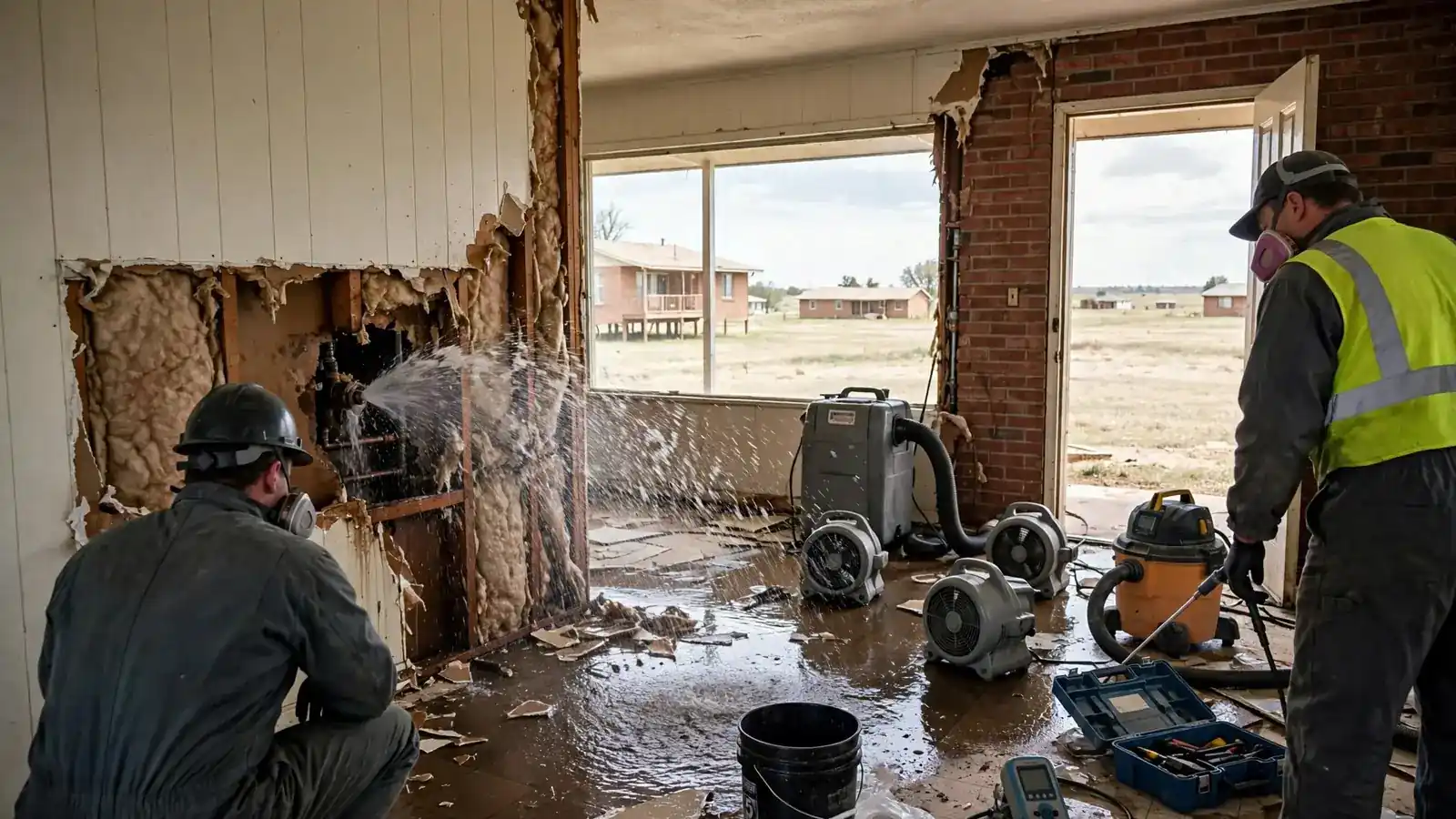
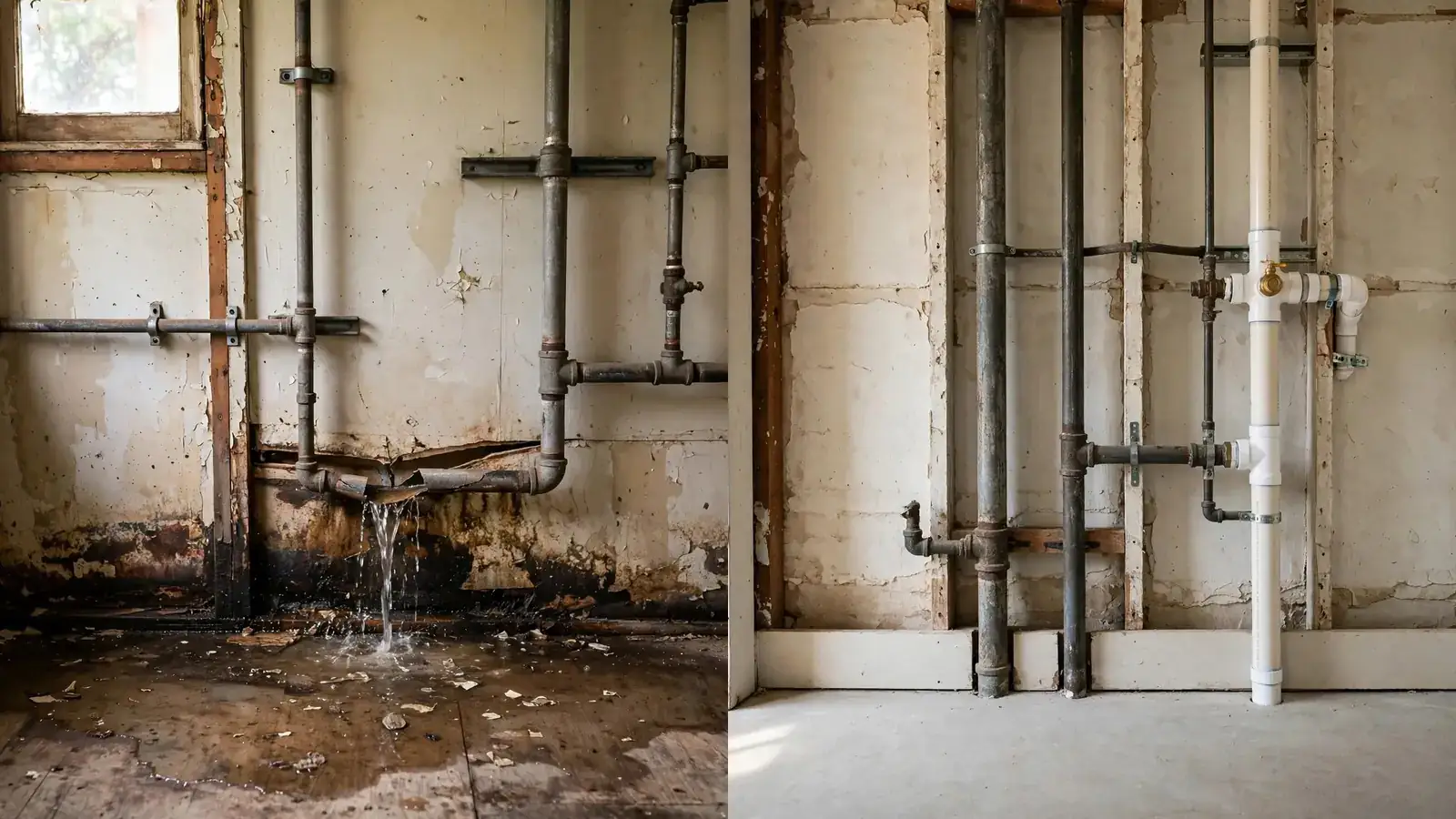
A pipe just burst in my Oklahoma City house, what do I do right now?
Turn the main water valve clockwise until it stops, then open the lowest faucet to drain what is left in the lines. Split lines under pressure keep running until the supply is closed [1]. After that, call this number any hour to reach an independent contractor about burst pipe water damage.
Key facts: Emergency Burst Pipe Help
- Supply lines in attics, crawlspaces, garages and exterior walls are the ones most likely to freeze [1].
- A split line under pressure keeps flowing until the valve is shut, so closing it comes before anything else [1].
- Sudden pipe bursts are often covered by homeowners policies, while slow leaks usually are not [2].
- Starting to dry inside 24 to 48 hours lowers the chance of mold in soaked insulation and drywall [3].
First hour
What to do in the first hour: burst pipe help
- 1
Turn the main valve clockwise
Find the shutoff in the meter box near the street, or where the line enters the house in a garage, closet or next to the water heater. Turn it until it stops [5].
- 2
Open the lowest faucet
A tub spout or outside spigot at the lowest point lets water left in the pipes drain out instead of into the wall.
- 3
Shut off the water heater
With the supply off, turn the heater's gas to pilot or switch off its breaker so it does not run empty.
- 4
Kill power to soaked rooms
Switch off the breakers for wet areas from a dry place. Skip this if the panel is wet.
- 5
Check below the break
Water from an attic line runs down into ceilings and walls. Put buckets under drips and keep people out from under bulges.
- 6
Ring for pipe help
Call this number and explain where the pipe broke and how long it ran. The contractor can plan extraction and drying with you on the call.
Warning signs
When a broken pipe becomes urgent
Spraying or hissing
You can hear or see water under pressure. Every minute adds more water to walls and floors.
Ceiling stain that grows
A ring that spreads or darkens means an attic line is still feeding it. See our ceiling stain guide for more.
Water at a light or smoke alarm
Water near wiring overhead is a shock and fire risk. Turn off that circuit if you can do it safely.
No pressure after a freeze
Faucets that only trickle during a cold snap may mean a frozen line that could split when it thaws [4].
Warm wet spot on a slab
A damp, warm patch on the floor can point to a hot water line leaking under the concrete.
On the call
Your call about a burst pipe, and the first visit
On the call, the contractor will want to know where the pipe is, whether the water is off, how long it ran and which rooms it reached. Mention whether the line was in the attic, an outside wall or under the slab, since each one spreads water differently. This is also the moment to ask whether they can work alongside your plumber.
When the crew gets there, they confirm the supply is off and trace where the water went with moisture meters. Attic breaks usually mean wet insulation has to come out and the ceiling below gets opened or dried. Wall cavities may be drilled or opened at the base so air can reach the framing. Our structural drying page explains that stage.
Before anything is torn out, they photograph the damage for your claim. Sudden bursts are often covered, but freezing in a home left unheated may be treated differently, so call your insurer early and ask [2]. You make the decisions about the work; this site does not contact you after the call.
Oklahoma City factors
Freeze patterns that split Oklahoma City pipes
Oklahoma City winters are mostly mild, so many homes were built with water lines in attics and exterior walls rather than deep inside the house. When an arctic front drops temperatures fast, those lines are the first to freeze [4]. The trouble often shows up a day later, when the sun comes out and the split pipe starts to leak.
Ice storms add another risk. Fallen limbs can cut power for days, furnaces stop and indoor temperatures sink. Older central houses with galvanized lines and pier-and-beam crawlspaces, like many around burst pipe repairs in Crown Heights, lose heat under the floor quickly.
Newer slab homes farther out face a different version of the problem: lines in garages and outside walls, plus hot water lines in the slab that can fail when clay soil shifts. Homes near the lake, covered on our Lake Hefner burst pipe page, see strong north winds that chill exposed walls during a freeze.
After tonight
After the pipe is fixed and the house is drying
Once the plumber repairs the line and the water is back on, check the area around the repair for drips over the next day. A second weak spot on the same line is not unusual after a hard freeze, especially in older galvanized pipe.
While the drying equipment runs, think about the next cold snap. Insulating attic and crawlspace lines, covering outside spigots and letting a faucet drip during a freeze all lower the chance of a repeat. The contractor can point out lines that look exposed.
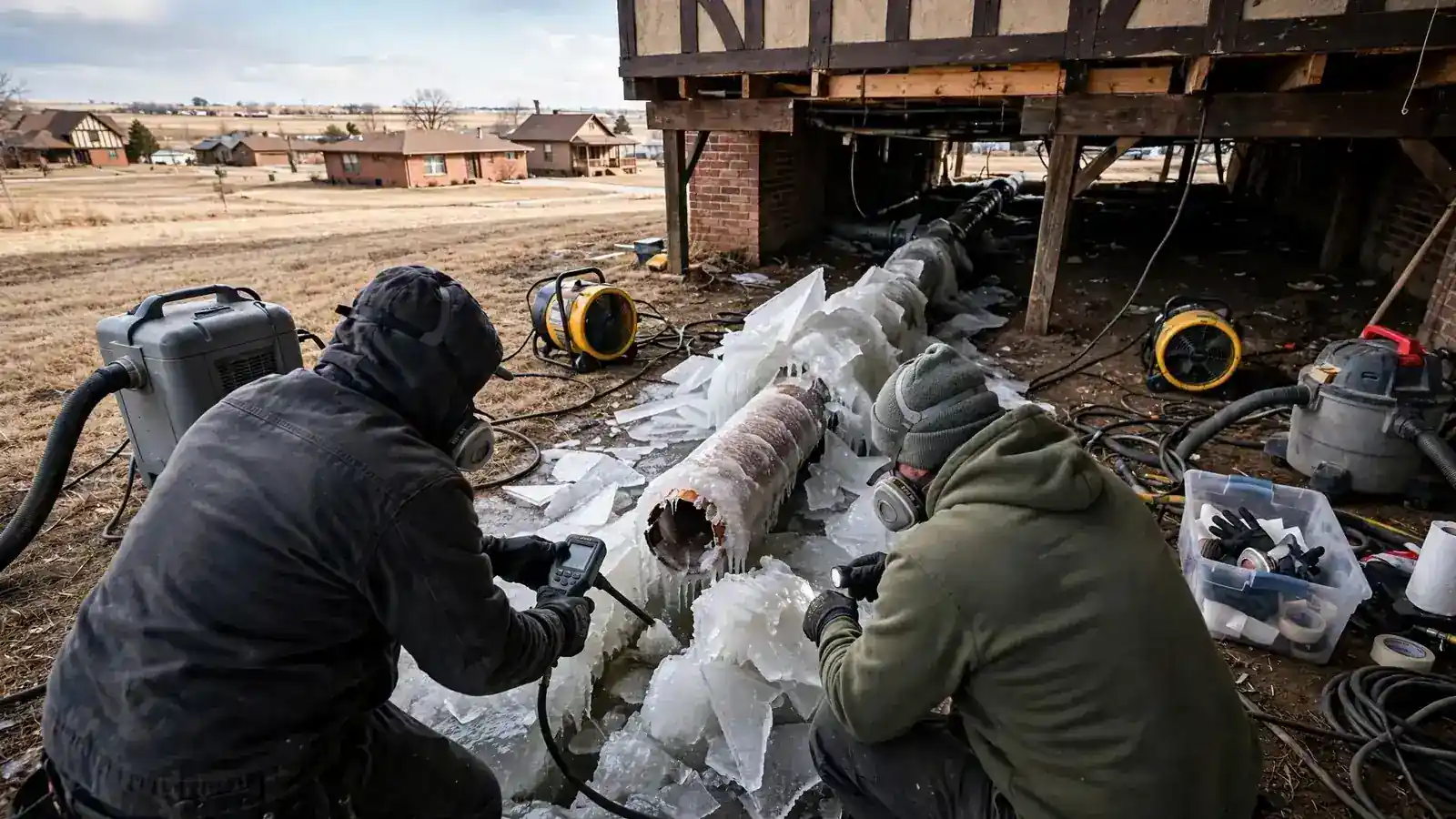
Crawlspace pipes freeze from below
Vented crawlspaces under older homes let cold air reach the lines all night. When a pipe splits there, water soaks the soil and the wood above it, and you may not see it for hours. Crews check the joists and subfloor as well as the pipe itself.
If your house sits on piers, tell the contractor on the call. Drying a crawlspace takes different equipment than drying a room, and our guide to the first hour after a burst pipe lists what to do before they arrive.
- Joists and subfloor checked
- Wet soil pumped or dried
- Pipe insulation reviewed
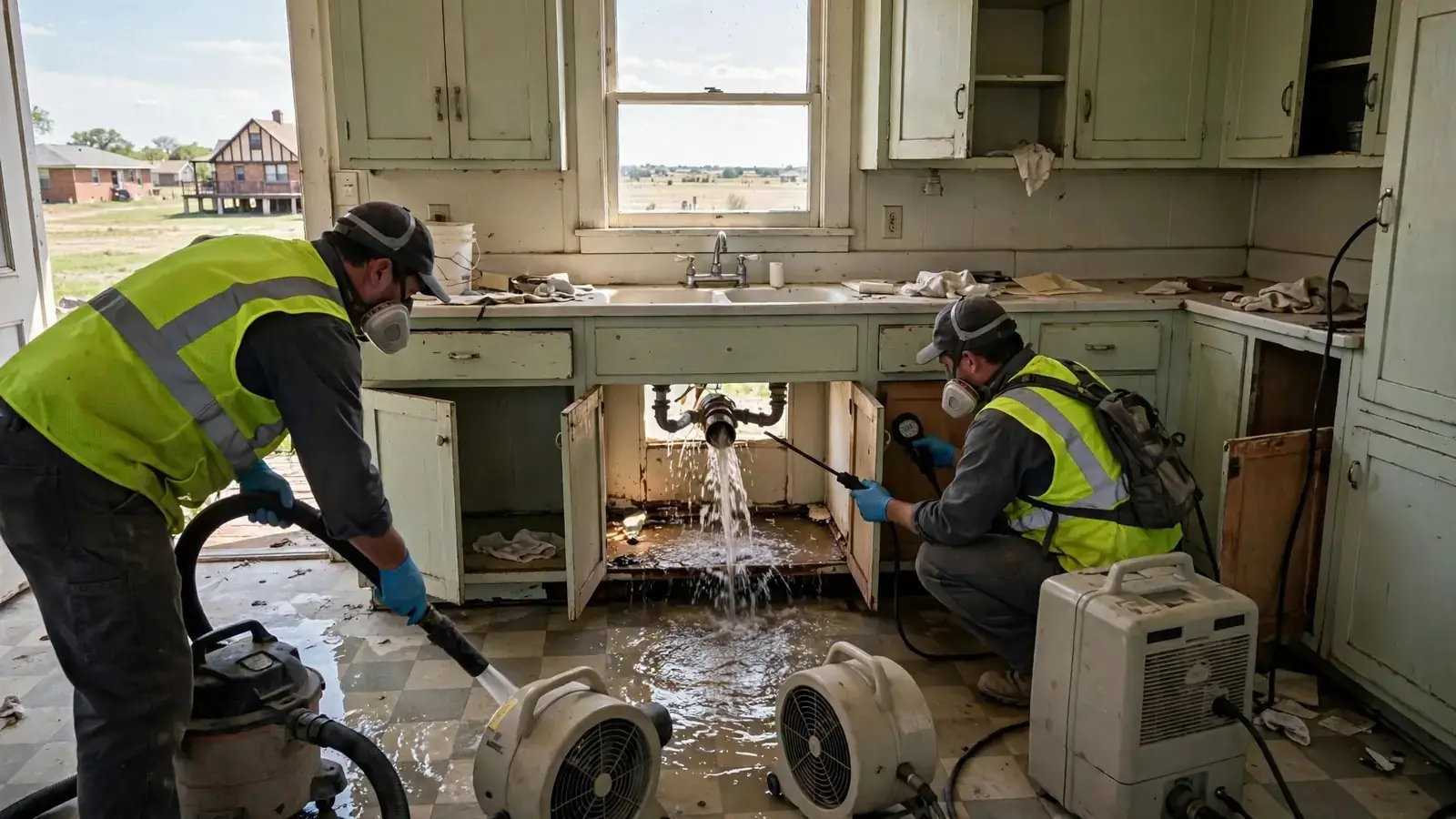
Under-sink breaks soak cabinets fast
Kitchen sinks on outside walls are a common failure point in a freeze. The water fills the cabinet base, runs under the toe kick and spreads across the subfloor. Pulling the toe kick lets air dry the hidden space instead of trapping moisture.
Our main emergency water damage restoration page covers the general steps that apply to every kind of indoor flood.
- Toe kick removed for airflow
- Subfloor readings taken
- Cabinet saved when possible
Checklist
What to have ready for the pipe call
- Where the pipe broke, if you know.
- Whether the main valve is closed.
- Roughly how long water ran.
- Which rooms and floors are wet.
- Whether a plumber has been called.
- Your insurer and policy number.
FAQ
Burst pipe emergency questions
Can I turn the water back on after closing the valve?
Not until the broken section is repaired. Turning it back on will send water straight back into the wall or ceiling.
Do I need a plumber and a restoration crew?
Usually both. The plumber fixes the line, and the restoration contractor removes water and dries the house. Ask on the call if they work with a plumber.
How do I know if a frozen pipe has split?
Watch for a trickle at the faucet during a freeze, then water stains, drips or a hissing sound as it thaws [4].
Is a pipe burst covered by my policy?
Sudden bursts are often covered; slow leaks and freezes in a home left without heat may not be [2]. Ask your insurer early.