
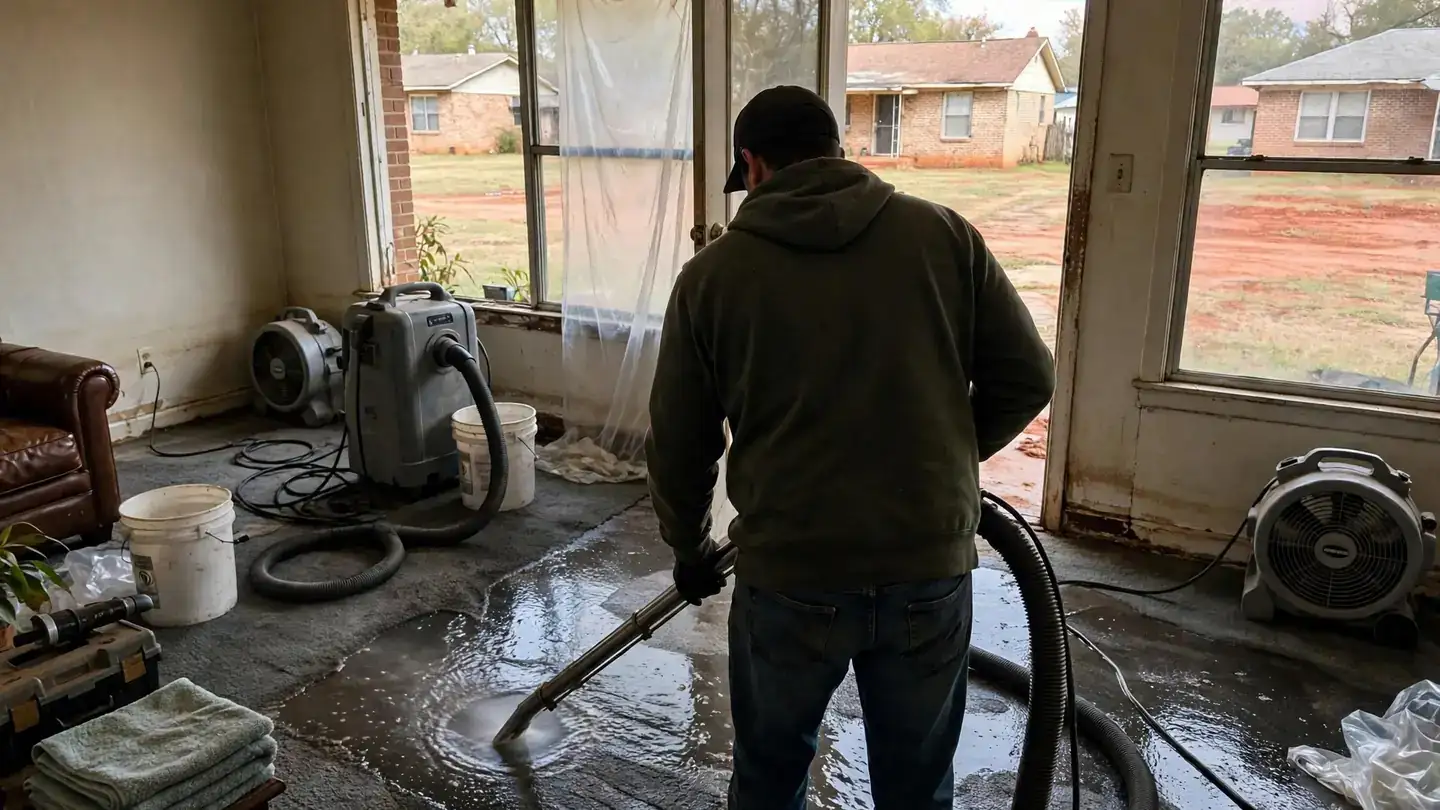
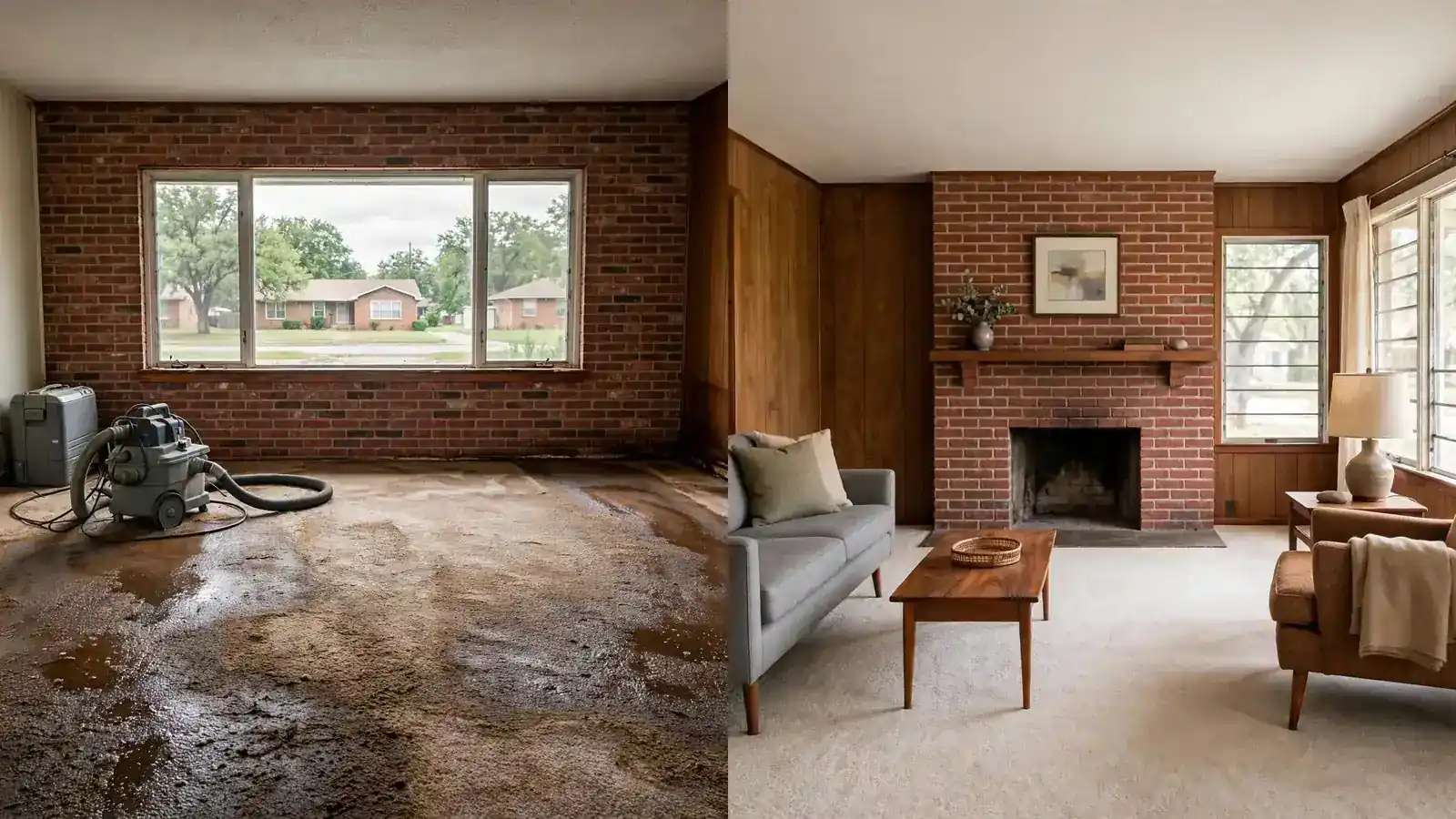
Who do I call at night when water floods my OKC house?
Call the number on this page; calls are answered 24/7 and connect you to an independent local contractor who handles urgent water jobs. Before you dial, close the main water valve if a pipe is the source. The contractor can then talk through water extraction and drying on that call.
Key facts: Emergency Water Damage
- Getting wet areas dry within 24 to 48 hours lowers the chance of mold, so the first day matters most [2].
- Restoration standards sort water into clean, gray and grossly contaminated groups, and each is handled differently [1].
- Rising surface water is usually left out of standard homeowners policies and falls under separate flood insurance [3].
- Calls to this number are answered 24/7 and connect you to an independent contractor who takes urgent jobs.
First hour
What to do in the first hour: water damage
- 1
Find and stop the source
If a supply line or fixture is leaking, close the main water valve. In many Oklahoma City homes it sits in a meter box near the street or where the line enters the house. Storm water and sewage cannot be shut off this way, so move on to safety.
- 2
Cut power only from a dry spot
Switch off breakers for wet rooms if you can reach the panel without standing in water. If the panel is in a wet area, leave it alone and stay out of that room [6].
- 3
Get people and pets clear
Move children, older relatives and animals away from wet floors, sagging ceilings and any water that came from a drain or from outside.
- 4
Take photos and short videos
Record the water line, the source and damaged items before anything is moved. Your insurer will want to see the scene as you found it [4].
- 5
Lift what you can reach safely
Raise furniture legs onto foil or plastic, roll up dry rugs and carry papers, photos and electronics to a dry floor.
- 6
Make the call
Call the number on this page. The independent contractor who answers can ask about the water and plan the first visit with you on that call.
Is it urgent?
Signs the water cannot wait until morning
Water still flowing
A pipe or fixture that keeps running adds water every minute, and it travels under walls into the next room.
Standing water on the floor
Water pooled across carpet, wood or a slab soaks deeper the longer it sits [1].
A ceiling that bulges or drips
Wet drywall overhead can sag and fall. A bulge or drip from a light fixture needs attention now.
Water from a drain or toilet
Backups carry sewage, which is the most contaminated class of water and needs protective handling [1].
Storm water coming inside
Flash flooding in the metro can push water into cellars, crawlspaces and low rooms fast [5].
On the call
What happens on the call and after
When you call, the person on the line is an independent local contractor, not a call center reading a script. Expect questions about where the water came from, whether it has stopped, which rooms are wet and how long it has been sitting. Answering those clearly helps them decide what equipment to bring and which structural drying steps may follow.
You can ask your own questions too. Ask how they will find hidden moisture, what they expect to remove, and how they document a job for insurance. You decide on that call whether to go ahead. This site does not call, text or email you afterward, and nothing is booked unless you agree with the contractor directly.
When the crew arrives, the usual order is inspection, then extraction, then drying. They trace moisture with meters and sometimes thermal cameras, pull out standing water, remove materials that cannot be saved and set up dehumidifiers and air movers. Drying is checked with readings until materials match dry areas of the same house [1].
Oklahoma City factors
Why Oklahoma City water emergencies look the way they do
Weather drives many of the calls here. The Norman forecast office issues flash flood warnings for the metro during heavy spring and summer storms, and those storms can fill storm cellars and crawlspaces in minutes [5]. Brief hard freezes do the opposite kind of damage, splitting pipes in attics and exterior walls. See burst pipe help in Heritage Hills for an older-home example.
Housing matters as well. Central neighborhoods have older plaster walls, pier-and-beam floors and aging drain lines, while newer areas are mostly slab homes where water spreads across the concrete under flooring. A cellar flood or sewer backup in an older house behaves differently from a supply leak on a slab, which is why the first questions on the call are about the house itself.
Shared drains add another layer. The homeowner is generally responsible for the private sewer line from the house to the public main, so a backup may need both a plumber and a cleanup crew [7]. Lower areas such as those near flooded basement cleanup in Paseo can see water from outside and from drains in the same storm.
After tonight
The days after the water is out
The first night is about stopping the water and starting extraction. The next few days are about drying and deciding what to rebuild. Expect technicians to visit, take readings and move equipment as rooms dry. Keep a simple log of each visit and what was removed.
Once readings show the structure is dry, repairs such as new drywall, paint and flooring can begin. Rushing that step can trap moisture behind new materials. If you notice a musty smell or new stains later, mention it to the contractor right away.
Extraction comes before everything else
Pulling liquid water out of carpet, pad and flooring is far quicker than waiting for it to evaporate [1]. Truck-mounted or portable extractors remove most of it in the first hours, and that shortens every step after. Our page on emergency water extraction covers this stage in detail.
Extraction also shows what is underneath. Once the standing water is gone, the crew can see whether pad, baseboards or flooring need to come out, and where moisture has wicked into walls.
- Standing water removed first
- Carpet and pad checked
- Hidden moisture mapped
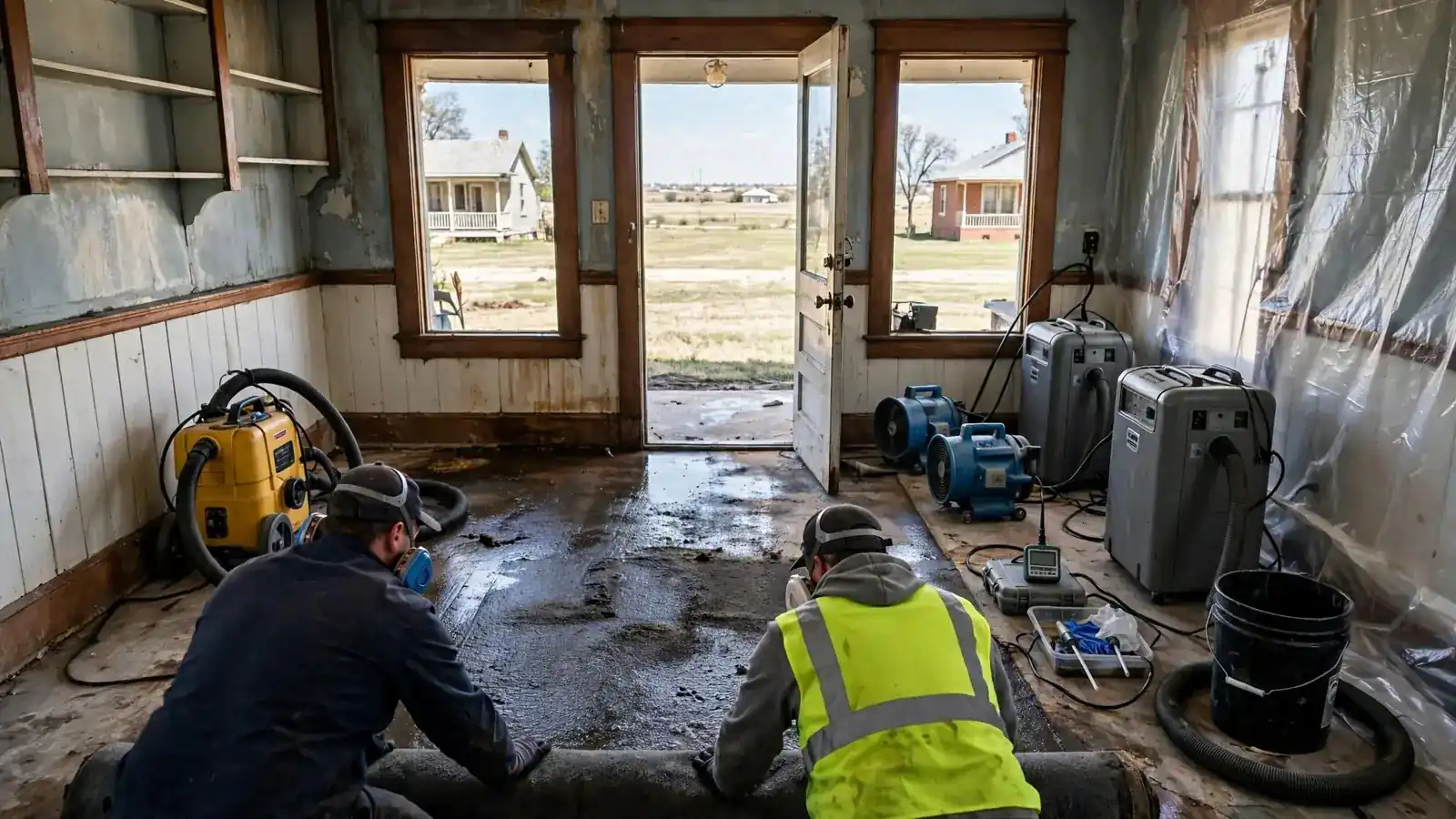
Drying equipment runs day and night
After extraction, air movers and dehumidifiers work together to pull moisture out of drywall, framing and subfloor. They are meant to run without a break, even while you sleep. The goal is to reach dry readings inside the window EPA describes, before mold has a chance to start [2].
Technicians come back to take readings and move equipment as areas dry. Ask how often those visits will happen. Our guide to how long drywall takes to dry explains why some walls take longer than others.
- Equipment stays on
- Daily moisture readings
- Done when readings match dry areas
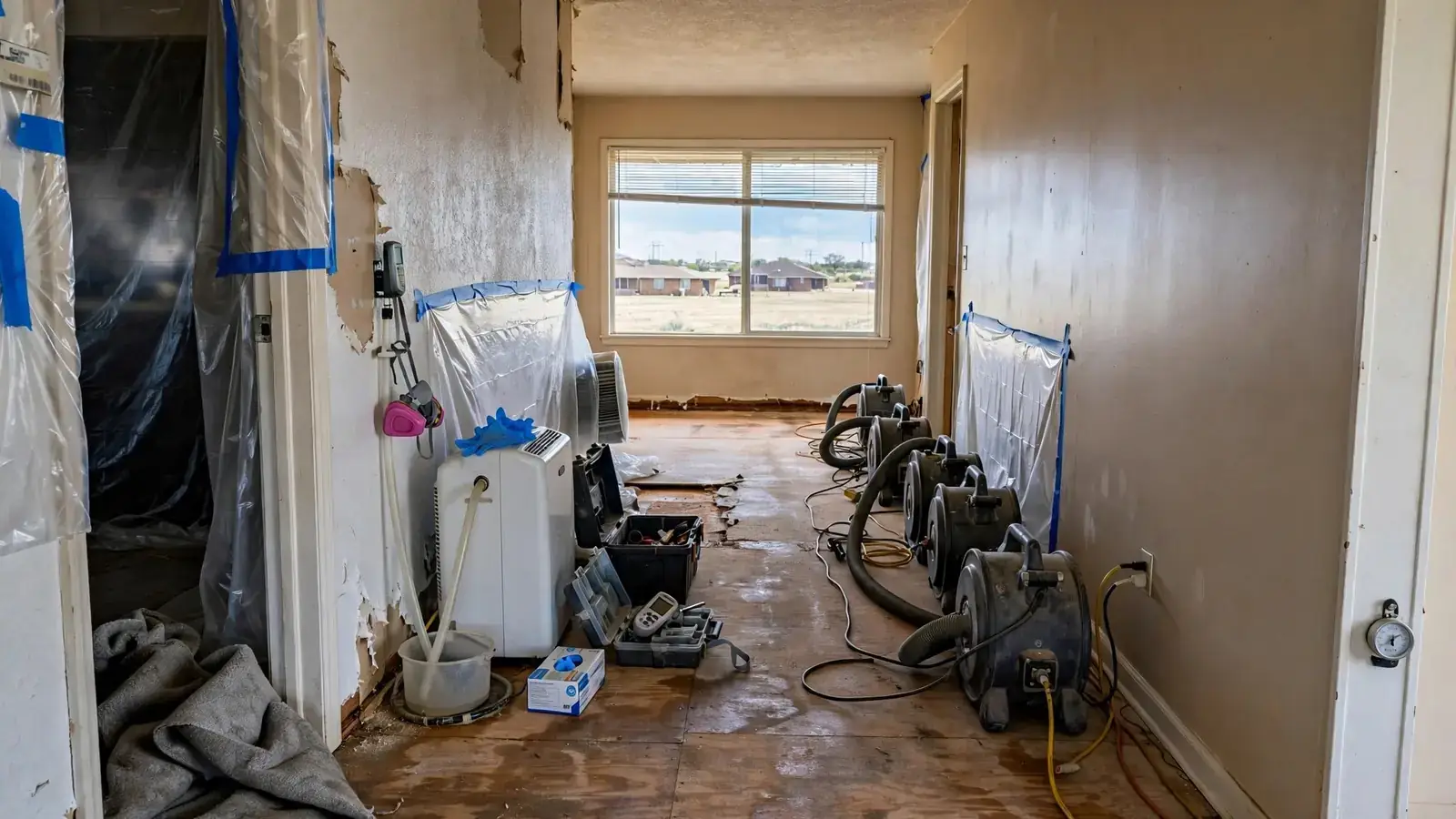
Checklist
Emergency checklist while you wait
- Close the main water valve if the source is plumbing.
- Leave breakers off for wet rooms.
- Open interior doors so air can move between rooms.
- Keep the heating and cooling system off if water reached the ducts.
- Bag and set aside soaked items you want to keep.
- Write down when the water started.
- Have your insurance policy number ready.
FAQ
Quick answers about urgent water damage
Can someone come out in the middle of the night?
In Oklahoma City, calls about emergency water damage are answered 24/7; your own call reaches an independent Oklahoma City contractor who talks it through with you.
Should I start mopping before help arrives?
Small amounts of clean water can be mopped. Leave sewage and floodwater alone, and do not stand in water near outlets.
Does insurance pay for water emergencies?
Sudden plumbing leaks are often covered, while outside flood water usually needs flood insurance [3]. Call your insurer and keep every photo.
Will my floors and walls have to come out?
Not always. Clean water caught early can often be dried in place. The crew decides after measuring how far the moisture traveled.
Sources and citations
- [1]IICRC: Standards (ANSI/IICRC S500 water damage restoration)
- [2]U.S. EPA: A brief guide to mold, moisture and your home
- [3]FEMA FloodSmart: National Flood Insurance Program
- [4]Oklahoma Insurance Department
- [5]National Weather Service, Norman forecast office
- [6]Ready.gov: Floods
- [7]City of Oklahoma City: Utilities