
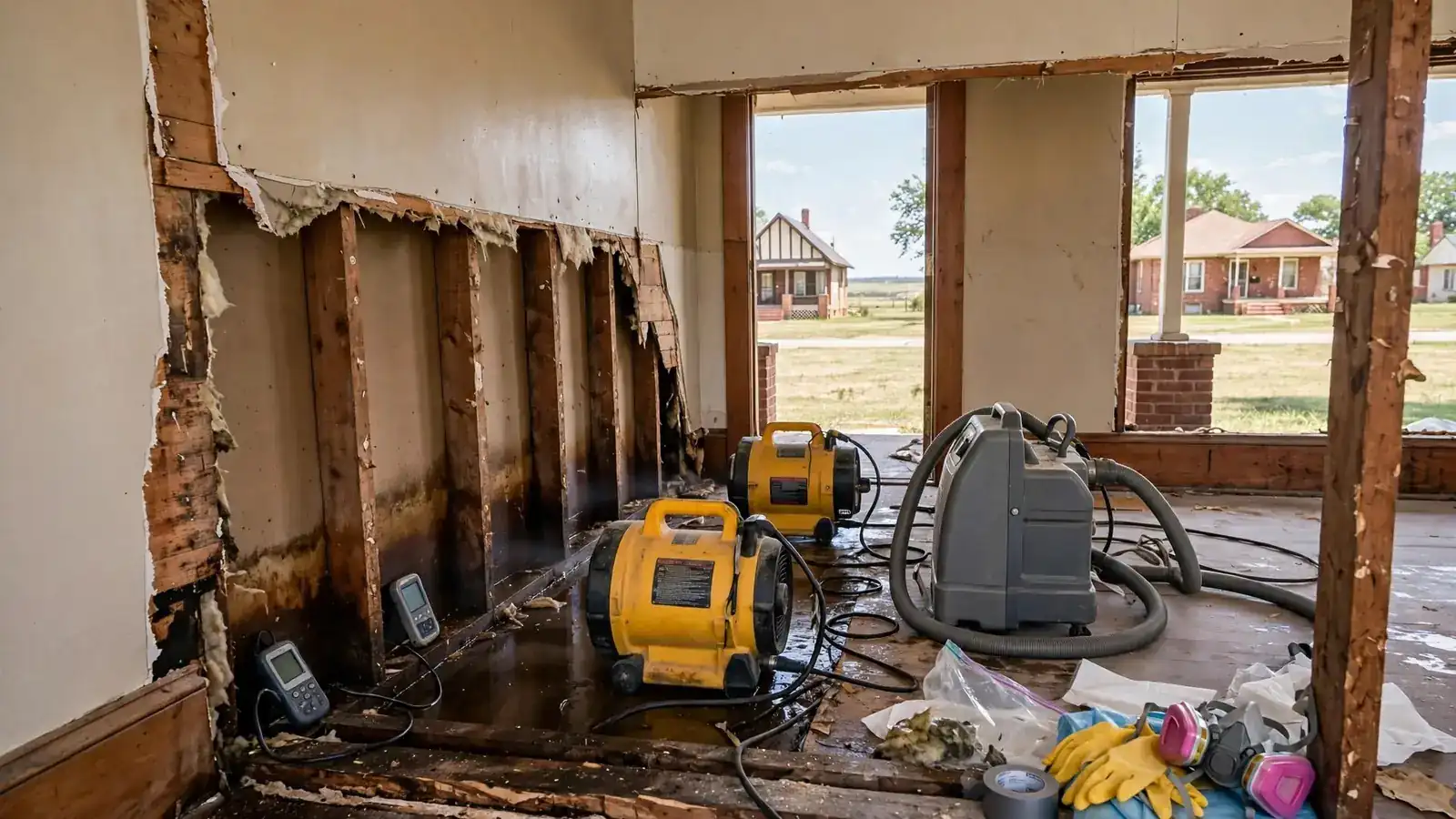
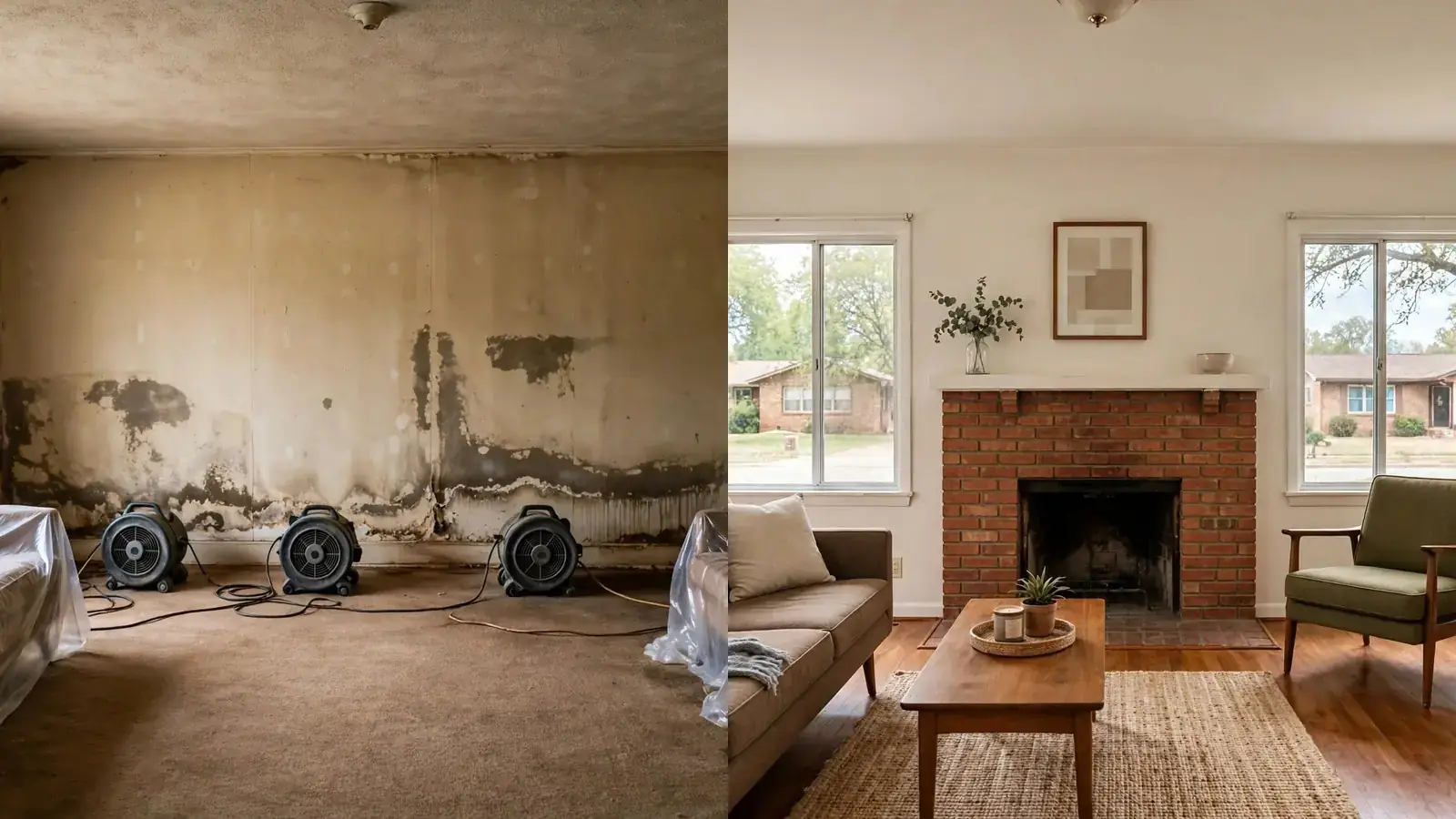
How fast does a wet house need to be dried out in Oklahoma City?
Start drying within a day or two; EPA advises drying wet materials within 24 to 48 hours to limit mold [2]. Surfaces can feel dry long before framing and subfloor are. Calls here are answered at any hour, so you can reach an independent contractor about structural drying tonight.
Key facts: Emergency Structural Drying
- Drying wet materials within 24 to 48 hours cuts the chance of mold growth [2].
- Structural drying combines dehumidifiers, air movement and sometimes heat, guided by moisture readings [1].
- A job is dry when readings match similar dry materials in the same house, not when surfaces feel dry [1].
- Oklahoma swings between dry, windy days and humid ones, which changes drying speed [3].
First hour
What to do in the first hour: structural drying
- 1
Remove what water you safely can
Mop clean water, pull up wet rugs and lift furniture. Drying cannot start properly while water still stands.
- 2
Pull wet items off the walls
Move books, boxes and furniture at least a foot from damp walls so air can reach the surface.
- 3
Set the thermostat steady
Keep the house at a normal living temperature. Very cold rooms dry slowly.
- 4
Keep windows shut in muggy weather
On a humid Oklahoma day, outside air adds moisture. Open windows only if the air outside is dry [3].
- 5
Note where water reached
Mark the highest water line on walls with tape. It helps the technician plan where to measure.
- 6
Call to get equipment in place
Call this number. The contractor can talk through equipment and timing on that call.
Act now if
When drying turns into an emergency
Water sat more than a day
Past the 24 to 48 hour window, mold risk climbs quickly in drywall and carpet pad [2].
Musty smell is starting
An earthy odor means moisture is already feeding growth somewhere you cannot see.
Baseboards are swelling
Swollen trim or flooring that has started to cup shows water inside the wall or under the floor.
Paint is bubbling
Blisters on walls point to water trapped behind the surface.
Ceiling feels soft
Soft or sagging drywall overhead holds water and may need to come down.
On the call
How the drying call and setup work
On the call, explain what got wet, how long ago, and whether standing water has been removed. Mention the flooring type and whether walls are plaster or drywall. The contractor uses that to estimate how much equipment the house needs and whether water extraction is still the first step.
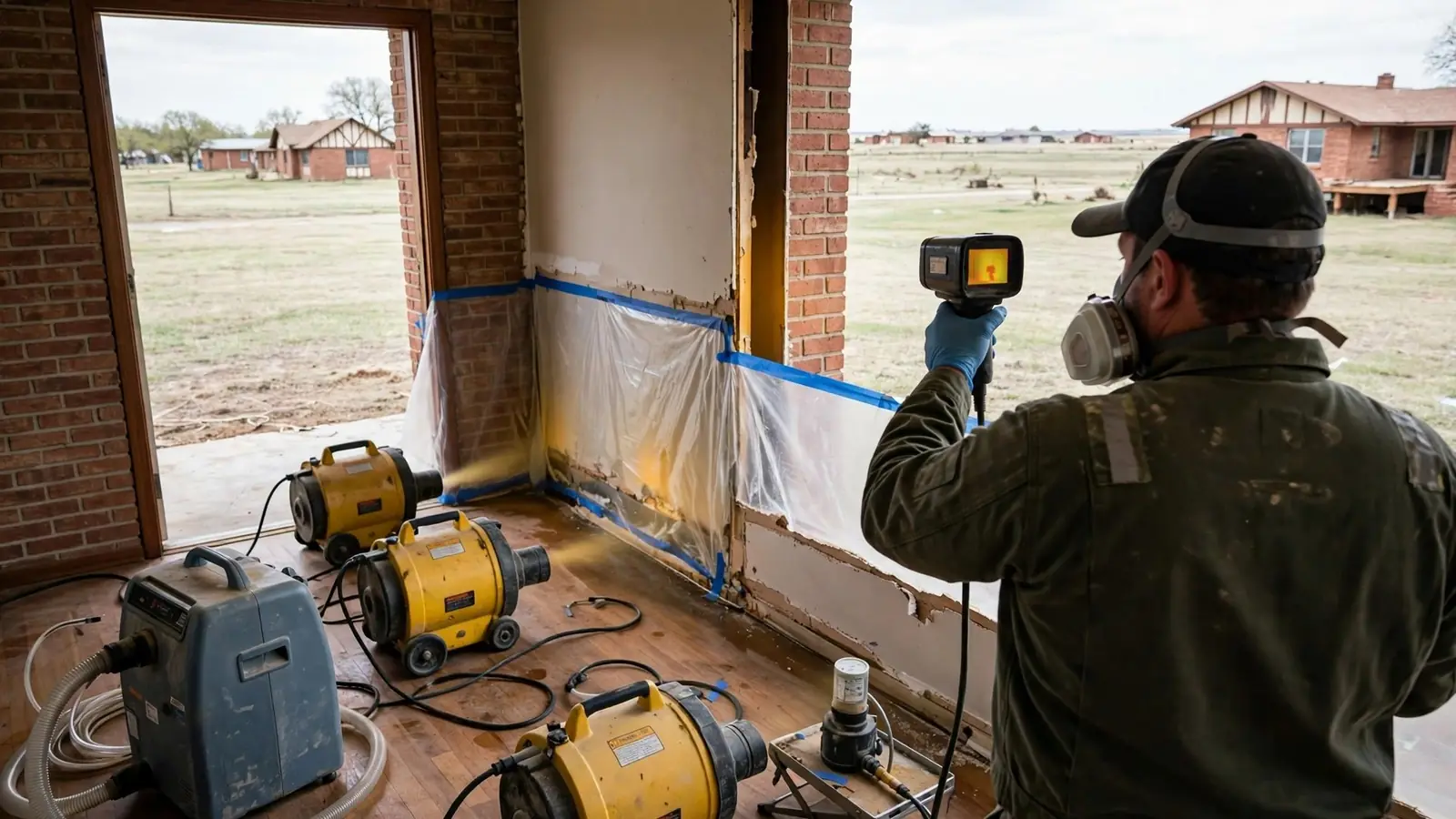
At the house, technicians take moisture readings and may use a thermal camera to find wet areas behind the surface. They place air movers along the walls and dehumidifiers in the room, and may drill small holes or remove baseboards to reach wall cavities. Equipment should stay running day and night.
They return to take readings and adjust the setup. The job is finished when materials match dry reference readings from the same house [1]. Ask how often they will check and how they record the readings. This site does not contact you after the call.
Oklahoma City factors
How Oklahoma City weather and houses affect drying
Central Oklahoma can be dry and windy one week and humid the next, and Mesonet data shows how quickly that changes [3]. On dry days, drying moves faster. In muggy summer weather, dehumidifiers do more of the work and windows stay closed.
Older homes in central neighborhoods often have plaster walls and pier-and-beam floors that hold water differently from drywall on a slab. Our page on structural drying in Heritage Hills looks at plaster and wood floors in detail.
Slab homes farther out let water spread under carpet and laminate across the concrete, which can take time to dry. Clay soil around foundations can also stay wet after storms. See structural drying near Lake Hefner for newer slab houses.
Drying basics
What dehumidifiers and air movers actually do
Air movers push a fast, steady stream of air across wet surfaces. That speeds up evaporation, turning water in drywall, wood and carpet into moisture in the air. On their own, though, they only move the water from the materials into the room.
Dehumidifiers finish the job. They pull that moisture out of the air and send it down a drain hose or into a bucket. Working together, the two keep the air dry enough that materials keep giving up water [1]. Without the dehumidifiers, a closed room just gets muggy and drying stalls.
Some jobs add heat or special mats. Heat raises the rate of evaporation in dense materials, and mats placed on hardwood draw water up from the boards. The technician chooses the mix from the readings and the materials in the room.
It also helps to know what not to do. Running the home's heating at full blast, sealing the room with plastic on your own or turning equipment off at night can all slow drying or move moisture to the wrong place. Follow the technician's setup and ask before changing anything. If a unit stops, beeps or its bucket fills, note the time and tell the technician at the next visit so the drying log stays accurate.
After tonight
When the readings finally say dry
The last visit should include final readings for each wet area, compared with dry spots in the same house. Ask for a copy. Those numbers are the best record that the framing, subfloor and walls reached a normal level before repairs.
After the equipment leaves, keep an eye on the rooms for a few weeks. New stains, a musty smell or flooring that starts to move again can mean a pocket of moisture was missed. Tell the contractor if you see any of those signs.
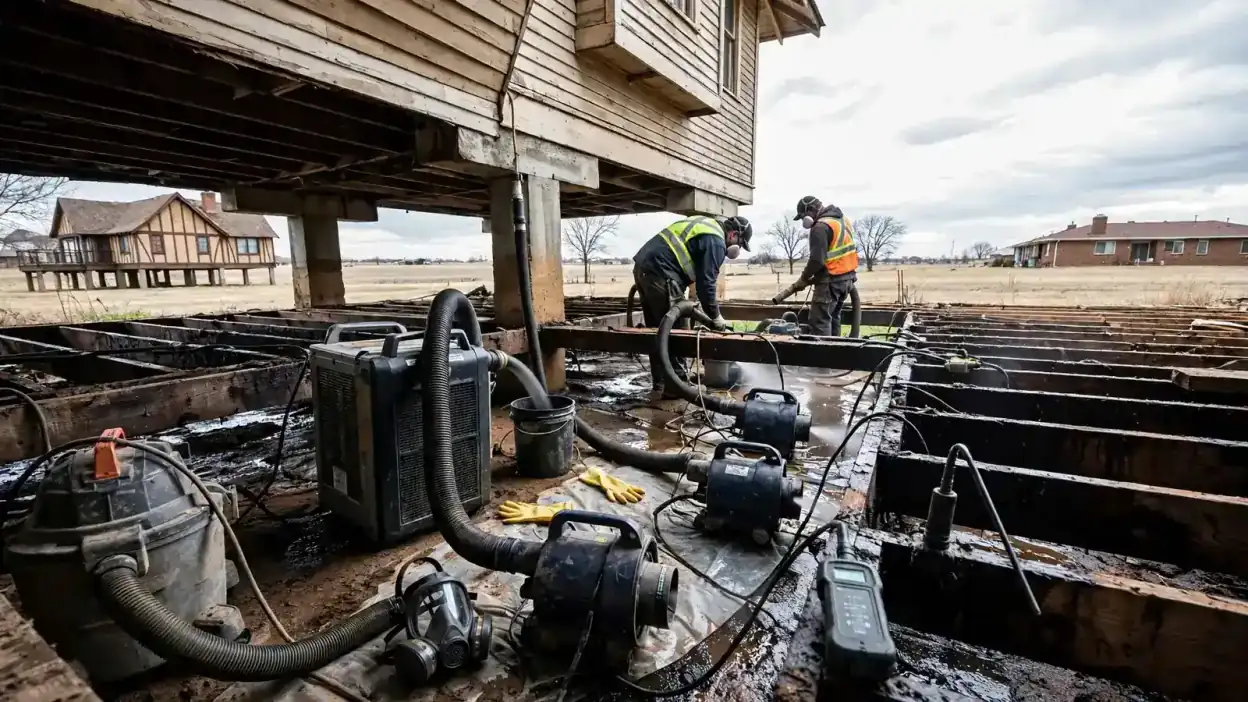
Floor joists need drying too
In raised houses, water runs through the floor into the crawlspace and soaks the joists. Crews aim air movers and dehumidifiers under the house as well as in the rooms above.
For the bigger picture of an indoor flood, see our emergency water damage restoration page.
- Crawlspace equipment placed
- Joist and subfloor readings
- Airflow under the house
Checklist
Help the drying while you wait
- Leave fans and dehumidifiers running once placed.
- Keep interior doors in wet rooms as advised.
- Empty dehumidifier buckets if they are not drained.
- Keep the thermostat steady.
- Do not paint or reinstall trim yet.
- Report any new stains or smells.
FAQ
Questions about urgent drying
Can I just use my own fans?
Fans help, but they do not remove moisture from the air. Without dehumidifiers and readings, framing can stay wet while surfaces look dry.
How long will equipment stay in my house?
It depends on materials and weather. The contractor decides based on readings, not a set number of days [1].
Why do they need to drill holes in my wall?
Small holes let dry air into a wall cavity so the framing dries without tearing out the whole wall.
When can I put the flooring back?
Only after readings show the subfloor and walls are dry. Ask the technician for the final numbers.