
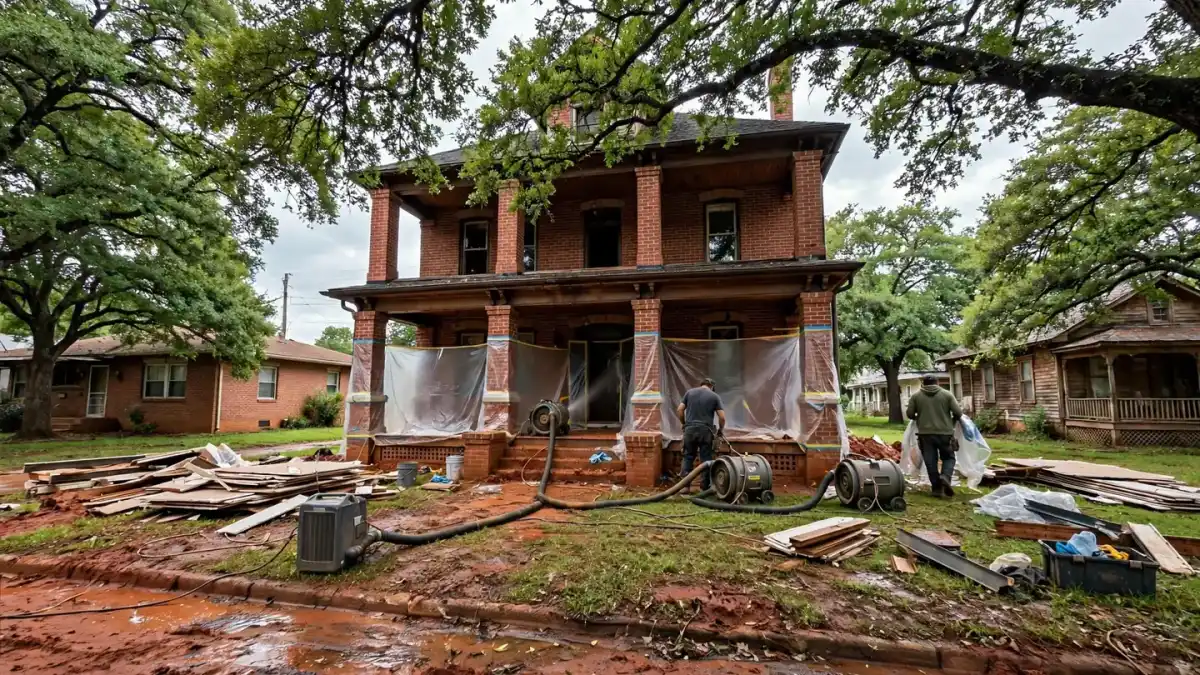
Key facts: Structural Drying in Heritage Hills
- A drying job ends when moisture readings match unaffected materials in the same house, which touch alone cannot confirm [1].
- The Heritage Hills district was added to the National Register in 1979 and includes more than 350 contributing buildings [7].
- The CDC notes that indoor mold can trigger symptoms in people with asthma or allergies [5].
Heritage Hills plaster needs slow, steady drying
Plaster on wood or metal lath is the standard wall and ceiling finish in Heritage Hills. It is dense, so it takes in water slowly and gives it back slowly. Quick blasts of heat can crack it or loosen paint. Steady dehumidification with gentle, even airflow dries it more safely, even if it takes longer than drying drywall in a newer house.
If a ceiling sags, cracks in a new pattern or sounds hollow when tapped, the plaster may be separating from the lath. Keep people out from under it. A crew evaluates it before drying continues, and plaster specialists can often reattach loose areas with adhesive and washers instead of removing them.
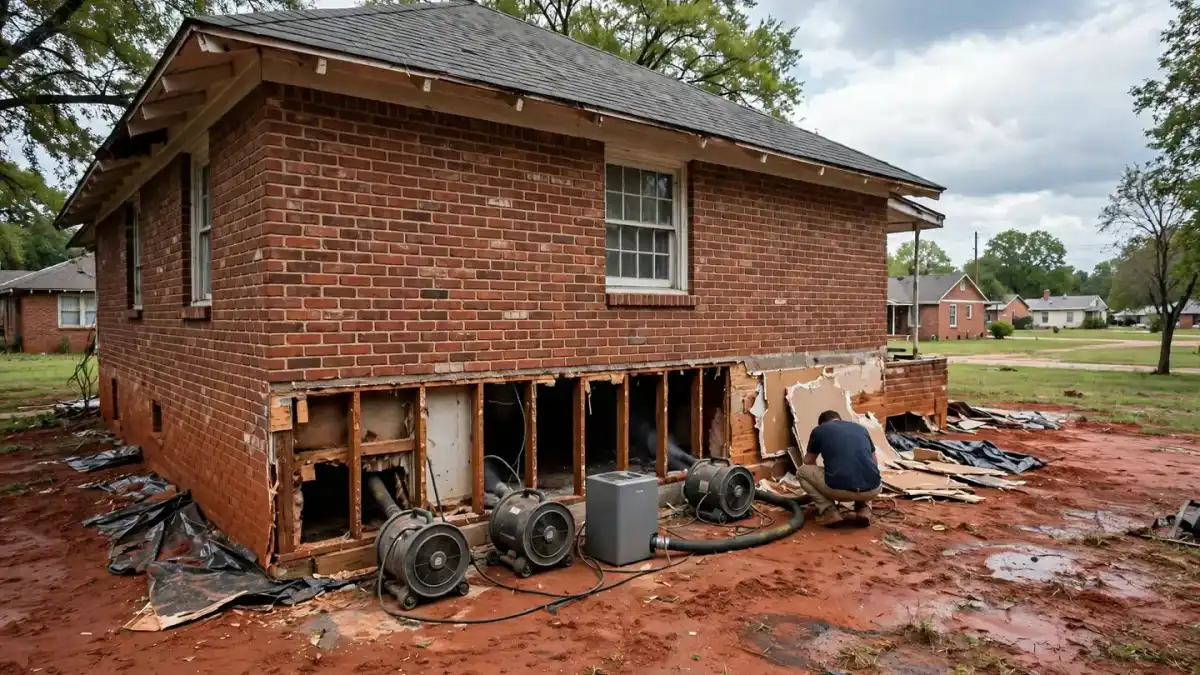
Heritage Hills floors with thin wear layers
Original oak and pine floors in Heritage Hills have often been sanded several times over a century, which leaves less wood above the tongue. Cupped boards may not survive aggressive sanding. Drying evenly with floor mats or panels and steady dehumidification lets them settle back toward flat as far as they can.
Wait for moisture readings to match a dry reference before any refinishing decision. Sanding a floor that is still wet underneath can leave it crowned once it finishes drying, and a flooring specialist experienced with old floors can then judge whether boards need replacing with matching reclaimed wood.
How drying proceeds in Heritage Hills
A typical order of work.
- 1
Trace the water through every level
Read ceilings, walls and floors from top to bottom.
- 2
Protect fragile finishes
Cover woodwork and keep heat moderate.
- 3
Dry the basement masonry
Run dehumidifiers with the basement closed off.
- 4
Confirm with dry references
Compare wet areas with unaffected rooms.
Drying stone and brick basements in Heritage Hills
Many Heritage Hills basements have walls of stone, brick or early concrete. These materials hold water deep inside and release it for weeks after the floor is pumped dry. Closing the basement off from the rest of the house and running dehumidifiers steadily works far better than opening windows.
Moisture readings taken at the same spots each visit show when the walls are back to normal. Wood shelving, stair stringers and sill plates resting on the masonry need their own readings, since they can stay damp after the walls look dry.
How Oklahoma humidity slows drying near downtown
Oklahoma weather swings from dry, windy days to muggy ones, and the Oklahoma Mesonet tracks those changes at stations around the state [3]. Humid stretches slow drying, so windows usually stay closed and dehumidifiers do the work.
In winter, cold outside air is dry, but heavy plaster and masonry give up moisture slowly when they are cold. Keeping the house warm, whether by the boiler or by temporary heat, helps those materials release water so the dehumidifiers can collect it.
What to tell the crew
Helpful details.
- Levels of the Heritage Hills house affectedBasement, first, second or attic.
- Wall finishes in the wet roomsAnd any sagging ceilings.
- Flooring under the wet areasOak, pine, tile or carpet.
- Radiator or boiler troubleThat may affect heat.
Stopping mold in Heritage Hills wall cavities
EPA advises drying wet materials within 24 to 48 hours to reduce the chance of mold [2]. Large older homes with closed wall cavities, dusty attics and damp basements can grow mold if those spaces stay wet, and it may be out of sight until an odor appears.
If mold is already visible, it should be cleaned or removed as part of the drying plan rather than painted over. Our guide on mold risk after water damage explains signs to watch for during and after drying.
Historic review and permits after drying in Heritage Hills after drying in Heritage Hills
Interior drying, removing wet materials and refinishing floors do not need historic review. Exterior repairs that follow a water loss, such as replacing damaged windows or changing roofing, generally need a Certificate of Appropriateness first [8]. Structural repairs to joists or framing need building permits from Oklahoma City Development Services [4].
Plan any exterior review alongside the insurance claim so repairs are not held up. The Heritage Hills page explains approvals and local homes in more detail.
Tracing water through several stories
Heritage Hills homes often have two or three floors, attic rooms and servants' stairs. Water from one leak can travel through floor cavities, along pipes and down stairwells, wetting rooms far from the source. Drying starts with a moisture map of every level so no wet cavity is missed.
Ceilings below an upstairs bath, the walls around a stair and the floor framing above the basement are common places for hidden moisture. Each needs its own readings and, often, its own equipment.
Lead-safe work in older rooms
Many Heritage Hills houses were painted with lead-based paint before 1978. When drying requires removing baseboards, drilling small holes in plaster or cutting out damaged sections, the work should follow EPA's lead renovation, repair and painting rules to control dust.
Ask the contractor how they contain dust and clean up in older homes, especially if children live in the house.
FAQ
Structural Drying in Heritage Hills: questions
Why is drying slow in my Heritage Hills home?
Plaster, masonry and old wood release water slowly.
Can cupped original floors be saved?
Often, with patient, even drying.
Do I need historic approval to dry my house?
No. Interior drying does not need review.
Sources and citations
- [1]IICRC: Standards (ANSI/IICRC S500 water damage restoration)
- [2]U.S. EPA: A brief guide to mold, moisture and your home
- [3]Oklahoma Mesonet
- [4]City of Oklahoma City: Development Services
- [5]CDC: Mold
- [6]Wikipedia: Expansive clay
- [7]NPS record: Heritage Hills Historic and Architectural District (NRIS 79002006)
- [8]Heritage Hills neighborhood association: About