
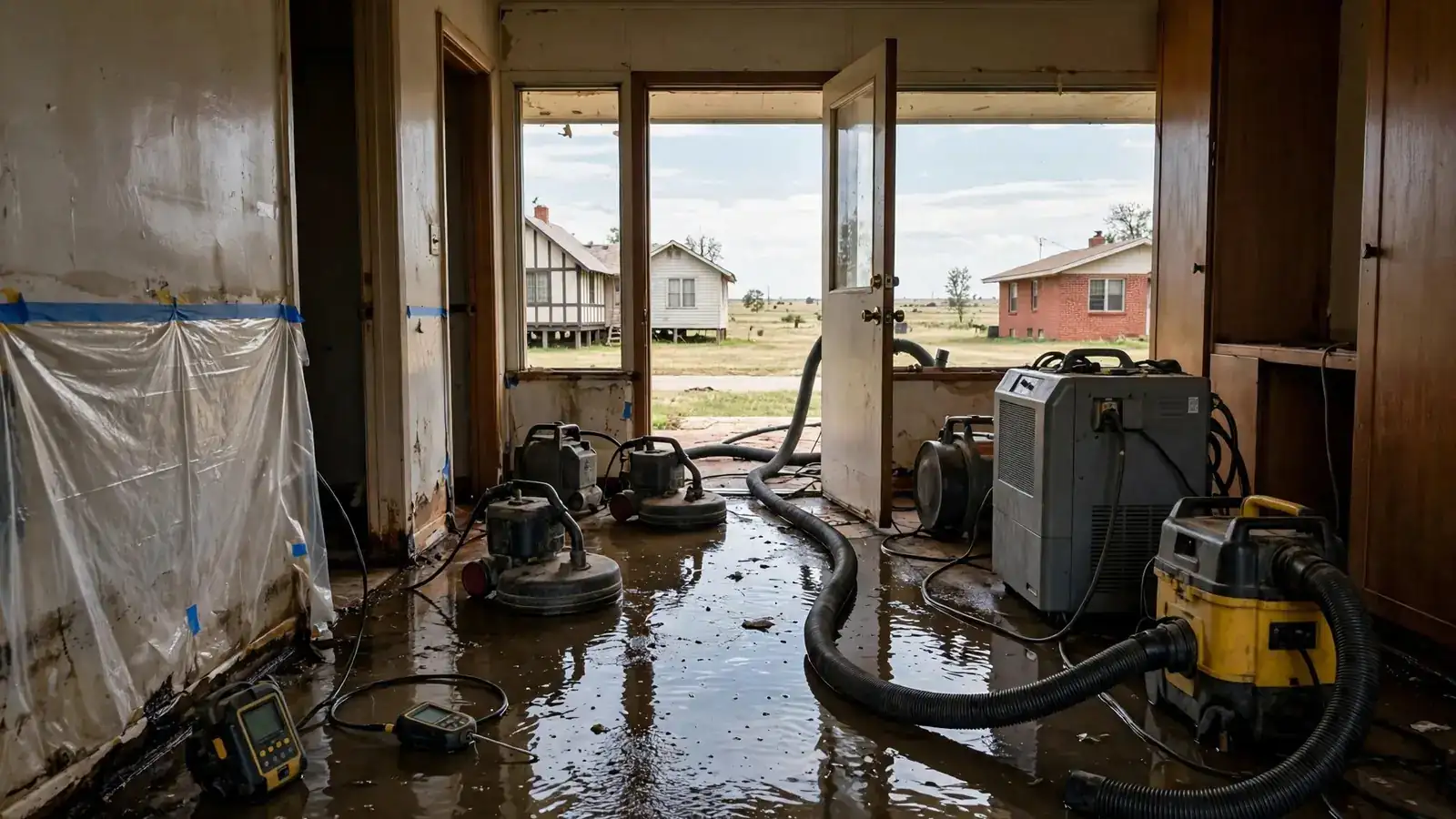
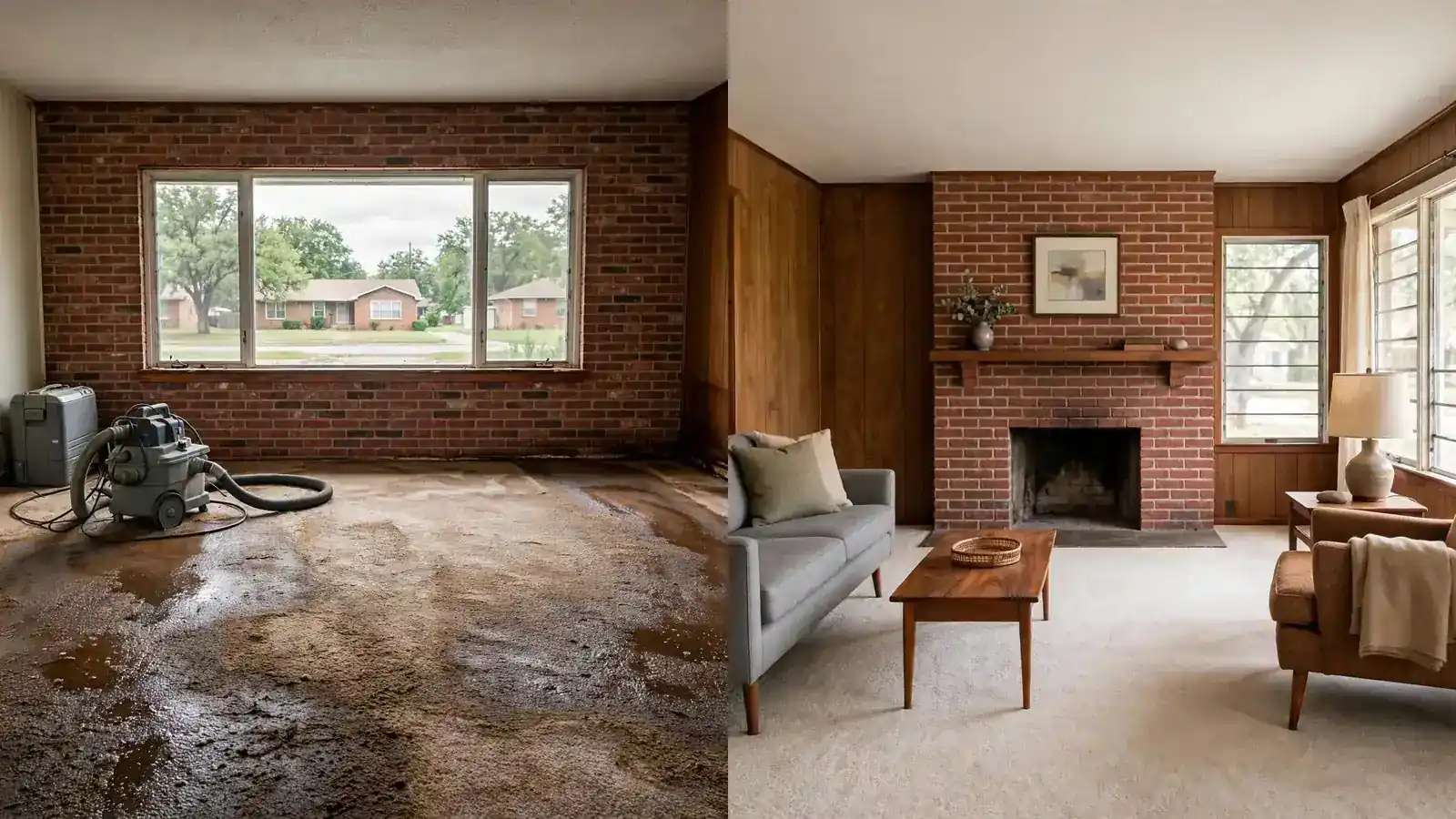
Who can get standing water out of my carpet tonight in Oklahoma City?
Call this number; calls are answered 24/7 and connect you to an independent contractor who takes urgent extraction jobs. Pulling liquid water out is far quicker than letting it evaporate [1]. Before they arrive, turn off power to wet rooms from a dry spot and read about water extraction.
Key facts: Emergency Water Extraction
- Extracting liquid water is far faster than letting it evaporate, which is why it starts the job [1].
- EPA advises getting wet areas dry within 24 to 48 hours to help prevent mold [2].
- Water is graded by contamination, from clean supply water to sewage or floodwater, and handled to match [1].
- Flood from rising surface water usually needs a separate flood policy [3].
First hour
What to do in the first hour: water extraction
- 1
Stop the water at its source
Close the main valve for a plumbing leak, or the fixture valve for a toilet or washer line [6].
- 2
Shut off power to wet rooms
Use the breaker panel only if you can reach it while standing on a dry floor.
- 3
Lift furniture off wet carpet
Put foil or plastic under legs, or move pieces to a dry room, so stains and rust do not transfer.
- 4
Pull up loose rugs
Area rugs trap water underneath. Roll them up and move them somewhere they can drain.
- 5
Tell the type of water
Clean water from a supply line is handled differently from storm water or a drain backup [1].
- 6
Call for extraction
Call this number and describe the rooms, the flooring and how deep the water is.
Signs to call
When standing water needs extraction now
Soaked carpet that squelches
Water has reached the pad. The longer it sits, the less likely the pad can be kept. Our wet carpet guide explains more.
Water across a hardwood floor
Wood absorbs water quickly and starts to cup. Fast extraction gives it the best chance.
Water spreading under walls
Once it moves under baseboards, it starts wicking up the drywall.
Puddles on a slab under flooring
Laminate and vinyl plank can trap water on the concrete where you cannot see it.
More than one room is wet
Large areas need commercial extractors to get the water out in time.
On the call
What happens during the extraction call and visit
On the call, the contractor asks how much water there is, what kind of flooring is underneath and where the water came from. Give an idea of depth and how many rooms are affected. That tells them whether a portable unit is enough or a truck-mounted system is needed.
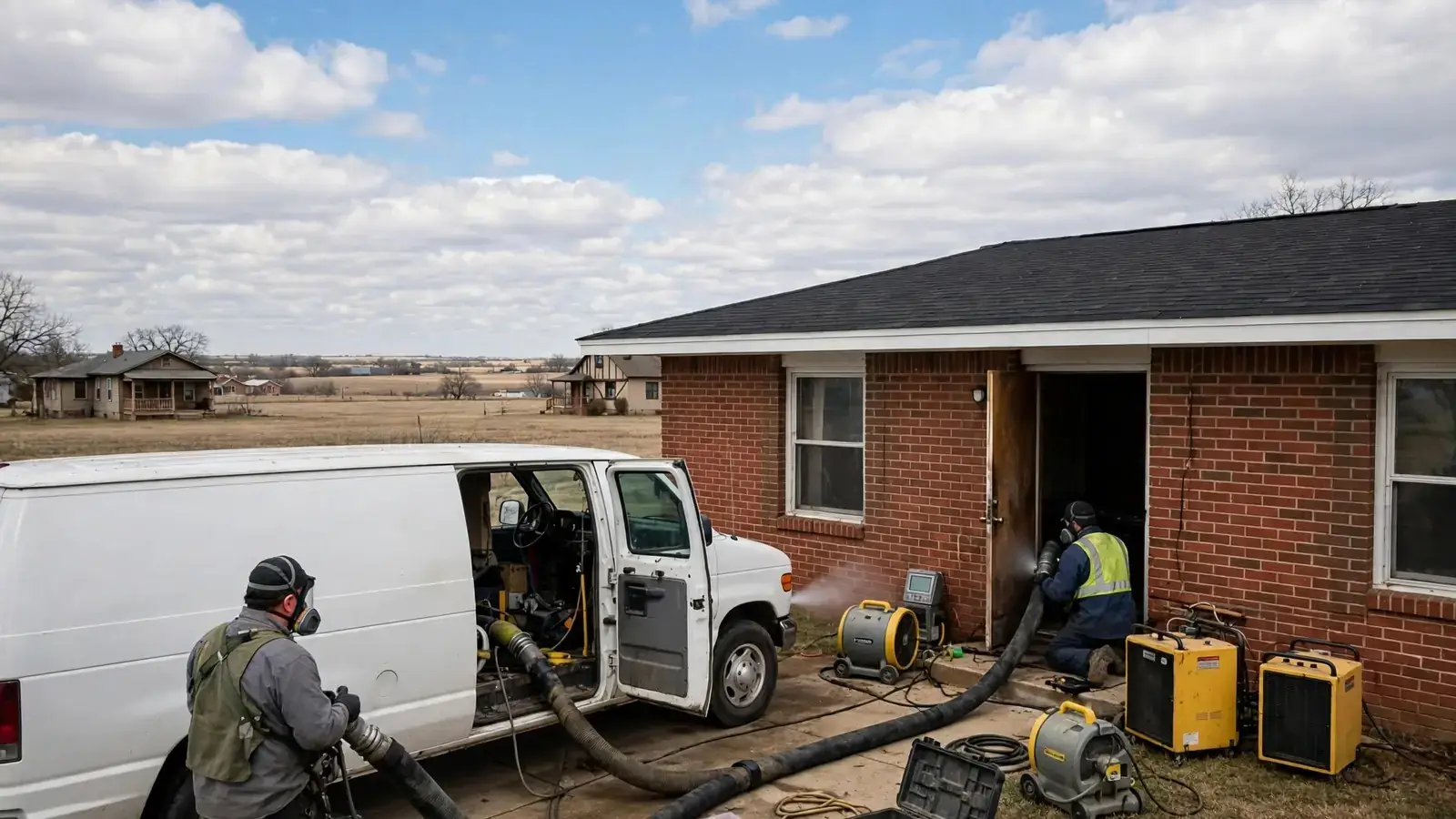
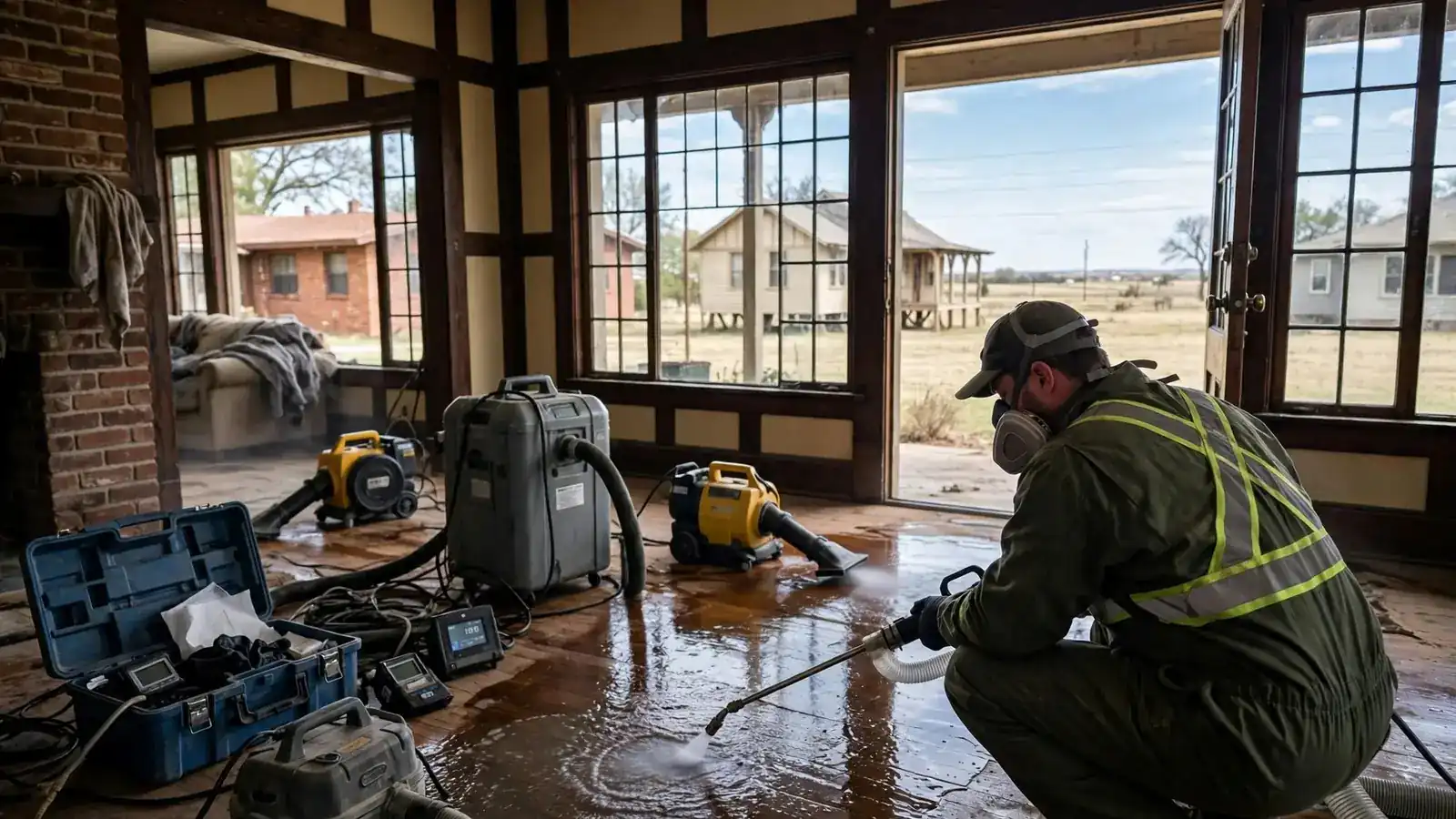
On arrival, hoses often run from a van or trailer through a door into the house. Technicians work wands across carpet, wood and tile, and may use weighted tools to press water out of pad. On concrete they use squeegee-style heads. Pad and some flooring may be removed if they cannot be saved.
When extraction is done, structural drying usually follows with dehumidifiers and air movers. Ask how they will document the job for insurance; flood from outside water usually falls under a separate flood policy [3]. This site does not call or message you after the call.
Oklahoma City factors
Standing water patterns in Oklahoma City homes
Many homes across the metro sit on slabs, so water from a leak spreads across the concrete under carpet or plank flooring. Fast extraction keeps it from running into every room. Our page on water extraction in Crown Heights covers older houses with wood floors instead.
Heavy storms can bring water in through doors or low walls, and the Norman forecast office issues flash flood warnings for the metro during those events [5]. That water is often muddy and contaminated, which changes how it is extracted and what can be kept.
Burst pipes in winter are another common source, especially when attic lines leak into rooms below. See our Plaza District water extraction page for older cottages with mixed flooring.
Equipment
Portable and truck-mounted extraction compared
Portable extractors roll into the house and plug into an outlet. They suit smaller areas, upper floors and spots where a hose cannot reach from outside. Truck-mounted units stay in a van and send suction through long hoses, pulling more water in less time.
For carpet, technicians may use weighted tools that press down on the surface to squeeze water out of the pad underneath. On tile and concrete, wide squeegee heads clear water quickly. Each method aims to leave as little liquid as possible before drying starts [1].
The type of water decides how the extracted water is treated. Clean supply water can be handled simply, while storm water or a drain backup calls for protective gear and careful disposal. Tell the contractor on the call where the water came from so they bring the right setup. If you are not sure, say so; they can check when they arrive. Mention any odor, color or mud in the water, since those clues help them judge the category before they start.
After tonight
What comes after the water is pulled out
Extraction removes the liquid, but the floor, walls and framing are still damp. Drying equipment usually goes in right after the water comes out, and it stays until readings show the materials are back to normal.
Leave the equipment where the technician placed it and keep pets away from cords and hoses. If carpet was saved, it may be lifted at the edges to dry the pad or subfloor beneath. Ask before you walk on it.
Truck-mounted units move a lot of water
For large areas, hoses run from a powerful unit in a van into the house. It pulls more water than portable machines and sends it straight to a holding tank outside.
If the water came from a broken line, see our burst pipe water damage page for the plumbing side of the job.
- Hoses through a door or window
- Water sent to an outside tank
- Large rooms cleared quickly
Hardwood floors need a gentle approach
Wood absorbs water quickly and can cup or crown. Technicians use special heads that pull water from the boards and seams, then follow with drying mats or targeted air.
For the full set of first steps in any flood, see our emergency water damage restoration page.
- Water pulled from seams
- Drying mats where needed
- Readings taken on boards
Checklist
Get ready for extraction
- Clear a path from the door to the wet rooms.
- Move cars from the driveway if a van needs to park.
- Pick up small items from wet floors.
- Keep pets in a dry room.
- Note how deep the water was.
- Have your policy number nearby.
FAQ
Water extraction emergency questions
Can I use a wet vac before help arrives?
A wet vac rated for water can remove small amounts of clean water. Do not use a household vacuum, and stay away from contaminated water.
Will my carpet be saved?
Clean water caught quickly often allows the carpet to be dried. The pad is often replaced. Sewage-soaked carpet is removed [1].
How long does extraction take?
It depends on the size of the area and the flooring. Most of the work happens on the first visit, with drying after.
What happens to the water they remove?
It goes into the unit's tank and is disposed of according to the type of water.