
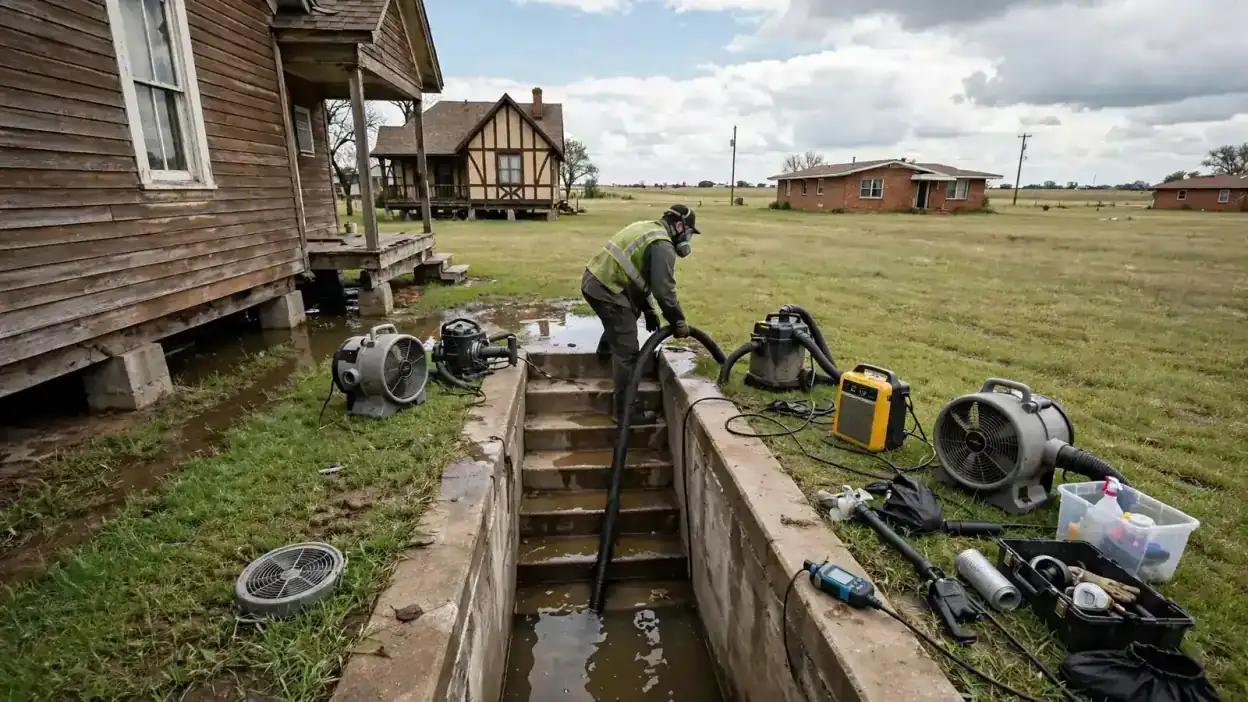
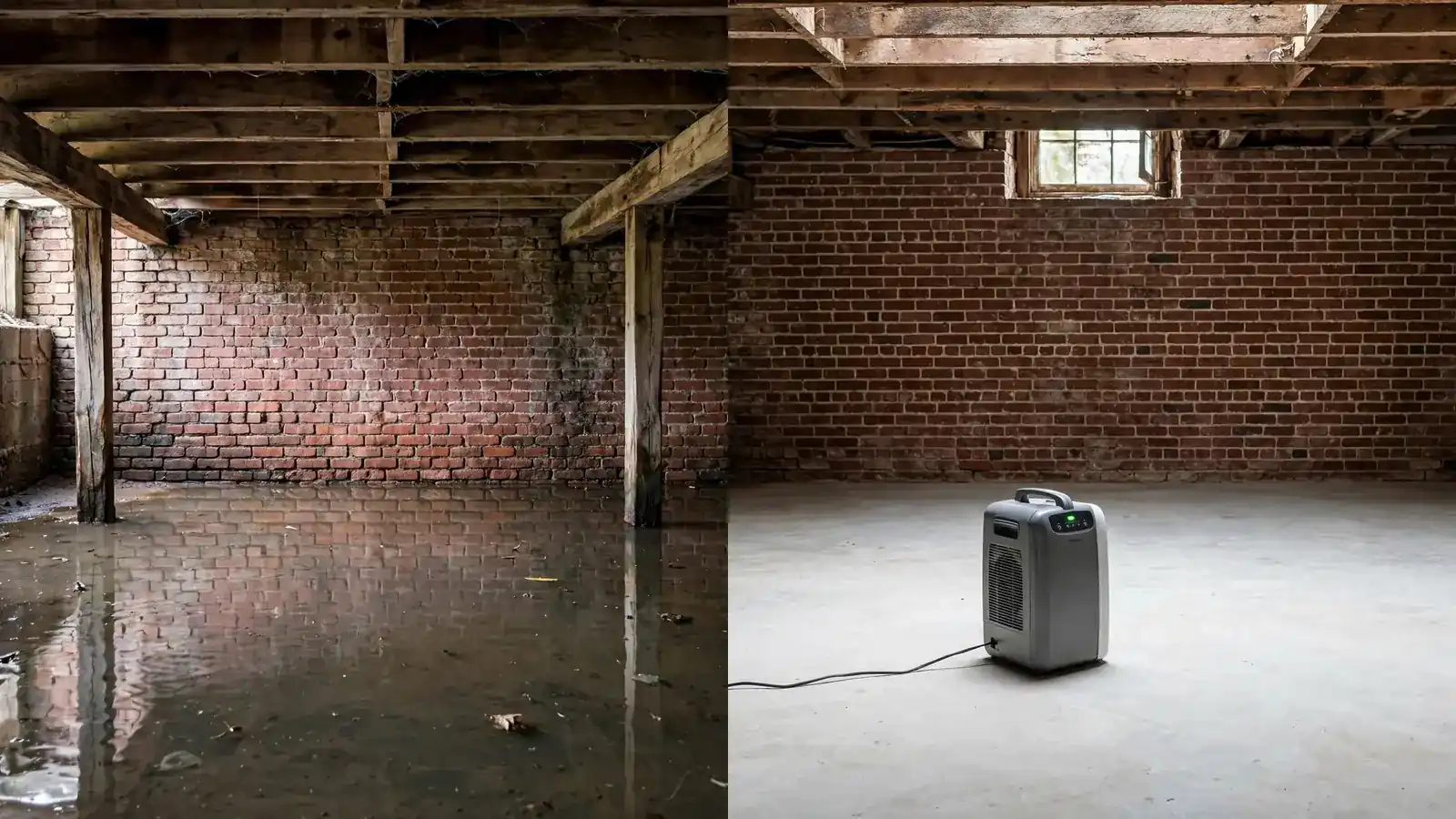
Who pumps out a flooded storm cellar in Oklahoma City at night?
Call this number at any hour to reach an independent contractor who pumps and cleans flooded cellars, shelters and crawlspaces. Stay out of the water until power to that space is off, because floodwater is treated as contaminated [1]. The contractor can explain flooded basement cleanup on the call.
Key facts: Emergency Basement Flooding
- Floodwater is handled as contaminated because it can carry sewage, chemicals and debris [1].
- Rising surface water needs flood insurance; standard homeowners policies generally exclude it [2].
- Porous items soaked by floodwater that cannot be fully cleaned and dried are usually thrown out [1].
- Flash flood warnings for the metro come from the National Weather Service office in Norman [3].
First hour
What to do in the first hour: basement flooding
- 1
Stay at the top of the stairs
Do not wade into a flooded cellar or lower room. Water can hide steps, debris and live wiring.
- 2
Cut power to the space
If the panel is upstairs and dry, switch off the circuits for the flooded area. If not, wait for help [6].
- 3
Watch the weather
Check flash flood warnings from the Norman office before anyone works near the water. More rain may be coming [3].
- 4
Keep the water from spreading
Close doors to the flooded area and keep children and pets away from the entry.
- 5
Record the flood
Photograph the water level on walls and steps, plus anything stored below. Note the time it started.
- 6
Call and describe the space
Tell the contractor whether it is a cellar, shelter, lower room or crawlspace, and roughly how deep the water is.
Signs it is urgent
When below-ground water needs help tonight
Water still rising
If the level keeps climbing, outside water is still finding its way in and the space will need pumping.
Water near the furnace or heater
Many lower spaces hold mechanical equipment. Water at the burner or controls is a safety concern.
Foul drain odor below
A foul odor means a drain may be backing up along with storm water. See sewage backup cleanup.
Shelter filled to the lid
In-ground shelters can fill completely and need a pump before anyone can step in.
Mud across the crawlspace
Silt and wet soil under a raised house hold moisture against the framing.
On the call
On the line and at the cellar door
On the call, describe the space: a concrete cellar, a steel or concrete in-ground shelter, a finished lower room or a crawlspace. Say how deep the water is, whether it is still coming in and whether anything electrical is down there. The contractor uses that to decide on pumps, hoses and protective gear.
At the house, the crew pumps standing water first, then clears mud and debris. Soaked porous items such as carpet, cardboard and upholstered furniture often cannot be saved after floodwater [1]. Walls and floors are cleaned, then dried with dehumidifiers. The water extraction page explains the pumping stage.
Ask how they will document the flood for your insurer. Flood from rising surface water usually needs a flood policy, while water from a broken pipe or a failed sump may fall under a homeowners policy [2]. This site does not follow up with you; you deal with the contractor directly.
Oklahoma City factors
Why Oklahoma City cellars and crawlspaces flood
Central Oklahoma storms can drop heavy rain in a short time, and the Norman office issues flash flood warnings when streets and low ground fill fast [3]. Storm cellars and in-ground shelters sit below grade by design, so water runs toward them. A lid or door that does not seal well lets that water straight in.
Older neighborhoods near downtown have more pier-and-beam houses with crawlspaces and the occasional true basement. Our page on flooded basement cleanup in Heritage Hills covers those older lower levels. Clay soil around the metro swells when wet, which can push water through gaps in cellar walls.
Newer slab homes may have a shelter in the garage floor or yard. When one floods, it often fills to the top. Areas covered on our Capitol Hill basement cleanup page mix older cellars with newer shelters, so the first question is always which kind you have.
After tonight
Once the cellar is pumped and dry
After the water and mud are gone and the space is dry, look at how the water got in. A worn door seal, a cracked wall or a downspout that empties toward the cellar are common causes. Fixing them helps the next storm stay outside.
Store items in plastic bins on shelves rather than cardboard on the floor, and keep a battery light by the entry. Check the shelter after every big storm so a small leak does not turn into standing water again.
If you rely on the cellar or shelter for tornado safety, make sure it is usable again before the next storm season. Clear the steps, test the door or lid, and confirm the floor is dry and clear of slick mud. A wet shelter with a stuck lid is a hazard of its own, so ask the crew to look at the entry while they are there.
Finally, review your coverage. Many owners learn after a cellar flood that rising water was not part of their homeowners policy. Flood insurance through the national program is a separate policy, and new policies usually have a waiting period before they take effect [2].
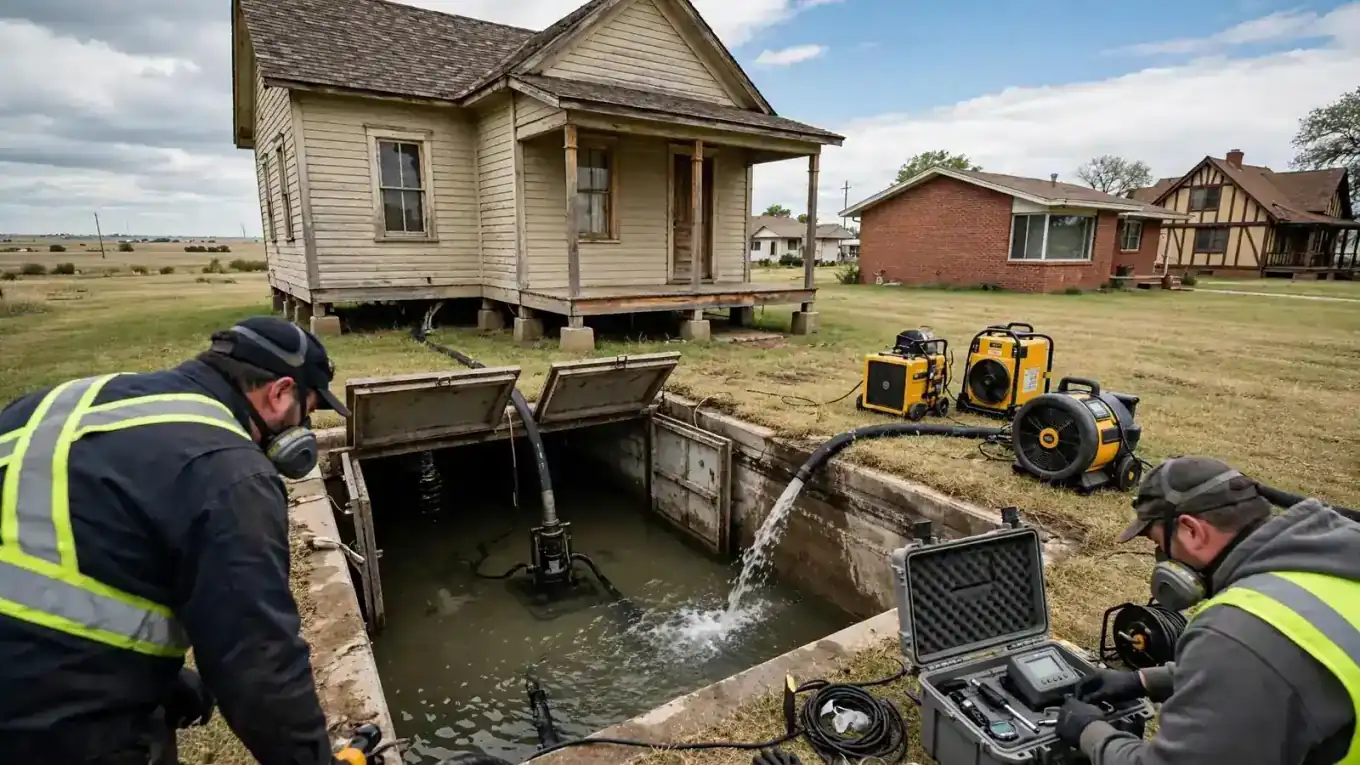
Pumping comes first in a flooded cellar
A submersible pump moves water out through a hose to a safe spot outside. The crew watches the level as it drops, because a cellar that refills means water is still entering. Once it is down, they can see the floor and the damage.
Our emergency water damage restoration page covers the steps shared by every kind of indoor flood.
- Pump placed at the low point
- Discharge away from the house
- Refill rate watched
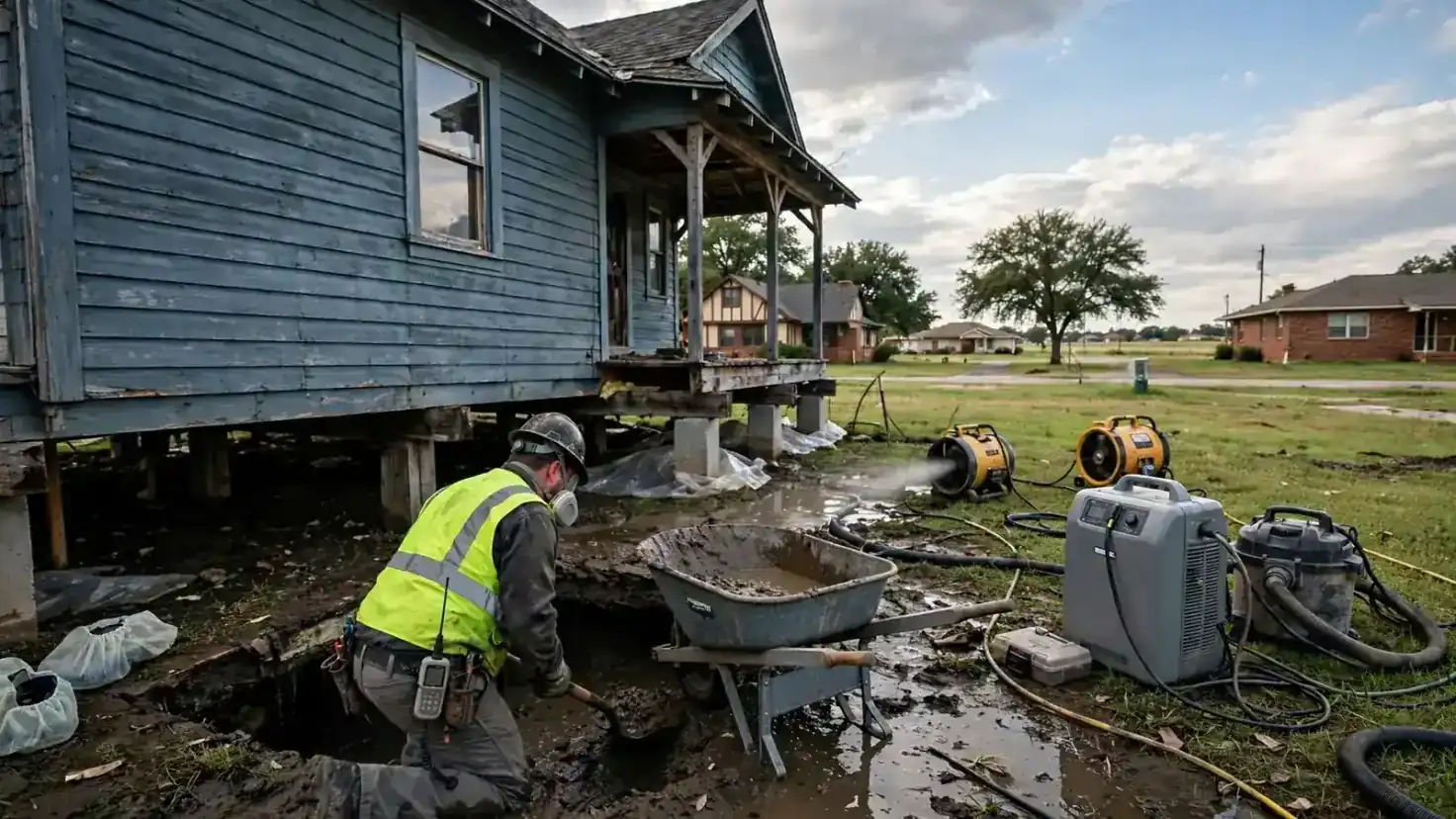
Crawlspace mud has to come out
Under a raised house, floodwater leaves silt and wet soil that keep the wood above damp. Crews clear what they can, then dry the joists and subfloor. Leaving the mud in place keeps humidity high under the floor.
Moisture that stays for days raises the chance of growth. Our guide to mold risk after water damage explains what to watch for.
- Silt and debris removed
- Joists dried and tested
- Vapor barrier checked
Checklist
Before the crew reaches your cellar
- Keep the door or lid closed if rain continues.
- Leave power off to the flooded area.
- Move cars or items away from the cellar entry.
- Note what was stored below.
- Find your flood or homeowners policy.
- Keep pets away from the water.
FAQ
Questions about urgent cellar and basement floods
Can I pump out the shelter myself?
Small amounts of water may be pumped with an electric pump on a protected outlet. Deep water, mud or sewage is a job for the crew.
Is storm water in my cellar safe to touch?
Treat it as contaminated. It can carry sewage and chemicals, so wear gloves and boots and wash afterward [1].
Will homeowners insurance pay for the flood?
Rising surface water usually needs flood insurance [2]. Water from a pipe or failed drain may be handled differently. Ask your insurer.
What if water keeps coming back in?
Tell the contractor. It may mean a drainage or seal problem that needs fixing after the cleanup.