
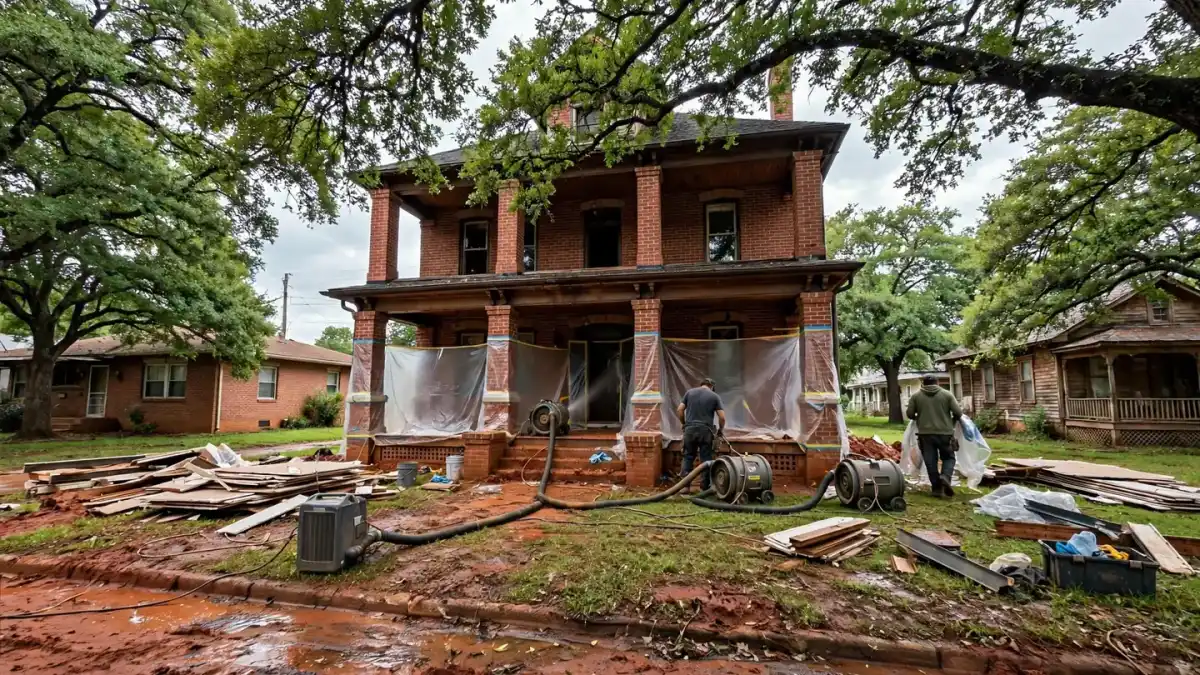
Key facts: Flooded Basements in Heritage Hills
- EPA advises throwing out porous items soaked by floodwater when they cannot be cleaned and dried completely [1].
- Many Heritage Hills basements have walls of stone, brick or early concrete that soak up water and release it slowly [7].
- Water from heavy storms that enters through the ground is usually a flood matter for insurance, not a homeowners claim [2].
Why Heritage Hills has basements
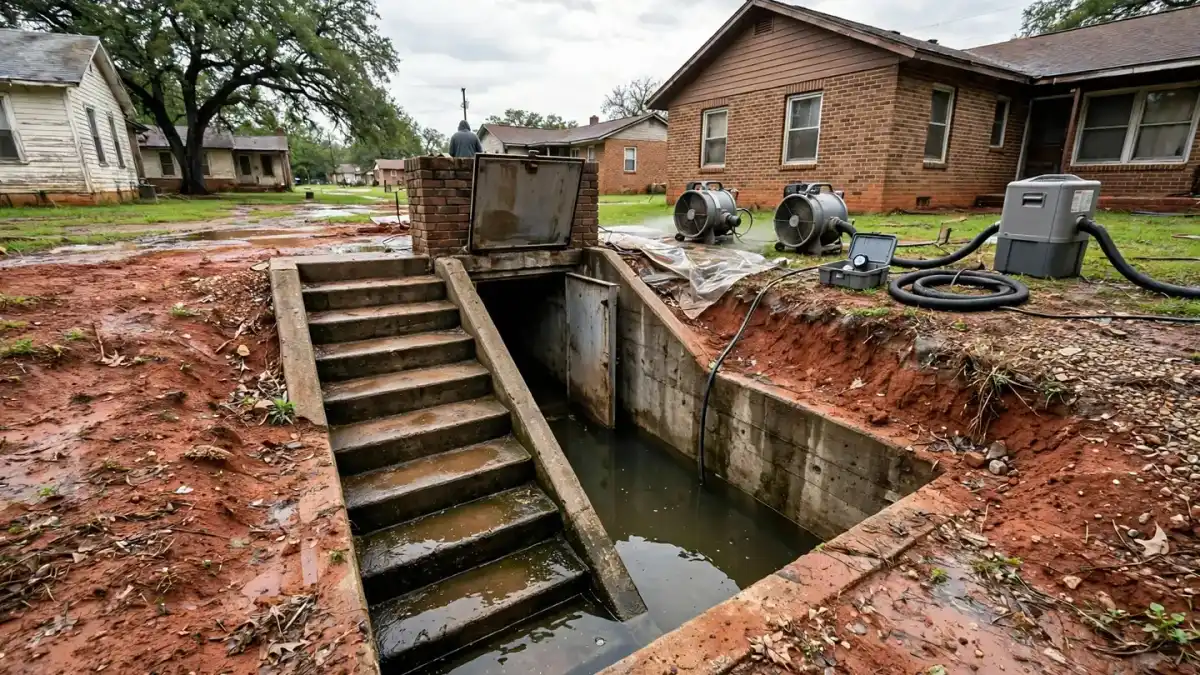
Heritage Hills homes from the early 1900s through the 1930s were often built with full or partial basements, unlike the slab and crawlspace homes common elsewhere in the city. Those basements hold furnaces or boilers, water heaters, laundry and storage, and some have finished rooms added later.
Old basement walls were not built with modern waterproofing. When the soil around them is saturated after long rain, water can seep through mortar joints and cracks or come up through the floor.
Three ways water reaches a Heritage Hills basement
Seepage from saturated soil is common after long rainy periods. Leaks from upstairs plumbing, such as a burst pipe or failed radiator, drain down into the basement. Sewer backups through floor drains bring contaminated water up from below.
Each source calls for a different response. Clean water from a supply line may be dried. Seepage and sewage are treated as contaminated, and porous materials they soak usually have to be removed.
Starting basement cleanup in Heritage Hills
Work in this order.
- 1
Keep away from the panel and boiler
Do not enter standing water near electrical or gas equipment.
- 2
Find the water source
Seepage, plumbing leak or floor drain backup.
- 3
Pump the basement steadily
Remove water and silt, watching old walls for movement.
- 4
Sort wet stored items
Keep what can be cleaned; set aside what cannot.
Masonry basements dry slowly
Stone, brick and early concrete hold water deep inside. After pumping, the walls keep releasing moisture for weeks. Steady dehumidification with the basement closed off works better than open windows and fans alone.
Our structural drying page explains how a crew uses moisture readings to tell when masonry has returned to normal.
Boilers, water heaters and electrical equipment
Basement equipment that sat in water should be checked by a qualified technician before use. Boiler controls, gas valves and electrical panels can fail in unsafe ways after flooding.
Ready.gov's flood safety guidance stresses staying out of water that may be energized and waiting for professionals to confirm equipment is safe [6].
Contaminated water and protective gear
EPA treats floodwater as contaminated, and its cleanup guidance calls for gloves, boots and good ventilation [1]. Sewer backups through floor drains are even more contaminated and need cleaning and disinfection.
Keep children and pets out of the basement until cleanup is done. Wash hands well after any contact.
Flood insurance and backups
Seepage from storm water is usually treated as flood and needs flood coverage [2]. Sewer backups may need a water backup endorsement. The Oklahoma Insurance Department can help with policy questions [5].
Photograph water levels and damaged items before removal. Keep receipts for pumping and cleanup work.
Mold in older basements
EPA's mold guidance recommends drying within 24 to 48 hours where possible [4]. Basements with wood shelving, stored papers and limited airflow are prone to mold if they stay damp.
Our guide on mold risk after water damage explains warning signs. The Heritage Hills page covers more about local homes.
Reducing future basement water
Keep gutters clean, extend downspouts away from the house and check that soil slopes away from foundations. A backwater valve can help prevent sewer backups through floor drains. Heavy storms are forecast by the National Weather Service in Norman [3].
Store valuables on shelves rather than the floor, and consider a sump pump if water returns often.
Finished rooms and stored heirlooms below grade
Some Heritage Hills owners have turned part of the basement into a den, office or wine room over the years. Carpet, paneling and drywall in those rooms soak up water quickly and often have to be cut back after a flood. Original stone or brick behind the newer finishes then needs time to dry before anything goes back up.
Basements in big old houses also tend to hold decades of family belongings: trunks, photographs, books and holiday decorations. Lift what you can onto shelves or carry it upstairs, lay papers flat in a cool room and photograph everything that was wet. A record made now is far easier than trying to remember later.
Upstairs leaks that end in the basement
Not every flooded basement in Heritage Hills starts outside. A split line on the second floor, a failed radiator valve or an overflowing tub can send water down through plaster ceilings and wall cavities until it pools on the basement floor. In that case, the rooms above need checking as carefully as the basement itself.
Clean supply water that is caught quickly is easier to deal with than seepage or sewage. Even so, once it has run through old walls and dust, crews often treat it with more caution, cleaning surfaces before they start drying.
FAQ
Flooded Basements in Heritage Hills: questions
Is basement seepage in Heritage Hills covered by insurance?
Usually not under a homeowners policy if it came from groundwater. Flood coverage may apply.
Can I use my boiler after the basement flooded?
Have a qualified technician inspect it first. Controls and gas valves may be damaged.
How long will a stone basement take to dry?
Often several weeks. Masonry releases water slowly.
Sources and citations
- [1]U.S. EPA: Flood cleanup to protect indoor air quality
- [2]FEMA FloodSmart: National Flood Insurance Program
- [3]National Weather Service, Norman forecast office
- [4]U.S. EPA: A brief guide to mold, moisture and your home
- [5]Oklahoma Insurance Department
- [6]Ready.gov: Floods
- [7]NPS record: Heritage Hills Historic and Architectural District (NRIS 79002006)