
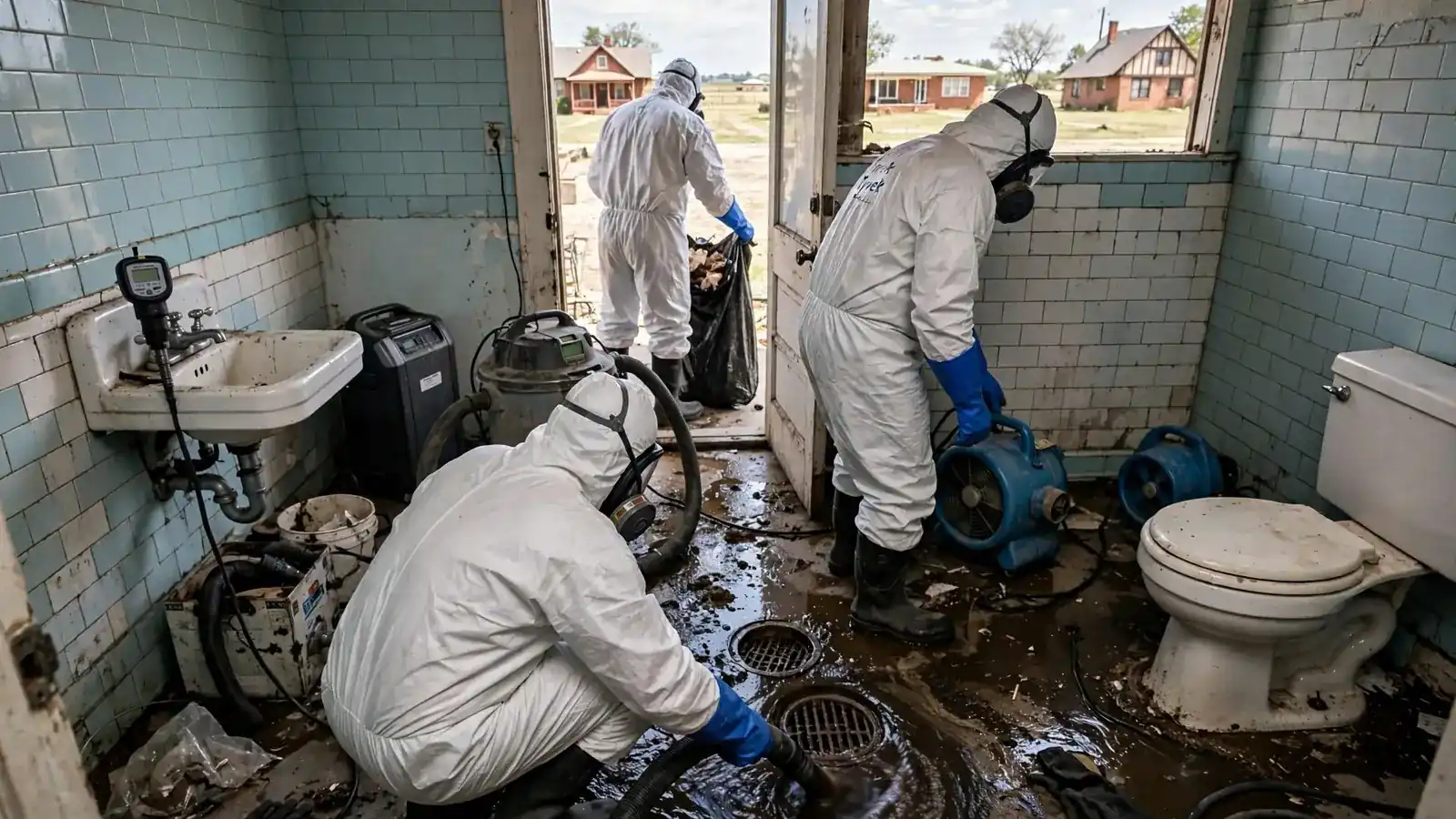
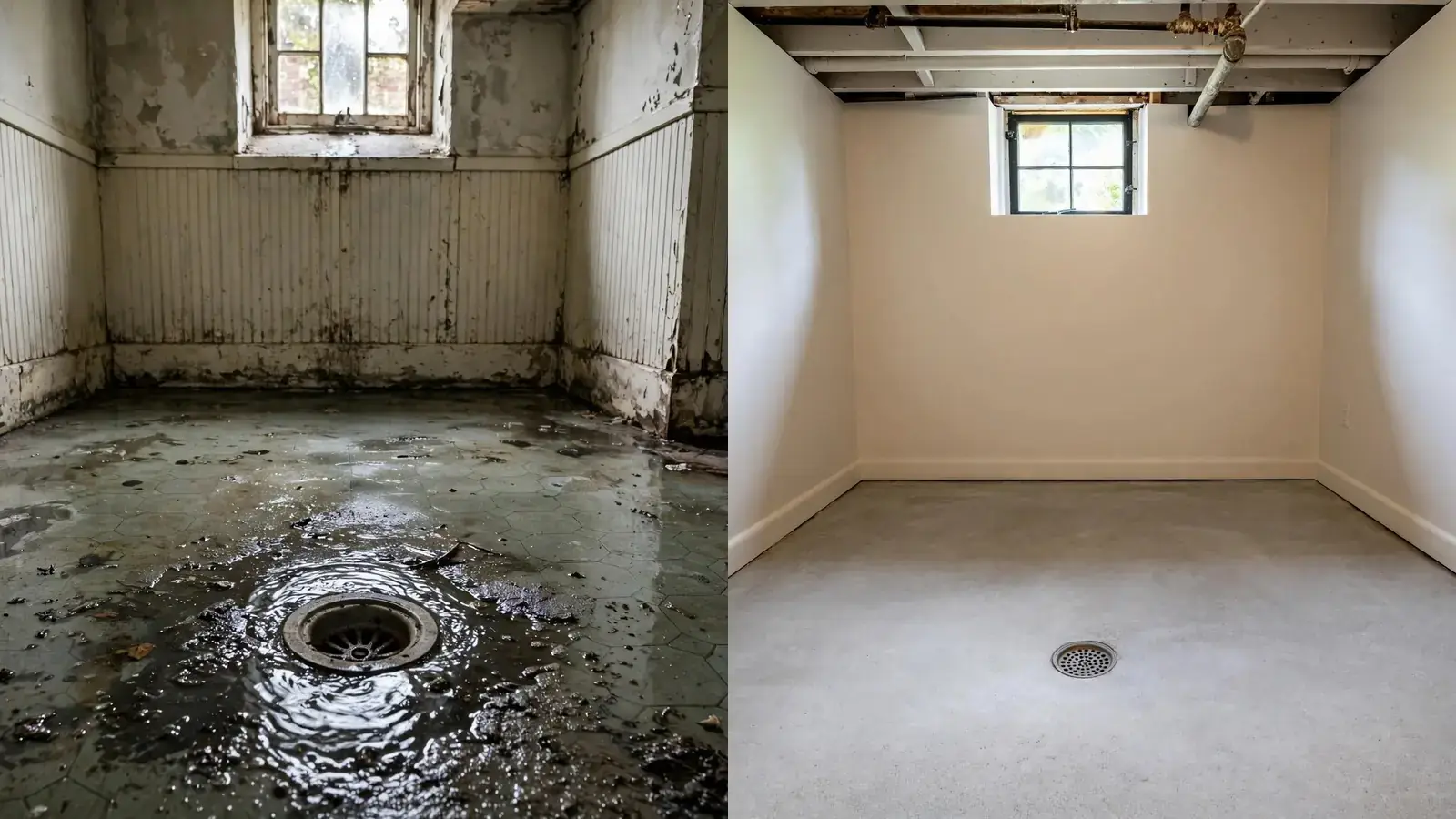
What if sewage comes up my floor drain at night in OKC?
Stop using every sink, toilet, shower and appliance that drains, then keep people and pets out of that area. Sewage is the most contaminated class of water and needs protective handling [1]. Calls are answered 24/7 here, so you can reach an independent contractor about sewage backup cleanup right away.
Key facts: Emergency Sewage Backup
- Sewage is classed as grossly contaminated water, so cleanup needs protective gear and removal of soaked porous items [1].
- Preparedness guidance says to wear protective gear and keep children and pets away from contaminated water [2].
- Sewer and drain backups are often excluded from homeowners policies unless a backup endorsement was added [3].
- The property owner is generally responsible for the private sewer line between the house and the public main [4].
First hour
What to do in the first hour: sewage backup
- 1
Stop every drain in the house
No flushing, showers, laundry or dishwasher. Each one sends more water toward the blockage and back out the lowest drain.
- 2
Clear the area of people
Keep children, pets, older relatives and anyone with a weak immune system away from the affected rooms [2].
- 3
Switch off power if outlets are wet
Turn off the breaker from a dry spot. Never touch an outlet or cord that sewage has reached.
- 4
Shut the HVAC in that zone
Running the system can pull odor and droplets into ducts and spread them to other rooms.
- 5
Photograph, then step back
Take pictures of the backup and the drain it came from, then leave the scene alone [3].
- 6
Call for cleanup and a plumber
Call this number to reach a cleanup contractor. A plumber is usually needed to clear the line.
Do not wait if
Signs of a sewage emergency
Wastewater at the lowest drain
Floor drains, basement showers and ground-floor tubs show a backup first.
Gurgling toilets and slow drains
Several fixtures acting up at once often point to a main line blockage.
Water under carpet near a bathroom
Sewage that soaks carpet and pad usually means both have to be removed [1].
Strong odor in the house
A heavy sewer smell can mean hidden wastewater under flooring or in a wall.
Backup after a heavy storm
Storm water can overload lines and push sewage into low drains.
On the call
The call and what the sewage crew does
Expect the contractor to ask which drain overflowed, whether it is still coming up, how many rooms it reached and what flooring is there. Say whether a plumber has cleared the line yet. Cleanup cannot finish while the blockage is still there, so they may suggest both visits on the same call.
The crew arrives in protective suits, gloves and respirators. They remove the wastewater, then take out porous materials it soaked, such as carpet, pad and the lower part of drywall [1]. Hard surfaces are cleaned and disinfected. After that, structural drying brings the framing and subfloor back to normal moisture.
Insurance is a common worry. Many policies exclude sewer backups unless you bought a backup endorsement, so check yours and call the insurer early [3]. The contractor can photograph and document the work. You decide everything on the call; this site does not contact you later.
Oklahoma City factors
Sewer backups in Oklahoma City homes
The line from your house to the public main is generally the owner's to maintain, while the city handles the main itself [4]. In older central neighborhoods, private lines can be clay or cast iron and may have roots, cracks or sags. Our page on sewage backup cleanup in Paseo looks at those older lines.
Heavy storms can overload drains around the metro, and low floor drains in cellars or lower rooms are often the first to back up. Clay soil that swells and shrinks with the weather can also shift older pipe joints over time.
Newer slab homes route drains under the concrete, so a backup often shows up first at a ground-floor tub or shower. Homes covered on our Plaza District sewage page include both older cottages and remodeled houses, each with its own drain layout.
Water categories
Why sewage is handled differently from a clean leak
Restoration standards sort water by how contaminated it is. Water from a supply pipe starts out clean, water from a washing machine or dishwasher is a step down, and sewage sits in the most contaminated group [1]. That ranking decides what gear the crew wears, what gets removed and how surfaces are treated.
With a clean leak, carpet and drywall can often be dried in place. With sewage, porous materials it touched are usually cut out and bagged, because they cannot be cleaned all the way through [1]. Hard surfaces such as tile, concrete and sealed wood are scrubbed and disinfected instead.
Time also changes the picture. Even a clean leak that sits for days can grow bacteria and move into a more contaminated group. That is one more reason to call early rather than waiting to see if the floor dries on its own.
Clothing, bedding and toys that sewage touched need care as well. Washable fabrics can often be laundered in hot water, but items that cannot be washed, such as stuffed furniture or mattresses, are usually discarded [5]. Ask the crew before you throw anything away so it can be listed for your claim.
After tonight
After the line is clear and the rooms are clean
Once the plumber has cleared the blockage and the crew has finished cleaning, ask what caused the backup. Roots, a sagging pipe or grease buildup each need a different fix, and knowing the cause helps prevent a repeat.
Before you use the drains normally again, confirm with the plumber that the line flows. Keep wipes, grease and paper towels out of the drains. If the backup came during a storm, ask the plumber whether a backwater valve makes sense for your house.
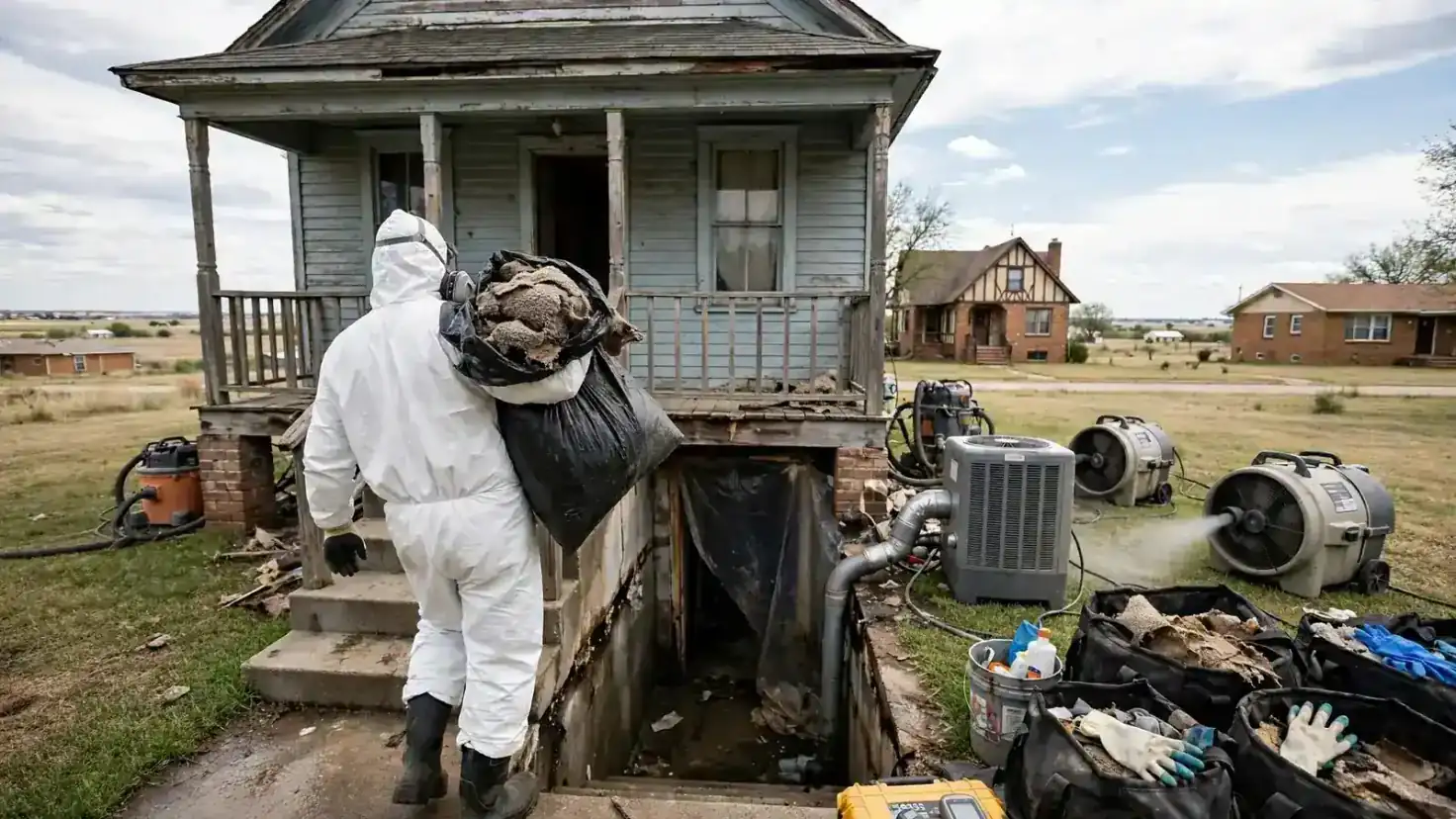
Soaked materials leave the house sealed
Carpet, pad, insulation and drywall that sewage reached are cut out and bagged before they are carried through the house. That keeps contamination from spreading along the way to the door.
If clean water also spread through the home, our emergency water damage restoration page covers the wider steps.
- Porous items bagged on site
- Paths protected on the way out
- Hard surfaces disinfected
Floor drains get cleaned and checked
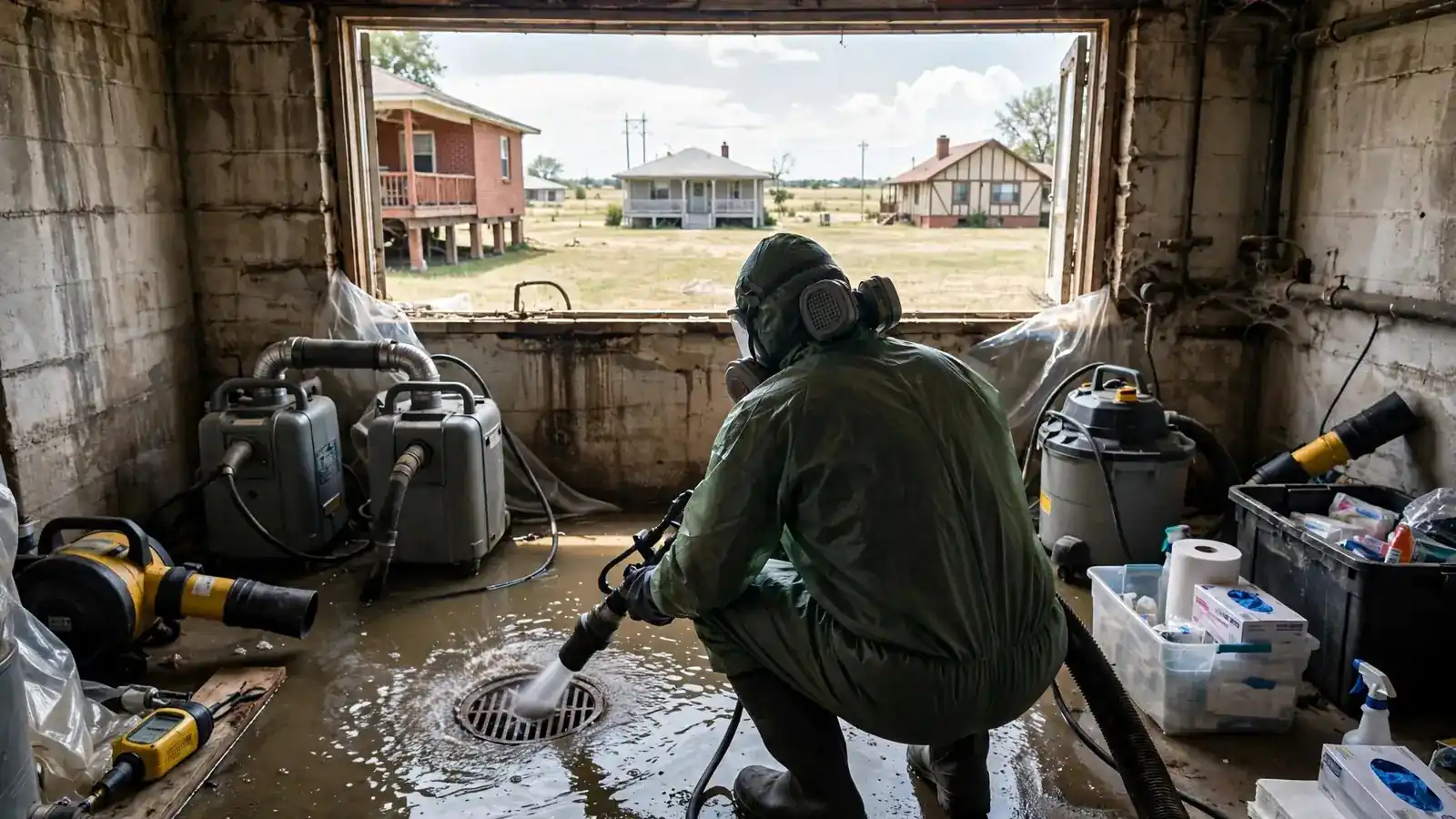
The drain that overflowed is cleaned and the area around it disinfected. Crews look at the floor and wall base for wastewater that seeped under. A plumber may camera the line to find the cause.
Below-grade spaces are a common spot for backups. See our flooded basement cleanup page if storm water came in as well.
- Drain area disinfected
- Seepage under walls checked
- Line inspection suggested
Checklist
While you wait for the sewage crew
- Keep all drains in the house unused.
- Close doors to the affected area.
- Open a window in that room if it is safe.
- Keep pets out completely.
- Set aside clothes that touched the water.
- Find your policy and any backup endorsement.
FAQ
Urgent sewage backup questions
Can I clean up a small sewage spill myself?
A tiny spill on tile may be manageable with gloves and disinfectant. Sewage on carpet, drywall or across a room needs a trained crew [1].
Who clears the blocked sewer line?
A plumber clears the line. The cleanup contractor handles the wastewater and damaged materials. Many jobs need both.
Is it safe to stay in the house?
Keep people away from the affected rooms. If the backup is large or affects the only bathroom, staying elsewhere may be easier.
Does my policy cover a sewer backup?
Often only if you added a water backup endorsement [3]. Call your insurer before cleanup begins if you can.