
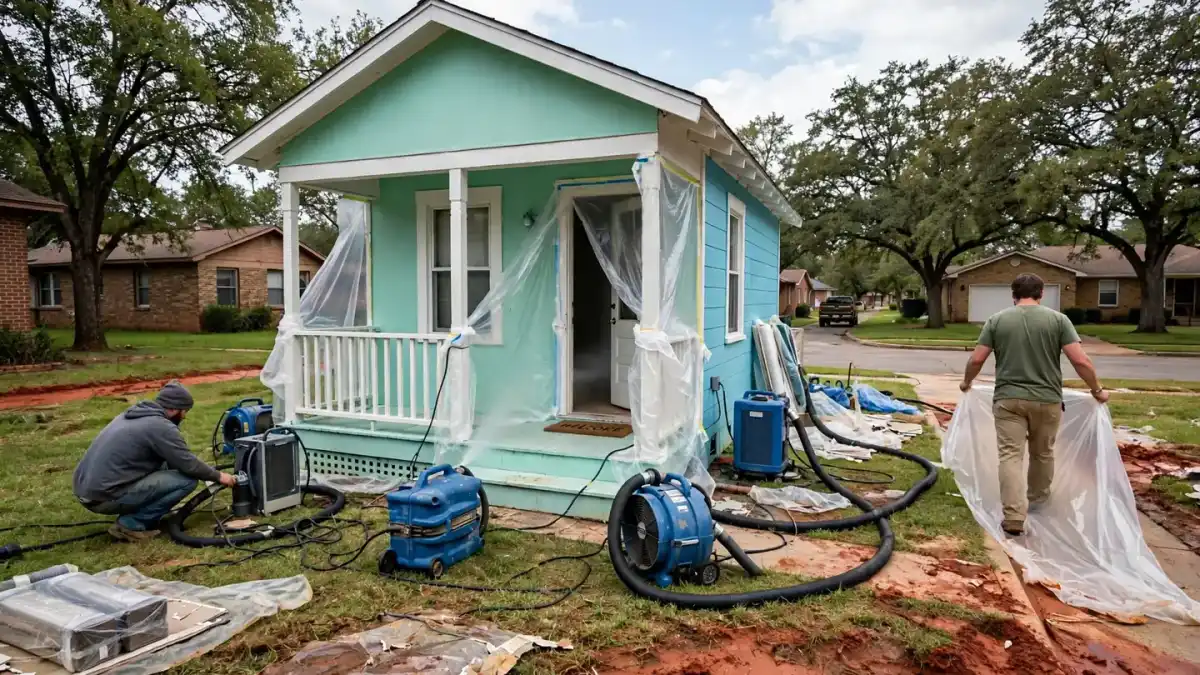
Key facts: Sewage Backup in the Plaza District
- Sewage counts as grossly contaminated water, so cleanup calls for protective gear and removal of affected porous materials [1].
- Owners are generally responsible for the private sewer line from the building to the public main [4].
- The Plaza Theatre on NW 16th Street opened in the mid-1930s, a decade after the commercial strip formed [7].
Old drain lines under Plaza District houses
Many houses near the Plaza District still have original cast iron or clay drain lines running through the crawlspace to the street. Cast iron corrodes, clay joints let in roots, and shifting clay soil can crack either [8].
A cracked line may leak under the house long before anything backs up inside. A sewer smell in the house or damp soil along the drain path is worth a plumber's camera inspection.
First steps after a backup near NW 16th
Before the cleanup crew arrives.
- 1
Stop using water in every unit on the line
Each flush adds to the overflow.
- 2
Keep children and pets away
Ready.gov advises protective gear and keeping vulnerable people clear of tainted water [2].
- 3
Tell the owner or manager in writing
They arrange the plumber and cleanup.
- 4
Photograph the fixture and the damage
Images before cleanup support the claim.
Restaurants and shops on the strip
The Plaza District's commercial strip includes restaurants and bars with commercial kitchens in older buildings. Grease can build up in older drain lines, and a blockage can affect neighboring businesses that share the line.
Business owners should know their lease terms and report backups to the building owner immediately. Close the affected space and keep customers away until it is cleaned and disinfected.
Cleanup and removal of materials
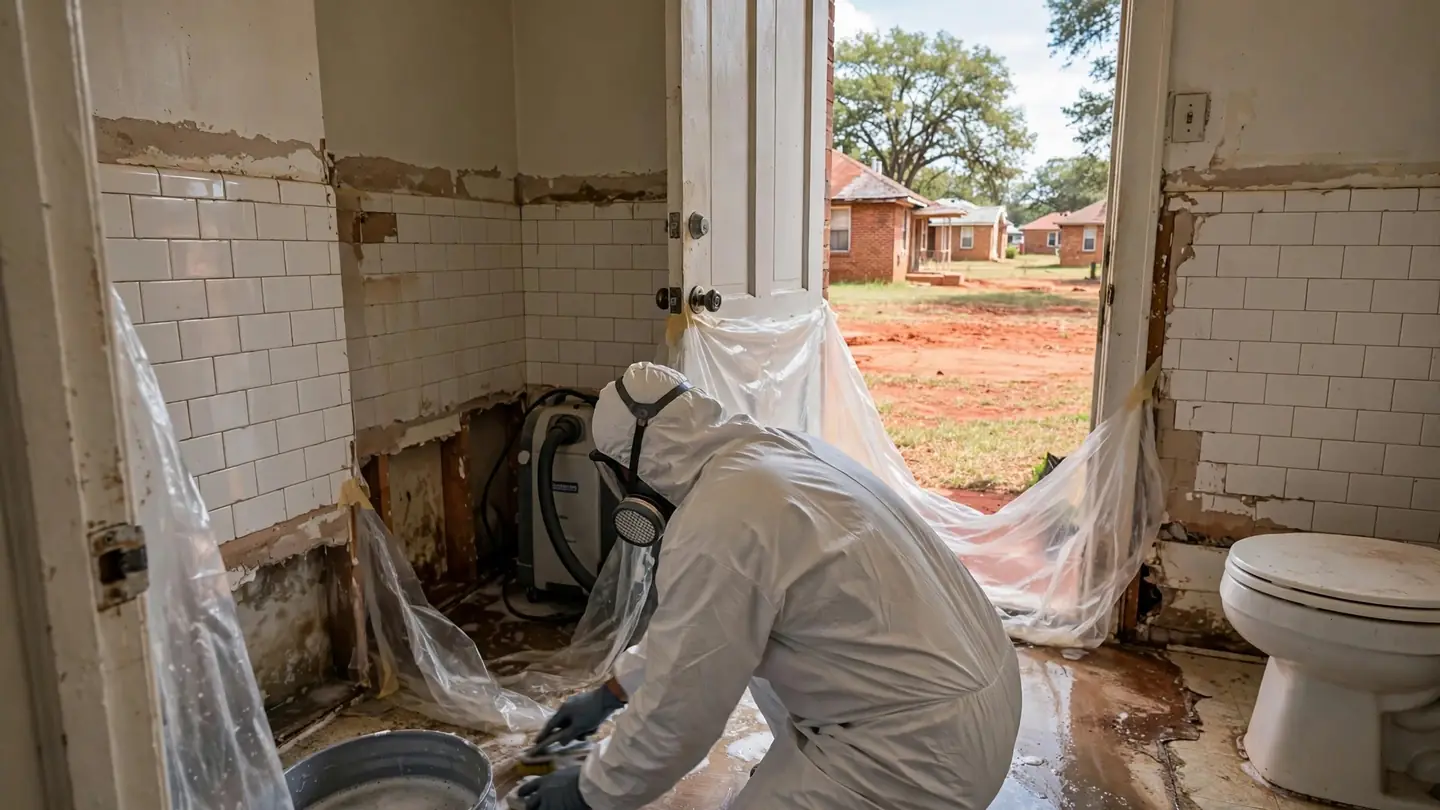
IICRC guidance calls for removing porous materials that sewage touched, such as carpet, pad, rugs and drywall [1]. Wood floors that absorbed sewage usually need the affected boards replaced. Tile and hard surfaces can be cleaned and disinfected.
If sewage leaked into the crawlspace, contaminated insulation and vapor barrier are removed, the soil surface is treated and a new barrier is laid. Workers wear protective gear throughout.
Signs a Plaza District sewer line is failing
Catch these early.
- Slow drains in more than one fixturePoints to the main rather than one sink.
- Sewer odor near floor registersMay come from a crack under the house.
- Gurgling toilets after the washer drainsA partial blockage traps air.
- Backups in the other unit of a duplexThe shared line may be blocked.
City main or private line
If several neighbors have backups at once or sewage comes up in the street, the problem may be in the public main. Contact Oklahoma City's utilities department [4]. Problems on your private line are handled by your plumber.
Replacing or lining an old sewer line is permitted plumbing work [6]. Ask the plumber to handle the permit.
Insurance and mold after a backup
Many homeowners policies exclude sewer backups unless a water backup endorsement was added [3]. Check your policy before cleanup and keep photos and the plumber's report.
After cleaning, the structure is dried to prevent mold [6]. Our mold risk guide explains what to watch for, and the structural drying page covers how drying works.
Tenants and landlords after a Plaza District backup
Many homes around the Plaza District are rented, and a sewage backup raises quick questions about who does what. The owner is usually responsible for the drain line and the building. Tenants protect what they can, report the backup in writing and document their own belongings.
If the house is unlivable during cleanup, ask the owner what arrangements they can make. Renters insurance, where a tenant carries it, may help with temporary housing. Keep copies of every message and receipt.
Original bathrooms in Plaza District bungalows
Some bungalows near NW 16th still have tile bathrooms from the 1920s and 1930s. If sewage comes up through a tub or floor drain there, glazed tile in a mortar bed can usually be cleaned and disinfected rather than torn out.
Grout and any wood trim that absorbed sewage may need attention. Ask the crew to explain what can stay and what has to go before work starts, so original features are kept where they safely can be.
Cleanouts and access on older Plaza District lots
Many older houses near NW 16th have a sewer cleanout in the yard or beside the foundation, sometimes buried under grass or a flower bed. When a plumber can open the cleanout, they can clear the line without pulling a toilet, and pressure can be released outside rather than through a tub.
If you do not know where yours is, ask the plumber to locate and mark it after the line is cleared. Keeping it visible makes the next visit quicker and gives you a way to relieve a backup before it reaches the house.
FAQ
Sewage Backup in the Plaza District: questions
Why did sewage back up in my unit but not my neighbor's?
In a shared line, sewage rises at the lowest drain. That unit takes the overflow.
Can wood floors be cleaned after a sewage backup?
Usually not where sewage soaked in. Affected boards are typically replaced.
Does renters insurance cover a sewage backup?
It may cover your belongings, depending on the policy. Check with your insurer.
Sources and citations
- [1]IICRC: Standards (ANSI/IICRC S500 water damage restoration)
- [2]Ready.gov: Floods (safety during cleanup)
- [3]Oklahoma Insurance Department
- [4]City of Oklahoma City: Utilities
- [5]U.S. EPA: Flood cleanup to protect indoor air quality
- [6]U.S. EPA: A brief guide to mold, moisture and your home
- [7]Wikipedia: Plaza District
- [8]Wikipedia: Expansive clay