
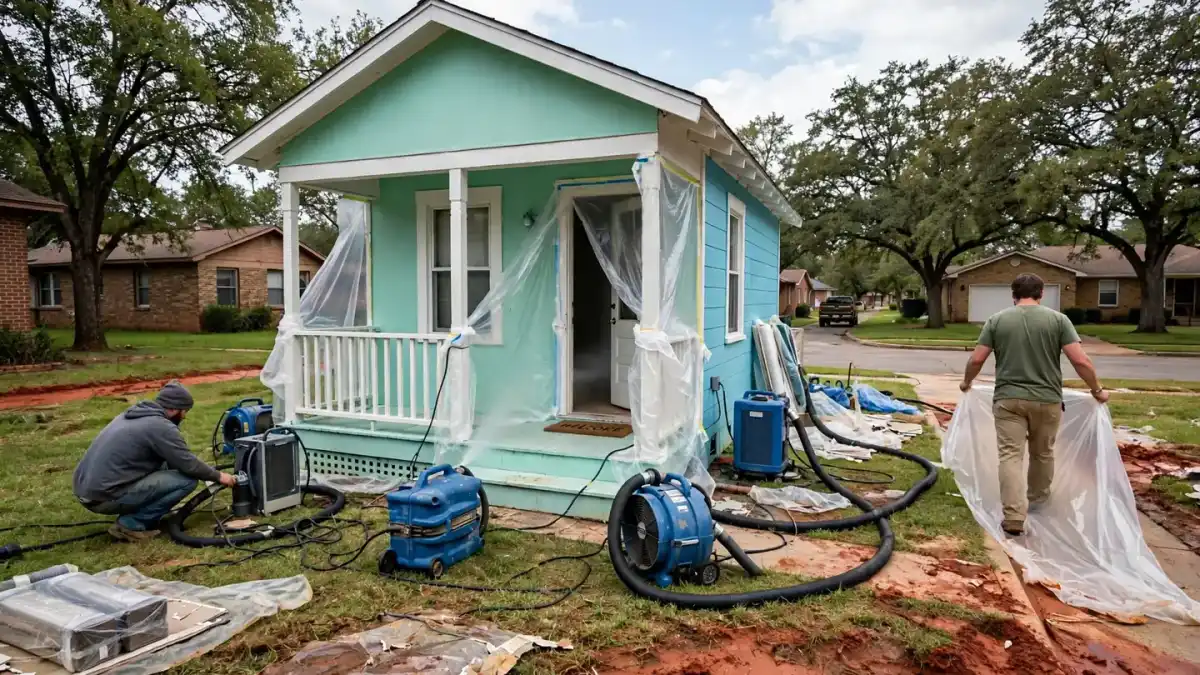
Key facts: Water Extraction in the Plaza District
Water on wood and plank floors
Original wood floors and newer plank floors both let water through at the seams. Weighted extraction tools and floor mats can pull water from wood before it soaks in deeply. Floating floors usually have to be lifted so water underneath can be removed.
Area rugs should be lifted right away. They hold water against the floor and can bleed dye. Our wet carpet guide explains what can be saved.
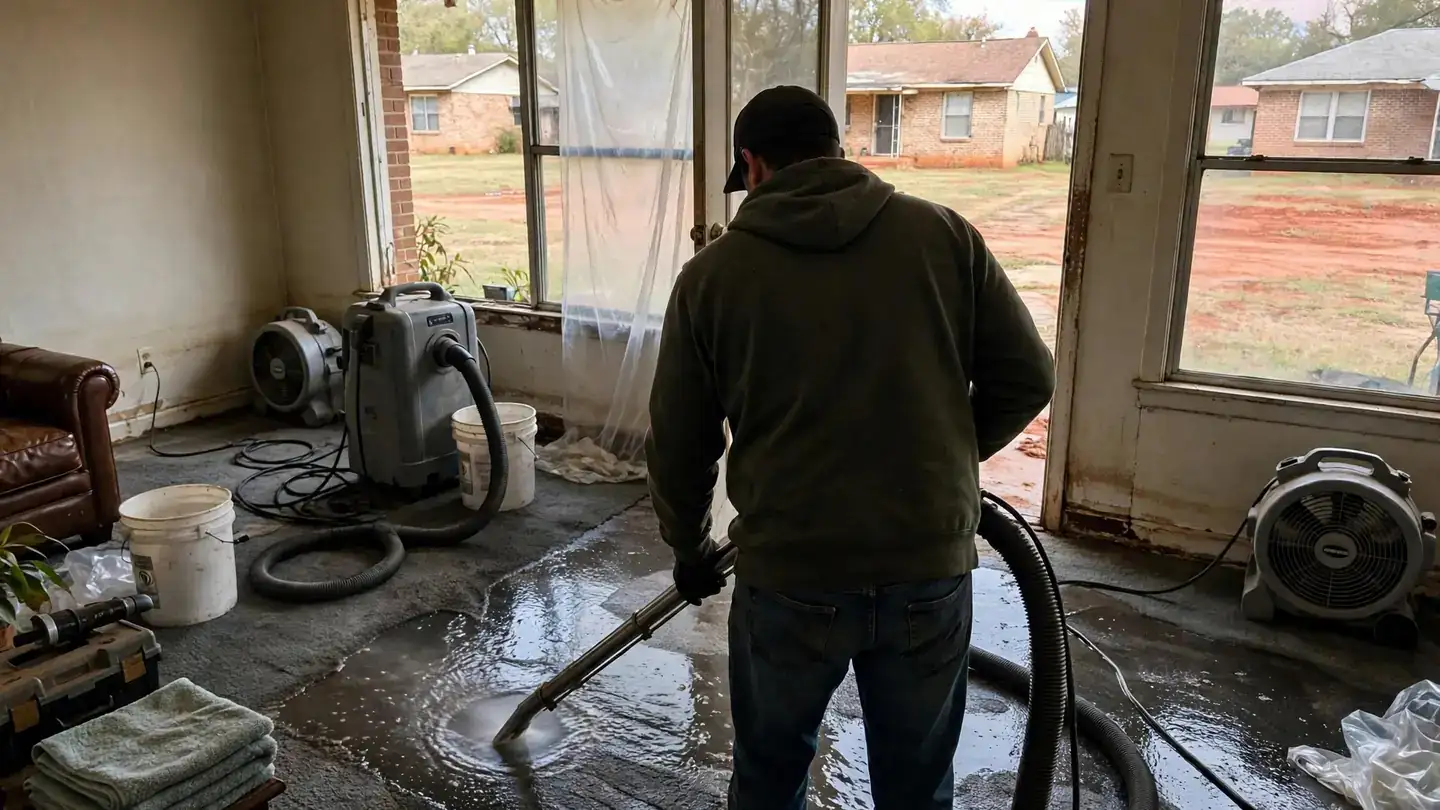
Kitchen leaks in compact bungalows
Kitchens in older bungalows are often small, with the sink, dishwasher and refrigerator close together. A failed supply line soaks the cabinet base and the subfloor beneath it, and on a pier-and-beam floor water drips into the crawlspace.
Extraction starts at the floor, then continues under the cabinets once the toe kicks are removed. The crawlspace below is checked for standing water.
Extracting water from a Plaza District bungalow
The usual order of work.
- 1
Stop the source and make wet circuits safe
Safety first.
- 2
Lift rugs and floating planks
Water hides underneath.
- 3
Extract water from floors and under cabinets
Weighted tools reach water in seams.
- 4
Pump any water from the crawlspace
Water often drains below the floor.
Shops and restaurants on NW 16th
Older storefronts on the strip share walls and sometimes floors. A broken line or failed water heater in one business can affect the one next door. Extraction in commercial spaces often happens after hours to limit disruption.
Move inventory, equipment and displays out of the wet area. Report the leak to the building owner, and document your losses for your own policy.
Rentals and quick reporting
Many houses around the Plaza District are rentals. Tenants should report leaks to the owner right away and in writing. The sooner extraction starts, the less damage there is to the floors and subfloor.
The Plaza District page covers renter and landlord responsibilities in more detail.
Before extraction starts near the Plaza District
Simple steps that help.
- Move furniture off wet floorsPut blocks or foil under heavier pieces.
- Pull curtains up off the wet bungalow floorFabric wicks water up.
- Clear a path to the wet roomsHoses and equipment need room.
- Unlock the crawlspace accessThe crew may need to check below.
Speed, drying and mold
EPA recommends drying within 24 to 48 hours to reduce mold [2]. Extraction removes most of the water quickly so drying can finish faster. After extraction, air movers and dehumidifiers take over. Our structural drying page explains that step.
If water sat under new flooring for days before it was found, check for mold during extraction and drying.
Insurance and the city shutoff
Photograph the source and each wet room before extraction. Sudden plumbing failures are often covered; slow leaks are usually not. The Oklahoma Insurance Department offers consumer guidance [4].
Oklahoma City's utilities department provides water service in the area [6]. If you cannot close your main valve, the city can shut water off at the meter.
Closet water heater leaks in Plaza District bungalows
In many small houses near NW 16th, the water heater sits in a hall closet or a utility room off the kitchen. When it fails, water spreads into the hall and bedrooms and drains through the floor. Extraction starts at the closet and follows the water along the hallway.
Close the cold-water valve on top of the tank and turn off its gas or power before the crew arrives. They will extract the floors and check the crawlspace under the closet, where water usually collects.
Duplex units and extraction near the Plaza District
In a duplex or small multi-unit building, water from one unit can cross under a shared wall or through a shared crawlspace. Crews extract both units if needed and check the wall bases on each side.
The owner usually arranges the work. Tenants in each unit should move their belongings, photograph them and let the crew in when asked.
Infill townhomes and extraction on a slab
Newer townhomes near the Plaza District are usually built on slabs. Water there spreads under flooring rather than draining into a crawlspace. Extraction focuses on carpet pad, floating floors and the base of the walls.
Baseboards are often removed so the crew can extract and dry the bottom of the drywall. The slab is then dried with dehumidifiers over the following days.
FAQ
Water Extraction in the Plaza District: questions
Can water under plank flooring be extracted without lifting it?
Usually not. Floating floors normally need to be lifted so the water underneath can be removed.
Will the crew check my crawlspace?
Yes. On pier-and-beam houses, water often drains under the floor.
I rent. Should I call or wait for my landlord?
Report it to your landlord right away in writing. They usually arrange the work on the building.
Sources and citations
- [1]IICRC: Standards (ANSI/IICRC S500 water damage restoration)
- [2]U.S. EPA: A brief guide to mold, moisture and your home
- [3]FEMA FloodSmart: National Flood Insurance Program
- [4]Oklahoma Insurance Department
- [5]National Weather Service, Norman forecast office
- [6]City of Oklahoma City: Utilities
- [7]Wikipedia: Plaza District