
Key facts: Water Extraction in Crown Heights
- Mechanical extraction removes liquid water far faster than evaporation, so it is the first task in water damage work [1].
- EPA recommends drying wet areas within 24 to 48 hours to help prevent mold growth [2].
- Crown Heights lies roughly between NW 36th and NW 43rd Streets and between Walker and Western Avenues [7].
Water on oak floors and rugs
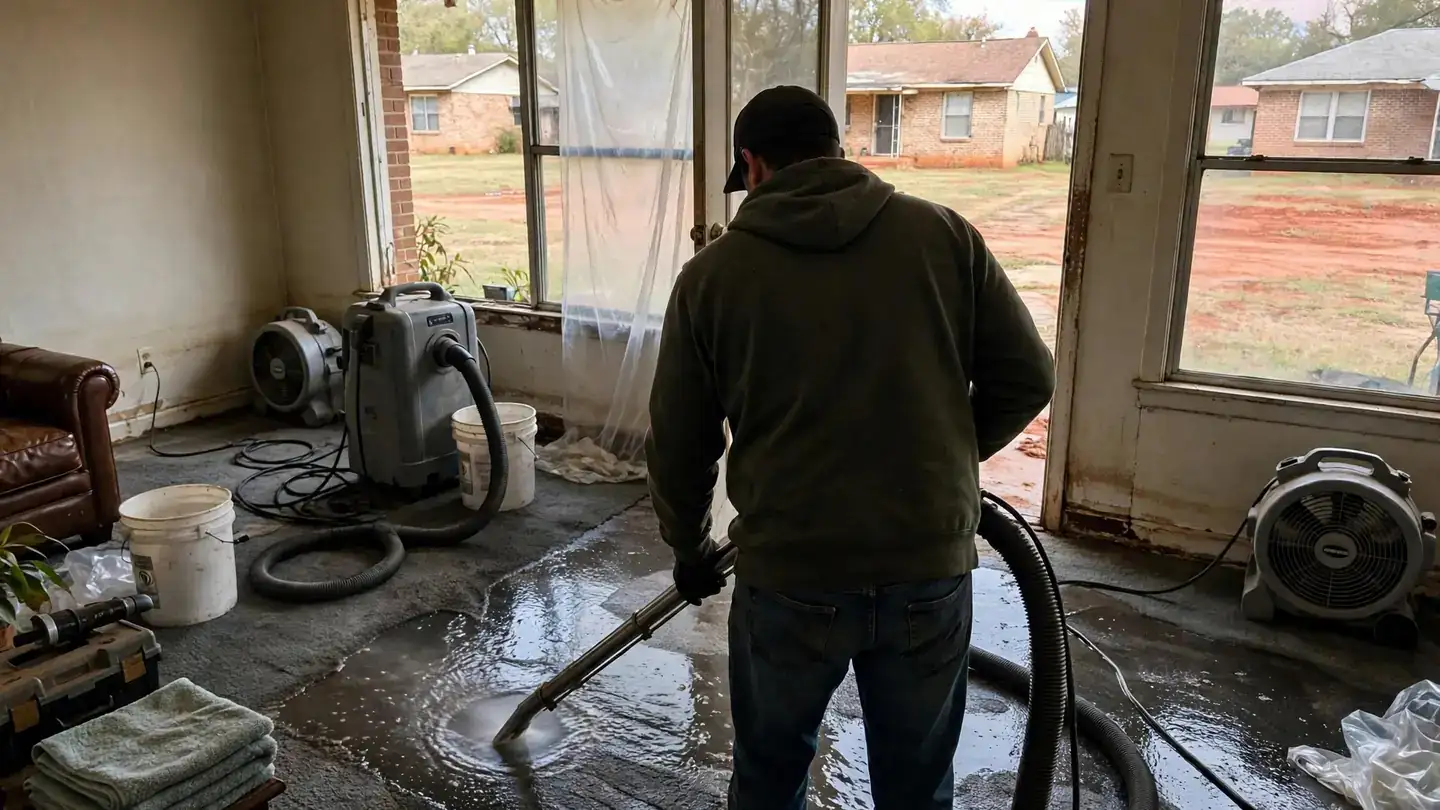
Oak strip floors are common in Crown Heights homes, often covered with area rugs. Water on a wood floor needs to be removed quickly before it soaks into the boards and seams. Wet rugs should be lifted so the floor beneath can dry.
Extraction tools designed for hardwood can pull water from between boards. Rugs may need professional cleaning and drying off site.
Water categories and what they mean
Restoration standards classify water from clean to grossly contaminated [1]. A broken supply line starts clean. An appliance overflow is gray. Sewage and storm runoff are contaminated and call for extra protection.
The category affects how extraction is done and whether materials can be saved. Clean water removed quickly gives floors and rugs the best chance.
Extracting water in a Crown Heights home
The usual sequence.
- 1
Shut off the leak feeding the Crown Heights rooms
Close the main or fix the overflow.
- 2
Make rooms safe
Turn off power where water is near outlets.
- 3
Extract floors and rugs
Remove water from wood, tile and carpet.
- 4
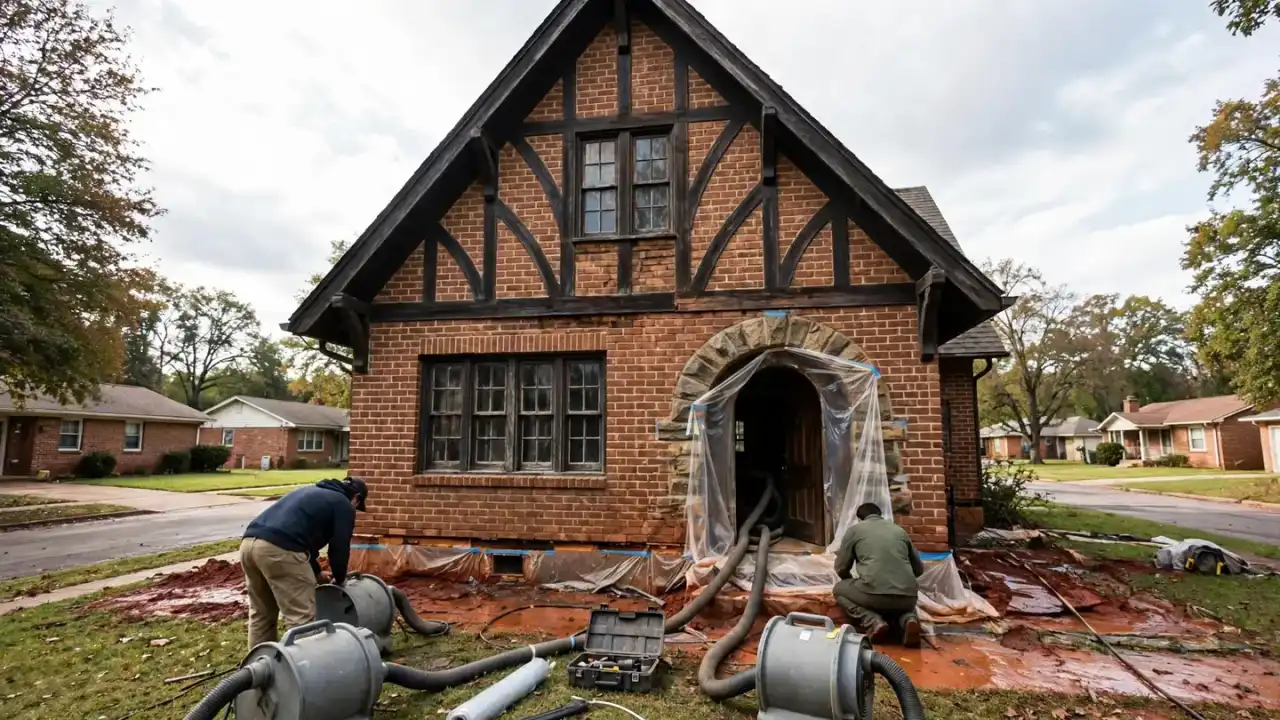
Pump water from under the pier-and-beam floor
Pump standing water from under the house.
Crawlspace water under pier-and-beam floors
Water from a leak above drains through gaps in the floor into the crawlspace. Storm runoff can also enter there. Standing water under the house keeps the oak floor above damp and invites mold.
Pumps and wet vacuums clear the water. Wet insulation and debris are removed so drying equipment can work.
Storm runoff in 73118
Heavy spring storms in central Oklahoma can bring flash flooding, and the National Weather Service in Norman issues warnings for the metro [5]. Water from roofs, driveways and yards can reach the crawlspace if grading or gutters send it toward the house.
Storm water is treated as contaminated. Extraction includes mud and debris along with water.
Facts to have ready
These help the contractor plan.
- Water sourcePipe, appliance, roof or storm.
- Floors affectedOak, tile, rugs or carpet.
- Crawlspace conditionStanding water or mud.
- How long the water satMinutes, hours or days.
Tile bathrooms and kitchens
Original tile in Crown Heights baths and kitchens resists water on the surface, but water can seep through grout into the subfloor. Extraction removes surface water, and moisture readings show whether the floor below is wet.
Our guide on wet carpet after a leak covers carpeted rooms, which need different handling.
Insurance after a water loss
Next steps after extraction
Once the water is out, structural drying brings the floors, walls and framing back to normal moisture. That may take days or weeks in an older home.
If a leak was at the meter, Oklahoma City Utilities can say whether it is on the city side [6]. The Crown Heights page has more about the neighborhood.
Plaster walls after standing water
When water stands on the floor of a Crown Heights room, the bottom of the plaster wall can wick it upward. Plaster absorbs slowly, so fast extraction often keeps the wicking to a few inches. Baseboards may be pulled so the crew can check the wall cavity and the sill beneath.
If water sat for a day or more, the lath behind the plaster may be wet too. Readings tell the crew whether the wall can be dried in place or needs a small opening for airflow.
Steep roofs, hail and indoor water
Tudor roofs in Crown Heights have steep planes and valleys that carry heavy flows in a thunderstorm. Hail can crack shingles and open paths for water, and leaks often show up on upstairs sloped ceilings or near the chimney. When water drips onto floors below, extraction starts in that room and in any space beneath it.
Wet insulation in the attic or behind knee walls holds water against the ceiling. It is removed once the roof is covered, so the ceiling can dry.
Equipment that fits older homes
Narrow halls, arched openings and tight crawlspace hatches limit what can be carried through a Crown Heights house. Crews often use portable extractors and compact pumps rather than large hoses through the front door. That keeps woodwork and plaster corners from being damaged during the work.
Ask where hoses and cords will run, and whether door frames and floors will be protected along the path.
Contents and keepsakes after extraction
Older households often keep photographs, books and family papers in closets and lower cabinets. If water reaches them, move them to a dry, cool room and lay paper items flat. Wet books can be stood on end with pages fanned to help them dry.
Photograph damaged items before moving them. Some may be restored by specialists, and a record helps with any claim.
FAQ
Water Extraction in Crown Heights: questions
Can wet oak floors in Crown Heights be saved?
Often, if water is removed quickly and the floor is dried evenly from both sides.
Should I pull up wet area rugs?
Yes, if safe. Lifting rugs lets the floor beneath dry.
Is storm water in my crawlspace contaminated?
Yes. Treat it as contaminated and avoid contact without protective gear.
Sources and citations
- [1]IICRC: Standards (ANSI/IICRC S500 water damage restoration)
- [2]U.S. EPA: A brief guide to mold, moisture and your home
- [3]FEMA FloodSmart: National Flood Insurance Program
- [4]Oklahoma Insurance Department
- [5]National Weather Service, Norman forecast office
- [6]City of Oklahoma City: Utilities
- [7]NPS: Crown Heights Historic District record