
Key facts: Burst Pipes in the Plaza District
- Lines in crawlspaces and along outer walls have the least protection from freezing [1].
- The Plaza District's commercial strip sits on NW 16th Street, running from Classen Avenue to Pennsylvania Avenue [7].
- A sudden pipe burst is often covered by homeowners insurance, while a slow leak usually is not [2].
Old lines meet new fixtures near NW 16th
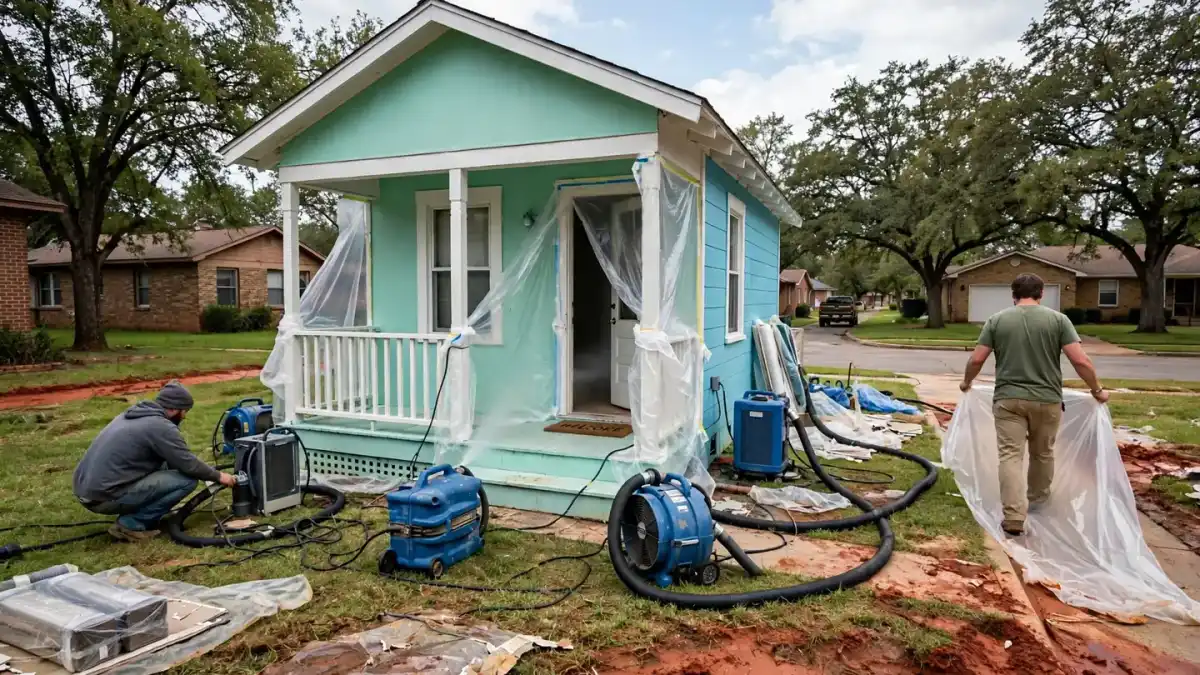
Many houses around the Plaza District have been renovated by owners and investors. A full renovation replaces the plumbing, but some update only what shows: a new vanity, a new kitchen sink, new tile. Behind them, the original galvanized or copper supply lines may still run through walls and under the floor.
The fitting where a new line meets an old one is a frequent failure point, and a freeze makes it worse. If you recently bought a renovated house, ask whether the supply lines were replaced. Knowing that before winter helps you decide what to insulate.
Crawlspace pipes under Plaza District bungalows
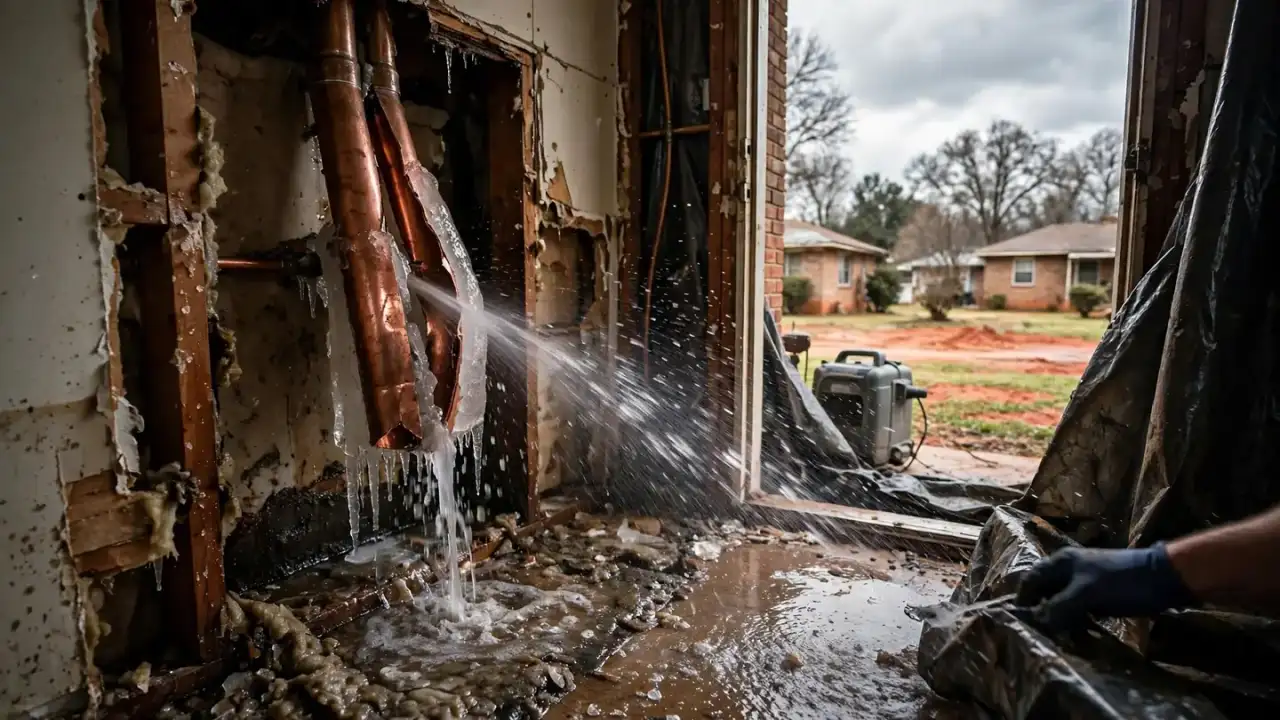
Most original houses here sit on pier-and-beam foundations over a shallow crawlspace [7]. Supply lines run under the floor, exposed to cold air through the foundation vents. In a hard freeze, the lines closest to the vents freeze first.
When one splits, water drains into the clay soil and may not be noticed for hours. A drop in pressure, a running sound under the floor or a moving water meter are clues. Close the main valve and call a plumber. Our guide on what to do after a burst pipe lists the first steps.
Responding to a split pipe in a Plaza District bungalow
The first hour after you find it.
- 1
Close the main valve at the meter
Water keeps flowing under pressure until it is shut off [1].
- 2
Turn off circuits near wet floors and walls
Older wiring is often close to the floor.
- 3
Tell your landlord in writing if you rent
The owner is generally responsible for the plumbing.
- 4
Photograph the pipe, floors and belongings
Images before cleanup support any claim.
When a hall-closet water heater line bursts near NW 16th
In many Plaza District bungalows, the water heater sits in a hall closet or a small utility room rather than a garage. When a tank or its supply line fails, water spreads straight into the hallway and bedrooms and runs through the floor into the crawlspace.
Close the cold-water valve on top of the heater and turn off its gas or power. A drain pan with a line to the outside or a leak sensor with automatic shutoff can limit damage next time. The Plaza District page has more on these closet installations.
A burst line in a Plaza District duplex
Some properties near the Plaza District are duplexes or small multi-unit buildings made from larger houses. Units may share a main, a water heater or a crawlspace. A burst pipe in one unit can spread under the floor into the other.
The owner usually manages the response, but tenants in each unit should report what they see and protect their belongings. Drying may need access to both units at once, so coordination helps.
Winter steps for Plaza District homes and rentals
Before a hard freeze arrives.
- Cover or close foundation ventsCold air under the floor freezes pipes fastest.
- Wrap exposed lines in the crawlspaceFoam sleeves are a simple fix.
- Leave cabinet doors open under outside-wall sinksRoom heat reaches the pipes.
- Keep vacant rentals heated or drainedEmpty units can leak for days unseen.
New flooring over an old subfloor
Renovated homes often have laminate or vinyl plank laid over the original wood subfloor. When a pipe bursts, water runs under the new floor and into the subfloor without showing at first. The floor may swell at the seams days later.
Drying usually means lifting the planks so the subfloor can be dried from above and below. Our wet carpet guide and structural drying page explain what follows.
Rental homes and burst pipes
Many houses around the Plaza District are rentals owned by individuals. When a pipe bursts, the owner is generally responsible for the building and plumbing, and the tenant for their own belongings. Renters insurance, if the tenant has it, covers personal property [8].
Tenants should report leaks quickly and in writing. Owners should respond promptly, arrange drying and keep tenants informed. Clear communication keeps the damage smaller.
Permits and drying after a Plaza District burst
Plumbing repairs and repiping need permits from Oklahoma City's Development Services Department [6]. If unpermitted work from a past renovation is found during repairs, it is usually simpler to correct it while the wall is open.
Drying should start within 24 to 48 hours to limit mold [3]. Crews dry the crawlspace and the rooms above together, using readings to decide when the work is finished.
FAQ
Burst Pipes in the Plaza District: questions
My renovated house had a pipe burst. Was the plumbing replaced?
Not always. Some remodels connect new fixtures to old lines. A plumber can tell you what is behind the walls.
Can a burst pipe in my duplex neighbor's unit affect mine?
Yes. Shared crawlspaces and walls let water travel between units. Report it to the owner.
Who pays for a burst pipe in a rental?
The owner generally handles the building and plumbing. Your renters policy covers your belongings if you have one.
Sources and citations
- [1]Ready.gov: Floods
- [2]Oklahoma Insurance Department
- [3]U.S. EPA: A brief guide to mold, moisture and your home
- [4]National Weather Service, Norman forecast office
- [5]City of Oklahoma City: Utilities
- [6]City of Oklahoma City: Development Services
- [7]Wikipedia: Plaza District
- [8]Oklahoma Insurance Department