
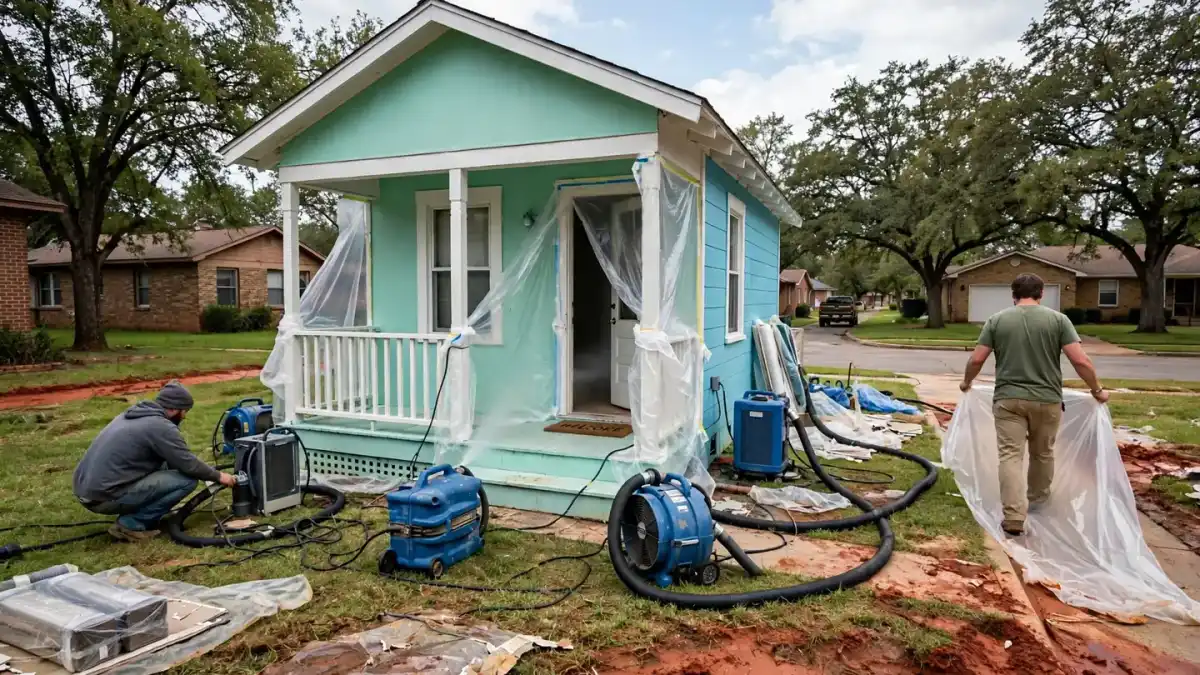
Key facts: Flooded Crawlspaces near the Plaza District
- Water from flooding can bring sewage, chemicals and debris into a home, so cleanup treats it as contaminated [1].
- Clay soils around Oklahoma City absorb water and swell, and they drain slowly afterward [8].
- The National Weather Service office in Norman issues flash flood warnings for the metro during heavy rain [3].
Under the floor of a Plaza District bungalow
The original houses around the Plaza District were mostly built from the 1920s into the 1940s on pier-and-beam foundations [7]. Beneath the floor is a crawlspace with soil or a vapor barrier on the ground, wood joists overhead and plumbing running between them.
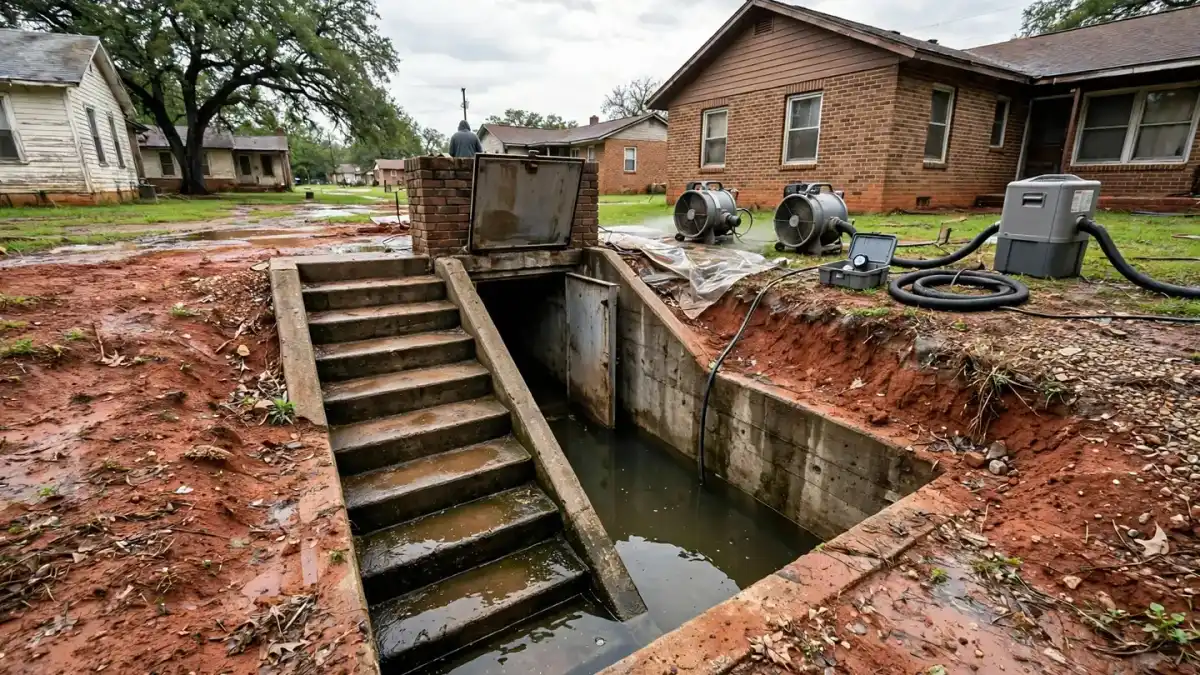
Heavy rain soaks the clay around the house, and water finds its way in through foundation vents, gaps and low spots. Once inside, it sits on the soil because clay drains slowly. The space stays wet and humid for days after the storm.
Storm runoff and older gutters
Spring storms bring heavy rain across Oklahoma City, and the National Weather Service in Norman issues warnings when it falls fast [3]. Older houses near the Plaza District may have small or missing gutters, so roof runoff lands right at the foundation.
Driveways and neighboring lots that slope toward the house add more water. Over time, extending downspouts and regrading low spots reduces how often the crawlspace floods.
Clearing water from under a Plaza District house
A common order of work.
- 1
Switch off power to anything in the crawlspace
Ducts and wiring may be wet.
- 2
Pump standing water from the low spots
Portable pumps remove most of it.
- 3
Remove wet insulation and torn vapor barrier
Soaked batts and plastic sheeting are bagged and hauled out, following EPA flood cleanup advice [1].
- 4
Lay a new barrier and dry the joists
Dehumidifiers run until readings are normal.
Effects on the rooms above
Water under the house makes the floor above damp. Original wood floors may cup, and laminate laid over the old subfloor may swell. A musty smell often rises through gaps around registers and baseboards.
Drying the crawlspace usually clears the smell. If it returns after rain, water is still getting in. The Plaza District page explains how musty odors in older bungalows usually trace back to the crawlspace.
Infill homes on slabs
Newer infill homes and townhomes near the Plaza District are usually built on slabs. Storm water reaches them at doors and low thresholds rather than under the floor. Water spreads across the slab under flooring and wicks into the bottom of walls.
Extraction and drying on a slab look different from a crawlspace job. Our water extraction page explains that work.
Information for your call about water under a Plaza District house
These help the crew plan.
- Where the crawlspace access isExterior hatch or an interior panel.
- Whether the water came from rain or plumbingIt changes cleanup and coverage.
- If the house is a rental or duplexOwners and tenants may both be involved.
- Any ductwork or equipment under the floorThese may need attention.
Insurance for crawlspace flooding
Rising surface water is generally covered only by flood insurance [2]. A sudden plumbing failure under the house is often handled by a homeowners policy. Long-term seepage usually is not. Take photos of the crawlspace and note the storm date.
Landlord policies for rental houses may differ from owner-occupied policies. The Oklahoma Insurance Department offers consumer guidance [5].
Mold in damp crawlspaces
EPA recommends drying within 24 to 48 hours to reduce mold [4]. Crawlspaces are hard to dry quickly, so mold on joists and subfloor is common after storms. Small amounts on wood can be cleaned. Larger areas may need removal of materials once contained.
Our mold risk guide lists signs to watch. A fresh vapor barrier and better drainage help keep it from coming back.
Keeping storm water out near NW 16th
Add or extend gutters and downspouts, regrade low spots so soil slopes away from the house and keep foundation vents clear of debris. If your house is in a historic district such as Gatewood, exterior changes may need review.
Our structural drying page explains how a crew dries a crawlspace and the floor above it.
Ductwork under Plaza District floors
Some bungalows near the Plaza District have heating and cooling ducts running through the crawlspace. When storm water rises under the house, it can reach the bottom of those ducts or flood a low run entirely. Wet duct insulation and flexible duct are usually replaced, since they hold contaminated water.
Metal ducts can often be cleaned and dried. Until the crew has checked them, avoid running the system, which could blow damp, musty air into the rooms above.
Rental bungalows with a wet crawlspace
When storm water collects under a rented bungalow near the Plaza District, the tenant may be the first to notice the musty smell or a soft spot in the floor. Telling the owner in writing, with the date and a short description, starts the clock on getting the space pumped and dried.
Owners of several small rentals often find that the same houses flood after each big storm. Fixing gutters, downspouts and grading at those addresses usually does more good than repeated cleanups, and it keeps tenants from living over a damp crawlspace.
FAQ
Flooded Crawlspaces near the Plaza District: questions
Do Plaza District bungalows have basements?
Most do not. They usually sit on crawlspaces. Newer infill homes are mostly on slabs.
Why does my floor feel damp after a storm?
Water is probably sitting in the crawlspace. Clay soil holds it, and the humidity rises into the floor.
Can a crawlspace be kept dry long term?
Better gutters, grading and a good vapor barrier help a great deal.
Sources and citations
- [1]U.S. EPA: Flood cleanup to protect indoor air quality
- [2]FEMA FloodSmart: National Flood Insurance Program
- [3]National Weather Service, Norman forecast office
- [4]U.S. EPA: A brief guide to mold, moisture and your home
- [5]Oklahoma Insurance Department
- [6]Ready.gov: Floods
- [7]Wikipedia: Plaza District
- [8]Wikipedia: Expansive clay