
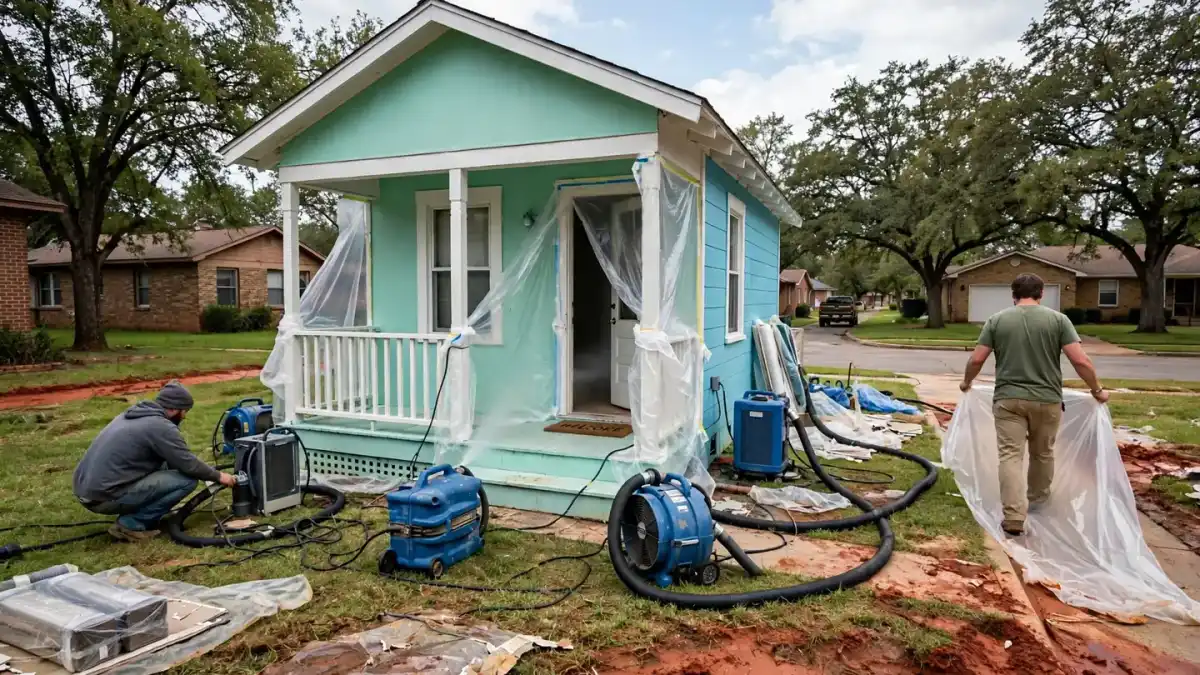
Key facts: Structural Drying in the Plaza District
- Drying relies on dehumidification and airflow, sometimes with heat, and is guided by moisture measurements [1].
- Many Plaza District houses have pier-and-beam foundations with crawlspaces underneath [7].
- Oklahoma's weather can move quickly between dry and humid conditions, which affects drying speed [3].
New floors over old subfloors
Renovated homes around the Plaza District often have laminate or vinyl plank laid over the original wood subfloor. When water gets under the new floor, it soaks the subfloor and may not show until seams swell days later.
Drying usually means lifting the planks and drying the subfloor from above and from the crawlspace below. Readings show when the wood is back to normal.
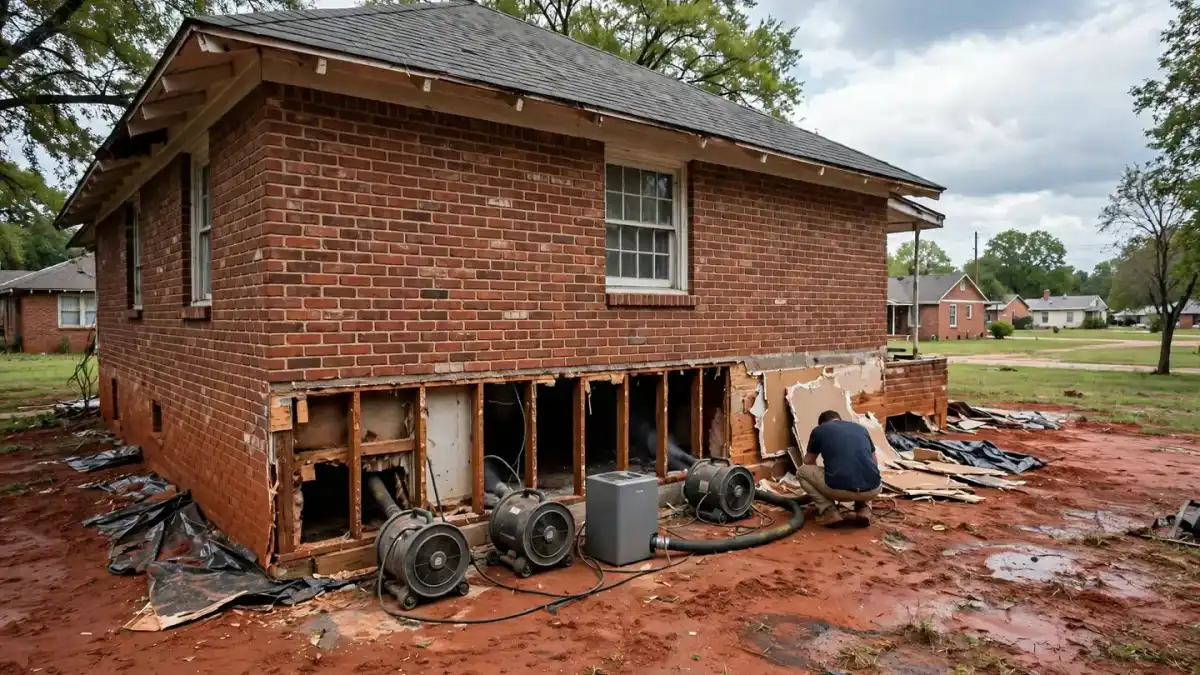
Drying the crawlspace and the floor together
Under most bungalows is a crawlspace with joists, subfloor and sometimes ducts. After a leak or storm, the crawlspace is pumped, wet insulation is removed and dehumidifiers are set underneath. Equipment in the rooms above works at the same time.
This two-sided approach dries the subfloor faster and helps original wood floors flatten. The Plaza District page explains how damp crawlspaces affect these homes.
A drying plan for a Plaza District bungalow
What usually happens over the first days.
- 1
Take moisture readings above and below the floor
Baseline readings come from dry areas [1].
- 2
Lift wet planks and remove soaked insulation
Air needs to reach the wet wood.
- 3
Set equipment in the rooms and the crawlspace
Drying works from both sides.
- 4
Check readings daily until materials are dry
Equipment is removed area by area.
Cabinets and tile in remodeled kitchens
New kitchen and bath cabinets in renovated homes often have particleboard bases that swell when wet. Drying under them usually means removing the toe kick or drilling small holes so air can reach the space.
Tile installed without enough waterproofing may let water into the subfloor below. Crews check under tile with meters. Swollen particleboard is usually replaced; countertops can often stay.
Slab-built infill townhomes off NW 16th
Newer infill homes near the Plaza District sit on slabs. Water spreads under flooring and wicks into the bottom of walls. Drying focuses on the slab, the lower drywall and the cabinets.
Baseboards are often removed so the crew can check and dry the wall bases. The slab may take several days to reach normal readings.
Questions for a drying crew at a Plaza District house
Useful to ask on the first day.
- Which floors need to be liftedPlanks, carpet or tile.
- Whether the crawlspace will be driedMost bungalows need it.
- How many outlets the equipment needsSo you can plan around it.
- When the crew will return for readingsSomeone may need to be home.
Humidity and drying time
Central Oklahoma can swing from dry days to very humid ones [3]. After a storm, keep windows closed so dehumidifiers can work. In winter, keep the heat on at the level the crew suggests.
Leave equipment running day and night. Turning it off lets moisture settle back into the materials.
Mold and permits after drying
EPA recommends drying within 24 to 48 hours to reduce mold [2]. Hidden leaks under new flooring often go longer, so some growth is common. The CDC advises people with asthma or allergies to avoid moldy areas [5].
Drying does not need a permit, but plumbing, electrical or structural repairs afterward usually do [4]. Our mold risk guide explains signs to watch for.
Drywall over old plaster in renovated bungalows
Some renovations around the Plaza District covered original plaster with new drywall rather than removing it. When water gets into that wall, it can sit between the two layers, where air does not reach it. Meters may show a wet reading even though the drywall surface looks fine.
Crews may drill small holes near the floor or remove the lower strip of drywall so the space behind can dry. Painted plaster in pre-1978 homes may contain lead, so any opening up is done carefully.
Living with drying equipment in a small house
Plaza District bungalows are compact, so dehumidifiers and air movers can take over much of the floor. Rooms get warm and noisy, and some doors need to stay closed. Many families stay home if a bedroom and a bathroom remain usable.
Keep pets away from the equipment and let the crew in for daily readings. If a breaker trips, call the crew rather than unplugging units. Keep your electric bill for the drying period in case the extra usage is part of the claim.
Hail leaks and wet attics in older Plaza District roofs
Older roofs around the Plaza District have often been through many spring hailstorms. A leak that starts in the attic soaks insulation and stains bedroom ceilings near the outside walls. Drying here means removing wet insulation, drying the ceiling drywall or plaster and checking the top plates of the walls.
The roof must be repaired or tarped before drying begins, or the next storm will undo the work. Our water stain guide explains how to read a ceiling stain while you wait for the roofer.
FAQ
Structural Drying in the Plaza District: questions
Why did my new floor swell days after the leak?
Water spread under it into the old subfloor. The planks absorbed moisture from below.
Does the crawlspace need to be dried too?
Usually yes. Drying from above and below works best on pier-and-beam houses.
Can my kitchen cabinets be dried in place?
Often, by removing the toe kick or drilling small holes so air can reach underneath.