
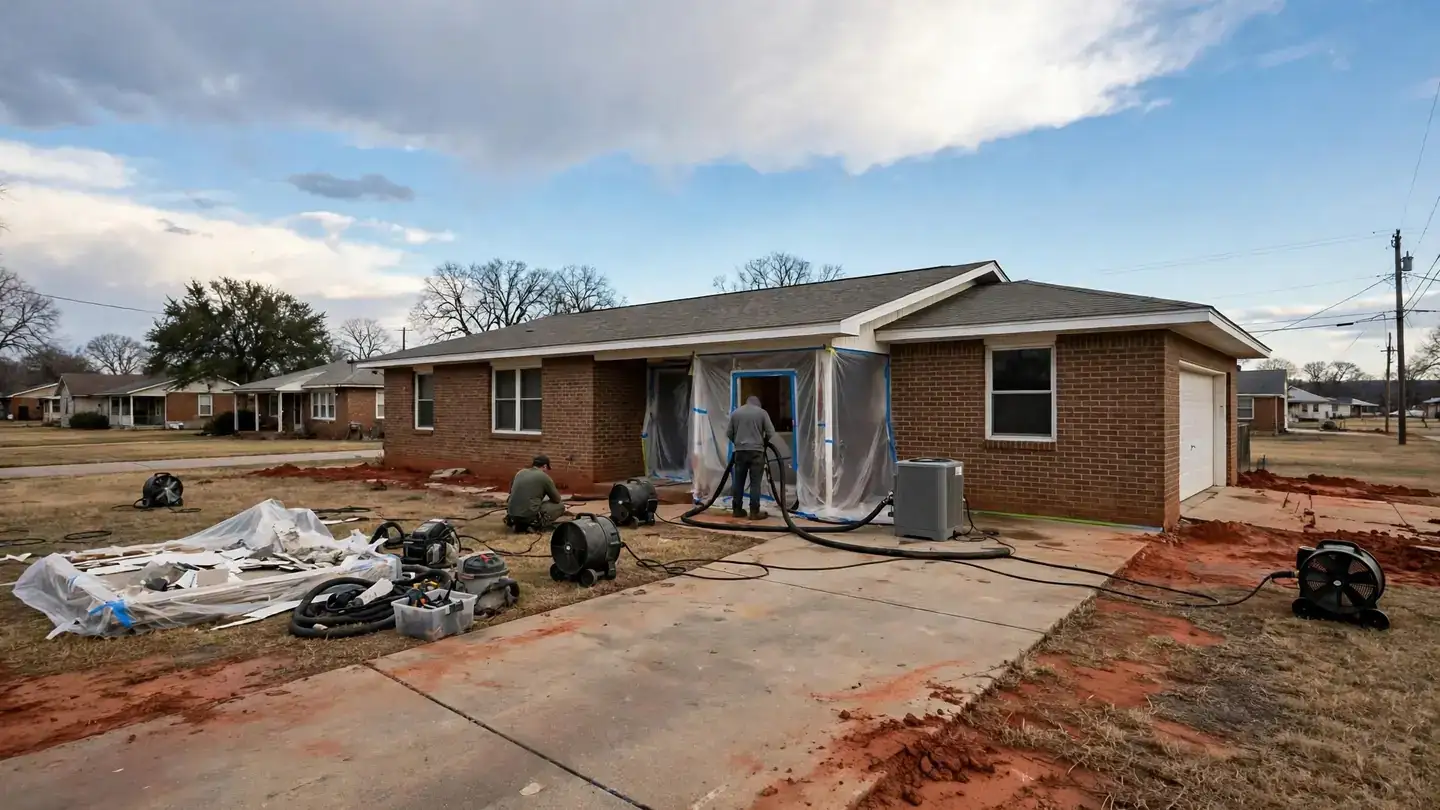
Key facts: Flooded Lower Levels near Lake Hefner
- Water that floods in from outside can contain sewage, chemicals and debris, so it is handled as contaminated [1].
- Damage from rising surface water is generally outside a standard homeowners policy and falls under separate flood insurance [2].
- Clay soils in central Oklahoma take on water and swell, then shrink again as they dry out [7].
The below-grade level in a Lake Hefner split-level
Split-level homes around the lake stack living space on staggered floors. The lowest one is often set a few feet into the ground on a concrete slab, with a family room, a laundry and sometimes a bedroom. Walls there may be drywall or wood paneling over concrete or block, and the floor is usually carpet laid over the slab.
Because part of that level is below grade, water that reaches it has few ways out. It spreads across the slab, soaks the pad and wicks into the bottom of the paneling or drywall. The surrounding soil keeps the space cool and humid, which slows evaporation compared with an upstairs room.
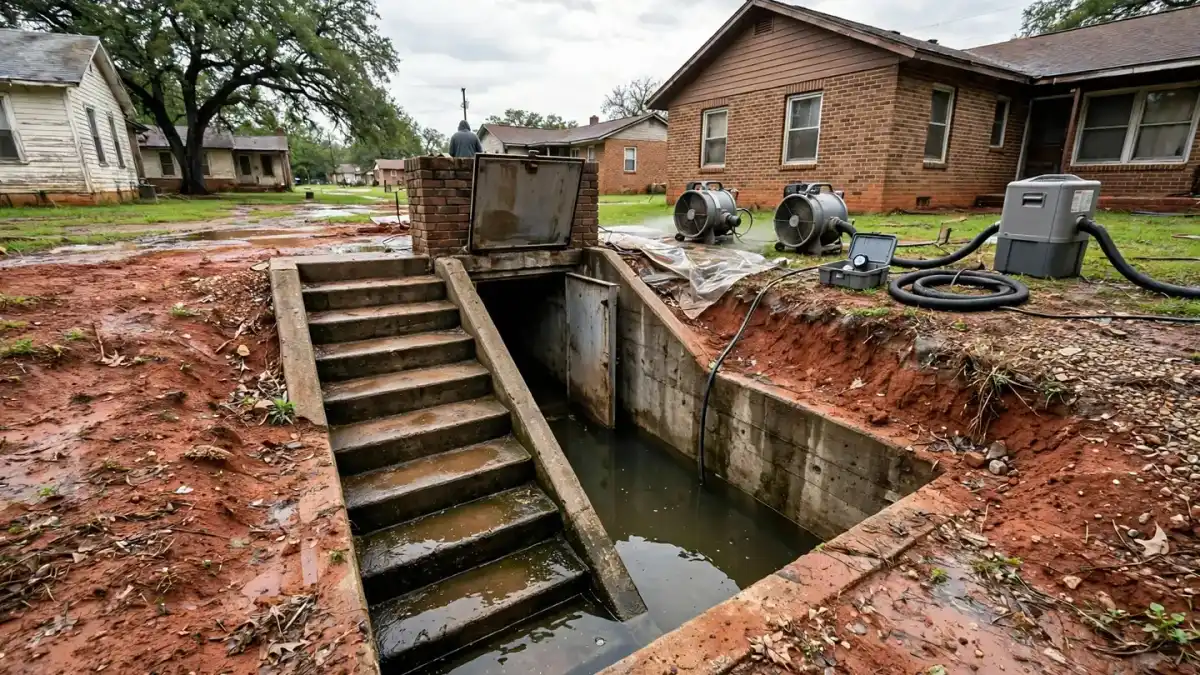
How storm water reaches the lower level near the lake
Spring thunderstorms near Lake Hefner can drop a lot of rain in a short time, and the National Weather Service in Norman issues flash flood warnings for the metro when it happens [3]. Water collects in window wells, runs down sloped driveways toward lower doors and backs up where gutters overflow next to the foundation.
Open ground around the lake offers little shelter, so wind can also drive rain under a lower-level door or through a window well cover. Once water is inside, it follows the slab to the lowest corner. Keeping window wells clear and downspouts pointed away from the house reduces how often this happens.
Clearing water from a split-level family room by the lake
A typical sequence once it is safe to go downstairs.
- 1
Shut off power to the lower level before stepping in
Outlets and cords sit close to the floor in these rooms.
- 2
Pump or extract standing water from the slab
Truck-mounted or portable units pull it out fastest.
- 3
Remove soaked carpet, pad and the lower wall strip
EPA advises discarding porous items that cannot be cleaned and dried [1].
- 4
Clean, then dry the slab and wall cavities
Dehumidifiers run until moisture readings reach normal levels.
Leaks from upstairs that end up on the lowest floor
In a split-level, water from a burst line or a washer on the upper floors follows the half-flights of stairs down. Many families find the worst damage in the lower family room even though the leak started elsewhere. A water heater or laundry on the lower level can also flood it directly when a hose or tank fails.
Clean water from a supply line is less risky than storm water, but it still soaks the same carpet and paneling. If you find water on the lower level, look upstairs too. Our burst pipe page explains what to check when the source is a supply line rather than rain.
Contamination and safety in a flooded lower level
Storm water that came in from outside may have picked up lawn chemicals, sewage from overloaded lines and dirt. EPA's flood cleanup guidance treats that water as contaminated and recommends gloves, boots and good ventilation [1]. Keep children and pets out of the room until it has been cleaned.
Items that soaked up floodwater, such as upholstered furniture, mattresses, cardboard boxes and carpet pad, usually cannot be cleaned well enough to keep. Hard items like metal shelving and plastic bins can often be washed and disinfected. Photograph everything before it is thrown out, for the claim.
Things to note before calling about a Lake Hefner lower level
These help the crew bring the right equipment.
- Where the water came inDoor, window well, wall or from upstairs.
- How deep it is on the slabA rough depth in inches is enough.
- What covers the floor and wallsCarpet, tile, paneling or drywall.
- Whether power to the level is offIt affects when work can safely start.
Insurance for water in a below-grade room
Whether a flooded lower level is covered depends on how the water got there. Damage from a sudden plumbing failure is often covered by a homeowners policy, while rising surface water usually needs a separate flood policy [2]. Water that came in through a storm-damaged window or roof may be treated differently again.
Write down the date and time, the weather and the path the water took. Keep photos of the outside of the house as well as inside. If you have a dispute with your insurer, the Oklahoma Insurance Department provides consumer guidance [5].
Drying concrete and paneling on a Lake Hefner slab
The slab under a lower level holds water for days after the surface looks dry. Crews measure it with meters and run dehumidifiers until readings reach the normal level for that material. EPA recommends drying within 24 to 48 hours to reduce mold risk [4]. Paneling glued to the wall may need to be removed so the wall behind it can dry.
Our structural drying page explains how drying goals are set. When the lower level shares an HVAC system with the rest of the house, the crew may close or redirect vents so damp air is not pushed upstairs.
Keeping water out of the lower level next spring
After the cleanup, look at the outside. Grading should slope away from the house, gutters should be clear and downspouts should discharge several feet from the foundation. Window wells benefit from clear covers and a drain at the bottom. These steps also help keep the clay soil around the slab at a steadier moisture level [7].
Inside, consider replacing carpet on the lowest level with tile or vinyl plank that tolerates water better, and keep stored items in plastic bins off the floor. The Lake Hefner area page covers other storm and plumbing risks for homes around the lake.
FAQ
Flooded Lower Levels near Lake Hefner: questions
My house near Lake Hefner has no basement. Does this apply?
Yes, if it has a split-level lower floor or any room set below grade. Those spaces flood and dry the same way a basement does.
Can I keep the paneling in my lower family room?
Sometimes. Solid wood paneling can occasionally be dried in place, but thin paneling over wet drywall or insulation usually comes off.
Is a lower level that flooded from a storm covered?
It depends on the source and your policy. Rising surface water usually needs flood insurance, while storm openings and plumbing failures are handled differently.