
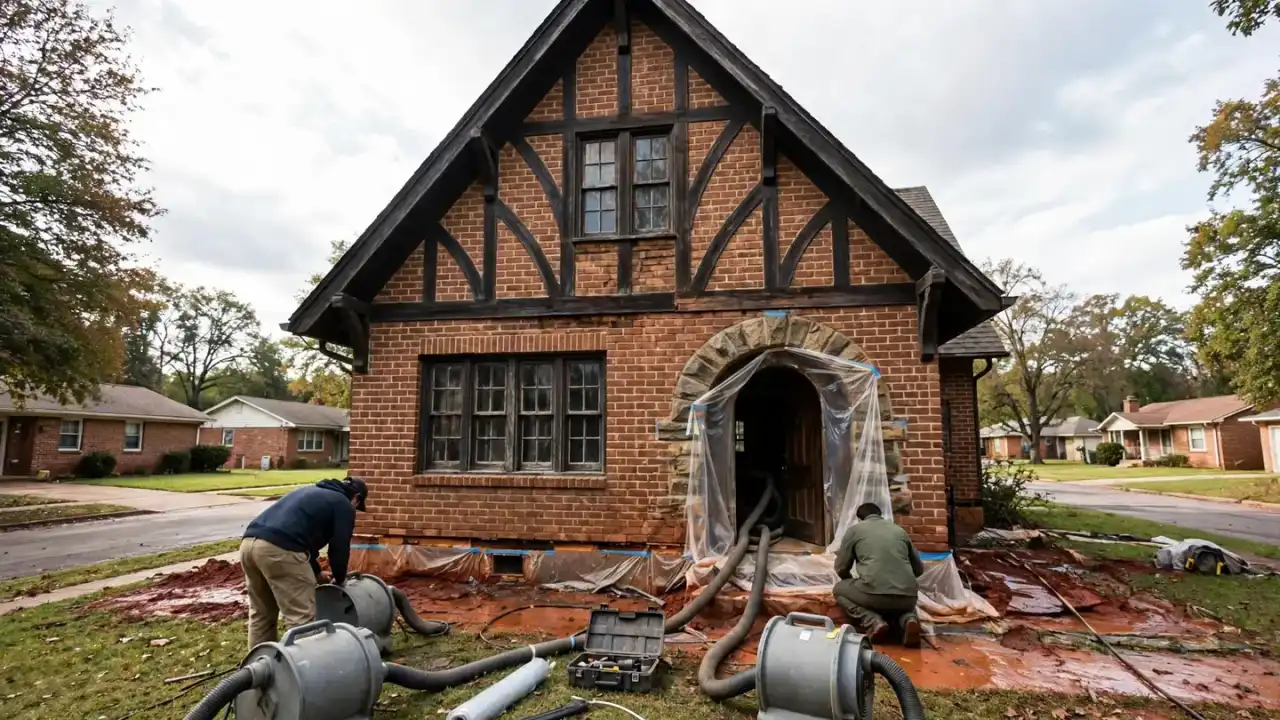
Key facts: Flooded Crawlspaces in Crown Heights
- Floodwater is handled as contaminated during cleanup because it can carry sewage, chemicals and debris [1].
- Central Oklahoma City sits on clay-rich soil that swells when wet and can stay saturated for days after long rain [7].
- Flood from rising surface water generally requires a flood policy, since homeowners coverage usually excludes it [2].
Storm water under Crown Heights homes
The typical Crown Heights house is a one- or one-and-a-half-story brick home on piers and beams. During a long spring rain, water from roofs, driveways and yards can collect around the foundation. If the grading slopes toward the house or a gutter overflows, that water runs straight into the crawlspace.
Clay soil under the neighborhood absorbs water slowly and holds it once wet. A crawlspace can turn into standing water and mud that stays for days, keeping the floor above damp.
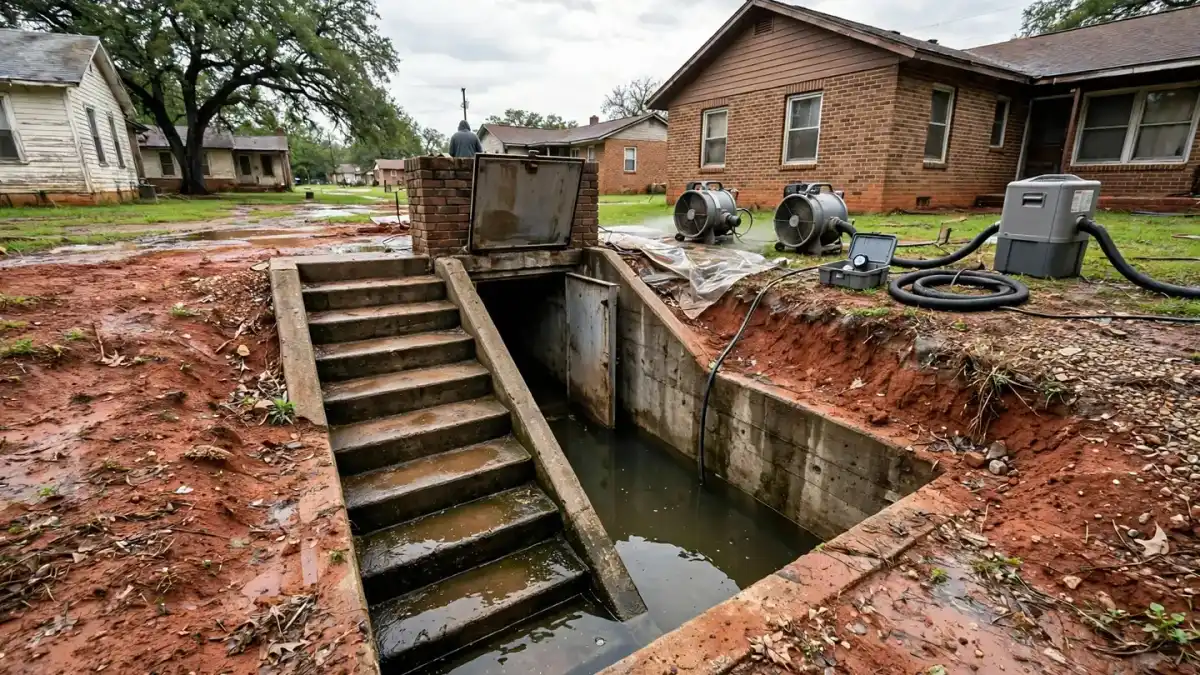
Cellars and lower rooms in some homes
Some older houses in north-central Oklahoma City have a small cellar, a furnace pit or a below-grade room, even when most of the home is on piers. These spaces sit lowest on the lot, so storm runoff and seepage reach them first.
Brick and concrete walls in those rooms soak up water and dry slowly. Stored items on the floor, such as boxes and old furniture, often have to be thrown out after floodwater reaches them.
Cleaning up a flooded Crown Heights crawlspace
Steps once the rain has passed.
- 1
Check power before entering
Make sure no wiring or equipment in the space is energized.
- 2
Pump out standing water
Use a sump or trash pump to clear water and mud.
- 3
Pull wet insulation and debris
Remove soaked fiberglass and anything that washed in.
- 4
Clean and dry the space
Treat surfaces, then dehumidify until the wood reads dry.
Why storm water is treated as contaminated
Water that comes from outside picks up soil, fertilizer, oil from streets and sometimes sewage from overflowing lines. EPA's flood cleanup guidance treats it as contaminated and calls for protective gear and thorough cleaning [1]. That applies under the house as well as in living space.
In a crawlspace, contaminated water touches soil, piers, joists and the underside of the subfloor. Cleaning those surfaces is part of the job, not just pumping out water.
Protecting oak floors above a wet crawlspace
Oak strip floors in Crown Heights absorb moisture from whichever side is wetter. A flooded crawlspace sends humid air up through the subfloor and can make the boards cup. Drying the crawlspace quickly is the best way to protect the floor.
Crews may run a dehumidifier under the house and another in the room above. Our structural drying page explains how readings guide that process.
What the contractor needs to know
Share these when you call.
- How much water is under the houseA few inches or up to the joists.
- Where it seems to enterLow side of the lot, gutter, driveway or vent.
- What is in the crawlspaceDuctwork, plumbing, insulation or stored items.
- Whether floors above feel softOr show cupping or stains.
Ductwork and equipment under the floor
Many homes have heating and cooling ducts running through the crawlspace. Floodwater can fill or crush ductwork and leave it contaminated. Soaked ducts may need cleaning or replacement before the system is used again, since it moves air into every room.
If a furnace, water heater or electrical box sits in a lower room, have a qualified technician check it before restarting. Ready.gov's flood safety guidance stresses avoiding water that may be energized [6].
Flood insurance in 73118
If water rose from the ground and entered the crawlspace or lower room, it is generally considered flood. Flood coverage comes through the National Flood Insurance Program or private flood insurers [2]. Standard homeowners policies usually exclude it.
The Oklahoma Insurance Department can explain coverage questions and the claims process [5]. Photograph water levels, damaged items and the crawlspace before anything is removed.
Reducing runoff around a Crown Heights foundation
Extend downspouts several feet from the house, clean gutters before storm season and make sure soil slopes away from the foundation. On narrow lots with long driveways, check whether driveway runoff is aimed at the house.
A vapor barrier over the crawlspace soil, with seams lapped and sealed, helps once the space is clean and dry. The National Weather Service in Norman issues flash flood warnings when heavy rain is expected [3].
Mold and musty air after a flood
EPA's mold guidance recommends drying within 24 to 48 hours to limit mold [4]. A crawlspace that stays wet can grow mold on joists and subfloor and send a musty smell into the house through gaps in the floor.
Our guide on mold risk after water damage explains warning signs. The Crown Heights page covers other risks in the neighborhood.
Foundation questions after repeated floods
Clay soil that swells and shrinks can move piers over time, and repeated flooding can make that worse. If doors stick or floors slope after a wet season, a foundation specialist can check the piers and beams.
That is a separate question from water cleanup, but worth raising while the crawlspace is open and clean.
FAQ
Flooded Crawlspaces in Crown Heights: questions
Do Crown Heights homes have basements?
Most sit on piers and beams over a crawlspace. Some have a small cellar or below-grade room, which is cleaned the same way after a flood.
Is crawlspace floodwater dangerous?
Treat it as contaminated. Use boots, gloves and eye protection, and keep children and pets away.
Will my homeowners policy cover storm water under the house?
Usually not if water rose from the ground. That is flood, which needs a separate flood policy.