
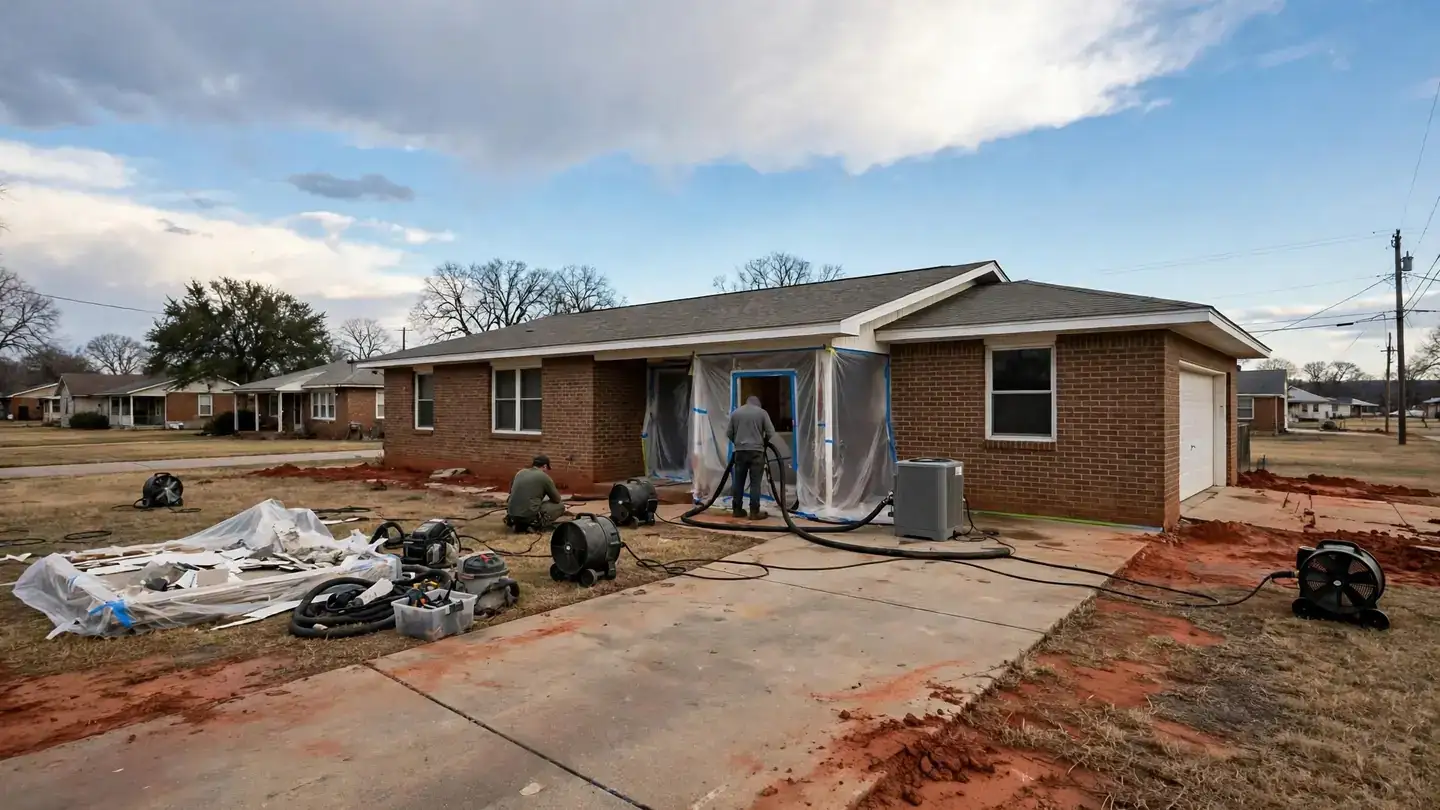
Key facts: Water Extraction near Lake Hefner
- Pulling water out mechanically works much faster than letting it evaporate, which is why extraction comes first [1].
- Water is grouped by contamination level, from clean supply water through to sewage and floodwater [1].
- Severe thunderstorm warnings for the Oklahoma City area come from the National Weather Service office in Norman [7].
Carpet over the slab in Lake Hefner homes
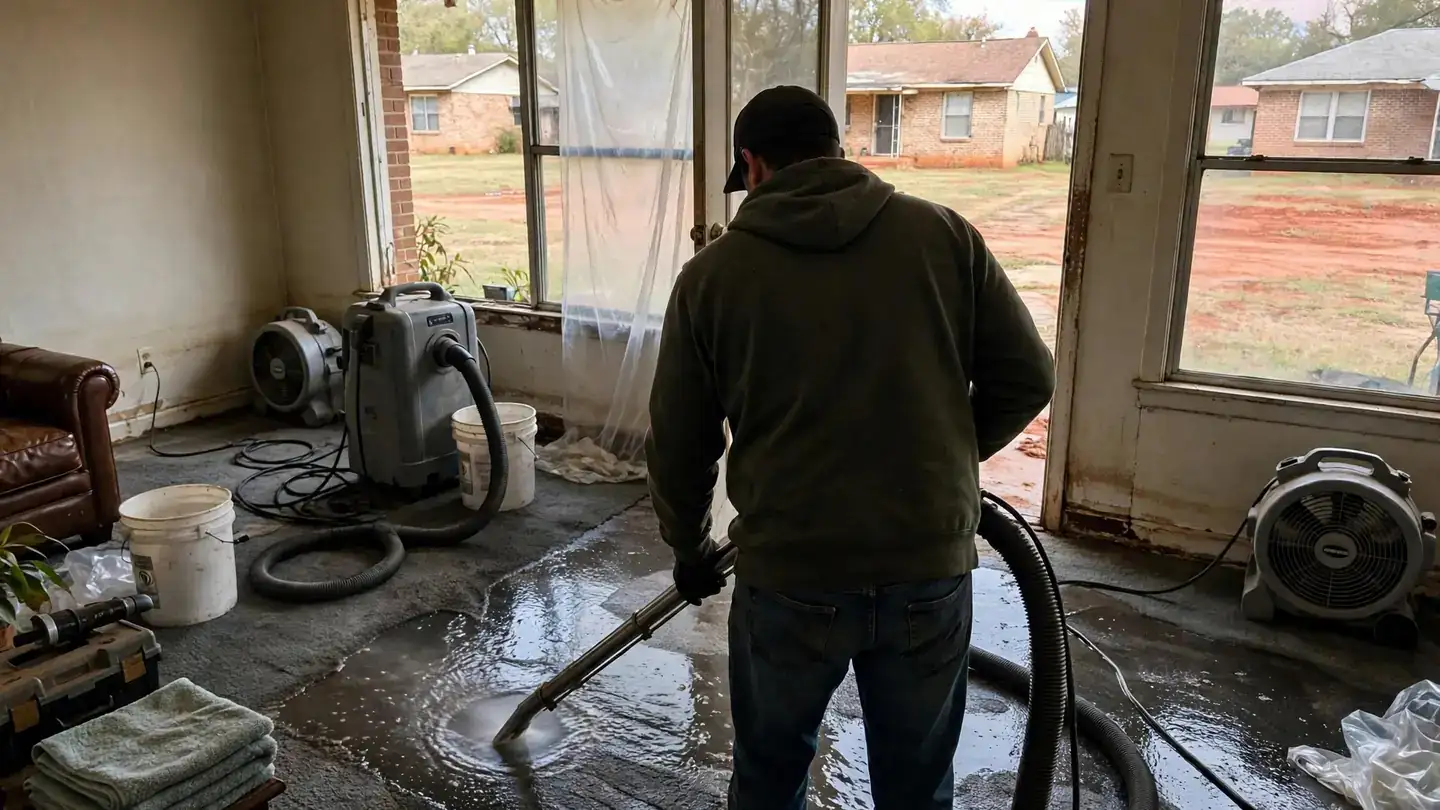
Bedrooms and living rooms in many lakeside ranch homes have wall-to-wall carpet laid over pad on a concrete slab. When a line breaks or a heater fails, the pad acts like a sponge. Weighted extraction tools press the carpet down and pull water out of the pad. Light vacuums only remove what sits on the surface.
If the water was clean and extraction starts quickly, the carpet can sometimes be dried and kept, though the pad is often replaced. Our wet carpet guide explains how that choice is made.
Laminate and vinyl plank on a lakeside slab
Many homes around the lake have been updated with laminate, vinyl plank or engineered wood. These floors look dry on top while water spreads underneath them across the slab. Extraction equipment cannot reach water trapped under a floating floor without lifting it.
Crews usually remove the affected planks so the slab can be extracted and dried. Laminate that has swelled at the seams normally cannot be reused. Vinyl plank may be reinstalled if it is in good condition, depending on the product.
Extracting water from a Lake Hefner ranch
The usual order once the source is stopped.
- 1
Confirm the water is off and wet circuits are safe
Safety comes before any equipment is plugged in.
- 2
Identify whether the water is clean or contaminated
That decides what can be kept [1].
- 3
Extract standing water and saturated carpet pad
Weighted tools reach water held in the pad.
- 4
Lift floating floors and check the wall bases
Hidden water under planks and behind baseboards is removed.
Garage floors and water that moves into the house
Many Lake Hefner homes have the water heater and washer in the attached garage. When one fails, water spreads over the garage floor and can run under the door into the house. Garage floors are often a little lower, so water may pool there first.
Extraction starts in the garage and continues into the house where the water crossed the threshold. The base of the shared wall between the garage and the house is checked for wicking, since the drywall and bottom plate there can stay wet.
Storm water and lower-level rooms
Spring storms can push rain under doors and into the lower level of split-level homes. The National Weather Service office in Norman issues warnings when heavy rain is expected [5]. Water that came in from outside is treated as contaminated, so carpet and pad soaked by it are usually discarded.
Rising surface water is typically not covered by a standard homeowners policy and needs separate flood insurance [3]. Note where the water entered and take photos before extraction starts. The flooded basement cleanup page explains more about below-grade spaces.
Before the extraction crew reaches a Lake Hefner home
Small steps that help the work go faster.
- Move small furniture off wet carpetPut foil or blocks under the legs of larger pieces.
- Lift drapes and bed skirts off the floorFabric wicks water upward.
- Clear a path from the door to the wet roomsHoses and equipment need room.
- Note any rooms with older textured ceilingsThese may need testing before work overhead.
Why speed matters at extraction
EPA recommends drying water-damaged materials within 24 to 48 hours to reduce mold [2]. Extraction removes most of the water in hours, which gives the drying equipment a much smaller job. Every hour water sits on the slab, more of it soaks into the concrete and the bottom of the walls.
After extraction, air movers and dehumidifiers take over. Our structural drying page explains how the crew decides when materials are dry.
Insurance and documentation for extraction near the lake
A sudden plumbing failure is often covered by a homeowners policy, while slow leaks and wear are usually excluded. Take photos of the source, the water and each wet room before extraction starts. Keep the damaged materials or photos of them until the adjuster says otherwise.
If you have trouble with a claim, the Oklahoma Insurance Department offers consumer help [4]. The Lake Hefner page lists other common leak sources in local homes.
City water service and finding the main valve
Oklahoma City's utilities department provides water service across most of the Lake Hefner area [6]. The main shutoff is usually at the meter near the street, and many homes also have a valve on the supply line in the garage. Knowing where yours is can stop a leak in minutes.
If you cannot close your valve, the city can shut water off at the meter. Test the house valve once a year so it does not seize. A key for the meter box is useful to keep in the garage.
FAQ
Water Extraction near Lake Hefner: questions
Can wet carpet near Lake Hefner be saved?
Sometimes, if the water was clean and extraction began quickly. The pad is usually replaced, and the carpet is dried and checked.
Why does my lakeside slab floor still feel damp once extraction is done?
The slab and the base of the walls still hold water. Drying equipment removes that over the next few days.
Do I need to move out during extraction?
Usually not. Extraction itself takes hours. The drying that follows can be noisy, but many families stay home.
Sources and citations
- [1]IICRC: Standards (ANSI/IICRC S500 water damage restoration)
- [2]U.S. EPA: A brief guide to mold, moisture and your home
- [3]FEMA FloodSmart: National Flood Insurance Program
- [4]Oklahoma Insurance Department
- [5]National Weather Service, Norman forecast office
- [6]City of Oklahoma City: Utilities
- [7]National Weather Service, Norman forecast office