
Key facts: Sewage Backup near Lake Hefner
- Restoration standards treat sewage as grossly contaminated water, which calls for protective gear and removal of affected porous materials [1].
- Sewer and drain backups are excluded from many homeowners policies unless a water backup endorsement was purchased [3].
- Homes near Lake Hefner built from the 1960s through the 1980s often still have original drain lines beneath the slab [7].
Where sewage comes up in a Lake Hefner slab home
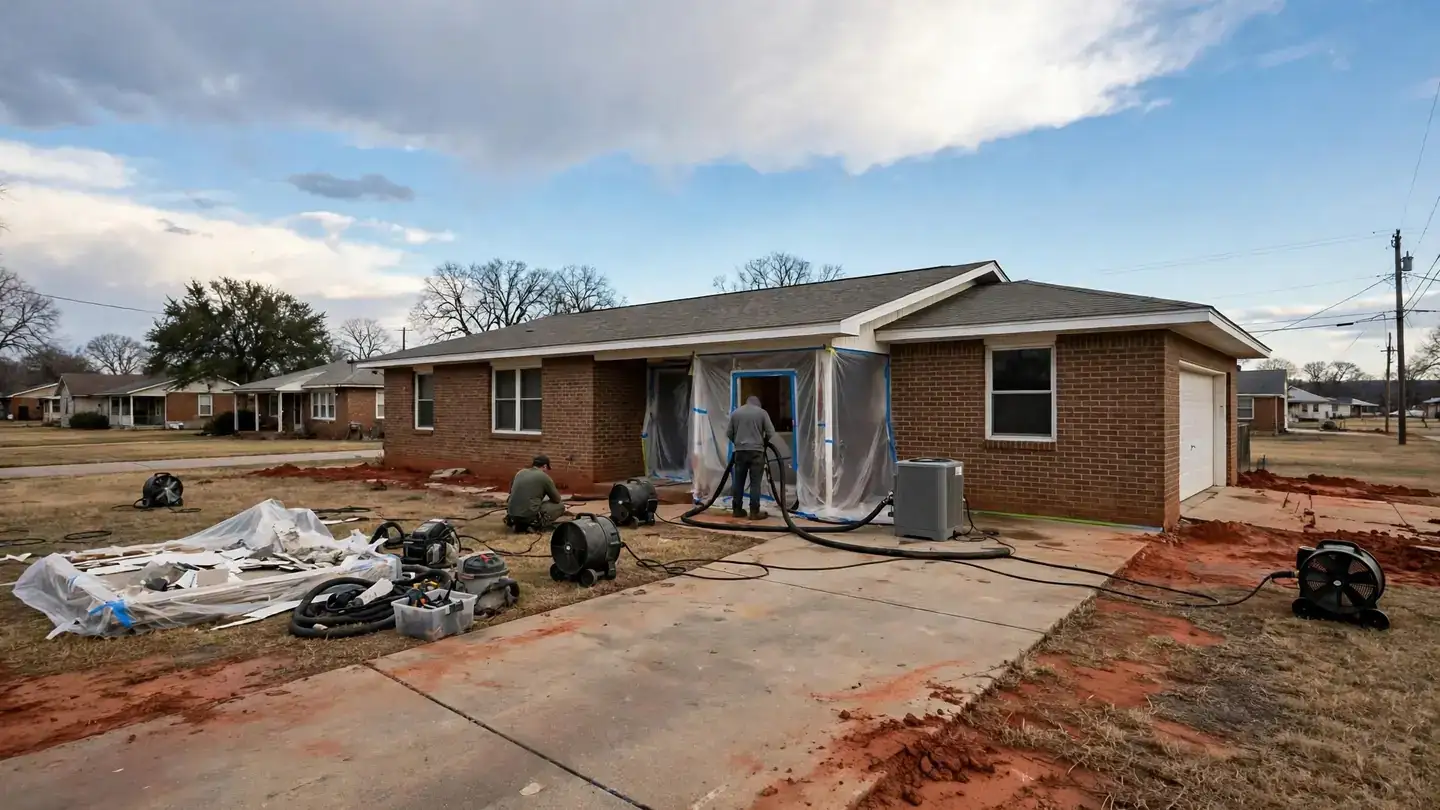
A slab house has no crawlspace or basement to catch an overflow. When the main drain blocks, waste from the toilets, sinks and washer backs up to the lowest fixture, which is often a shower or tub. From there it runs across bathroom tile, under the door and into carpeted halls and bedrooms.
Because the drain lines run under the concrete, the blockage is out of sight. Gurgling toilets, slow drains in several fixtures at once and water rising in the tub when the washer drains are all signs the main line is restricted. Stop using water in the house as soon as you notice them.
Older drain lines beneath ranch homes by the lake
Many houses around Lake Hefner were built with cast iron drains under the slab. After decades, cast iron can corrode, crack or develop rough spots that catch debris. Tree roots from mature yards can enter through joints. Soil movement in the region's expansive clay can also stress the pipe where it runs through the concrete [8].
A plumber can run a camera down the line to see whether the problem is a simple clog or a damaged section. If the line is broken, the repair may mean opening the slab or replacing the section. Ask for a copy of the camera footage, which can help with your claim.
Safely handling a backup in a lakeside slab ranch
Basic steps to take before the crew arrives.
- 1
Stop running water anywhere in the house
Every flush or drain adds to the overflow.
- 2
Keep children, pets and older relatives away
Federal guidance stresses distance from contaminated water [2].
- 3
Turn off power to wet rooms if the panel is dry
Outlets near the floor may be in contact with the water.
- 4
Photograph the fixture, floors and walls
Images before cleanup support your claim.
Public sewer or private line near Lake Hefner
Property owners in Oklahoma City are generally responsible for the private sewer line from the house to the public main [4]. If several neighbors on your street have backups at once, or water is bubbling up in the street, the problem may be in the city's main. Contact Oklahoma City's utilities department in that case.
If the problem is limited to your house, a plumber clears or repairs your private line. Some homes have a cleanout near the foundation or in the yard where the plumber can reach the line without going through a toilet. Knowing where yours is can make the visit quicker.
Removing contaminated carpet and drywall
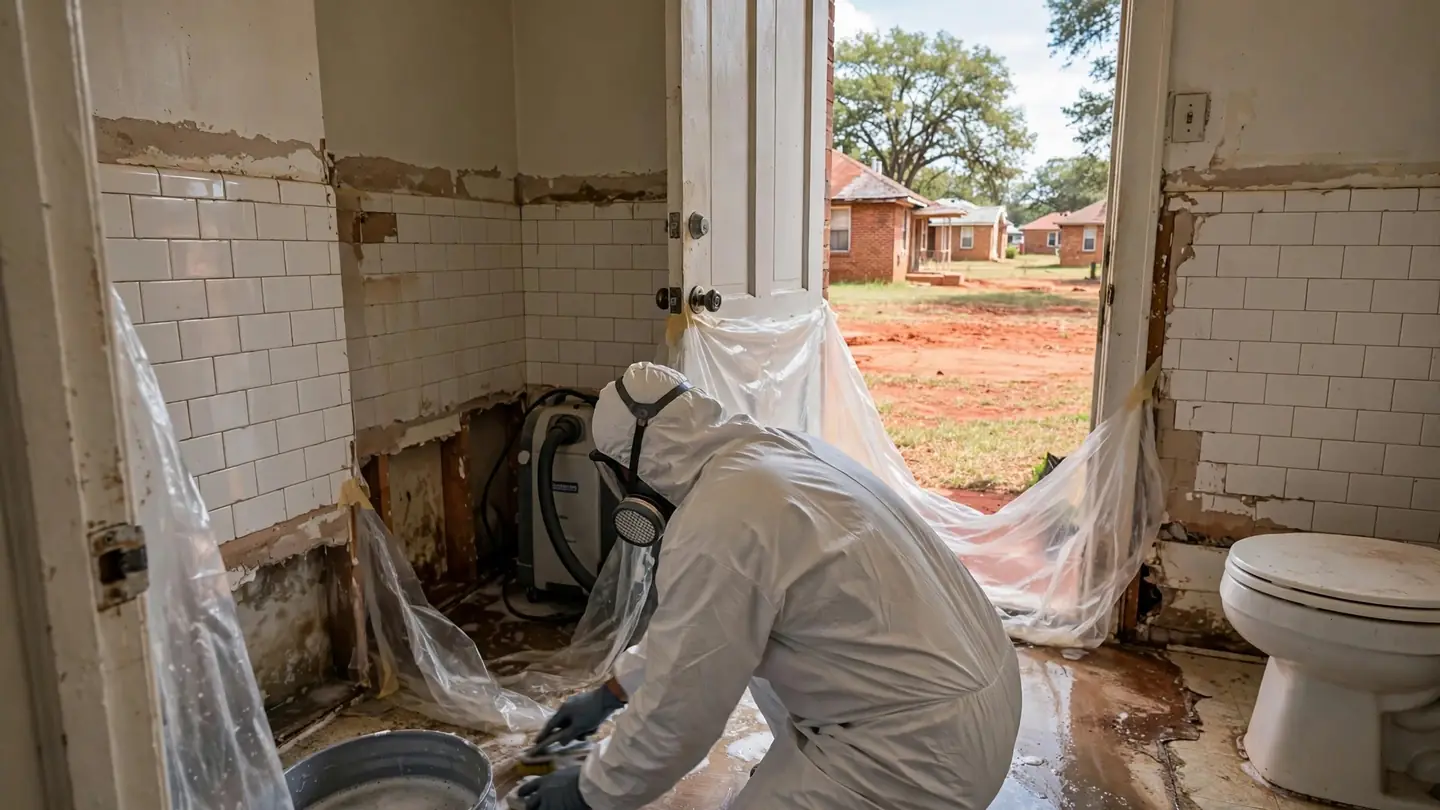
IICRC guidance for sewage calls for removing porous materials the water touched, including carpet, pad and drywall that wicked it up [1]. In these homes that usually means cutting the drywall a set height above the water line and pulling carpet in the affected rooms. Tile and hard surfaces can be cleaned and disinfected.
Cabinet bases in a bathroom are often particleboard and absorb sewage quickly. They are normally replaced. Workers wear protective gear and may set up containment so the rest of the house stays clean while the affected rooms are opened up.
Signs of a developing backup in a Lake Hefner home
Watch for these before sewage reaches the floor.
- Several drains slowing at onceA single slow sink is usually local; many point to the main.
- Water rising in a tub when the washer drainsWastewater is looking for a way out.
- Gurgling from toilets after flushingAir trapped by a blockage.
- A sewer smell in the hall bathPossible seepage at a cracked line or seal.
Sewage backups in Lake Hefner condominiums
In condo buildings near the lake, units share drain stacks. A blockage in a common line can push waste up into a lower unit even when the owner there did nothing wrong. Report it to management immediately so they can stop residents above from using water and call a plumber for the shared line.
Each owner's interior and belongings are usually covered by their own policy, while the association handles the shared pipes, depending on the governing documents. Write down what you saw, keep photos and save receipts for any temporary place to stay.
Drying and checking for mold after sewage cleanup
Once the contaminated materials are removed and the surfaces are disinfected, the remaining structure is dried with air movers and dehumidifiers. EPA advises drying within 24 to 48 hours to limit mold [6]. The slab and wall framing are tested with meters before rebuilding begins.
Our structural drying page explains how drying goals are set, and the Lake Hefner page covers other plumbing problems in local slab homes. If the house has older ceiling textures or flooring, testing for asbestos before they are disturbed protects your family [9].
Insurance questions after a backup near the lake
Many standard policies leave out sewer and drain backups unless a specific endorsement was added [3]. Check your declarations page or ask your agent. If the backup was caused by a broken supply line rather than a blocked drain, it may be handled under a different part of the policy.
Keep the plumber's report showing what caused the blockage, photos of the damage and a list of discarded items. Our mold risk guide explains what to watch for in the weeks after cleanup.
FAQ
Sewage Backup near Lake Hefner: questions
Why did sewage come up in my tub instead of the toilet?
The tub or shower drain is often the lowest opening in a slab home, so wastewater from a blocked main reaches it first.
Can I clean a small sewage spill myself?
A very small one on hard surfaces may be manageable with gloves and disinfectant, but anything on carpet or drywall usually needs professional removal.
Who pays when a backup comes from the city main?
That depends on the cause and your policy. Contact the city utilities department and your insurer, and document the damage.
Sources and citations
- [1]IICRC: Standards (ANSI/IICRC S500 water damage restoration)
- [2]Ready.gov: Floods (safety during cleanup)
- [3]Oklahoma Insurance Department
- [4]City of Oklahoma City: Utilities
- [5]U.S. EPA: Flood cleanup to protect indoor air quality
- [6]U.S. EPA: A brief guide to mold, moisture and your home
- [7]Wikipedia: Lake Hefner
- [8]Wikipedia: Expansive clay
- [9]U.S. EPA: Protect your family from asbestos