
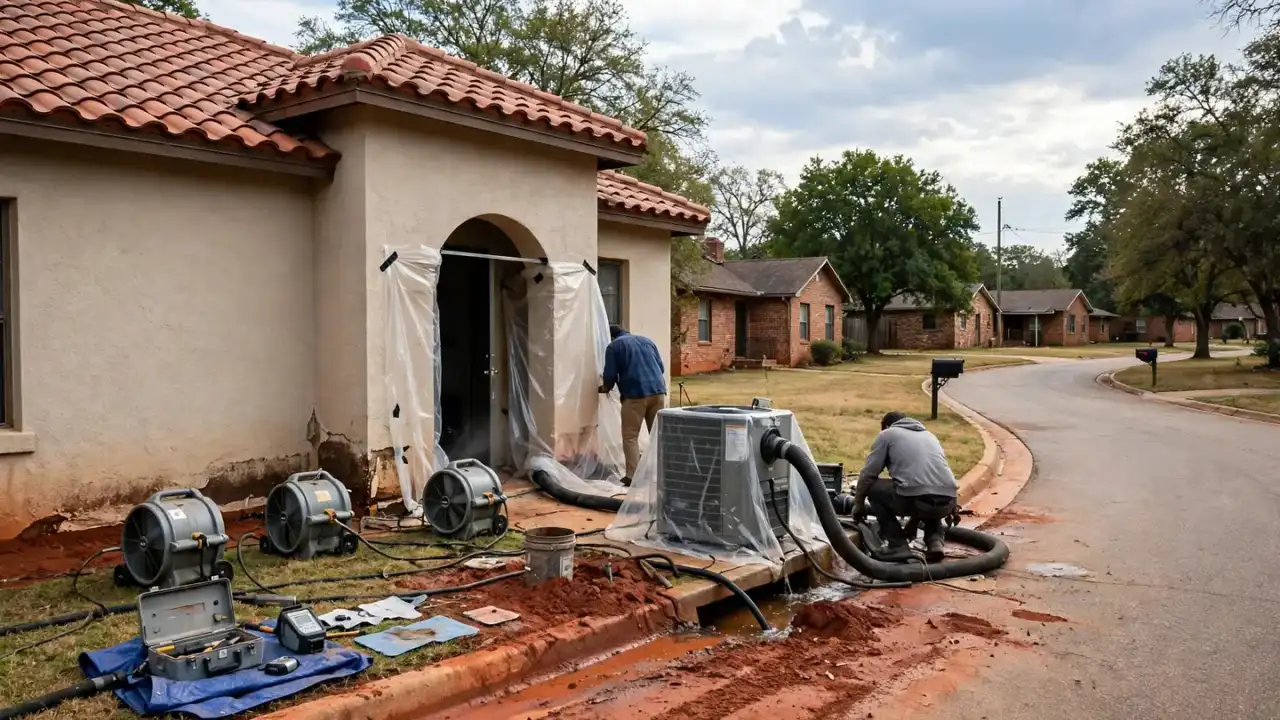
Key facts: Structural Drying in the Paseo
- IICRC S500 treats a material as dry once its moisture matches comparable unaffected material in the same building [1].
- The Paseo's stucco walls and clay tile roofs are among its best-known features [7].
- Humidity in Oklahoma can change sharply from day to day, which affects how fast materials give up water [3].
Plaster walls in Paseo homes
Plaster on wood lath is common in Paseo houses built in the 1920s and 1930s. It is denser than drywall and holds water longer, but it is also more forgiving. Plaster that is still firmly keyed to the lath can usually be dried in place with dehumidifiers and air movers aimed at the wall.
Crews check the plaster with meters and look for soft spots or sections pulling away. Small holes drilled near the base can let air into the cavity. Plaster that has crumbled or detached is removed and patched. Painted plaster in pre-1978 homes should be handled with lead-safe practices [9].
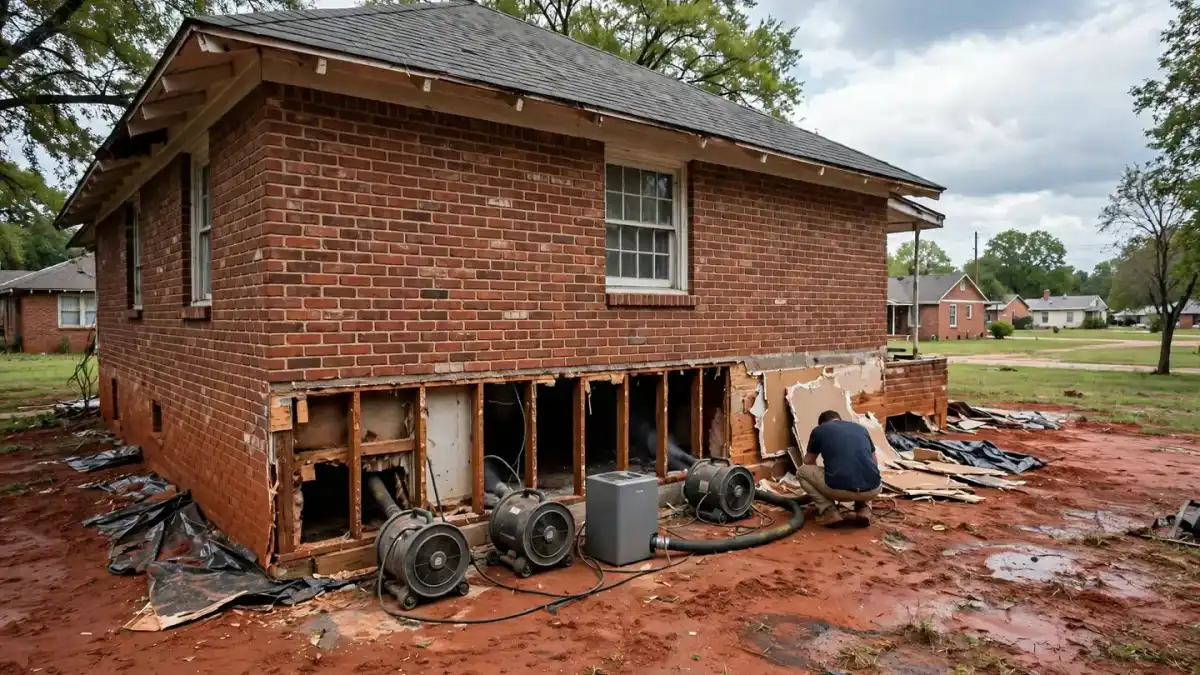
Original wood floors over a crawlspace
Oak and pine floors in Paseo cottages often cup when water soaks them from above or from the crawlspace below. Drying from both sides, with dehumidifiers in the room and in the crawlspace, gives the boards the best chance to flatten.
This takes patience. Floors may need a week or more to dry, and refinishing should wait until readings are back to normal. Sanding too early can leave boards uneven once they finish drying.
Drying a Paseo cottage after a leak
A typical plan for an older house.
- 1
Take readings in plaster, floors and the crawlspace
Baseline readings come from dry areas of the house [1].
- 2
Remove wet rugs, insulation and loose plaster
Only what cannot be dried comes out.
- 3
Dry the room and the crawlspace together
Equipment works from above and below the floor.
- 4
Check readings daily until they match the baseline
Equipment stays until each material is dry.
Stucco walls that stay wet
Water that gets behind stucco from a crack, a failed window flashing or a burst pipe soaks the sheathing and framing. Stucco dries slowly, so a wall can stay wet for weeks without intervention. Thermal cameras and meters help locate the wet area.
Drying usually works from the inside, by opening the interior wall surface near the wet area if needed. The exterior leak has to be fixed first. Stucco repairs in the Paseo historic district may need a Certificate of Appropriateness [8].
Flat roofs, parapets and wet ceilings
Many Spanish-style buildings in the Paseo have flat roofs behind parapets. When scuppers clog and water pools, it can leak into the ceiling below. Before drying the ceiling, the roof needs repair or temporary protection.
Wet insulation above the ceiling is removed, and the ceiling is dried or replaced. Our water stain guide explains what a stain can tell you about a roof leak. The Paseo page describes how parapet roofs fail.
Before a drying crew arrives at a Paseo building
Things that help the work go well.
- Move artwork and supplies out of the roomEquipment can be noisy and dusty.
- Open the crawlspace access if you canThe crew will need to get under the house.
- Note any original finishes you want keptPlaster, tile and built-ins can often be dried in place.
- Tell the crew about upcoming eventsArt walks and festivals affect access.
Humidity and the Paseo's drying time
Central Oklahoma can swing from dry days to very humid ones [3]. After a spring storm, outdoor air is often damp, so crews keep windows closed and let dehumidifiers work. In winter, dry air can help, but the house must stay warm.
Older houses leak air more than newer ones, which can make dehumidifiers work harder. Closing doors to the rooms being dried helps the equipment control the space.
Mold prevention in older buildings
EPA recommends drying within 24 to 48 hours [2]. In plaster, stucco and crawlspaces that is not always possible, so starting quickly matters. The CDC notes that people with asthma or allergies should avoid areas with mold [5].
Our mold risk guide explains warning signs after a leak. If a musty smell returns after drying, the source may still be active.
Permits and historic review in the Paseo
Drying and removing wet materials do not need permits. Repairs such as replacing plumbing, rewiring or structural work need permits from Development Services [4]. Exterior repairs in the historic district may need review [8].
Starting the historic review early means the exterior work will be ready when the interior is dry. Many routine repairs can be approved by staff.
Built-ins, arched doorways and coved ceilings
Many Paseo cottages keep original built-in cabinets, arched openings and coved plaster ceilings. These details are hard to reproduce, so crews try to dry them in place. Built-in cabinets can often be dried by opening their lower doors and placing small air movers inside, while dehumidifiers control the room.
If a built-in has to come out to reach wet framing behind it, ask the crew to label and store the pieces. Reinstalling the original woodwork after drying keeps the house's character intact.
FAQ
Structural Drying in the Paseo: questions
Can plaster walls really be dried without removal?
Often yes, if the plaster is still bonded to the lath. Readings show when it is dry.
How long does a Paseo wood floor take to dry?
Usually a week or more. Drying from the crawlspace and the room together helps.
Will my stucco need to come off?
Not always. Many walls are dried from the inside once the exterior leak is fixed.
Sources and citations
- [1]IICRC: Standards (ANSI/IICRC S500 water damage restoration)
- [2]U.S. EPA: A brief guide to mold, moisture and your home
- [3]Oklahoma Mesonet
- [4]City of Oklahoma City: Development Services
- [5]CDC: Mold
- [6]Wikipedia: Expansive clay
- [7]Wikipedia: Paseo Arts District
- [8]A Better Life OKC: Historic neighborhoods and preservation districts
- [9]U.S. EPA: Lead renovation, repair and painting program