
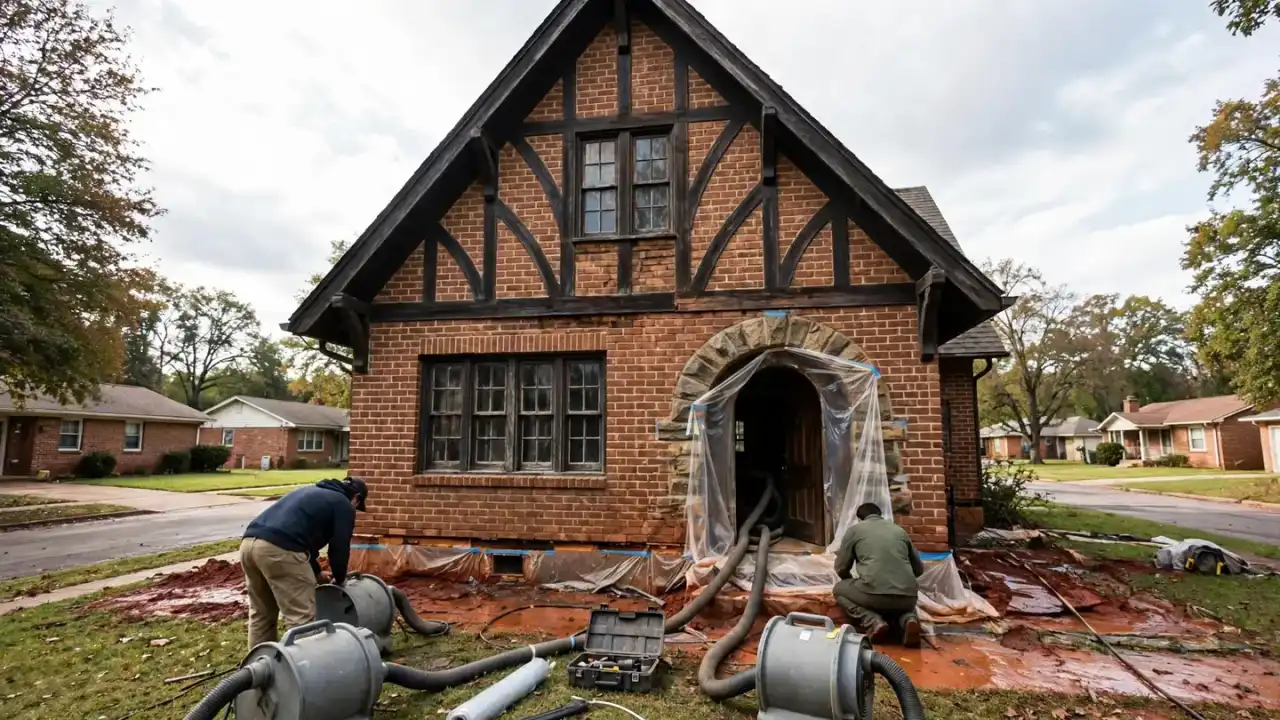
Key facts: Structural Drying in Crown Heights
- Drying is finished when materials match the moisture level of similar dry materials elsewhere in the house, not when they feel dry [1].
- Many Crown Heights houses date from 1925 to 1949, built in Tudor Revival, Colonial Revival and Spanish Revival styles [7].
- Humidity across Oklahoma swings widely, and the Oklahoma Mesonet records those changes station by station [3].
Oak floors need drying from both sides
Oak strip floors in Crown Heights are laid over wood subfloors on joists, with a crawlspace beneath. Water can reach them from a leak above or a wet crawlspace below. Boards cup when one side is wetter than the other.
The best results come from drying both sides together: floor drying mats or dehumidification in the room, and pumping and dehumidifying the crawlspace below. Floors refinished before they are dry may crown later.
Plaster walls and coved ceilings
Plaster in older Crown Heights homes is dense and dries slowly. After a short leak, it can often be saved with steady dehumidification. Coved ceilings and arched openings add detail that is hard to replace, so keeping the original plaster is worth the time.
If plaster sags or cracks in a new pattern, it may be losing its grip on the lath. A crew checks that before drying continues. Our guide on a water stain on the ceiling explains warning signs.
Typical drying order in a Crown Heights house
How a crew usually works.
- 1
Map moisture through the Crown Heights house
Use meters on floors, walls and the crawlspace framing.
- 2
Remove what cannot dry
Pull soaked insulation, pad and badly damaged materials.
- 3
Place equipment above and below
Set dehumidifiers and air movers in the room and crawlspace.
- 4
Track readings to the target
Compare wet areas with dry reference readings each visit.
Attic spaces behind knee walls
Story-and-a-half Tudor homes often have attic space behind short knee walls on the upper floor. After a roof leak, insulation there can hold water against the ceiling below. Opening the knee wall access lets crews remove wet insulation and dry the framing.
Steep roofs with valleys and chimney flashing are common leak points in heavy storms. The roof must be repaired before drying can finish.
Crawlspaces on clay soil
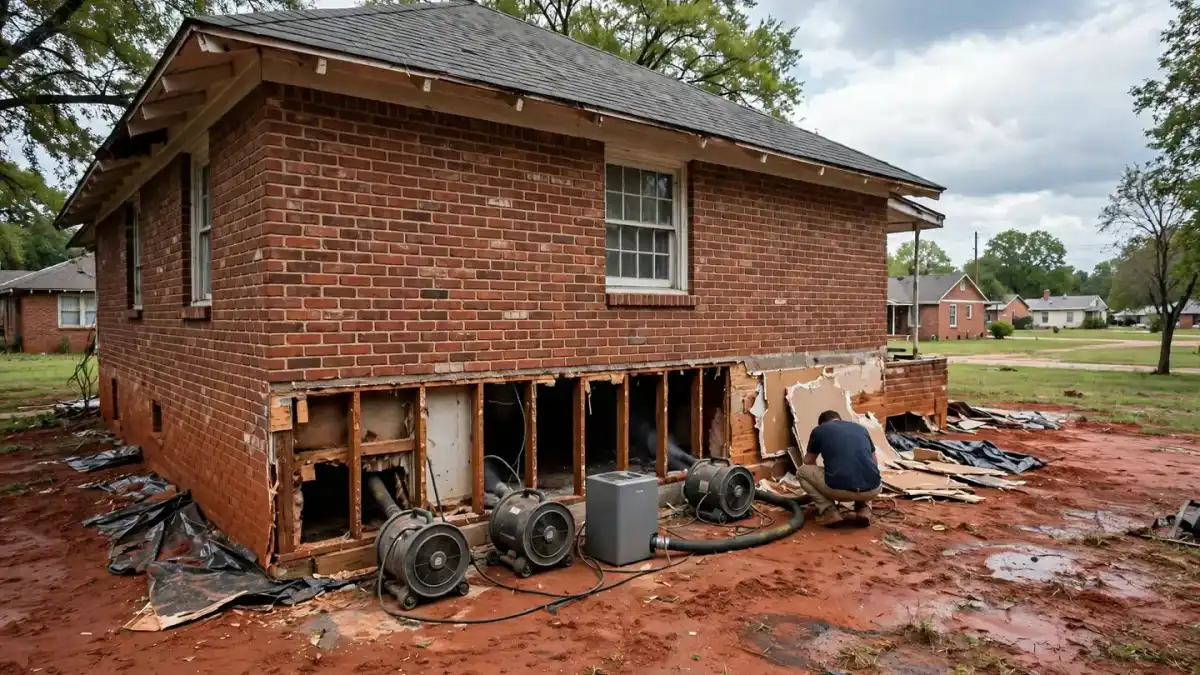
Clay-rich soil under central Oklahoma City swells when wet and holds water for days [6]. A crawlspace over saturated soil keeps the subfloor damp. Laying plastic over the soil and running a dehumidifier under the house helps dry the framing.
Closing foundation vents during drying keeps humid outdoor air from slowing the work. Once the space is dry, a sealed vapor barrier helps keep it that way.
What to tell the drying crew
Useful details when you call.
- Source of the waterPipe, roof, appliance or storm.
- Type of floors and wallsOak, tile, plaster or drywall.
- Condition under the oak floorsStanding water, mud or soaked insulation below.
- Any upstairs rooms affectedIncluding knee-wall spaces.
Weather and drying in north-central OKC
Dry, windy days help a house dry faster. Humid stretches slow it down. The Oklahoma Mesonet tracks humidity at stations around the state, and contractors adjust equipment to the conditions [3].
In winter, outside air is dry but cold. Keeping the house warm helps materials release moisture so dehumidifiers can capture it.
Preventing mold during drying
EPA advises drying within 24 to 48 hours to reduce mold [2]. In older homes with dust and organic materials, mold can start quickly in wet crawlspaces and wall cavities. The CDC notes that mold can affect people with asthma or allergies [5].
Visible mold should be cleaned or removed as part of the plan. See our guide on mold risk after water damage.
Historic review and repairs
Crown Heights is a city historic preservation district, so exterior changes may need a Certificate of Appropriateness [8]. Interior drying and repairs do not need that review.
Building permits for structural repairs come from Oklahoma City Development Services [4]. The Crown Heights page covers more about local homes.
Knowing when drying is done
The IICRC standard sets the target as the normal moisture of similar dry materials in the same building [1]. A technician reads dry oak and plaster in an unaffected room and uses those numbers as the goal.
Ask for the readings in writing. They help with the insurance claim and confirm the house is ready for refinishing and paint.
Drying around tile baths and built-in woodwork
Crown Heights homes often keep original tile bathrooms, built-in cabinets and painted or stained woodwork. Water that runs behind a tub or under a tile floor can stay trapped where meters must probe carefully. Crews may lift a threshold or remove a section of baseboard so air can reach the hidden framing without harming the tile.
Built-ins and trim can swell if left in a damp room. Steady dehumidification, rather than blasting heat at the wood, lets it return to normal moisture slowly and lowers the chance of cracked finishes or split joints.
Garages and driveways in Crown Heights
Many homes here have a garage reached by a narrow drive. When runoff from the drive collects against the house, the nearest crawlspace corner can stay wet long after the rest has dried. Moisture readings near that corner often lag behind.
Fixing the drainage there, by regrading or adding a channel drain, can keep the problem from coming back. That work is separate from drying but worth planning while the crew is on site.
FAQ
Structural Drying in Crown Heights: questions
How long does drying take in a Crown Heights house?
It depends on the materials and weather. Plaster and oak often take longer than drywall and carpet.
Can cupped oak floors flatten again?
Often, yes, if dried evenly from both sides. Wait for readings before sanding.
Do I need historic approval for drying work?
No. Interior drying does not need historic review. Exterior changes may.
Sources and citations
- [1]IICRC: Standards (ANSI/IICRC S500 water damage restoration)
- [2]U.S. EPA: A brief guide to mold, moisture and your home
- [3]Oklahoma Mesonet
- [4]City of Oklahoma City: Development Services
- [5]CDC: Mold
- [6]Wikipedia: Expansive clay
- [7]NPS: Crown Heights Historic District record
- [8]A Better Life OKC: Historic neighborhoods and preservation districts