
Key facts: Structural Drying in Capitol Hill
- Professional drying combines dehumidifiers, moving air and sometimes heat, and is guided by moisture readings rather than touch [1].
- Many older Capitol Hill houses rest on piers or short perimeter walls over a crawlspace, so drying has to reach below the floor [7].
- Oklahoma Mesonet stations record humidity across the state, and humid stretches slow drying inside a house [3].
What makes Capitol Hill houses slow to dry
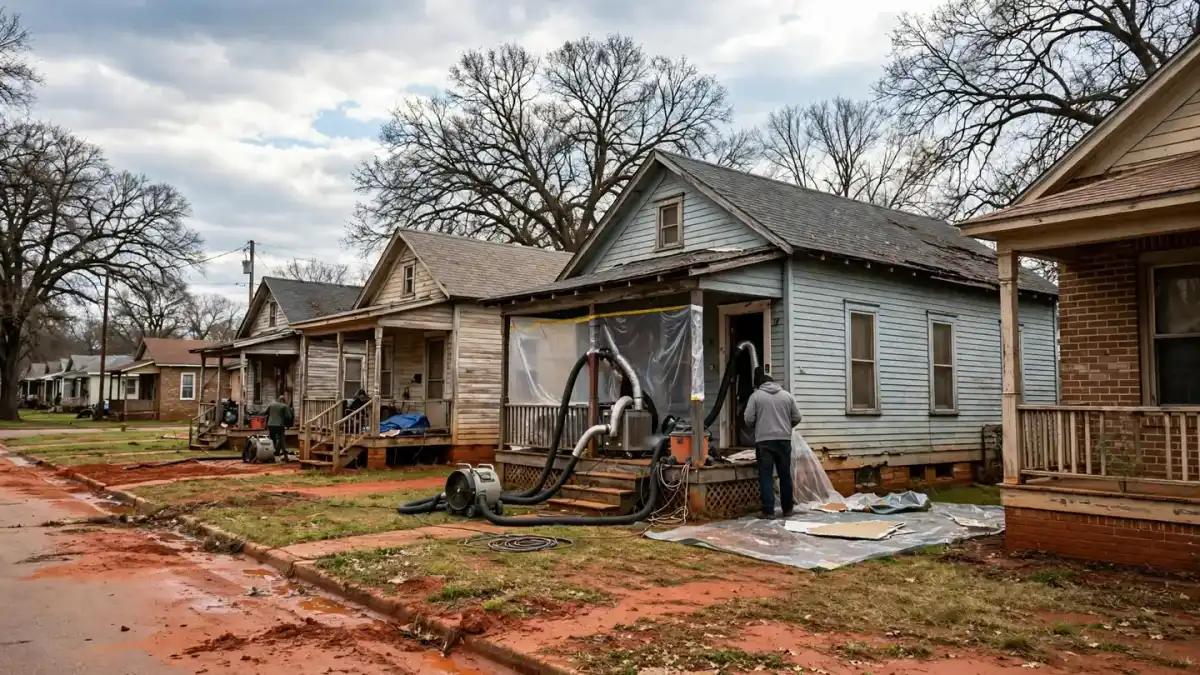
Capitol Hill's housing runs from small frame cottages of the 1900s and 1910s to 1920s bungalows and brick homes of the 1930s and 1940s. Many sit on piers over a crawlspace. Water that enters the floor soaks joists, sill plates and planks, then keeps the crawlspace air damp. Each of those surfaces holds moisture differently.
Old wood is dense and can be well seasoned, but once wet it releases water slowly. Several layers of flooring add more barriers. A crew has to open or lift some materials so dry air can reach the wet wood.
Moisture readings decide when drying is done
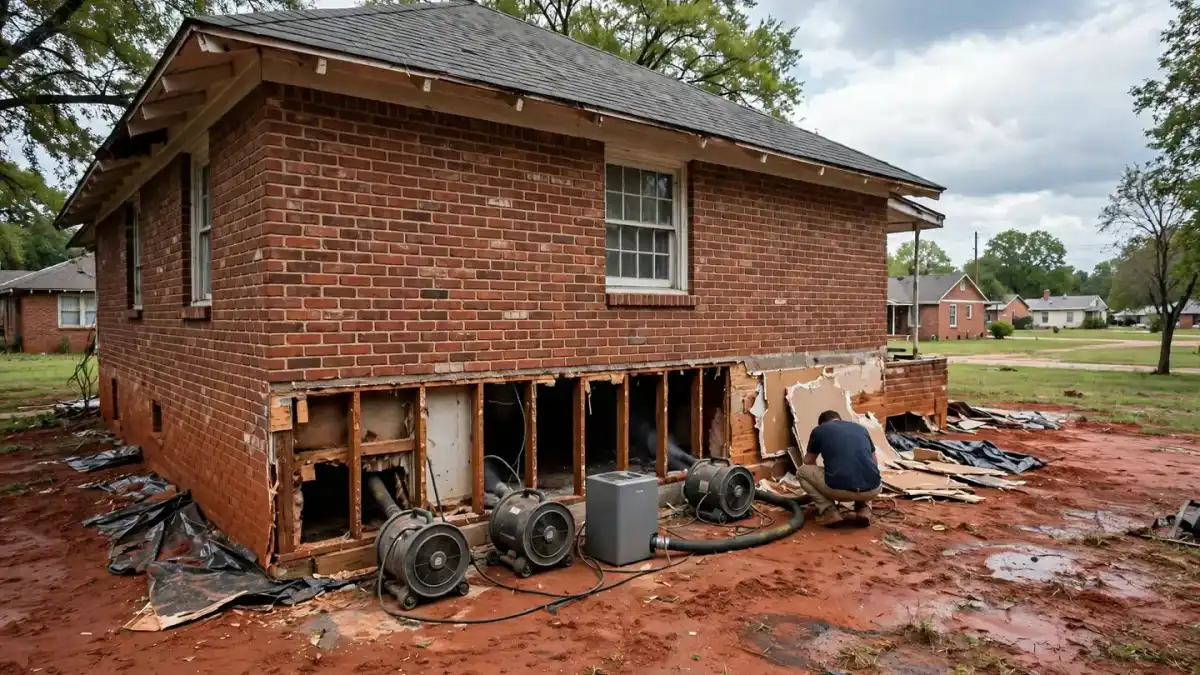
The IICRC water damage standard treats drying as complete when materials reach the normal moisture level of similar dry materials in the same building [1]. In practice, a technician reads a dry joist or wall in an unaffected room and uses that as the target for the wet areas.
Ask for those readings in writing. They show the adjuster that the house was dried properly and give you confidence before new flooring or paint goes on.
How drying usually runs in a Capitol Hill home
A typical sequence for a pier-built house.
- 1
Remove standing water
Extract water from floors and pump the crawlspace if needed.
- 2
Open trapped layers
Lift carpet, vinyl or baseboards where water is held underneath.
- 3
Set air movers and dehumidifiers
Place equipment in the rooms and, where possible, under the floor.
- 4
Read and adjust daily
Measure moisture each visit and move equipment as areas dry.
Drying under the floor in a crawlspace
A wet crawlspace keeps the subfloor damp from below even when the room above looks dry. Crews often remove wet insulation, lay plastic over muddy soil and run a dehumidifier in the crawlspace itself. In some older houses, clearance is very low, and equipment has to be chosen to fit.
Crawlspace vents may need to be closed during drying so humid outdoor air does not undo the work. Clay-rich soil common in central Oklahoma can hold water for days after rain, which adds to the moisture load [6].
Plaster, wallboard and paneling in older rooms
Walls in Capitol Hill homes may be original plaster, later wallboard or wood paneling, sometimes all in one house. Plaster dries slowly and may be saved after a short leak. Wallboard soaks up water quickly and often has to be cut away at the bottom. Paneling can hide wet framing behind it.
Drilling small holes at the base of a wall or removing baseboards lets air into the cavity. Our guide on how long drywall takes to dry explains what to expect.
Additions dry on their own schedule
Rooms added to Capitol Hill houses over the years, such as enclosed porches or side bedrooms, often have different framing, floors and foundations from the original house. One may be on a slab while the main house is on piers. Each part needs its own readings and equipment.
The seam between old and new is where water often hides. A thorough crew checks the framing on both sides of that line before calling the job done.
What a drying crew will want to know
Mention these when you call.
- When the water startedOlder leaks mean deeper soaking.
- Whether the crawlspace is wetStanding water, mud or damp insulation.
- What is under the top floorLinoleum, plank, plywood or a slab.
- Whether power is safeDrying equipment needs working circuits.
Oklahoma weather and drying times
Central Oklahoma can swing from dry, windy days to muggy stretches in a matter of days, and the Oklahoma Mesonet tracks those changes at stations across the state [3]. On dry days, a house dries faster. During humid spells, dehumidifiers do most of the work and windows should stay closed.
In winter, cold outside air is dry, but heating the house is still needed to keep materials warm enough to release moisture. Your contractor balances heat, airflow and dehumidification for the season.
Mold prevention while drying
EPA advises drying wet materials within 24 to 48 hours to reduce the chance of mold [2]. Older houses with dust, organic materials and closed crawlspaces can grow mold quickly when they stay wet. The CDC notes that people with asthma or allergies may react to mold indoors [5].
If mold is already visible, it should be cleaned or removed as part of the drying plan. Our guide on mold risk after water damage covers warning signs.
Storefronts and flat roofs on Commerce Street
Commercial buildings along Commerce Street often have flat roofs, masonry walls and shared structures. After a roof drain clogs in a storm, water may soak a ceiling, a wall and the building next door. Masonry and old plaster hold that water for a long time.
Drying a storefront may involve closing part of the space, running equipment overnight and coordinating with the neighboring tenant. Moisture maps help show the building owner what was wet.
When repairs follow the drying
Once readings reach the dry target, repairs can start. Replacing joists, sill plates or piers usually needs a building permit from Oklahoma City Development Services [4]. Flooring and paint can go on only after the wood and walls are confirmed dry.
The Capitol Hill page covers the neighborhood's housing and common water sources in more detail.
FAQ
Structural Drying in Capitol Hill: questions
Why is drying taking longer in my Capitol Hill house than a neighbor's?
Different floors, crawlspace conditions and additions dry at different rates. Daily readings show where moisture remains.
Should I open windows to help drying?
Only on dry days. During humid weather, closed windows let dehumidifiers work better.
Can the crew dry plank floors without removing them?
Often, yes. Lifting top layers and drying from above and below can save original planks when they are not badly damaged.