
Key facts: Water Extraction in the Paseo
Water on original wood floors
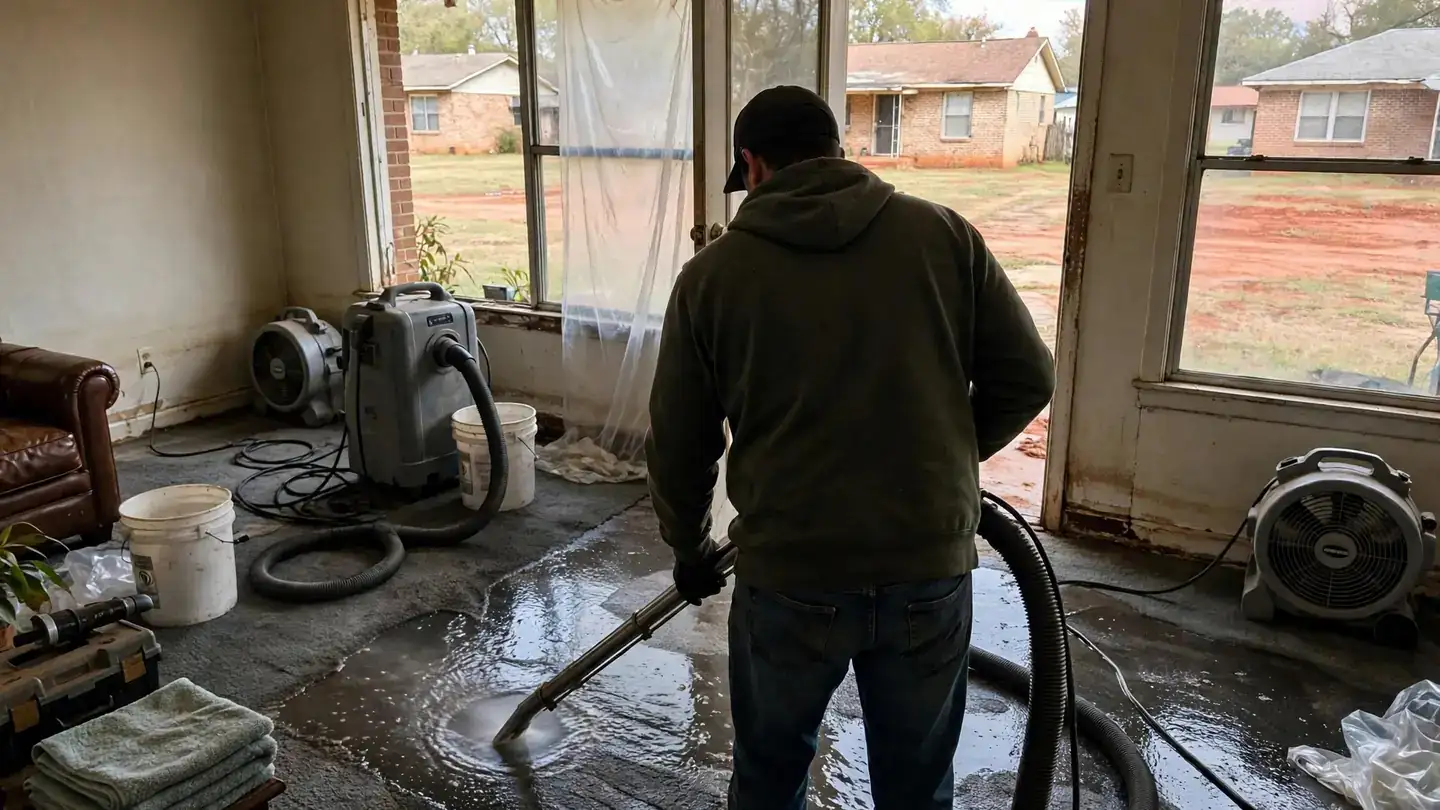
Oak and pine floors in Paseo homes absorb water at the seams and from below. Extraction with weighted tools and special floor mats pulls water up through the boards before it soaks in deeply. The faster this starts, the better the chance of keeping the floor.
Area rugs should be lifted off wet floors right away. They hold water against the wood and can transfer dye. Rugs can often be cleaned and dried off site.
Galleries and studios under apartments
When a leak upstairs drops water onto a gallery floor, extraction is only part of the job. Artwork, supplies and equipment need to be moved first. Keep works on paper flat, and do not wipe wet paint or try to separate stuck sheets.
Tell the crew what is stored in the space so they can work around it. Valuable pieces may need a conservator. The building owner and each tenant should report the leak and document their losses.
Extracting water in a Paseo gallery or studio
The usual order of work.
- 1
Stop the source and switch off wet circuits
Safety comes before equipment.
- 2
Move artwork, supplies and electronics to a dry area
Protect one-of-a-kind items first.
- 3
Extract water from floors and rugs
Weighted tools reach water in seams and pad.
- 4
Check the ceiling, walls and floor below the leak
Hidden water is found with meters.
Pumping water from a Paseo crawlspace
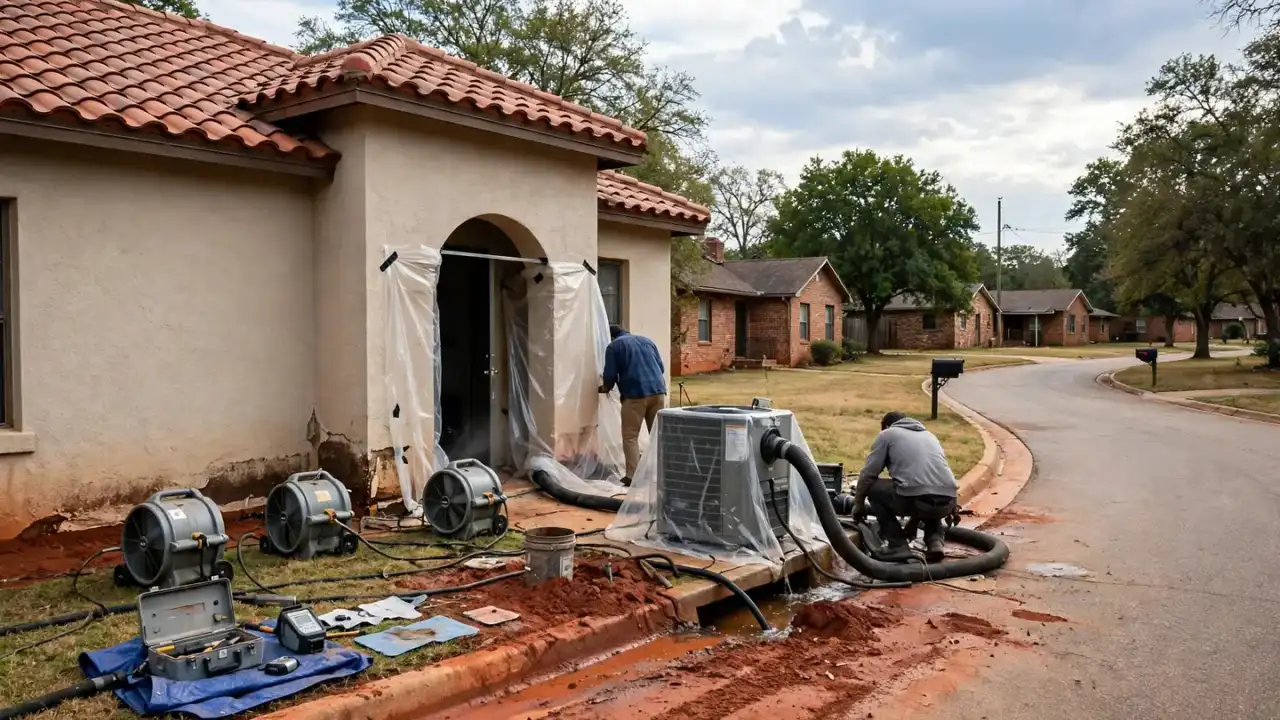
After a burst pipe or heavy rain, water can collect in the crawlspace under a Paseo house. Portable pumps remove standing water, and wet insulation is pulled out. The clay soil will hold some water, so dehumidifiers are used afterward.
Access to these spaces is often tight. Let the crew know where the hatch is and whether anything blocks it. The Paseo page explains why crawlspaces here stay damp.
Storm water from flat roofs and scuppers
Clogged scuppers on flat Paseo roofs can send water into ceilings and down walls during heavy storms. Once water reaches the floor, it is extracted like any other leak. The roof needs to be repaired or covered first, or the problem will repeat.
The National Weather Service in Norman issues severe storm warnings for the metro [5]. After a storm, check ceilings for new stains. Our water stain guide explains what to look for.
What to do before extraction in the Paseo
Steps that help the crew.
- Lift rugs and runners off wet floorsThey trap water against the wood.
- Move artwork away from wet wallsWater can wick into frames and mats.
- Clear a route for hoses and equipmentOlder buildings have narrow entries.
- Mention any event happening nearbyParking and access may be limited.
Why speed matters in old buildings
EPA recommends drying within 24 to 48 hours to reduce mold [2]. Extraction gets most of the water out quickly, which lets drying equipment finish the job faster. Plaster and wood benefit most from quick action.
Our structural drying page explains what happens after extraction, and the wet carpet guide covers soaked rugs and carpet.
Insurance and documentation in the Paseo
Take photos of the source, the water and each affected room or display area before extraction starts. Sudden plumbing failures are often covered by homeowners or commercial policies. Business owners should check for business income coverage.
If you have trouble with a claim, the Oklahoma Insurance Department provides consumer guidance [4].
Water service and shutoffs in the Paseo
Oklahoma City's utilities department provides water service in the Paseo [6]. The main shutoff is usually at the meter near the street. In shared buildings, tenants should know where the building's shutoff is and who can reach it.
If you cannot close the valve, the city can shut water off at the meter. Knowing this before a leak saves time.
Extraction in Paseo apartments above shops
When the leak starts in an upstairs apartment, crews extract water from that floor first so less of it drains through to the space below. Carpet and pad upstairs are pulled back to check the subfloor, and the ceiling of the business downstairs is checked with a meter.
Tenants upstairs and downstairs should each photograph their own space and contents. Building owners can help by giving the crew access to both units at the same time, which shortens the job for everyone.
Plaster and stucco walls after extraction in the Paseo
After floors are cleared, the crew looks at the walls. Plaster on lath and stucco exterior walls hold water at their base, where it wicked up from a wet floor. Meters show how high the moisture reached.
In most cases the walls can be dried in place once the floor is extracted. Painted surfaces in older buildings may contain lead, so any cutting or sanding is done with lead-safe practices.
FAQ
Water Extraction in the Paseo: questions
Can my original wood floor be saved after a leak?
Often, if extraction starts quickly. Drying from above and below helps the boards flatten.
What should I do with wet artwork?
Move it to a dry area, keep paper flat, do not wipe wet surfaces and contact a conservator for valuable pieces.
Is crawlspace water extracted too?
Yes. Standing water under the house is pumped out, and the space is dried afterward.
Sources and citations
- [1]IICRC: Standards (ANSI/IICRC S500 water damage restoration)
- [2]U.S. EPA: A brief guide to mold, moisture and your home
- [3]FEMA FloodSmart: National Flood Insurance Program
- [4]Oklahoma Insurance Department
- [5]National Weather Service, Norman forecast office
- [6]City of Oklahoma City: Utilities
- [7]A Better Life OKC: Historic neighborhoods and preservation districts