
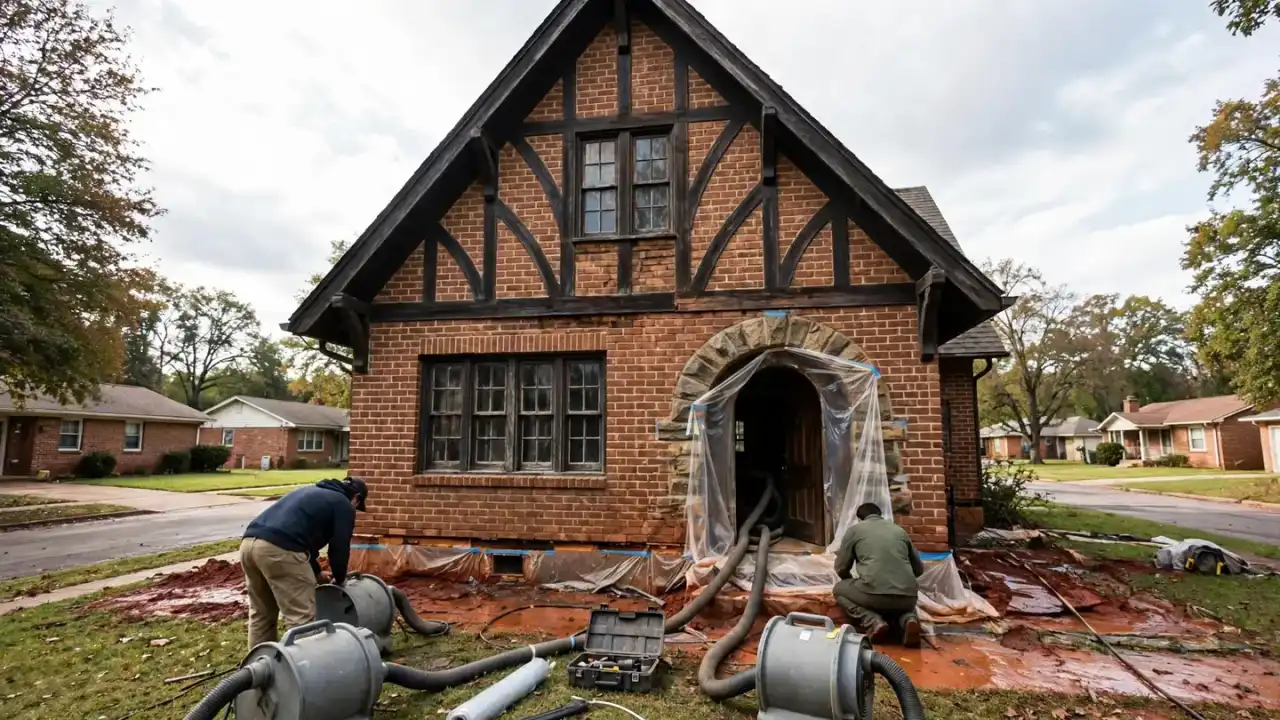
Key facts: Sewage Backups in Crown Heights
- Restoration standards treat sewage as the most contaminated class of water, calling for protective equipment during cleanup [1].
- Crown Heights houses date mostly from 1925 to 1949, the era when cast iron drain and vent piping was standard [7].
- Damage from a drain or sewer backup is excluded by many homeowners policies unless a water backup endorsement is in place [3].
How cast iron drains fail in Crown Heights
Cast iron is strong, but it rusts from the inside. In horizontal drain lines, the bottom of the pipe carries water and thins first. Eventually it cracks along its length or rusts through. Joints sealed with lead and oakum can also loosen with age and movement.
In a Crown Heights house on piers, a failing drain under the floor leaks into the crawlspace. The leak may be slow, so the first sign is often a sewer odor, a soft spot in a bathroom floor or a damp, musty smell.
Laterals, tree roots and the city main
The private sewer line from the house to the street is generally the owner's responsibility, while Oklahoma City Utilities maintains the public main [4]. Older laterals may be clay or cast iron. Roots from mature trees in the neighborhood can grow into joints and block the line.
If several neighbors have backups at the same time, the main may be blocked, and the city should be notified. If only your house is affected, a plumber can camera the lateral to find the problem.
First actions during a Crown Heights backup
Keep the damage from spreading.
- 1
Stop all water use
No flushing, laundry, dishwashing or showers.
- 2
Close off the affected rooms
Keep children and pets out and shut the doors.
- 3
Look under the house
Check the crawlspace for sewage from a cracked drain.
- 4
Get the line cleared
A plumber needs to clear or repair the drain before cleanup ends.
Sewage in tile bathrooms
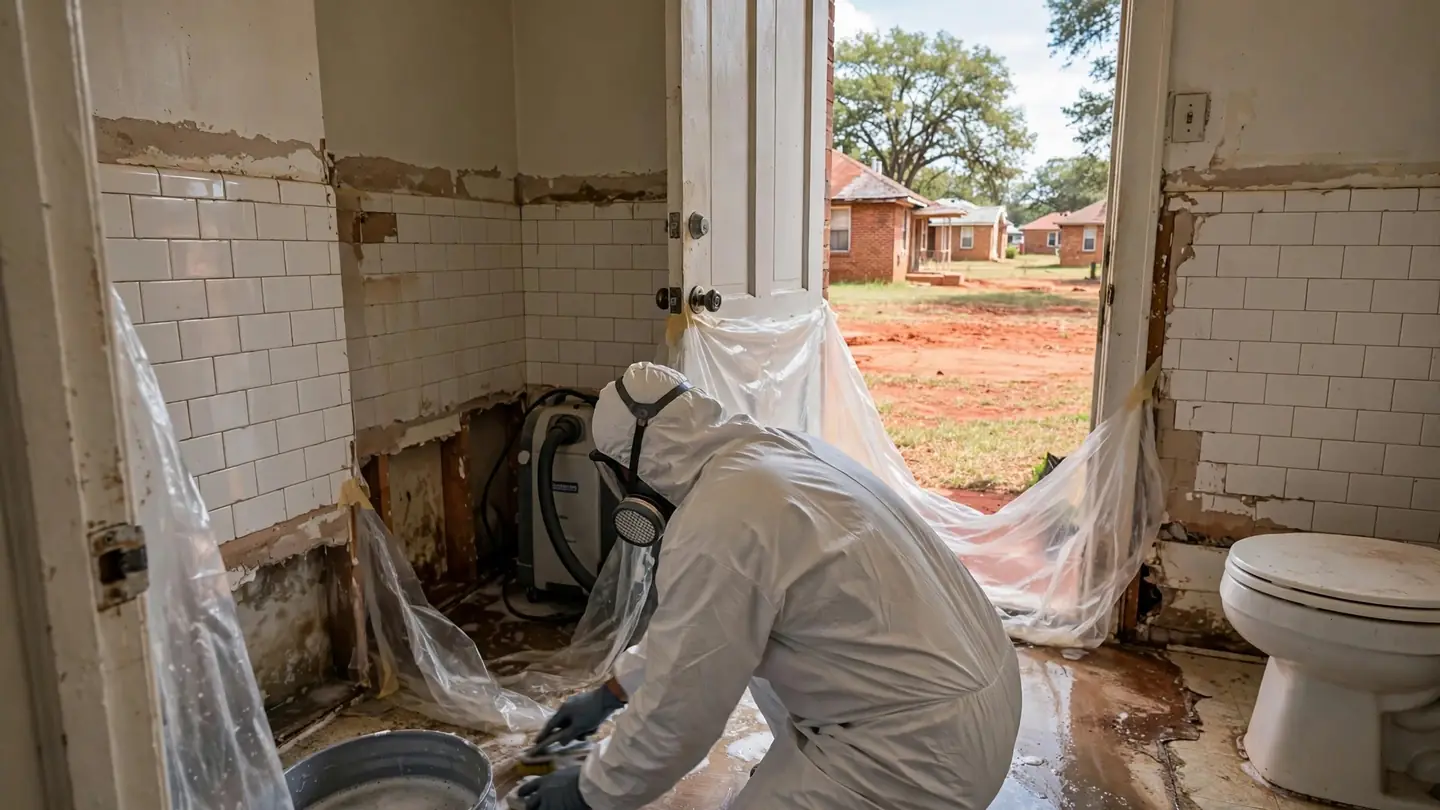
Many Crown Heights homes still have original tile bathrooms. Sewage rising from a tub or floor drain can spread across tile and seep into grout and the subfloor below. Tile surfaces can usually be cleaned and disinfected, but water under the tile may need more work.
If a cracked stack inside a wall leaked behind tile or plaster, the wall may need to be opened so it can be cleaned and dried. That decision is made with moisture readings and a look at the pipe.
Safety during sewage cleanup
Federal preparedness guidance recommends protective gear and keeping children, older adults and pets away from contaminated water [2]. Wash hands well and do not eat or drink in the affected area.
Professional crews follow the IICRC standard for grossly contaminated water. That means removing affected porous materials, cleaning and disinfecting what remains, and drying the structure [1].
Details for your call
Brief answers help the contractor plan.
- Where sewage appearedTub, toilet, floor drain or crawlspace.
- Whether it reached oak floorsOr only tile and hard surfaces.
- Whether a plumber has been calledAnd if the line is cleared.
- How long it has beenHours or days since the backup.
Crawlspace cleanup under a pier-and-beam house
When a drain leaks under the house, sewage soaks into soil, insulation and the bottom of the subfloor. Cleanup can include removing contaminated insulation and debris, treating soil surfaces and replacing the vapor barrier once the space is clean.
EPA's flood cleanup guidance notes that contaminated areas need thorough cleaning and drying to protect indoor air [5]. Air from the crawlspace rises into the house, so this matters for health and odor.
Oak floors and sewage
Oak floors touched by sewage present a hard choice. Surface contact on a sealed floor may be cleaned. If sewage soaked between boards or into the subfloor, those sections are usually removed.
Matching original oak is usually possible with reclaimed or new boards milled to the same profile. A flooring specialist can blend repaired areas with the rest of the room.
Insurance for backups in Crown Heights
Check your policy for a water backup or sewer backup endorsement [3]. Without it, many policies exclude this type of damage. The Oklahoma Insurance Department can answer questions about coverage and claims [3].
Keep the plumber's report and any camera video. Photograph the affected rooms and materials removed.
Preventing future backups
A plumber can recommend spot repairs, pipe lining or replacement for failing cast iron. A backwater valve can help prevent sewage from the main entering the house. Avoid grease, wipes and paper towels in drains.
Drying after cleanup should follow EPA's 24 to 48 hour guidance to limit mold [6]. The Crown Heights page covers the neighborhood's housing, and structural drying explains how drying is confirmed.
Odor and air quality after a Crown Heights backup
Sewer odor can linger in a closed-up brick house long after visible sewage is gone. The smell often comes from soaked materials that were missed, such as insulation under the bath, the bottom of a plaster wall or the grout lines in an old tile floor. Finding and removing those sources does more than masking the smell with fragrance.
Once cleaning is finished, steady airflow and dehumidification help the house air out. If the odor returns on humid days, ask the crew to recheck the crawlspace and the drain joints beneath the bathroom, since a slow leak may still be active.
FAQ
Sewage Backups in Crown Heights: questions
Why does my Crown Heights bathroom smell like sewer?
A cracked or rusted cast iron drain under the floor or inside a wall is a common cause. A plumber with a camera can find it.
Can sewage-soaked oak floors be saved?
Surface contact on sealed boards may be cleaned. Soaked boards and subfloor are usually replaced.
Who pays to fix the sewer line to the street?
Owners are generally responsible for their private lateral. The city maintains the public main.
Sources and citations
- [1]IICRC: Standards (ANSI/IICRC S500 water damage restoration)
- [2]Ready.gov: Floods (safety during cleanup)
- [3]Oklahoma Insurance Department
- [4]City of Oklahoma City: Utilities
- [5]U.S. EPA: Flood cleanup to protect indoor air quality
- [6]U.S. EPA: A brief guide to mold, moisture and your home
- [7]NPS: Crown Heights Historic District record