
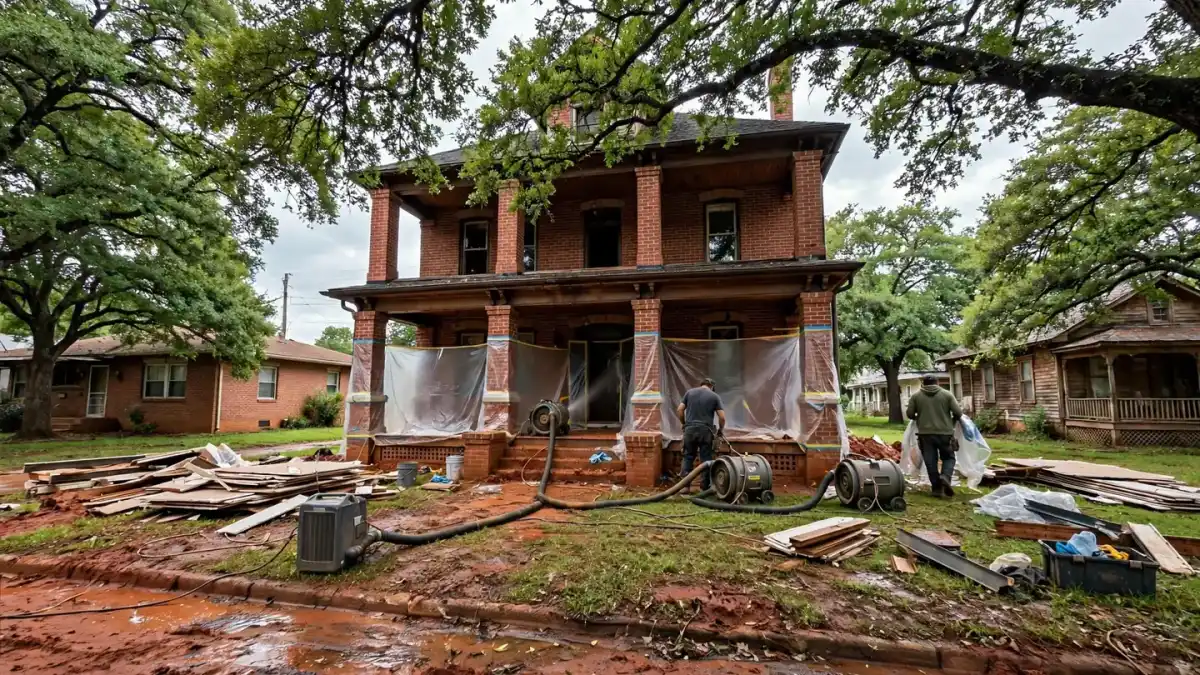
Key facts: Water Extraction in Heritage Hills
- Water damage professionals start with extraction because pulling out liquid water is far quicker than letting it evaporate [1].
- Many Heritage Hills homes have full or partial basements, which collect water from leaks above and seepage outside [7].
- When storm water enters from outside, flood insurance rather than homeowners coverage usually applies [3].
Heritage Hills basements collect the water
In a multi-story Heritage Hills house, water from an upstairs leak travels down through ceilings and wall cavities and gathers in the basement. Seepage through old stone or brick walls after long rains, and backups through floor drains, add more. Pumps and wet vacuums clear the standing water so drying can start.
Seepage brings silt and debris that settle on the floor, and those are removed along with the water. Stored items sitting in the water are moved out so the crew can reach the walls and the base of the boiler and water heater.
Original Heritage Hills floors and rugs
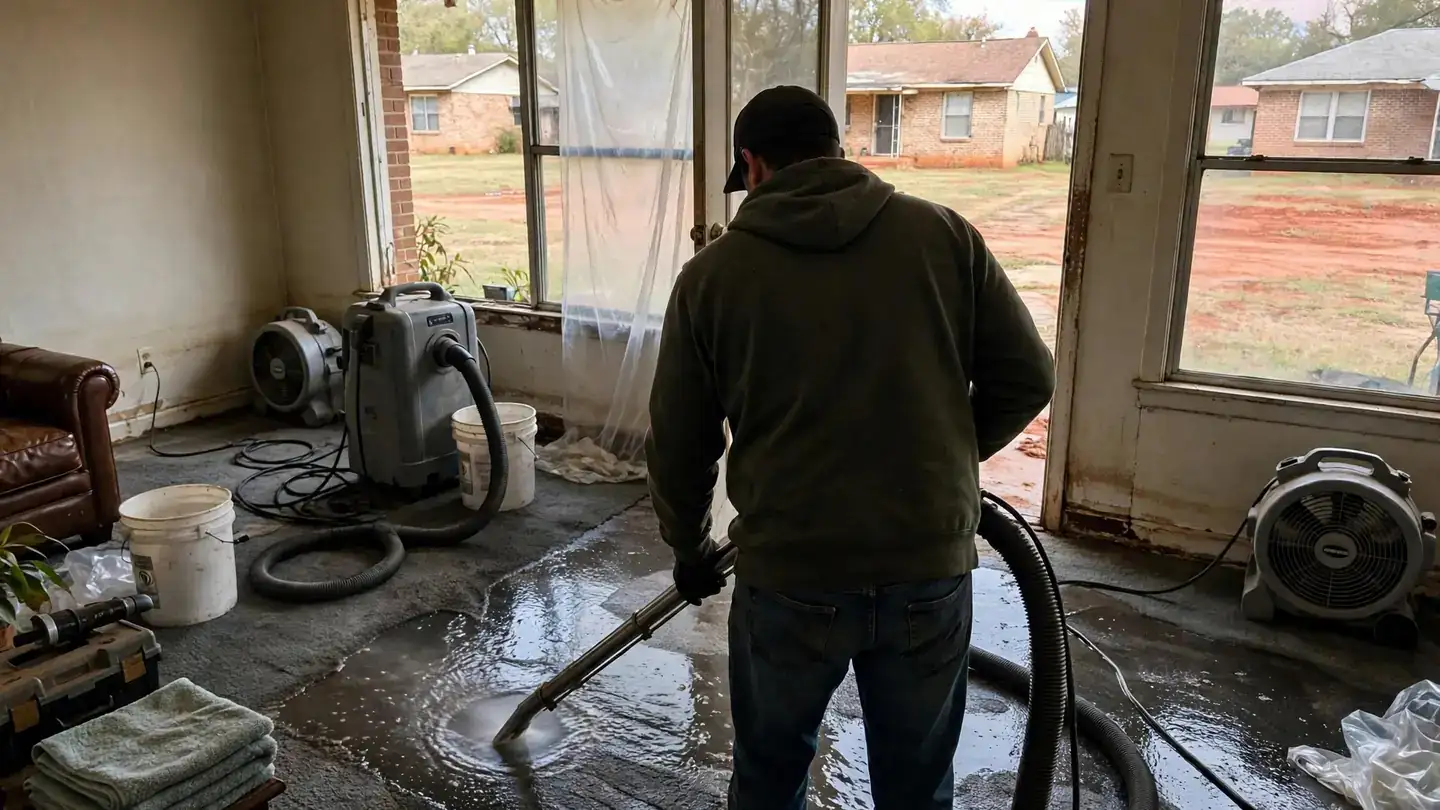
Original oak and pine floors in these homes have often been sanded many times, so they cannot take much more sanding if they cup. Removing water quickly limits how much soaks into the boards. Area rugs should be lifted and moved so the floor beneath can dry.
Extraction tools made for hardwood can pull water from the seams between boards. Valuable rugs are often best sent for professional cleaning and drying away from the house.
Extraction in a Heritage Hills house
Usual sequence.
- 1
Close the main or stop the overflow
Halt the water before anything else.
- 2
Check basement equipment safety
Stay away from wet panels and boilers.
- 3
Extract floors on each level
Start where water is deepest.
- 4
Pump out the basement
Remove water and silt.
Clean, gray and contaminated water in older homes
Restoration standards sort water from clean to grossly contaminated [1]. A split supply line starts clean, an appliance overflow is gray, and sewage or seepage from outside is treated as contaminated and calls for protective gear.
The category shapes the whole job. Clean water removed fast gives plaster, floors and rugs the best chance. Contaminated water usually means removing soaked porous materials and disinfecting what remains.
Acting within two days in Heritage Hills
EPA recommends drying water-damaged areas within 24 to 48 hours to help prevent mold [2]. In a large house with many wet rooms, that window passes quickly, so extraction should start as soon as the house is safe to enter.
While you wait, towels and a wet vacuum can help on hard floors. Do not use a household vacuum on wet carpet, and do not walk through standing water near outlets or basement equipment.
Flood or plumbing claims for Heritage Hills owners
Water that entered from outside, such as seepage after heavy rain, is usually treated as flood and needs flood coverage [3]. Sudden plumbing failures may fall under a homeowners policy. The Oklahoma Insurance Department offers consumer help on claims [4].
Photograph the water on every floor before extraction begins, and note the time and source. That record helps the adjuster understand what happened.
What follows extraction in a Heritage Hills home
Once the bulk water is out, structural drying brings plaster, floors and masonry back to normal moisture, which can take weeks in an old house. Heavy storm warnings come from the National Weather Service office in Norman [5].
If a leak is at or near the meter, Oklahoma City Utilities can say whether it is on the city side [6]. The Heritage Hills page covers local homes and approvals.
Radiators and boilers as a water source
Hot water and steam radiators remain common in Heritage Hills. A split radiator or failed valve can leak onto an upstairs floor, and a leaking boiler can flood part of the basement. Shut the system down and let it cool before extraction starts near it.
Radiator water carries rust and sediment, so floors it touches are cleaned as well as dried.
Protecting woodwork and stairs during extraction
Heritage Hills homes are known for elaborate woodwork, wide stairs and paneled halls. Hoses and equipment carried through those spaces can scuff or gouge them. Crews protect floors and door frames along the path and keep heavy units off fragile surfaces.
Ask where equipment will be staged and how hoses will reach the basement, especially in houses with narrow servants' stairs.
Upper floors and attic rooms
When water starts on a second or third floor, extraction begins there and follows the water down. Wet carpet in attic rooms, soaked rugs in bedrooms and water on bathroom tile are removed before the ceilings below are checked.
Our guide on wet carpet after a leak explains when carpet can be dried and when it should be replaced.
Plaster walls that wick standing water
When water stands on a Heritage Hills floor for hours, the base of each plaster wall draws it upward. Fast extraction keeps that wicking low. Crews may pull baseboards to look at the sill and the bottom of the lath, and readings show whether the wall can dry in place.
Keeping original plaster and trim is usually the goal in these houses, so careful removal of baseboards for reuse is better than cutting them out.
FAQ
Water Extraction in Heritage Hills: questions
Why does water end up in my Heritage Hills basement?
Water flows down through the house and collects at the lowest level.
Can wet original floors be saved?
Often, if water is removed quickly and dried evenly.
Is basement seepage contaminated?
Treat it as contaminated.
Sources and citations
- [1]IICRC: Standards (ANSI/IICRC S500 water damage restoration)
- [2]U.S. EPA: A brief guide to mold, moisture and your home
- [3]FEMA FloodSmart: National Flood Insurance Program
- [4]Oklahoma Insurance Department
- [5]National Weather Service, Norman forecast office
- [6]City of Oklahoma City: Utilities
- [7]NPS record: Heritage Hills Historic and Architectural District (NRIS 79002006)