
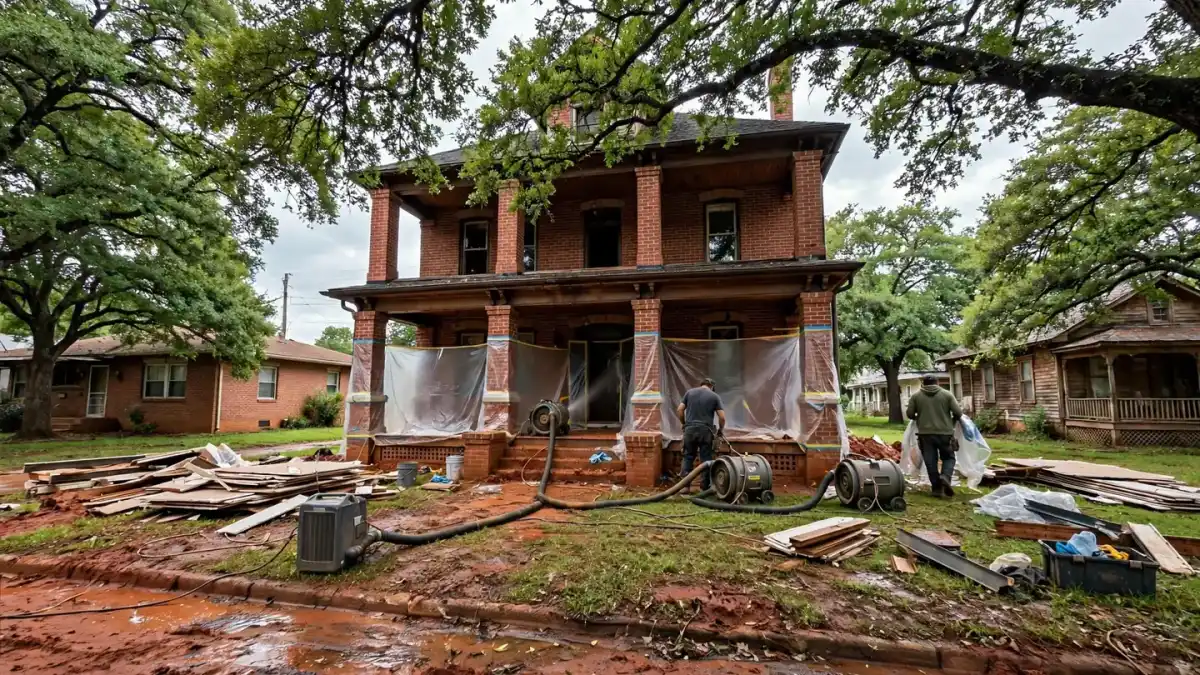
Key facts: Sewage Backups in Heritage Hills
- Under restoration standards, sewage-soaked porous materials are removed and crews wear protective equipment [1].
- Heritage Hills plumbing often mixes original cast iron drains with later copper and plastic lines [7].
- Owners in Oklahoma City generally maintain the private sewer line between the house and the public main [4].
Basement floor drains in Heritage Hills backups
Heritage Hills basements often have floor drains near the laundry or boiler. When the sewer lateral clogs, sewage rises through that drain first because it is the lowest opening. A small backup can spread across the floor and soak stored items quickly.
Stopping water use upstairs keeps more sewage from coming up. Then a plumber clears or repairs the line so cleanup can proceed.
Cracked cast iron stacks in walls
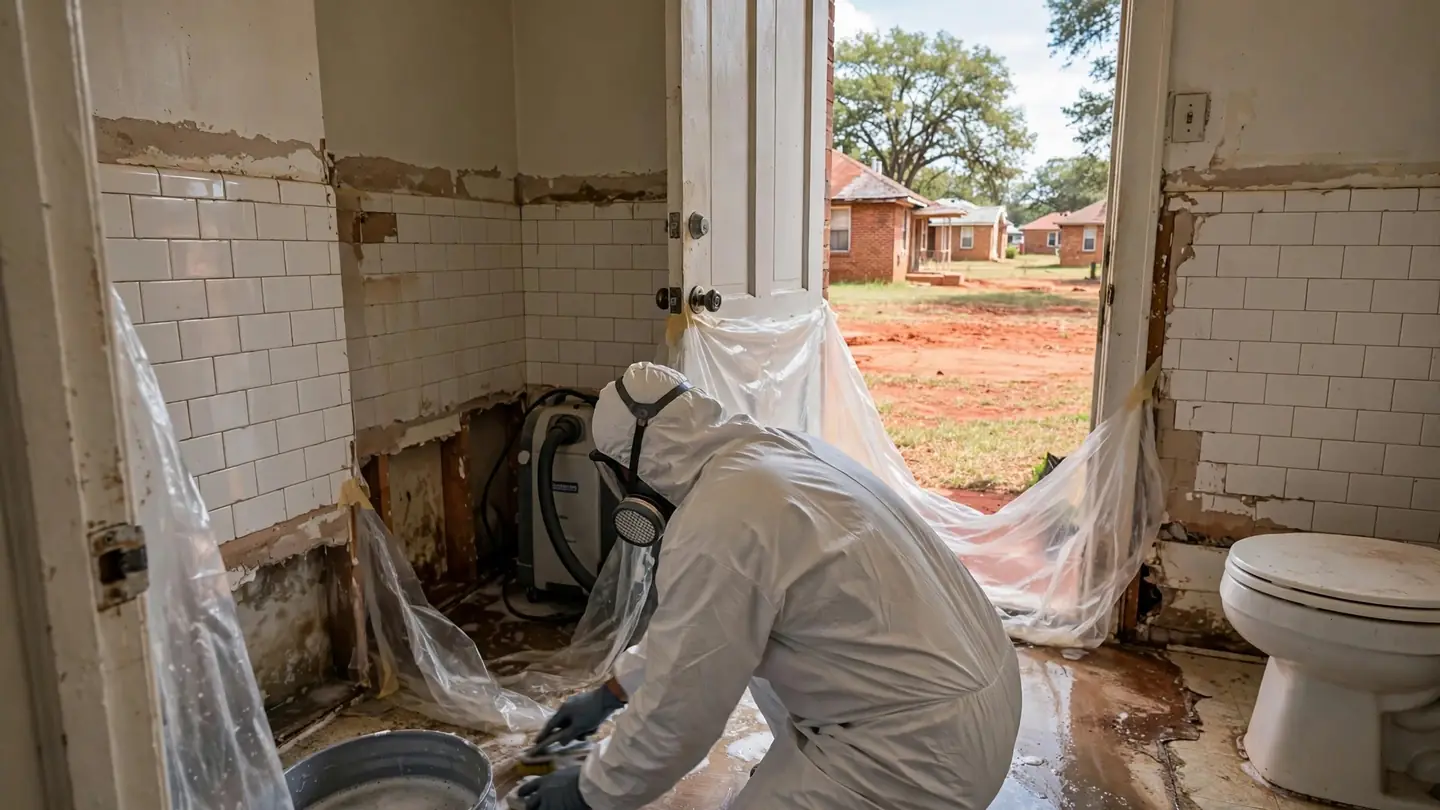
Cast iron drain stacks run through walls from upper bathrooms to the basement. After a century, they can crack or rust through. Sewage leaking inside a wall may show up as a stain, an odor or damp plaster before it is visible.
Opening a section of the wall lets the crew clean, disinfect and dry the cavity, and gives the plumber room to repair or replace the cracked stack. In a house with elaborate trim, careful removal of baseboards and casing first keeps that woodwork for reinstallation.
First steps during a Heritage Hills backup
Limit the spread and stay safe.
- 1
Stop running water upstairs
Every flush adds to the spill below.
- 2
Close the basement door
Keep children and pets away.
- 3
Ask neighbors about backups
Several at once may point to the city main.
- 4
Have the lateral cleared
A plumber must clear the line before cleanup ends.
Heritage Hills laterals versus the city main
Property owners generally maintain the lateral from the house to the public main, and Oklahoma City Utilities maintains the main [4]. Older laterals may be clay or cast iron, and tree roots in the neighborhood can block them.
A camera inspection shows the cause and helps decide between cleaning, repair or replacement.
Cleaning historic materials after sewage
Sewage that reaches plaster, original floors or woodwork presents hard choices. Sealed hard surfaces can usually be cleaned and disinfected. Porous materials soaked by sewage generally must be removed, following the IICRC standard [1].
Removing old painted materials may involve lead-based paint. Work must follow EPA's lead-safe rules [8].
Facts that help on your call
Share these with the contractor.
- Drain where the Heritage Hills sewage roseFloor drain, toilet or inside a wall.
- What it touchedStored items, finished rooms or equipment.
- Status of the plumber and the blocked lineAnd if the line is clear.
- Anyone at higher risk in the homeYoung children or people who are unwell.
Protecting your household in a Heritage Hills sewage cleanup
Sewer backup endorsements for Heritage Hills owners
Many policies exclude sewer backups unless a water backup endorsement was added [3]. Read your policy for that wording before you file. Photograph the drain, every affected room and all materials removed, and keep the plumber's report and any camera video with your claim papers.
The Oklahoma Insurance Department can answer questions about coverage [3].
Drying a Heritage Hills basement after sewage
After cleaning, drying should follow EPA's 24 to 48 hour guidance to limit mold [6]. Basements with masonry walls may need weeks of dehumidification.
See structural drying and the Heritage Hills page for more.
Stored items and finished rooms in the basement
Sewage that spreads across a Heritage Hills basement floor reaches whatever is stored there. Cardboard boxes, upholstered furniture, rugs and paper records that it soaks generally cannot be made safe again and should be discarded after they are photographed. Metal, glass and hard plastic items can usually be cleaned and disinfected.
Finished basement rooms with carpet, paneling or drywall are harder. The lower part of the walls and all soaked flooring typically come out, then the masonry behind is cleaned and dried before any new finishes go in.
Boilers, laundry and water heaters near the drain
Floor drains in older basements are often right next to the boiler, the water heater and the laundry. When sewage covers that floor, the bases of these appliances get wet. They should be cleaned and checked by a qualified technician before anyone runs them again.
Washing machines that drain into the same line will keep adding water until the blockage is cleared, so stop laundry as soon as you notice a backup.
Odors in a large historic house
Sewer odor from a basement can rise through stairwells, laundry chutes and old duct chases into upper floors of a Heritage Hills home. Removing every soaked material and cleaning the masonry is what removes the source. Air scrubbers and dehumidifiers then help clear what remains in the air.
If the smell comes back on humid days, ask the crew to recheck the drain joints and any wall cavities near the stack, since a hidden leak may still be active.
FAQ
Sewage Backups in Heritage Hills: questions
Why does sewage come up through my Heritage Hills basement drain?
It is the lowest opening, so sewage from a blocked lateral rises there first.
Can sewage-damaged plaster be saved?
Usually not if it soaked through. Sealed hard surfaces can often be cleaned.
Does a backwater valve help?
It can keep sewage from the main out of the house. A plumber can tell you if one fits.
Sources and citations
- [1]IICRC: Standards (ANSI/IICRC S500 water damage restoration)
- [2]Ready.gov: Floods (safety during cleanup)
- [3]Oklahoma Insurance Department
- [4]City of Oklahoma City: Utilities
- [5]U.S. EPA: Flood cleanup to protect indoor air quality
- [6]U.S. EPA: A brief guide to mold, moisture and your home
- [7]NPS record: Heritage Hills Historic and Architectural District (NRIS 79002006)
- [8]U.S. EPA: Lead renovation, repair and painting program