
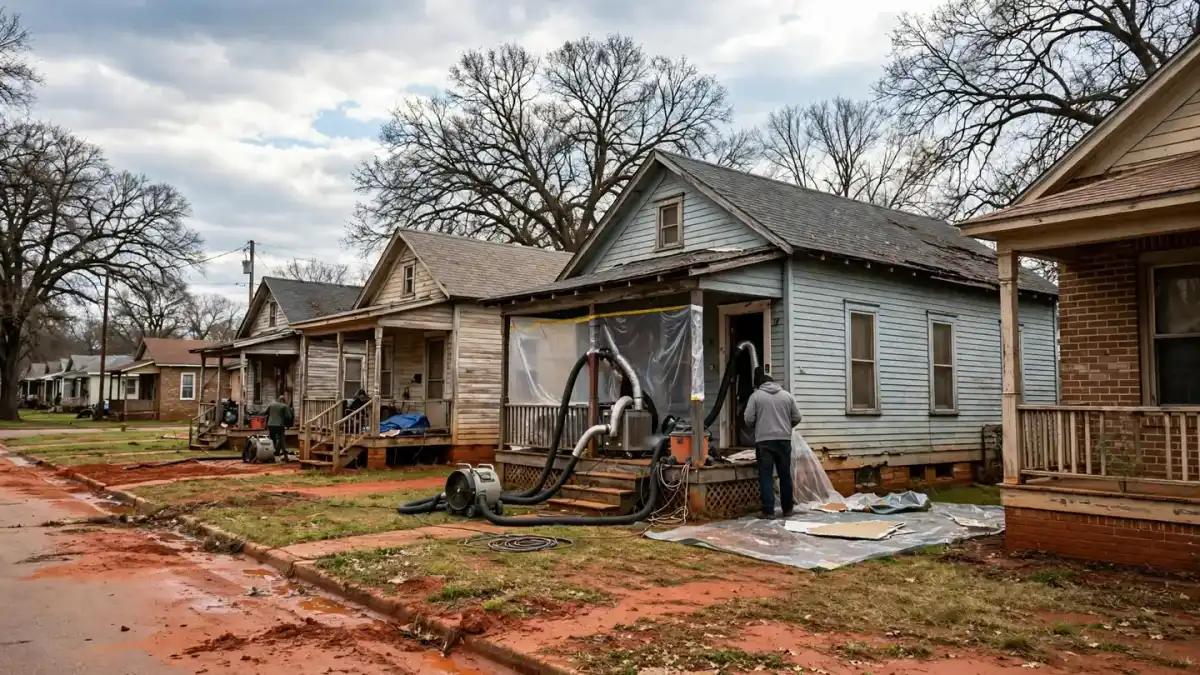
Key facts: Sewage Backups in Capitol Hill
- Water from a sewer backup is grossly contaminated, so porous materials it soaks generally have to be removed [1].
- In Oklahoma City, the owner typically maintains the private line from the house to the public main [4].
- Older Capitol Hill homes often drain through clay tile or cast iron laterals that tree roots and corrosion can block [7].
Why Capitol Hill sewer lines back up
Clay tile pipe was laid in short sections with joints every few feet. Over decades, roots from elms, hackberries and other street trees find those joints and grow inside, catching paper and grease until the line closes. Cast iron laterals and drains rust from the inside and can collapse or scale up until little can pass.
Heavy rain can add to the problem. When storm water gets into old sewer lines through cracks and loose joints, the system fills faster, and a partly blocked lateral can overflow into the house during a long storm.
Where sewage appears in a pier-built house
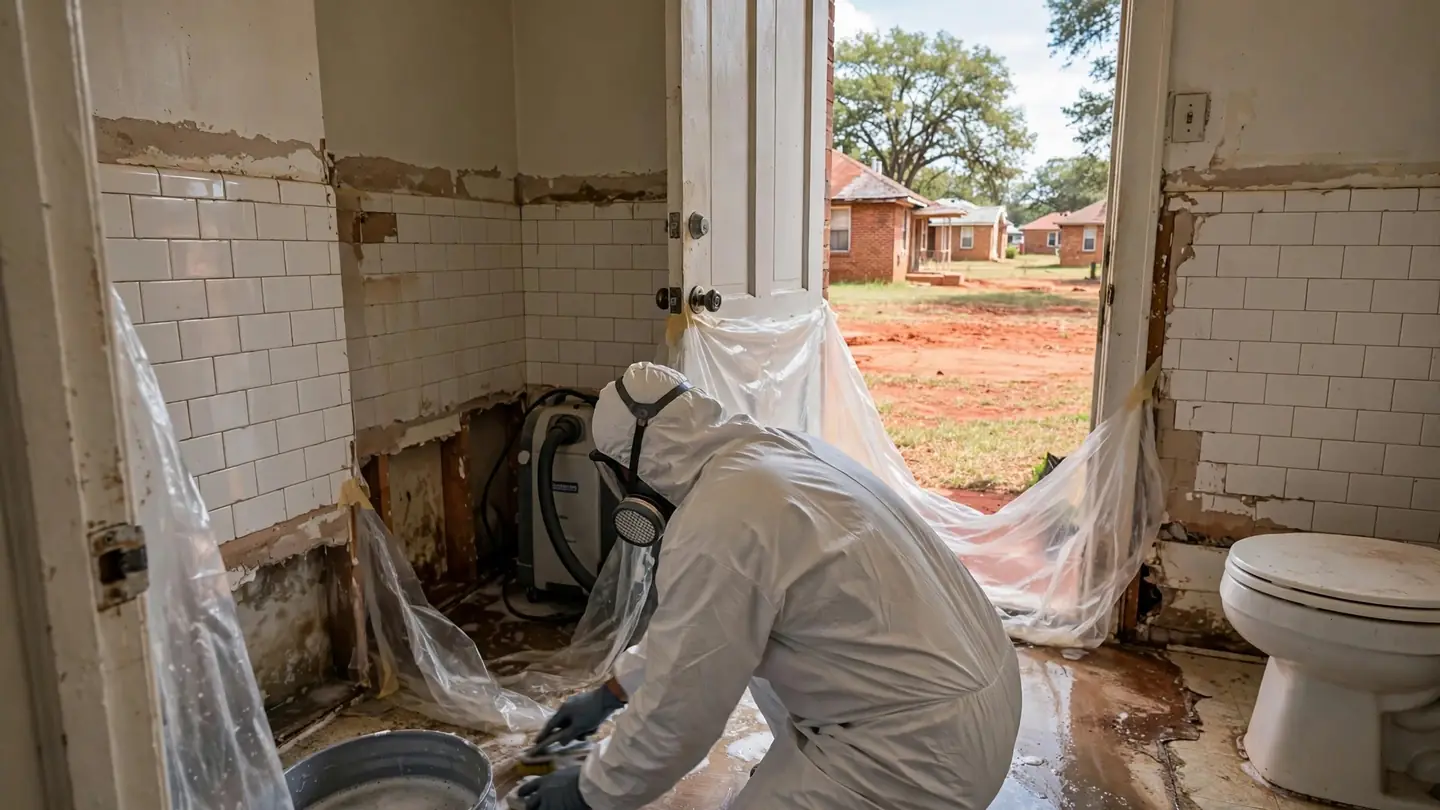
Sewage rises at the lowest opening in the plumbing. In a Capitol Hill house on piers, that may be a tub, a shower, a laundry floor drain in an enclosed back porch or a toilet in a later addition. If a drain line has cracked under the house, sewage may spill into the crawlspace without showing inside at all.
A strong sewer smell, gurgling drains or a damp spot that will not dry are warning signs. Do not keep running water in the house once a backup starts, since every flush or load of laundry adds to the spill.
What to do when sewage comes up
Keep people safe and limit the spread.
- 1
Stop using every drain
No flushing, showers, dishwasher or laundry until the line is cleared.
- 2
Keep children and pets out
Close doors to the affected rooms and keep them closed.
- 3
Check with neighbors
If several homes on the block back up, call the city's utilities line.
- 4
Call a plumber to clear the line
The blockage must be cleared before cleanup can finish.
Your lateral or the city main
Oklahoma City Utilities maintains the public sewer mains, while property owners are generally responsible for the lateral that runs from the house to the main [4]. If only your home is affected, the problem is most likely in your lateral. If several neighbors on the same block have sewage at once, the main may be blocked, and the city should hear about it.
A plumber can run a camera through the line to show roots, sags or broken pipe. That video helps you decide between cleaning, a spot repair or replacing the lateral.
Protective steps during sewage cleanup
Federal preparedness guidance recommends gloves, boots and eye protection when handling contaminated water, plus careful handwashing and keeping vulnerable people away [2]. Sewage can carry bacteria and viruses, so this is not a job for a mop and bucket alone.
Professional crews follow the IICRC water damage standard, which sets out how to handle grossly contaminated water, remove affected porous materials and clean what remains [1].
Removing layered flooring after a backup
Layered floors are common in Capitol Hill homes, with vinyl or carpet over linoleum over wood. Sewage that reaches those layers soaks into each one. Carpet, pad and soaked subfloor sections generally have to go, along with the lower part of any wet drywall or paneling.
Plank floors and joists that can be cleaned are disinfected and dried. Our water extraction page explains how standing liquid is removed before cleaning begins.
Information that speeds up your call
Short answers help the contractor plan.
- Which drain overflowedTub, shower, toilet or floor drain.
- Rooms and floors affectedAnd whether it reached the crawlspace.
- Whether the line is clearedOr if a plumber is still on the way.
- Who is in the homeYoung children, older adults or anyone unwell.
Sewage in the crawlspace under the house
When a drain cracks under the floor, the crawlspace soil may be soaked with sewage. Cleanup there can mean removing contaminated insulation and debris, treating the soil surface and laying a new vapor barrier once the area is clean and dry. Low clearance makes this slow work.
EPA's flood cleanup guidance notes that contaminated areas need thorough cleaning and drying to protect indoor air [5]. Air from a crawlspace moves up into the rooms above, so this step matters.
Insurance and sewer backup coverage
Many homeowners policies exclude damage from sewer and drain backups unless a water backup endorsement was added [3]. Check your policy for that wording before the claim call. The Oklahoma Insurance Department can explain how such endorsements work and help if questions come up [3].
Photograph the drain, the affected rooms and any removed materials. Keep receipts from the plumber and copies of any camera report.
Preventing the next Capitol Hill backup
Root cleaning on a schedule keeps many clay laterals working, though it does not fix cracked pipe. Avoid putting grease, wipes or paper towels down drains. A backwater valve on the lateral can keep sewage from the main out of the house, and a plumber can tell you whether one fits your line.
Drying and mold control follow every cleanup. EPA's mold guidance recommends drying within 24 to 48 hours [6]. The Capitol Hill page covers the neighborhood's other water risks.
FAQ
Sewage Backups in Capitol Hill: questions
Can I clean a small Capitol Hill sewage spill myself?
A very small spill on a hard floor may be manageable with protective gear and disinfectant. Anything that soaked carpet, walls or the crawlspace is best left to a trained crew.
Why does my tub fill with sewage when I run the washer?
The lateral is likely blocked. Water from the washer has nowhere to go and rises at the lowest drain. Stop using water and have the line cleared.
Will the city clean up sewage from a blocked main?
Ask Oklahoma City Utilities directly. The city maintains public mains, and its staff can explain what happens when a main causes a backup.
Sources and citations
- [1]IICRC: Standards (ANSI/IICRC S500 water damage restoration)
- [2]Ready.gov: Floods (safety during cleanup)
- [3]Oklahoma Insurance Department
- [4]City of Oklahoma City: Utilities
- [5]U.S. EPA: Flood cleanup to protect indoor air quality
- [6]U.S. EPA: A brief guide to mold, moisture and your home
- [7]City of Oklahoma City: Utilities