
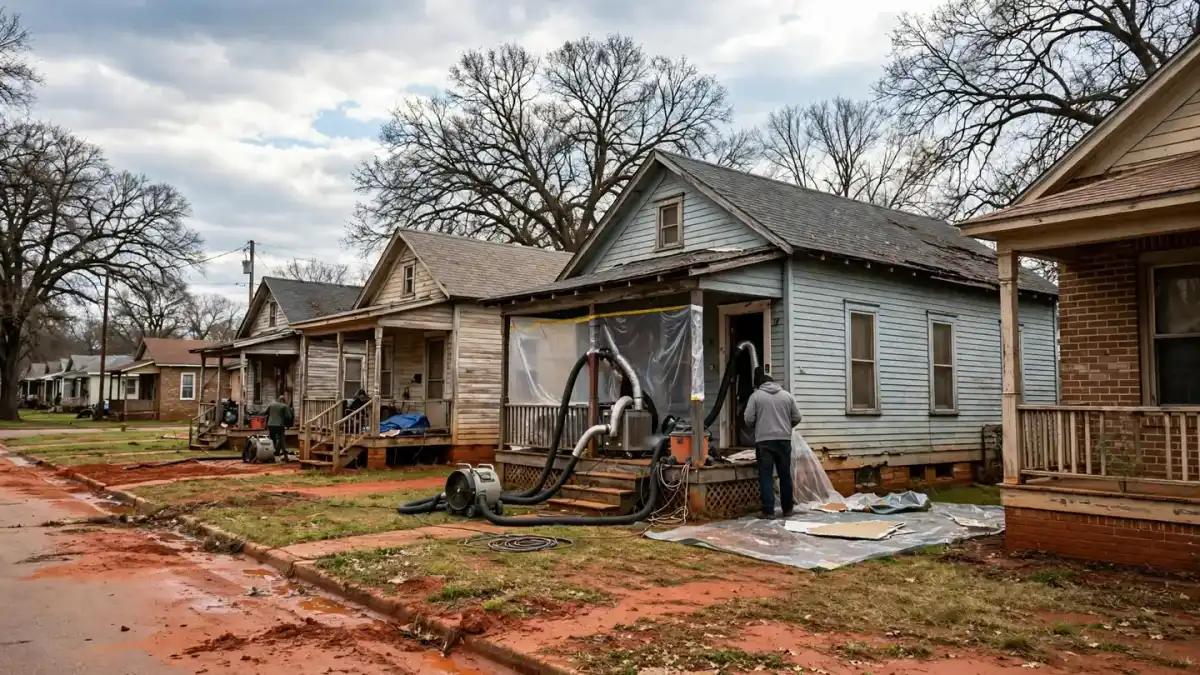
Key facts: Water Extraction in Capitol Hill
- Pulling liquid water out mechanically removes far more moisture than drying alone, which is why it comes first [1].
- Restoration standards sort water into categories from clean supply water to grossly contaminated sewage or floodwater [1].
- Capitol Hill's historic commercial district sits along Commerce Street, where older storefronts share walls and drainage [7].
Where water collects in Capitol Hill homes
In a slab house, water spreads across the floor. In many Capitol Hill houses, the floor is wood planks over joists, so water both pools on the surface and drains through gaps into the crawlspace. Carpet over vinyl over linoleum can hold large amounts of water between layers.
Extraction has to reach all of these places. Truck-mounted or portable units pull water from carpet and hard floors, while pumps and wet vacuums clear standing water under the house.
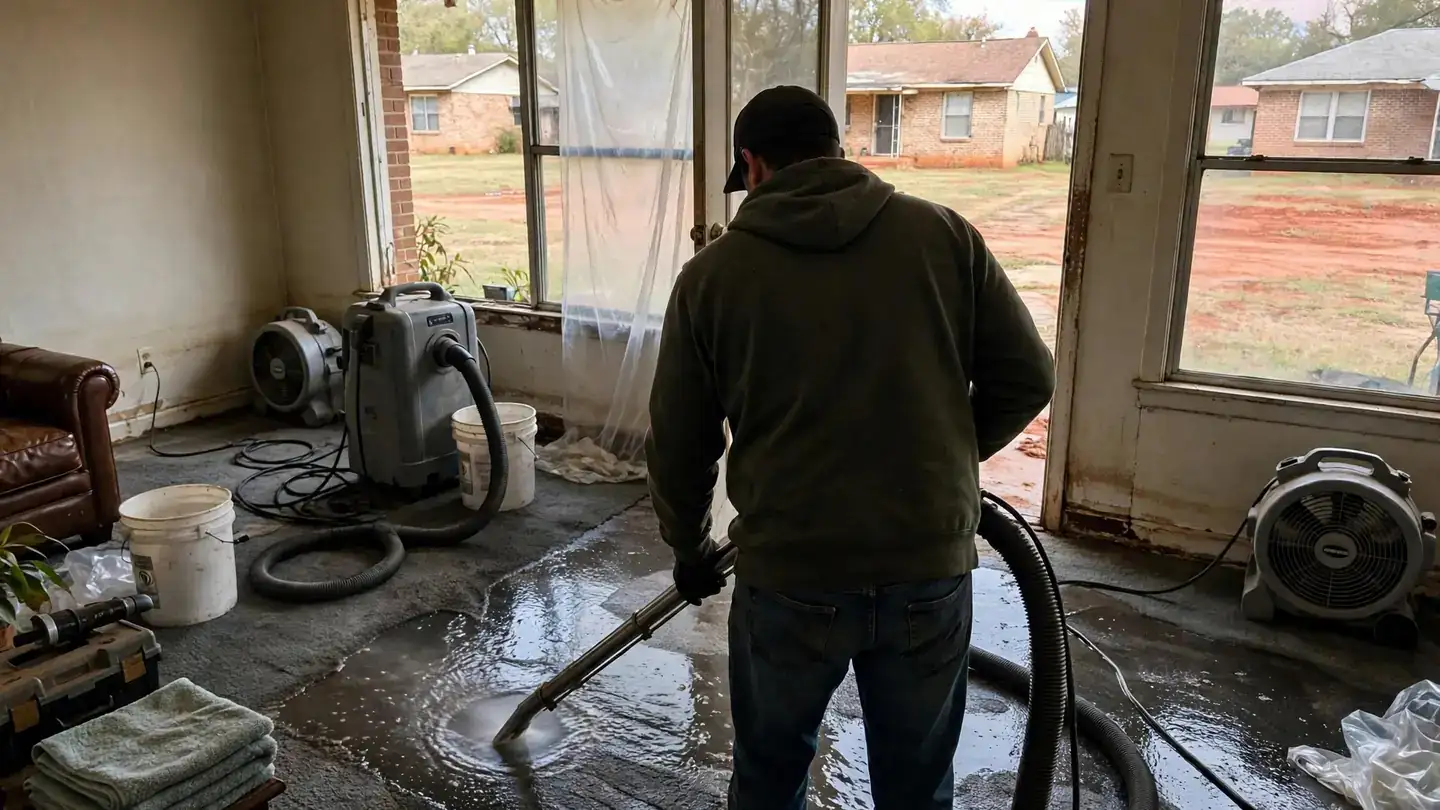
Clean, gray or contaminated water
Restoration standards classify water by how contaminated it is [1]. A split supply line starts as clean water. Water from a washer or dishwasher overflow is gray. Sewage and storm runoff from outside are treated as grossly contaminated and need extra protection and cleaning.
The category changes how extraction is done and what has to be thrown away. Clean water caught quickly may leave carpet and pad worth drying. Contaminated water usually means removing them.
Extraction in a Capitol Hill house
The usual order of work.
- 1
Make the area safe
Shut off the water and any power to wet rooms.
- 2
Extract floors and carpet
Pull water from the top layer, then decide what to lift.
- 3
Clear the crawlspace
Pump standing water and remove soaked insulation.
- 4
Set up drying
Place fans and dehumidifiers once the bulk water is gone.
Storm runoff on low south side ground
Parts of south Oklahoma City sit on low ground near the Oklahoma River and its creeks. During heavy storms, the National Weather Service in Norman may issue flash flood warnings for the metro [5]. Water running across yards can enter crawlspaces and push under doors into ground-level rooms.
Extraction after storm runoff includes silt and debris. Crews remove mud along with water, and contaminated materials are bagged and taken out before cleaning starts.
Speed matters in the first two days
EPA recommends drying water-damaged areas within 24 to 48 hours to help prevent mold [2]. The faster liquid water is removed, the sooner drying can begin. In older Capitol Hill houses with layered floors and crawlspaces, that window can pass quickly if water is left standing.
If you can do so safely, use towels and a wet vacuum on hard floors while you wait. Do not use a household vacuum on wet carpet, and do not stand in water near outlets.
Carpet and pad after extraction
Carpet pad holds water like a sponge. Even after strong extraction, wet pad under carpet can keep the floor damp for days. Many crews lift the carpet, remove the pad and dry the carpet and subfloor separately. Our guide on wet carpet after a leak explains when carpet can be saved.
In Capitol Hill homes with original planks under the carpet, removing pad also lets the wood dry from above. That can keep the old floor from cupping.
Storefront back rooms and lower levels
Commerce Street businesses can take on water from roof drains, alley runoff or a plumbing failure upstairs. Water in shared buildings often crosses into the next unit. Extracting quickly and telling the building owner and neighbors limits the spread.
Move stock and records off the floor and photograph them. Some commercial policies cover business income lost during a closure from a covered loss.
Insurance after a Capitol Hill water loss
If storm water came in from outside, it is usually flood, which needs separate flood coverage [3]. Damage from a sudden plumbing failure inside may fall under a homeowners policy. The Oklahoma Insurance Department has consumer help on claims and policy questions [4].
Keep photos of the water before extraction, along with notes on the time and source. That record helps the adjuster understand what happened.
Utilities and the water supply
If a leak is at or near the meter, Oklahoma City Utilities can help determine whether the problem is on the city or the property side [6]. Shutting the curb valve stops the flow if the house valve is missing or stuck.
Once the water is out, the next step is structural drying. The Capitol Hill page covers more about local homes.
FAQ
Water Extraction in Capitol Hill: questions
How fast should water be extracted from a Capitol Hill home?
As soon as safely possible. EPA suggests drying within 24 to 48 hours, and extraction is the first step toward that.
Can extraction save my carpet?
Often, if the water was clean and removed quickly. Pad is usually replaced. Sewage or storm water means removing carpet and pad.
Do crews pump water from under the house too?
Yes. In pier-built homes, standing water in the crawlspace is pumped or vacuumed out along with the rooms above.
Sources and citations
- [1]IICRC: Standards (ANSI/IICRC S500 water damage restoration)
- [2]U.S. EPA: A brief guide to mold, moisture and your home
- [3]FEMA FloodSmart: National Flood Insurance Program
- [4]Oklahoma Insurance Department
- [5]National Weather Service, Norman forecast office
- [6]City of Oklahoma City: Utilities
- [7]Wikipedia: Capitol Hill, Oklahoma City